
The 2026 FIFA World Cup, powered by data science.
NGN Offside follows the 2026 FIFA World Cup to bring you stories inspired by numbers. The analysis is brought to you by NetSI Sport, Northeastern's Network Science research hub specializing in data and sport.
Finals


The numbers that show Spain’s dominance in the World Cup final

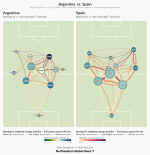
Spain dominated Argentina in the 2026 World Cup final. The 1-0 score barely tells the story — the data does.
Spain set records for a World Cup final through the team’s 896 attempted passes and the 774 the squad managed to execute, achieving a 86.4% passing completion rate. The Spaniards only conceded two shots — also a new low — including zero shots in the first 90 minutes.

Spain defeats Argentina in final match to win World Cup 1-0

Spain dominated Argentina but it took an extra-time goal for it to capture the World Cup for the first time since 2010.
The Spanish team beat Argentina in a grueling 1-0 match that was deadlocked at 0-0 for the majority of the game. The winning goal was delivered by Spain’s Ferran Torres, a forward, in the 106th minute in extra time.

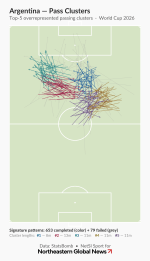
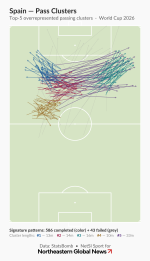
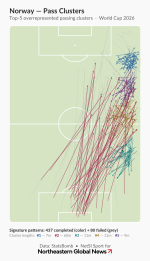
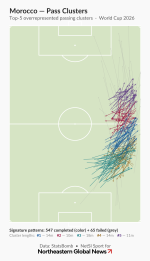
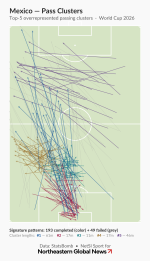
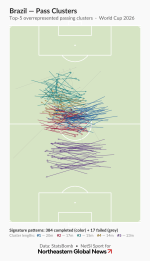
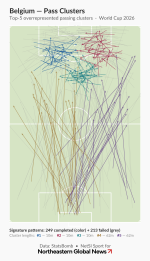
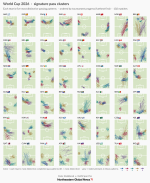
Can you guess your favorite World Cup team based on signature passes?

Each World Cup team’s passing patterns reveal distinctive “signatures” that show whether a team relies heavily on its star player or focuses strategy on playing against an opponent’s strengths, data shows.
“A lot of teams produce the same passes in the same areas, because some of the game has the potential to be a bit formulaic in certain parts of the game. What really makes teams shine or what characterizes a team above and beyond that baseline is tactical instructions and individual capabilities that allow for certain patterns of play,” said Brennan Klein, director of Northeastern University’s NetSI Sport research group.

This Northeastern student worked for FIFA at the World Cup
When Nicolas Dominguez took an elective photography course at Northeastern University’s Oakland campus, he didn’t imagine that it would put him right at the center of soccer’s biggest event: the FIFA World Cup.

Can network science predict the World Cup?


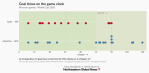
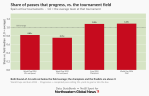
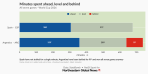
Spain versus Argentina: Team brilliance versus individual star power
Defending World Cup champion Argentina will meet second-ranked Spain in the final match at New York New Jersey Stadium on Sunday.
By the metrics, Spain is the higher-performing team, explained Brennan Klein, director of Northeastern University’s NetSI Sport research group. It’s yet to trail in any match, has only conceded one goal and handily beat France – a top-four ranked team – in a semifinal matchup.
Semi-finals


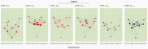
Argentina vs England preview: A match between Messi and Bellingham
Argentina and England may be entering Wednesday’s World Cup semifinal matchup at Atlanta Stadium somewhat battered.
Argentina’s previous knockout matches against Switzerland, Egypt and Cape Verde were all won after long and fierce back-and-forths, explained Brennan Klein, director of Northeastern’s NetSI Sport research.
England’s games against Norway, Mexico and the Democratic Republic of Congo were similarly tense and close, he added, with the English team having to rely on standouts such as striker Harry Kane and attacking midfielder Jude Bellingham at critical moments.

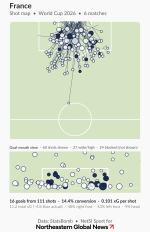
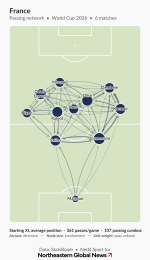


Spain versus France preview: A showdown between two titan teams
Going into the 2026 World Cup, Spain and France were largely considered two of the biggest contenders to win the tournament.
The two teams topped FIFA’s men’s world ranking before the tournament began, with France ranked number 1 and Spain in the second spot.
Those predictions have largely proven out thus far as both teams remain among the final four contenders for the World Cup.

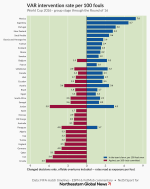
Are some teams getting favorable calls in World Cup matches?
Are some teams in the World Cup receiving more favorable calls on fouls than others?
That question came to a head earlier this week during Argentina’s 3-2 win over Egypt when a referee disallowed a goal for the Egyptians after video assistant referee, or VAR, review, a system that allows referees to replay game footage and consult with other match officials monitoring the game from a control room.
Quarter-finals


The 2026 World Cup’s header trends: More assists, higher precision
Footballers are using their heads differently in the 2026 World Cup.
Headers have accounted for a shrinking percentage of World Cup goals: dropping from 23.7% in 2018, to 18.4% in 2022, to 17.9% in 2026 through the Round of 16, according to Northeastern’s NetSI Sport research group analyzing this year’s tournament data. However, headers are getting more accurate – converting at a higher rate (11.4%) and getting on-target shots (33.5%) than in the two previous World Cups.


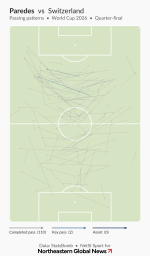
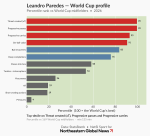
Bellingham, Paredes key players in World Cup quarterfinal matchups
The quarterfinals are in the book and the lineup for the semifinals are set. Spain will face France on Tuesday and Argentina will face England on Wednesday.
But before we get there, what does the data say about who dominated Saturday’s quarterfinals matches? Who were the most valuable players?
Northeastern University’s NetSI Sport research group helps shed light on a few standouts.

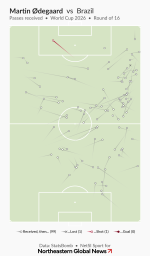
Norway-England preview: The players to watch in the quarterfinal match
Norway controlled the ball for over 60% of its match with Brazil in the Round of 16, according to FIFA, en route to a 2-1 victory. Can that dominance in possession continue against England, when the squads meet in the World Cup quarterfinals on Saturday?
The answer may hinge on Norway’s captain, Martin Ødegaard, the team’s offensive engine. As the center midfielder, Ødegaard orchestrates the attack, dropping deep to receive the ball, cycling it around or up the flanks, or threading long passes to striker Erling Haaland, a devastating goal scorer.
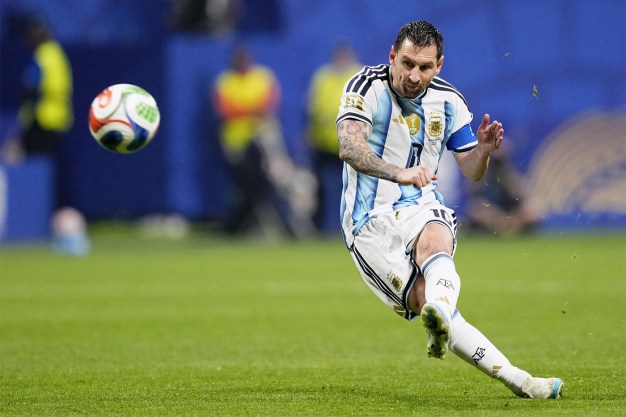

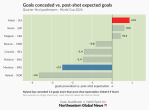
Argentina and Switzerland preview: Messi vs. a stout Swiss defense
Argentina and Switzerland meet on Saturday night (9 p.m. EDT) in the World Cup quarterfinals following grueling games in which both needed extra time and beyond to advance. Factor in that they feature the two oldest squads remaining based on playing time, and the match’s outcome could be decided by skill as much as by longevity.


How age could help Messi advance in Argentina-Switzerland quarterfinal
The average starting player in this year’s World Cup is 28 years and 117 days old, the oldest age in the last 60 years of the tournament. But how could age play a factor in a team’s performance?
Northeastern University data researchers say that while a trendline doesn’t show a clear correlation of World Cup performance related to age, they note that age could play a big role in the quarterfinal matchups, particularly in Sunday’s match between Argentina and Switzerland.

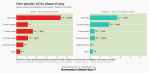
Spain versus Belgium: What the data says about the matchup
Spain is the only team left in World Cup play to have not conceded any goals, and Belgium is riding high after a dominant victory over the United States.
The high-stakes quarterfinal match takes place at 3 p.m EDT Friday at Los Angeles Stadium.
The data points to some notable trends that shed some light on how the game may turn out, explained Brennan Klein, director of Northeastern’s NetSI Sport research group. The data was collected by the sports analytics company Hudl StatsBomb.
Round of 16

Northeastern physicist explains how to ‘bend it like Beckham’

It contributed to soccer legend David Beckham’s record number of goals on direct free kicks, and entered popular culture by inspiring a movie which, in turn, inspired a West End musical.

What makes a soccer match exciting? There’s data for that
Egypt led 2-0 and was minutes away from a victory over Argentina on Tuesday.
Instead, Lionel Messi and the reigning World Cup champions stormed back with three goals to complete a comeback for the ages. Hours later, Colombia and Switzerland battled to a 0-0 score through extra time, with both goalkeepers making key saves late, before Switzerland prevailed in penalties, 4-3.

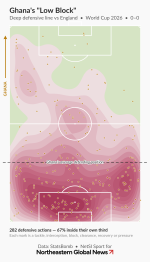

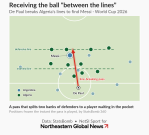
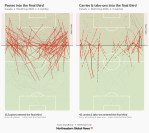
Low block? Final third? Here’s what these and other soccer terms mean
The 2026 World Cup is captivating audiences across the globe, drawing in lifelong fans and newcomers alike. For those watching their first match, there are inevitably some phrases commentators have tossed around that might leave new fans scratching their heads.
Here’s a quick primer on some common soccer terms, with accompanying graphics from Northeastern’s NetSI Sport research group to illustrate what these terms mean on the field … err, pitch.

How do World Cup crowds get synchronized so quickly? Researchers explain

“Row! Row! Row!” a crowd of Norway football fans chants in unison as they steer a fleet of invisible longships up a Boston escalator, where they were recently spotted by Northeastern University communication studies professor Stephen Warren on his way home after a Norway-Iraq watch party.

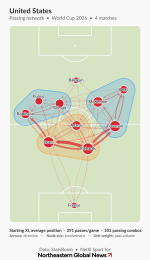
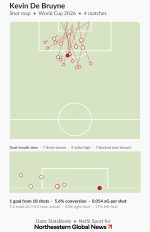
How the United States can beat Belgium, according to the data
A win Monday night would send the United States to the World Cup quarterfinals for the first time since 2002. Standing in the way: ninth-ranked Belgium, a step up from the 17th-ranked Americans.
But the data gives the U.S. a real case for advancing.
Wide passing triangles have powered the American attack throughout the tournament. Three players link up in a triangle shape to move the ball forward — but the real engine is movement, not just passing. Every pass triggers a run, dragging defenders out of position and creating open space for teammates elsewhere on the pitch.
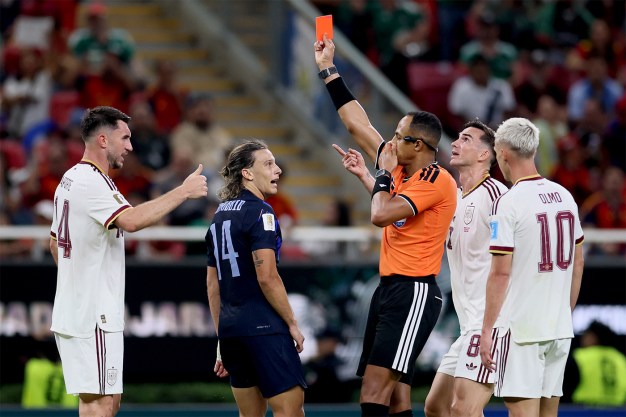

Red cards have more than tripled since the last World Cup, data shows
In a reversal on Sunday, FIFA announced that it was suspending U.S. striker Folarin Balogun’s one-game red-card ban, which will allow the star player to compete in the U.S.’s World Cup Round of 16 match against Belgium on Monday.
Balogun is far from the only player to have received a red card during this year’s tournament. In fact, according to data reviewed by Northeastern’s NetSI Sport research group, red card issuances have more than tripled compared to the last two World Cups.
Round of 32
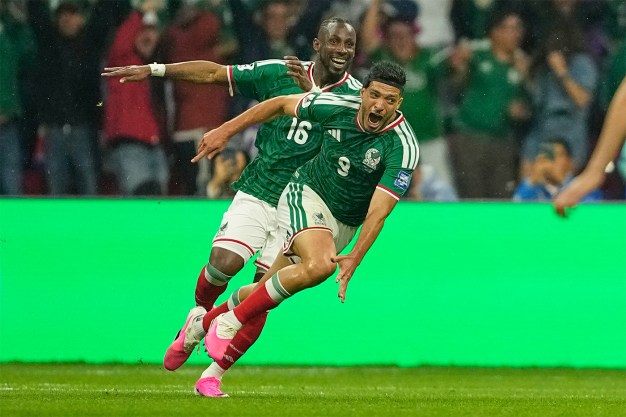


How the host nations reigned victorious in the first knockout round
The World Cup’s host nations just keep on winning.
All three countries – the United States, Mexico and Canada –- have advanced out of the Round of 32 knockout stage, and on Saturday will start competing in Round of 16 knockout matches.
Northeastern University’s NetSport research group helps break down some of the most interesting data points on each team’s victory in their knockout round matches.

Technology has made soccer more accurate. Is that good?
In a recent Round of 16 World Cup match, a review by the video assistant referee, or VAR, disallowed what would have been Germany’s game-winning goal over Paraguay because of a foul. Paraguay came out on top in a penalty shootout.

What makes Harry Kane a devastating finisher, according to the data
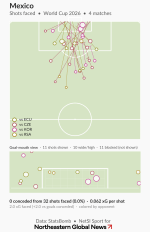
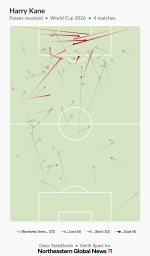
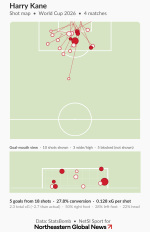
Harry Kane is a devastating finisher, with five goals through four games in the World Cup. England will need his offense Sunday against Mexico, which has yet to concede a goal in the World Cup.
However, the data shows that Mexico hasn’t faced the quality of shots that Kane typically unleashes.


Argentina-Cape Verde preview: It’s a matchup between Messi vs. Vozinha
Argentina’s Lionel Messi is the World Cup’s all-time leading scorer with 19 career goals — including six through three games in this tournament, which is tied for most as of Thursday morning.
On Friday, Messi will lead Team Argentina against Cape Verde in the knockout stage. On paper, it’s a one-sided matchup; Argentina is No. 1 in the FIFA rankings, to No. 67 for Cape Verde — the widest gap between opponents in the Round of 32.

Northeastern student performed at once-in-a-lifetime World Cup
It was a cheer-off, of sorts. Lana Vogler beamed as she swished her pom-poms and flicked her skirt’s red and blue fringe, moving seamlessly through a repertoire of choreographed dances. The fans in Gillette Stadium responded with rapturous chants and the blare of bagpipes.


What data reveals about Norway’s knockout match against Ivory Coast
What happens when two similarly matched dark horse teams compete against each other on the World Cup stage?
You get a game like Tuesday’s close knockout match between Ivory Coast, ranked 33, and Norway, ranked 31.
While Norway emerged victorious, with a 2-1 score over Ivory Coast the two teams spent much of the match crisscrossing each other in racking up expected goals, or xG, a measure used to determine a team’s chances of scoring, according to data from Northeastern’s NetSI Sport research group. The higher a team’s xG, the more likely they are to score based on mathematical probability.
First Stage


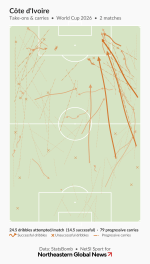
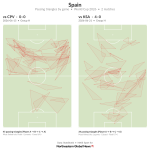
3 things to watch for when you attend a World Cup game
Thousands of fans attending World Cup matches this summer are experiencing professional soccer live for the first time — the atmosphere, the spectacle, the goals. But underneath all of it is another game entirely. The pass you didn’t see coming. A player’s subtle movement to corral a pass. The strategy that cracked open the defense.


What have we learned so far about the World Cup’s new tournament structure?
Group stage matches of the biggest World Cup come to a close today.
What insights can be gleaned so far from the tournament’s new format, designed to accommodate the expanded roster of 48 teams, up from 32 in previous tournaments?
Here are some notable trends, according to data analyzed by Northeastern’s NetSI Sport research group.


South Africa reaches knockout round in World Cup for first time ever
South Africa defeated South Korea 1-0 on Wednesday night, a historic result that secured its place in the World Cup knockout stage for the first time in the country’s history of World Cup appearances.
South Africa will face Canada on Sunday, in the tournament’s first knockout round game.
An underdog in the tournament given its 61st ranking by FIFA, South Africa began the World Cup with a 2-0 loss to host country Mexico, managing only three shots – none on target. But the beginnings of South Africa’s turnaround could be seen in the data. Across its three group-stage games, South Africa only surrendered three goals, leaning on its defense to withstand offensive pressure and regain possession of the ball.

Football or soccer? A linguist explains the origins behind the divide

World Cup 2026 has already provided compelling match ups between the world’s top teams, but in the mix with a battle over the ball is another fight: one over words.
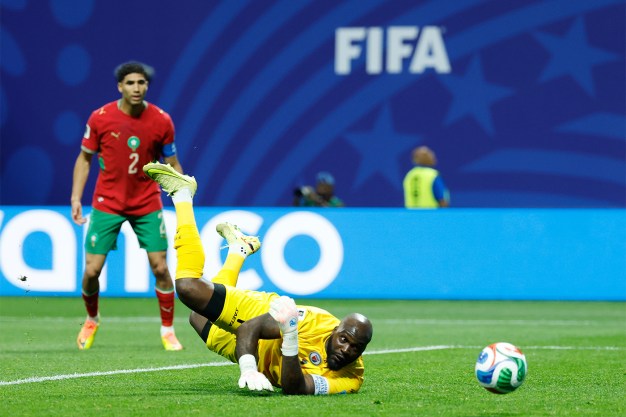


Own goals are soaring at World Cup. Here’s the data behind the trend
Egypt led Belgium 1-0 midway through the second half of its first World Cup match on June 15. As Belgium sent a crossing pass toward the net, multiple defenders tried to prevent Belgium forward Romelu Lukaku from scoring. The pass struck Egypt’s Mohamed Hany’s leg, and the ball goes into the net, tying the game 1-1, and ultimately leading to a draw.

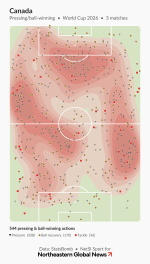


What heat maps can tell us about the World Cup teams
In soccer, a well-timed pressure event can turn the direction of a game in an instant.
In layman’s terms, a pressure event is when an opposing team takes defensive action against players in possession of the ball to not only restrict their ability to play but to also win it back.
Northeastern Global News, in your inbox.
Sign up for NGN’s daily newsletter for news, discovery and analysis from around the world.
Preview

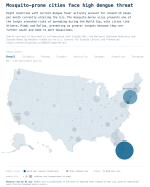
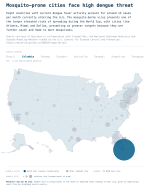
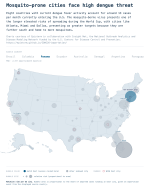
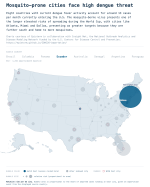
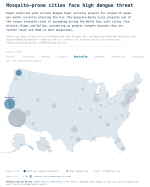
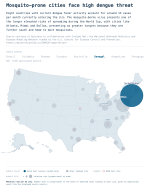
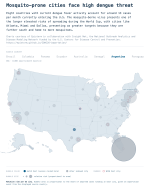
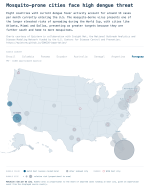
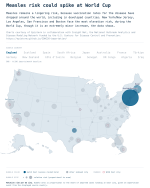
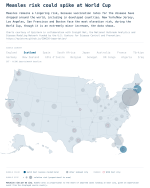
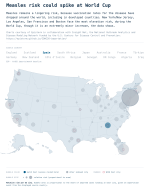
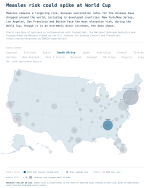


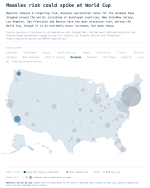


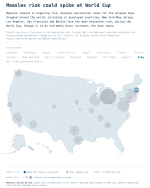
Could the World Cup trigger the next pandemic? Scientists mapped the risks
The 2026 World Cup is bringing together teams and fans from 48 countries in North America. From travel logistics to the accommodations for hundreds of thousands of visitors, organizers are addressing a host of considerations. For public health officials, one of those factors is also the spread of disease.
Disease surveillance has taken on a whole new meaning in the post-pandemic world. The Ebola outbreak in the Democratic Republic of the Congo may be the event commanding the most attention, but other outbreaks — both domestic and international — are also of concern. COVID-19 is still lingering, global health officials are still monitoring the hantavirus outbreak that rocked a cruise ship last month and here in the U.S., the country is seeing the largest number of measles cases since the disease was considered eradicated in the U.S. in 2000. Meanwhile, more common viruses and bacteria continue to impact our daily lives.

The FIFA World Cup 2026 is here. Is Boston ready for it?
The FIFA World Cup 2026 kicks off in the Boston area this weekend and local officials say the region is prepared for crowds, traffic, severe weather and security threats based on its experience with the Boston Marathon, New England Patriots football games and other major events.


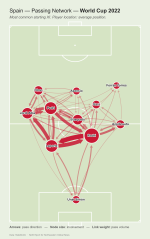


Here’s what the analyzed data says about the top World Cup teams
Soccer is like a dance, and every team competing in the FIFA World Cup 2026 will bring its own signature style and choreography to the pitch.
Team Spain employs a more direct style of play, prioritizing attackers Nico Williams and Lamine Yamal, for example. Team Portugal places a major focus on its midfielders such as Bernardo Silva.


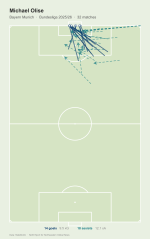
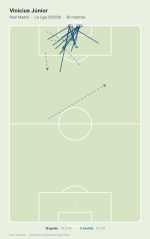
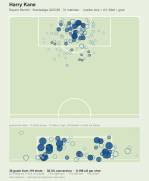

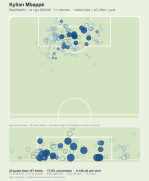

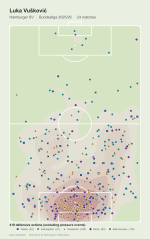
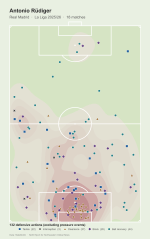


12 players to watch in the FIFA World Cup 2026, according to the data
Who are the top players to watch in the FIFA World Cup 2026?
Northeastern University Network Science Institute researchers have analyzed an extensive, comprehensive dataset and compiled a list of key players.
Brennan Klein, assistant teaching professor of physics, leads a research team that pairs its study of complex networks with a passion for soccer.


Researchers decode hidden patterns in World Cup data
Team Australia kicked it long from the goalkeeper. Switzerland took a slower approach and preferred short passes over long drives. Spain, on the other hand, tended to string the ball with sharp, sideways passes across the field.
Those are a few of the takeaways from passing-style graphics that Northeastern University’s Network Science Institute developed of the top soccer teams at the FIFA World Cup 2022 that showcased their most distinctive passing clusters.