Own goals on the rise at World Cup
The 2026 World Cup is poised to break the tournament record for the most own goals – where a team accidentally scores on itself.
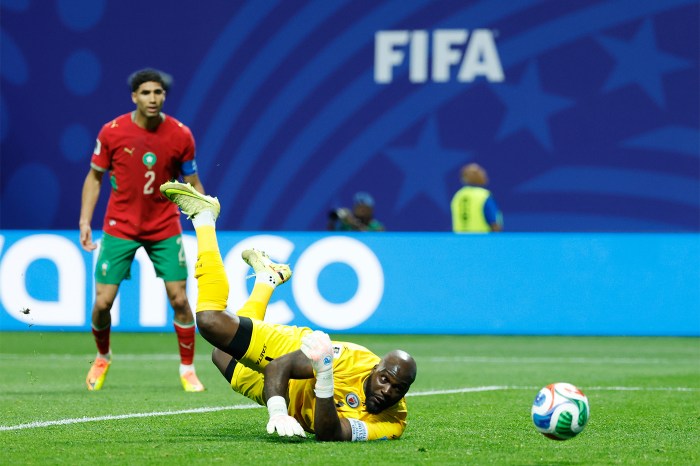

Egypt led Belgium 1-0 midway through the second half of its first World Cup match on June 15. As Belgium sent a crossing pass toward the net, multiple defenders tried to prevent Belgium forward Romelu Lukaku from scoring. The pass struck Egypt’s Mohamed Hany’s leg, and the ball goes into the net, tying the game 1-1, and ultimately leading to a draw.
Own goals – when a team accidentally scores on itself – can be confounding and deflating. They’re also happening at a pace (11 as of Thursday morning) that’s poised to break the tournament record of 12, set in 2018.
The graphic below shows two bar charts: at left, the total number of own goals from the past three World Cups; and at right, the type of play that led to them from 2018 and 2026.
Own goals are typically the result of unfortunate luck, says Brennan Klein, director for Northeastern University’s NetSI Sport research group. Four own goals have come off crossing passes this year, compared to zero own-goals on crossers in 2018. Klein says the data hasn’t shown an increase in crossing passes overall this year.
Editor’s Picks


Still, the data can offer a glimpse into what’s happening on these plays. Sometimes a player simply mishits the ball, like when Qatar’s Mohamed Manai tried to clear a shot by Canada. But in other cases, the offensive team’s pressure and speed lead to own goals on plays that would’ve produced high scoring chances anyway. Egypt’s own goal against Belgium is one example.
The United States has benefitted from two own goals in this World Cup, but Klein says both were the result of U.S.’s tactical style. The graphic below shows the progression that leads to the U.S. goal against Australia. U.S. forward Folarin Balogun receives a pass on the left side of the pitch, carries the ball diagonally toward the net, and makes a crossing pass to teammate Ricardo Pepi who is in prime scoring position. As Australia defender Cameron Burgess moves in to cut off the pass, the ball hits his foot as his momentum is toward the net, resulting in an own goal.


