Here’s what data says about the top teams in the World Cup
Northeastern data analysis show tendencies of the top World Cup teams such as Spain, Portugal, England, France and Argentina.

The first week of the 2026 FIFA World Cup is officially in the books. How did the top five ranked teams perform?
Here’s what data from Northeastern University’s Network Science Institute tells us.
Spain
First match: tied with Cape Verde, 0-0
Next match: vs Saudi Arabia, Sunday, Jun 21, 12 p.m. EDT
The data suggests that Spain should have easily won its match up against Cape Verde on Monday. With its dense clusters of passes and dominance near the net, Spain was performing at full force. By contrast, Cape Verde had a far weaker showing and completed far fewer passes and direct shots.
But Spain’s efforts were foiled by Cape Verde’s goalie Josimar Dias, known by his nickname Vozinha, who made seven saves during the game. The historic tie prevented an early victory for the top ranked team.
Argentina
First match: defeated Algeria, 3-0
Next match: vs Austria Monday, Jun 22, 1 p.m. EDT
Argentina’s strong showing in its 3-0 matchup against Algeria on Tuesday largely came down to the team’s star forward and captain Lionel Messi who scored all three of the country’s goals. The team’s midfielders have spent years creating opportunities for Messi to score, which was key in its 2022 FIFA World Cup victory. That strategy was on full display during its match against Algeria with midfielders Enzo Fernandez, Alexis Mac Allister and Rodrigo De Paul playing a key role in delivering Messi the ball between enemy defensive lines.
England
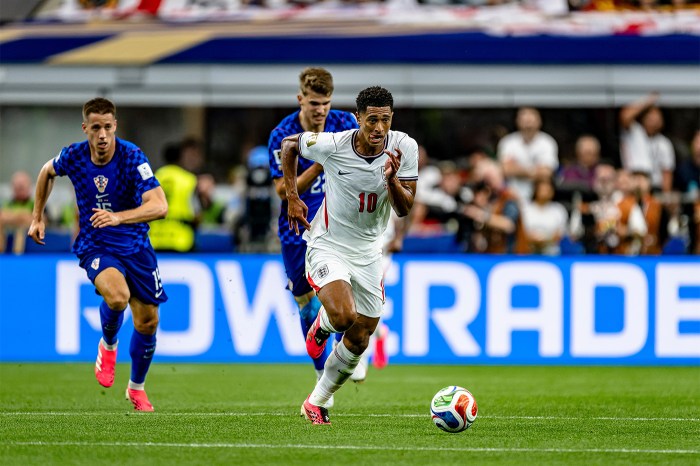
First match: defeated Croatia, 4-2
Next match: versus Ghana, Tuesday June 23, 4 p.m.
England’s Harry Kane and Jude Bellingham were two key players in the country’s 4-2 win over Croatia, securing three of the team’s goals. In particular, Bellingham’s goal in the second half of the game, illustrated the team’s effective passing midfielders and attacking midfilers.

Read more World Cup analysis on NGN Offside →
France
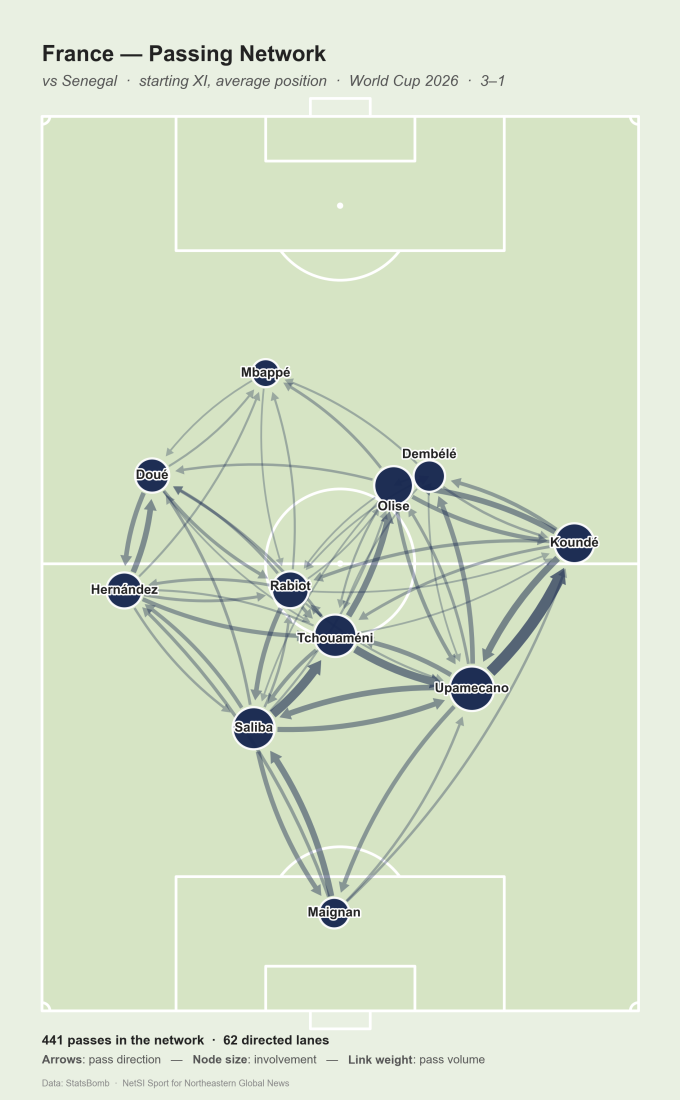
First match: defeated Sengal, 3-1
Next match: versus Iraq, Monday June 22, 5 pm EDT
French players Kylian Mbappé, Michael Olise and Ousmane Dembélé are proving to be the country’s dream team. Mbappe had a strong showing serving as a central forward, securing the team’s first goal in the first half and its third late in the game. Olise and Dembélé equally served well as wide and attacking midfielders.
Portugal
First match: tied with Democratic Republic of Congo, 1-1
Next match: vs Uzbekistan, Tuesday, June 23, 1 p.m. EDT
Portugal did not have his strongest showing in its game against the Democratic Republic of Congo. While the team was able to secure a point in the first half, it failed on most of its six attempted shots. Their strong reliance on Cristiano Ronaldo also did not do the team any favor, who did not play well during the game.
Data analysis provided by Brennan Klein, director for Northeastern University’s NetSI Sport research group.
Northeastern Global News, in your inbox.
Sign up for NGN’s daily newsletter for news, discovery and analysis from around the world.