Should you invest in crypto? Northeastern economic experts lay out pros and cons of the digital currency

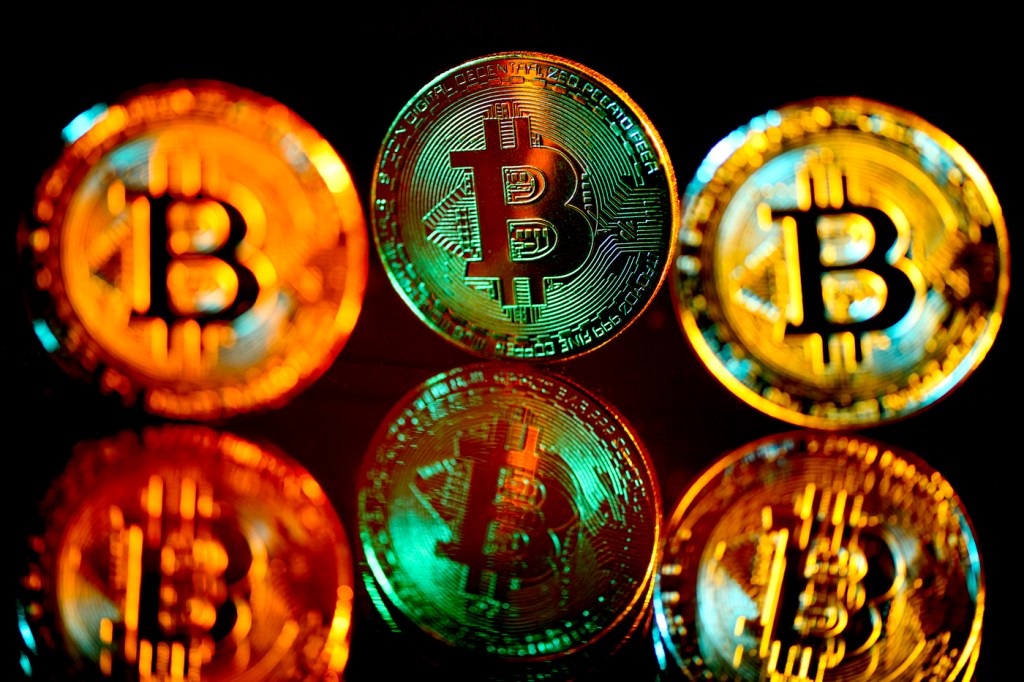
Bitcoin’s star is once again on the rise after a dark crypto winter, but investing in cryptocurrency still poses risks, Northeastern economic experts say.
This week, the price of Bitcoin, the leading crypto currency, temporarily reached an all-time high of $72,000.
The surge in Bitcoin’s valuation was made after regulators in the United Kingdom gave the go-ahead for Recognised Investment Exchanges to create a listed market segment for crypto-backed exchange traded notes or ETNs, the crypto trade publication Coin Desk reported.
The move opens up the door for investment firms and other institutions in the U.K. to invest in “crypto-trading products.”
The U.K. is following in the footsteps of U.S. regulators, explains Ravi Sarathy, Northeastern University professor of international business and strategy and author of “Enterprise Strategy for Blockchain.”
In January, the U.S. Securities and Exchange Commision green lit the first spot Bitcoin exchange traded funds (ETF). ETFs are a tightly regulated type of investment funding. Essentially, by buying into a Bitcoin ETF, an investor has the potential to make money as the price of Bitcoin goes up without some of the security and technical challenges that come with buying crypto directly.
“This year, the big news is that the SEC finally accepted Bitcoin ETF, or exchange traded funds,” Sarathy says. “Once the SEC was pushed to accept Bitcoin and say, ‘It’s OK to have an exchange traded fund,’ it became possible for a very large number of people to suddenly say, ‘Hey, I’ve been hearing about Bitcoin. Maybe now that it’s so easy, I should do it.’”
These spot Bitcoin ETFs have been listed on the Nasdaq stock market, the New York Stock Exchange and the Chicago Board Options Exchange.
The SEC news has bolstered the crypto industry’s upward trajectory, Sarathy says.
From Jan. 1 to March 11, Bitcoin’s price rose from $42,625 to $72,000, a jump of 69%. The price of Bitcoin continues to fluctuate, however. As of March 12, the price of Bitcoin sits at $71,805.
“Bitcoin ETFs are a quick and easy way to buy and also sell,” Sarathy says. “I just have to go to the exchange where the Bitcoin ETF is traded. I don’t have to go through a digital wallet and public and private keys. There’s a certain legitimacy that the Bitcoin ETF has created. Now that it’s available, JP Morgan and Fidelity and others have launched ETFs.”
It’s a sharp contrast from 2022 and early 2023, when interest in crypto was at an all-time low as the industry was embroiled in controversy. FTX, one of the largest crypto exchanges, collapsed and its founder and CEO, Sam Bankman Fried, was arrested on criminal charges.
“The big thing last year was the collapse of FTX and that was essentially fraud,” Sarathy says. “Huge amounts of people lost lots and lots of money, and so they were forced to sell some of their financial assets to meet their debts. There was a general loss of confidence in the market.
“At the same time, interest rates were very high. They had gone up to the highest in many many years. It was costly to hold assets that didn’t earn any income or if you borrowed money to hold on margin, it was costly to hold them,” he adds.

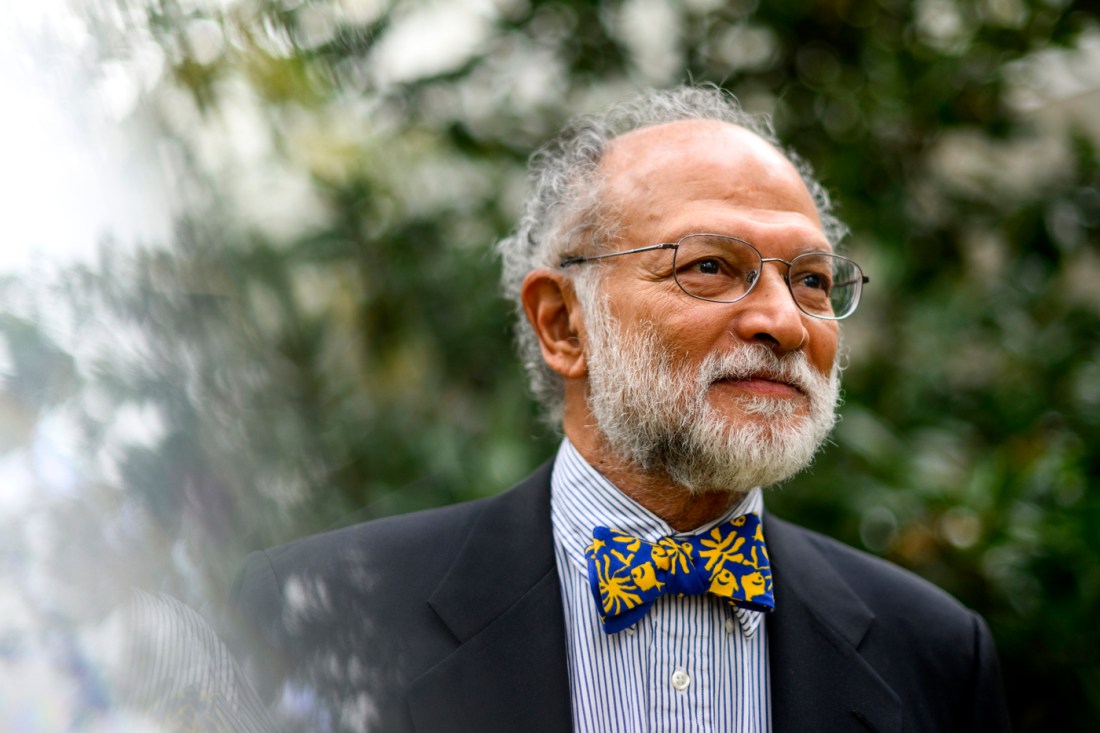
Despite the increased interest in crypto, William Dickens, a Northeastern professor of economic and public policy, says there are still many risks involved investing in the digital currency.
Bitcoin and other forms of cryptocurrency are referred to as non-productive assets, which means they make no money on their own through productivity. Gold and silver are also non-productive assets. Company stocks, on the other hand, are known as productive assets as they go up and down in price in relation to how a company is performing.
Featured Posts


Non-productive assets are useful to have in an investment portfolio because they can be useful in offsetting losses or gain, he says. Bitcoin and other cryptocurrencies, however, make for bad non-productive assets given their correlation to the stock market.
“Bitcoin doesn’t cut it,” he says. “What you want in a non-productive asset is a hedge. You want something that moves in the opposite direction of the stock market, or at least not moves with it as much as other stock assets do.”
He adds, “Bitcoin has what’s called a beta, which is a correlation with the S&P 500 of about point 4, which is pretty low, but gold is actually negative or very close to zero.”
Environmentally, cryptocurrencies are also not great, he explains.
“Bitcoin is particularly bad in that regard,” he says. “The proliferation of Bitcoin miners is causing problems for the electrical grid in a number of places. This is the past now, but for a while, Bitcoin mining had driven up the cost of high-performance computers way up because supply couldn’t keep up with the demand.”
Sarathy concurs that there are risks involved with investing in these cryptocurrencies, including price volatility, cybersecurity concerns and a lack of regulations compared to traditional currency.
Ultimately, it’s up to each individual user how much risk they want to take.
“If you’re young, recently married, buying a house and might have a kid or two, maybe you don’t want to take risks at this time,” he says. “But if you are in a position where you can afford to take some risks, most financial advisers will tell you to decide how much risk you want to take.”
“Out of your total assets of 100, you might decide to take 10 to 15 or 20 to 30 or even half of those assets, and say ‘I’m going to invest in these risky assets and the rest in these less risky assets,’” he adds.