AI compels us to nurture our uniquely human qualities, says President Aoun
Universities can lead the way in reaffirming “human centrality,” said President Joseph E. Aoun at the Global Leadership Summit in London.
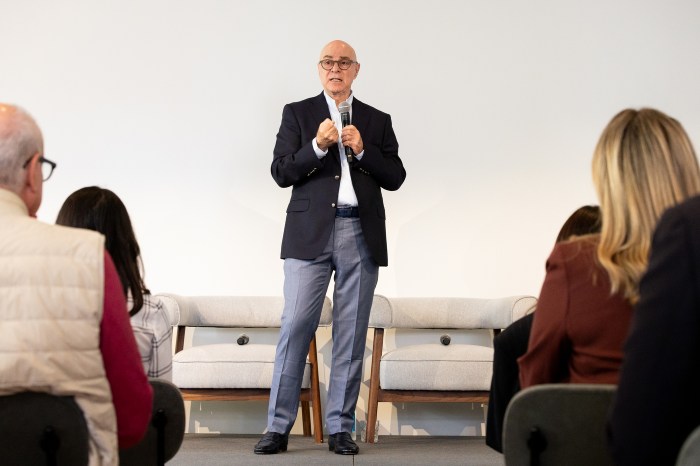

To kick off his speech in the British capital, Northeastern President Joseph E. Aoun asked attendees of the seventh annual Northeastern Global Leadership Summit for a show of hands.
Compared to the Industrial Revolution, which began on these shores about 250 years ago, Aoun posed the question to attendees: Do you believe that the impact of the AI Revolution will equal the Industrial Revolution? Or will today’s shift be greater?
The votes were split, with some raising their hand twice — “cheating!” he reprimanded the indecisive. The summit presented an ideal time to explore the “profound difference” between these two paradigmatic shifts, said Aoun, the author of “Robot-Proof: Higher Education in the Age of Artificial Intelligence.” The Industrial Revolution put powerful new tools in the hands of humans but it remains an open discussion whether AI will simply augment our abilities.
AI is the first entity of our creation that can act autonomously, make its own decisions, and define its own journey, he explained. As Silicon Valley researchers strive for superintelligent AI that is “superior to us as human beings in all endeavors,” we must confront the power of AI to not simply augment but displace humans.
“We, as a society, are going to face a constant balancing act between AI agency and human agency,” he announced. “From this perspective, the role of humans is going to be called into question, and I believe that human centrality has to be reasserted and redefined in this changing environment.”
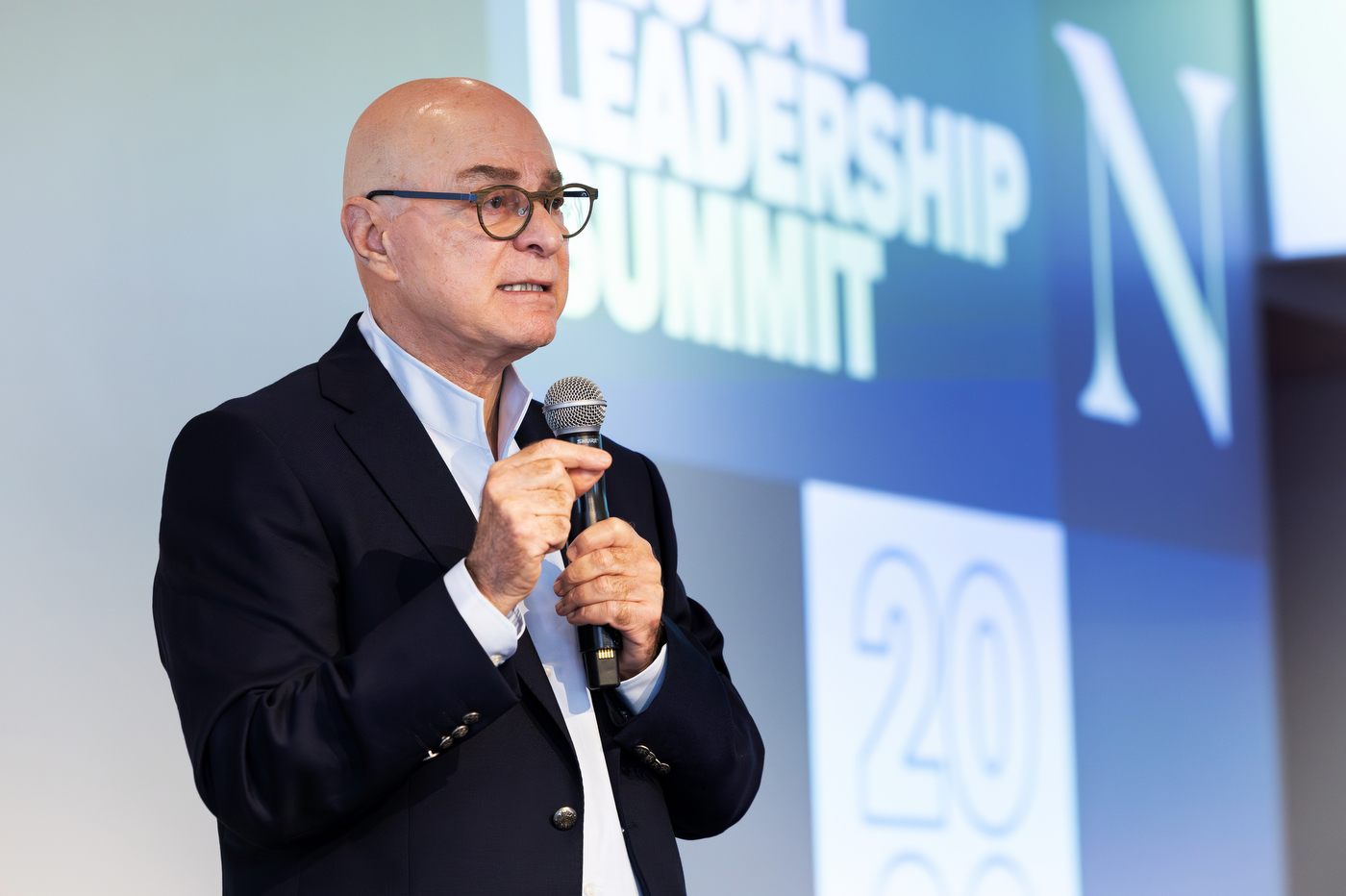
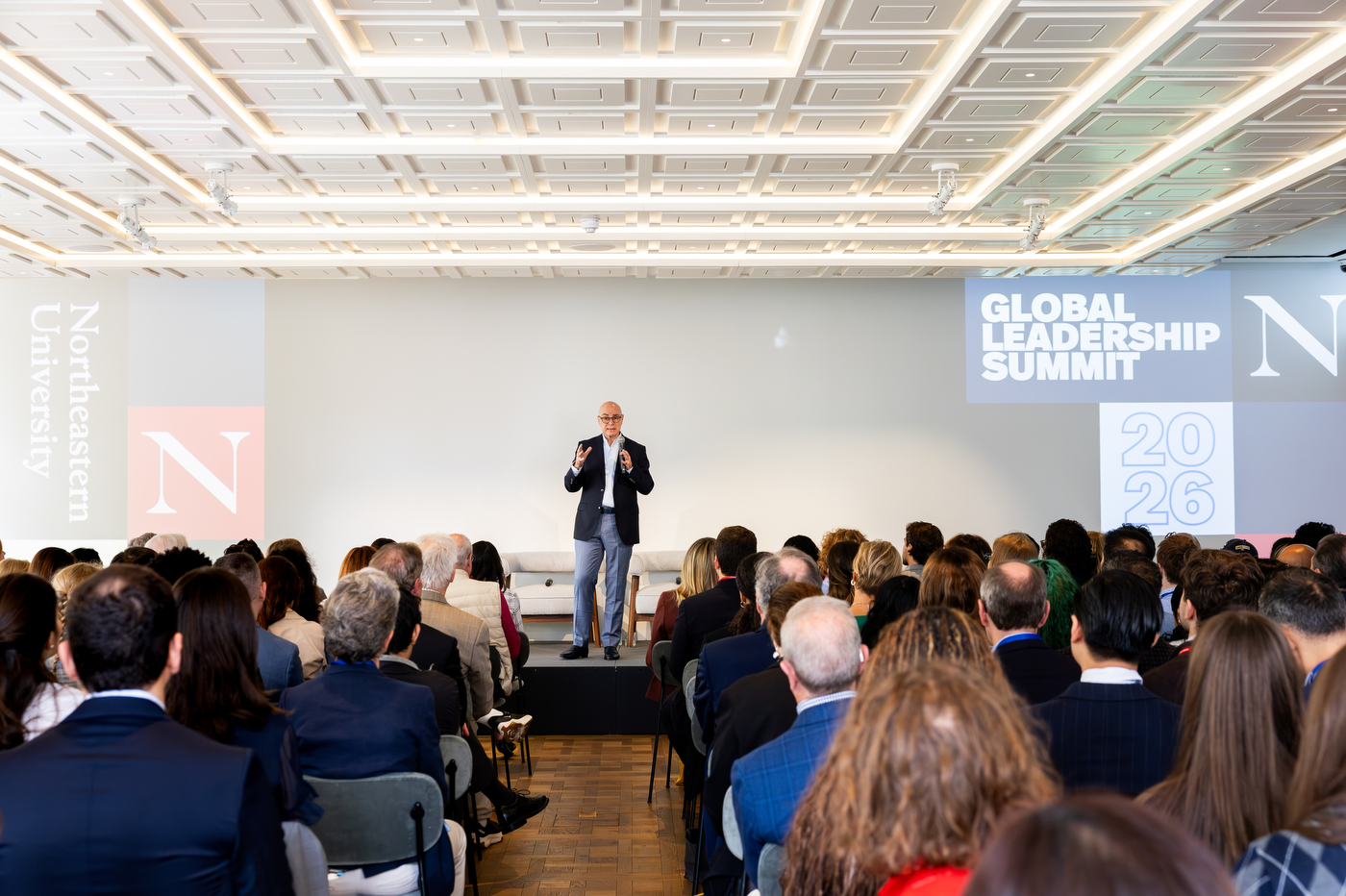
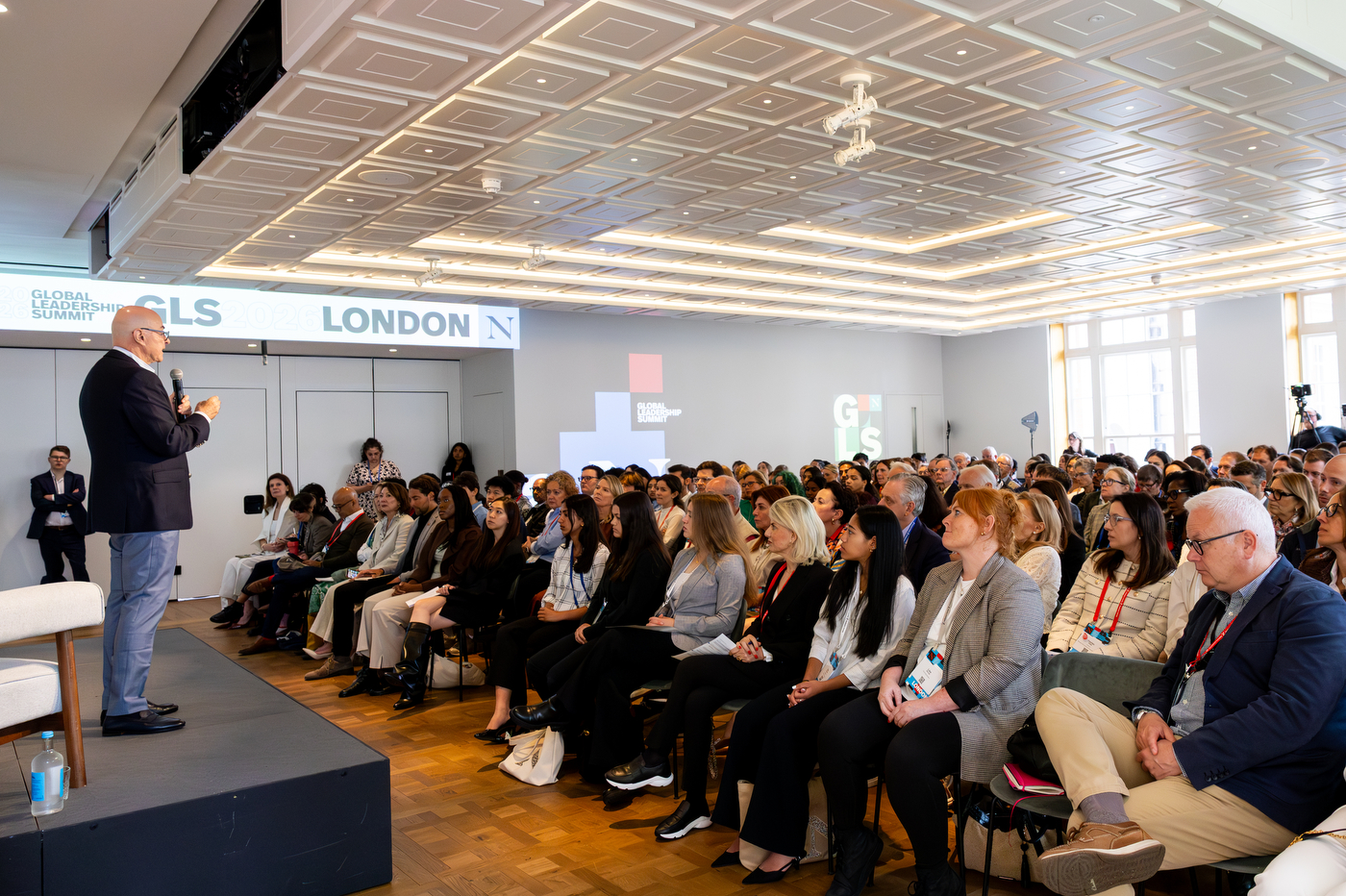
Aoun argued that despite the extraordinary abilities of AI, human minds and diverse communities possess qualities that no AI system can match. Echoing the summit’s theme, leadership in the age of AI, he argued that humans will be more vital than ever as voices to guide societal development by setting goals driven by our notions of justice, ethics and community values.
Higher education split on AI
Universities’ responses to the dawn of AI could scarcely be more divided, Aoun explained. Some institutions have tried to banish AI. Others are taking a different approach.
In his 20 years at the helm of Northeastern, Aoun has led a proactive embrace of AI, including in the university’s 2015 Academic Plan, which foresaw far-reaching impacts. In London, Aoun said that “humanics,” an approach he defined in his book “Robot-Proof,” is key to this new approach toward knowledge and learning. Humanics comprises literacy in technology and data, as well as human literacy. Humans have the ability to do “far transfer,” he said, meaning to transfer knowledge between domains, as Northeastern students do when they apply lessons learned in the classroom on co-op.
Rather than suppressing AI’s abilities, education should enhance the uniquely human qualities. Universities that find students are getting ChatGPT to write essays can either respond by trying to erase the tool or understand that “we did it for a long time along certain parameters, those parameters are obsolete. So we have to change ourselves.”
“We can reassess the way we’re assessing,” he said, for example, by handing students essays written by ChatGPT and Gemini, and asking them to examine the knowledge gaps and hallucinations.
We have to define our own story
Editor’s Picks


Higher education can reaffirm its relevance in this new AI age, if educators reflect on their mission. “Our mission is not to preserve knowledge and disseminate it. Our mission is to put human beings at the center again, which means that our education has to focus on each student and on the community of students,” he said. “We are also responsible for creating new discoveries that are going to augment human beings and not relegate them to the side.”
“The students, in many ways, are ahead of us, because they are the first AI generation,” he said.
For an expansive discussion, Aoun was joined on stage by Northeastern graduates and entrepreneurs Cynthia Orofo, CEO of Culture Care Collective, a healthcare startup that helps organizations connect clients to local health resources; Kat Tse, Founder of the fashion and music publication Terms and Conditions Magazine; and Austin Grippo, AI strategy lead for Salesforce, the cloud-based Customer Relationship Management platform.
Grippo hit back at the idea that entry-level jobs are set to be eliminated by AI, “because our talent pool of young talent is so important,” he said.
Orofo and Tse are both winners of Northeastern’s Women Who Empower Innovator Awards that recognize bold and creative changemakers among the university’s entrepreneurial community. They brought the perspective from two worlds that have largely remained preserves of humanity, healthcare and the creative arts.
“Being a nurse and working in that space clinically, a lot of things are done the way that they’re done because they’ve been done that way for many, many, many years,” said Orofo.
“Similarly, in the magazine and the creative world, storytelling is a big part of it,” Tse said
Aoun replied that storytelling potential is another fundamental human quality that AI is attempting to augment. “Human beings and societies over history have been storytellers,” he said. “Notions like the nation state are based on a story. You can talk about religions based on a story.”
Transmitting stories is part of what binds us together. “Why are we here together?” he asked. We could have held a Zoom “but we came here in order to affirm the fact that we are a community, we are a global community. We have a story which is a Northeastern story.”
Faced with one pessimistic story – that AI threatens to disrupt all we value – we can tell another. “And that’s why you are here, because we’re building our own story.”


