‘Fairytale game.’ The data shows how Cape Verde does it again.
Cape Verde’s first two games in the World Cup have been draws. It’s how they’ve gotten there that’s been surprising.
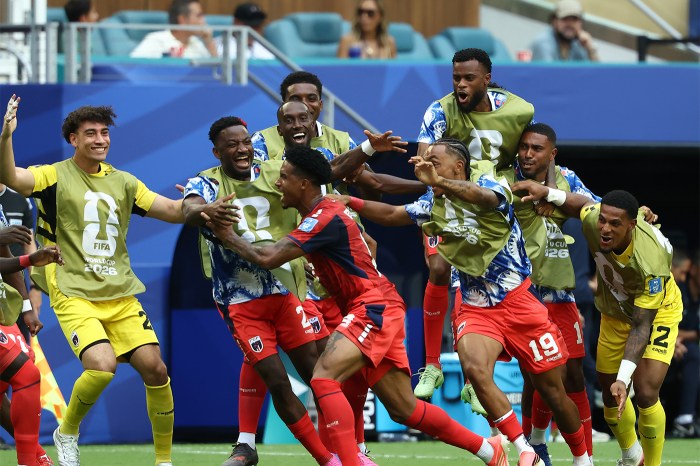

Cape Verde turned in another thrilling performance on Sunday in a 2-2 draw with Uruguay, this time with a much different style of play than in their first game, according to the data.
In its previous game, against Spain, Cape Verde’s goalkeeper made seven saves in an historic performance, and Cape Verde only had three successful dribbles. But against Uruguay, they more than tripled the amount of successful dribbles (11) and were much more willing to push the tempo and carry the ball up the pitch.
See the dribble map graphics below that illustrate this point. The map against Spain is much sparser because Cape Verde had to spend more time and energy on defense against a dynamic Spain offense. But against Uruguay, which is also a strong team, Cape Verde was able to push the action much more often.
In the graphic above (Cape Verde vs. Uruguay), you can see a long dark red line on the right side; that was a long carry that led to a free kick that gave Cape Verde its first goal. The graphic below shows that goal.

Cape Verde’s second goal came on a giveaway by Uruguay, where again Cape Verde’s aggressive style turned into a goal. The graphic below shows a “won ball” by Uruguay, with Cape Verde midfielder Helio Varela dribbling past the goalkeeper who had come far out of his net, and scoring a goal from outside the scoring box.

Both Cape Verde goals had quite low xG (0.02 and 0.27). xG stands for expected goals, a metric that measures the probability of any given shot resulting in a goal, based on factors like distance, shot angle and defensive pressure.
Read more World Cup analysis on NGN Offside →
“They had a fairytale game,” said Brennan Klein, who leads Northeastern’s NetSI Sport research group.
Cape Verde’s next match is Friday against Saudi Arabia, with a win putting them in great position to reach the knockout round.
Data analysis provided by Brennan Klein, director for Northeastern University’s NetSI Sport research group.


