As the President rails against birth tourism in the US, experts say it’s a small problem
The U.S. and just a handful of other nations allow birthright citizenship as a right.
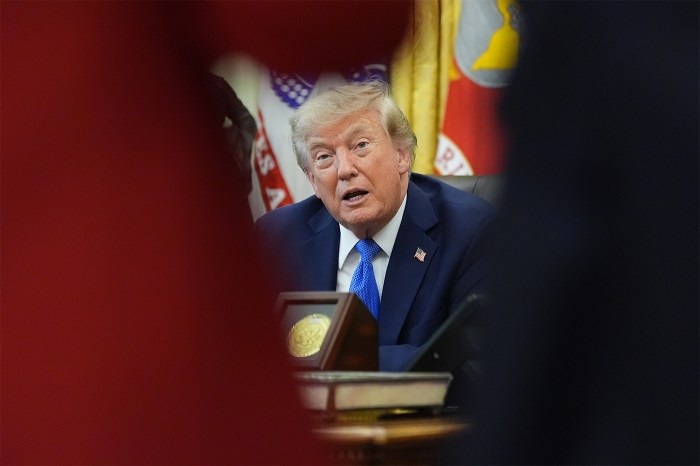

From appealing to the Supreme Court to issuing an Executive Order, President Donald Trump has made the idea of birthright citizenship a central issue for his administration to tackle.
The Supreme Court in June ruled against curtailing the 14th Amendment’s provision of birthright citizenship, or the idea that anyone born in the U.S. — with some exceptions — is automatically a citizen. Following that unsuccessful attempt, Trump recently signed two executive orders that continue to target birthright citizenship, including so-called birth tourism,” the practice of traveling to a country specifically to give birth there and have the child become a citizen and gain the accompanying rights.
One of the orders seeks to expand the number of exceptions to birthright citizenship, in other words, make more people ineligible for automatic citizenship. The other seeks to crack down on birth tourism by revoking, for instance, the number of travel visas from certain groups of people. Earlier this month, the U.S. State Department announced that it had revoked 175,000 visas from foreign nationals who have violated the terms of their visas, including more than 100 from North Africa for being alleged “birth tourist” parents.
The Executive Orders are likely to also face legal challenges, experts say. Northeastern University law professor Rachel Rosenbloom said, “I view the new executive orders as political theater. To the extent that it announces new exceptions, it is unconstitutional.”
Birth tourism is a problem that Trump has asserted brings countless women to the U.S., many paying intermediaries. He said at the Aug. 6 Oval Office signing of the orders that the number of babies born under “false pretenses” is in the “hundreds of thousands.”
But is there merit in those figures? Just how prevalent is birth tourism? Legal watchers and immigration experts say the problem is vanishingly small.

Nullam pulvinar aliquam arcu non porttitor. Mauris cursus, ante sed “In the real world, how many babies are we really talking about?” said Drew DeSilver, a senior writer at the non-partisan Pew Research Center, who has researched and written on the topics if immigration and policy.
Editor’s Picks


The Centers of Immigration Studies, a conservative group which supports lower levels of immigration, estimated in a study that looked at such data points as home addresses abroad, that there were 20,000 to 25,000 mothers who came to the U.S. for birth tourism in a one year period between 2016 and 2017.
That’s a fraction of non-citizen mothers – including both unauthorized immigrants and temporary legal residents. According to the Pew, these women were responsible for approximately 320,000 births in 2023, making up about 9% of all U.S. births of about 3.6 million.
Immigration lawyers and D.C. thinktank policy advisors, say birth tourism is not only rare in the U.S., but also across the globe. As a practice, even if someone claimed to be a birth tourist, it could only actually be possible in 33 of the 195 nations in the world, including the U.S., Canada, and Mexico, the Pew recently said in a report. And in most countries, a baby born to an undocumented migrant isn’t automatically a citizen.
“There are very few countries outside of the Western Hemisphere that would have what we call unconditional birthright citizenship,” DeSilver said. “In France, Germany, the U.K. (United Kingdom) it’s entirely a different thing,” he added, explaining that in those and other Western European nations, citizenship is linked to having at least one parent be a citizen or lawful resident.
Trump has never precisely defined the size of what he sees as birth tourism, said Boston-based immigration rights attorney Annelise Araujo. “But what I think he’s trying to do is equate all birth tourism to include the numbers of women who are putting down roots here.”
Still, experts aren’t optimistic about the power behind the new orders.
“If there’s one thing we know about President Trump, it is that he really doesn’t like to lose,” Rosenbloom said. “It may make him feel better to issue executive orders, but it won’t change what the Fourteenth Amendment says.”