12 players to watch in the FIFA World Cup 2026, according to the data
Northeastern University Network Science Institute researchers analyzed a comprehensive dataset and compiled a list of key players.
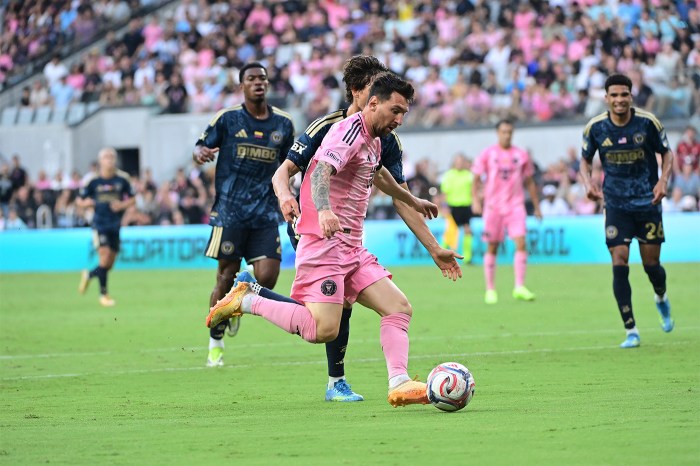

Who are the top players to watch in the FIFA World Cup 2026?
Northeastern University Network Science Institute researchers have analyzed an extensive, comprehensive dataset and compiled a list of key players.
Brennan Klein, assistant teaching professor of physics, leads a research team that pairs its study of complex networks with a passion for soccer.
The team’s secret weapon: the Hudl Statsbomb dataset, which logs over 3,400 events per match. Every pass, shot, dribble, tackle, pressure, ball carry and additional metadata — timestamped and pinpointed to the exact spot on the pitch where it happened. The dataset for the pre-World Cup analysis included more than 13,000 matches.
“We have really rich event representations that capture a lot of what to me is quite magical about the game,” Klein said.
Klein identified a dozen World Cup players to watch, based on their stats in different categories over their past season. However, the dataset doesn’t include France’s Ligue 1, which will be heavily represented in the tournament.
Northeastern Global News, in your inbox.
Sign up for NGN’s daily newsletter for news, discovery and analysis from around the world.
Overall threat
The top three players for overall threat are Lionel Messi of Argentina, Michael Olise of France and Vinícius Júnior of Brazil, Klein said, based on the data.
These three don’t just score and assist — they change the shape of a game. Klein measured “overall threat” using “on-ball value” — a metric that quantifies whether and by how much a player’s action increases or decreases their team’s probability of scoring on a given possession.
Messi’s numbers are staggering — 29 goals and 23 assists in the MLS since Aug. 2025 — but the data reveals something subtler too. “Even his moments that otherwise appear inconsequential have big implications for the success of the play,” Klein said. “That’s the magic.”
Operating primarily through the middle, Messi creates chances not just by shooting but by threading incisive through balls in behind the defensive line, according to the data.
Olise and Júnior work the flanks as classic wide forwards, driving into the final third and finishing inside the far post. Olise added another dimension with several corner kick assists.
The visuals below show lines representing each player’s goals and assists; goals are dark blue lines, passes for assists are dotted green.
Goal scoring
The top goal scorers to watch in the World Cup are Harry Kane of England, Erling Haaland of Norway and Kylian Mbappé of France, according to Klein’s analysis of the data.
Want to understand elite finishing? Look at xG — expected goals — a metric that estimates the probability of any given shot resulting in a goal, based on factors like distance, shot angle and defensive pressure. It judges finishers not just on whether they scored, but on the quality of the chances they took.
Read more World Cup analysis on NGN Offside →
By that measure, all three are elite, Klein said. Haaland scored 27 goals on 126 shots for Manchester City in the Premier League and outperformed his xG — helped by his knack for getting in behind defensive lines and receiving the ball in high-percentage positions. “He’s one of the best goal scorers alive,” Klein said. “Big, strong, fast, and crafty. You don’t see many shots from outside the box.”
Kane, is similarly lethal — 36 goals on 119 shots as a striker for Bundesliga club Bayern Munich — with the data revealing a pattern of finishing into corners with exceptional accuracy. Mbappé, meanwhile, is almost exclusively right-footed and rarely attacks the ball with his head.
The visuals below show each player’s attempted shots (at top) and the placement of the shot at the net (below). Filled-in circles represent goals; empty circles are misses. The larger the circle, the higher the xG.
Defensive Contribution
The players expected to make a strong defensive contribution are William Saliba of France, Luka Vušković of Croatia, and Antonio Rüdiger of Germany.
One name you need to know: Luka Vušković. “He’s going to leave this tournament quite hot,“ Klein said. “He’s incredible. A lot of clubs are really hoping to sign him.”
The data backs it up. Vušković is active all over the pitch — winning tackles, making interceptions, blocking shots, and clearing danger — with a particular knack for snuffing out pressure in his own defensive third before it can become a real chance. “He’s an exemplar defender in this tournament,” Klein said.
Saliba and Rüdiger tell a different story. Their defensive heat maps are sparse — because playing for elite club sides means they need to intervene fewer times. But when their teams need a stop? They deliver.
The visuals below for each player display various icons, each representing a different defensive action. They also display heat maps; the darker the area, the more time the player spent there.
Dribbling
Editor’s Picks


The most impactful dribblers, according to the data, are Lamine Yamal of Spain, Yan Diomande of Ivory Coast and Jérémy Doku of Belgium.
Lamine Yamal is coming off a hamstring injury but is expected to be available to play in Spain’s World Cup opener on June 15, barring any setbacks — and when he does, don’t look away.
“You just want to watch his highlight reels all day,“ Klein said.
Yamal posted eight attempted dribbles per match with an elite 2.30 on-ball value for Barcelona last year. Cutting in from the right flank, he consistently drives into dangerous areas and creates high-quality chances in the final third.
Yan Diomande, by contrast, roams the entire pitch — combining pressing and chance creation from both flanks. Klein expects him to be among the tournament’s most coveted unsigned talents when it’s over.
Jérémy Doku of Belgium is explosive and direct: he drives down the left flank, cuts sharply inside, and puts defenders on the back foot with quick, decisive movement toward goal.
The visuals below for each player show lines that represent all the times the player dribbled; the darker and thicker the line, the higher the on-ball value.