Audiences love music created by humans, but AI can enhance it
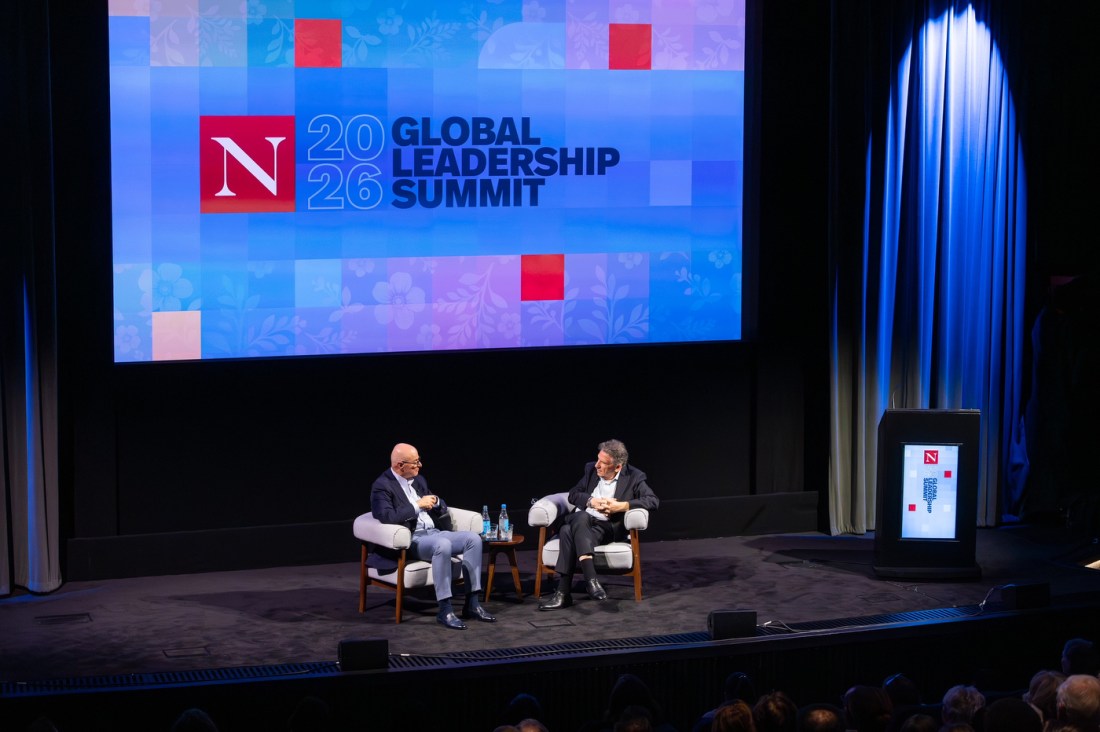
Sir Lucian Grainge, chair and CEO of Universal Music Group, spoke at the 2026 Northeastern Global Leadership Summit in London.
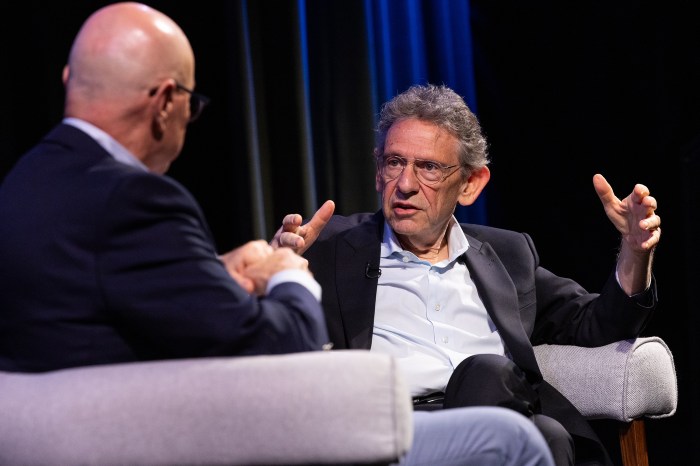

Audiences want to hear music that emerges from a creative human mind – but AI has the power to enrich that experience, said Sir Lucian Grainge, chair and CEO of Universal Music Group, at the 2026 Northeastern Global Leadership Summit in London.
Giving the keynote address of the seventh annual Global Leadership Summit at the British Academy of Film and Television Arts in London, Grainge said that music lovers remain unwaveringly fascinated by authenticity and human imagination. As record industry executives worldwide question how to engage with the transformative technology of AI, Grainge told the full-house audience that AI offers the opportunity to augment rather than replace the human heart of music: “The beauty of someone’s creativity can be harnessed and expanded as a result of this technology.”
In central London, he sat down with Northeastern president Joseph E. Aoun to discuss innovation and human creativity in the age of AI as the closing session of the summit, which convenes entrepreneurs from all over the world and facilitates discussions around groundbreaking ideas.
Grainge, recognised as the most influential leader in global music, has encouraged audiences and artists to recognise that the emergence of powerful AI technologies presents opportunities as well as risks. This year UMG has signed a deal with Spotify to allow a tier of premium users to create covers and remixes of songs by participating artists, as part of its AI-enabled superfan initiative. The technology offers “hyperpersonalization” and the chance to “remix your relationship with what we love, within a walled graden” he said.
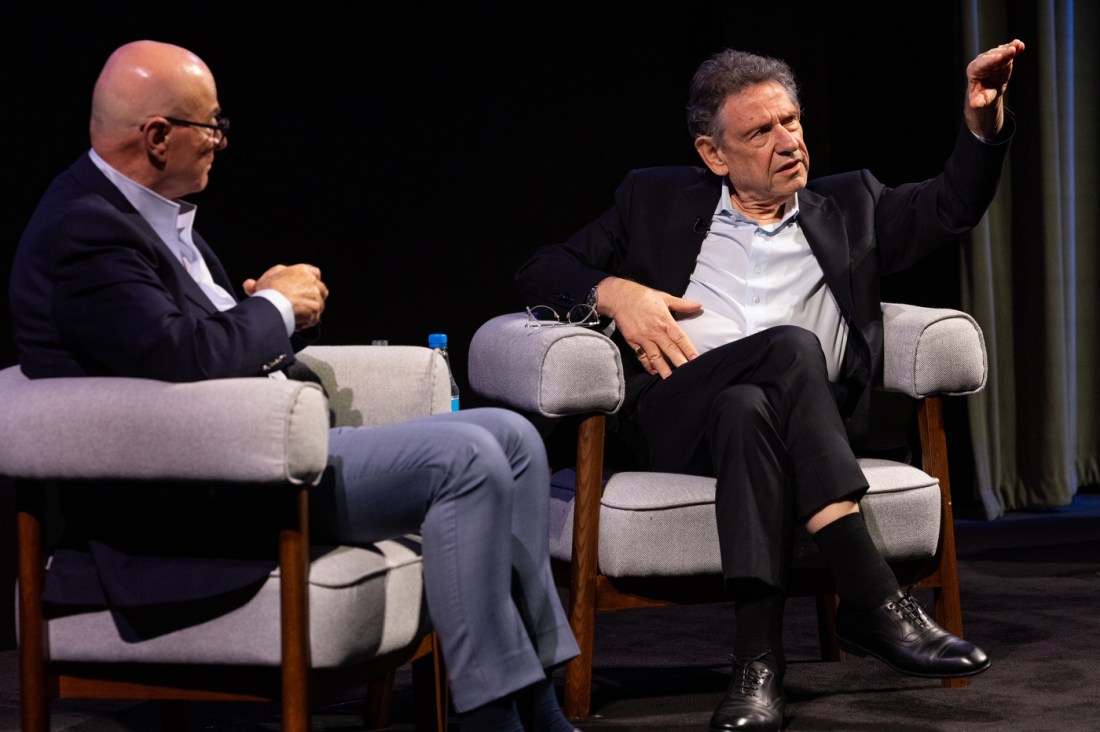
These technologies could allow subscribers to play guitar on with rock classics, harmonize backing vocals with girl-groups or create a reggae version of a new pop release, he said. These possibilities should be on offer “as long as the artists opt in,” he stated. “I’m critically sensitive about that. They have to want to be part of it.”
A disruption-spanning career
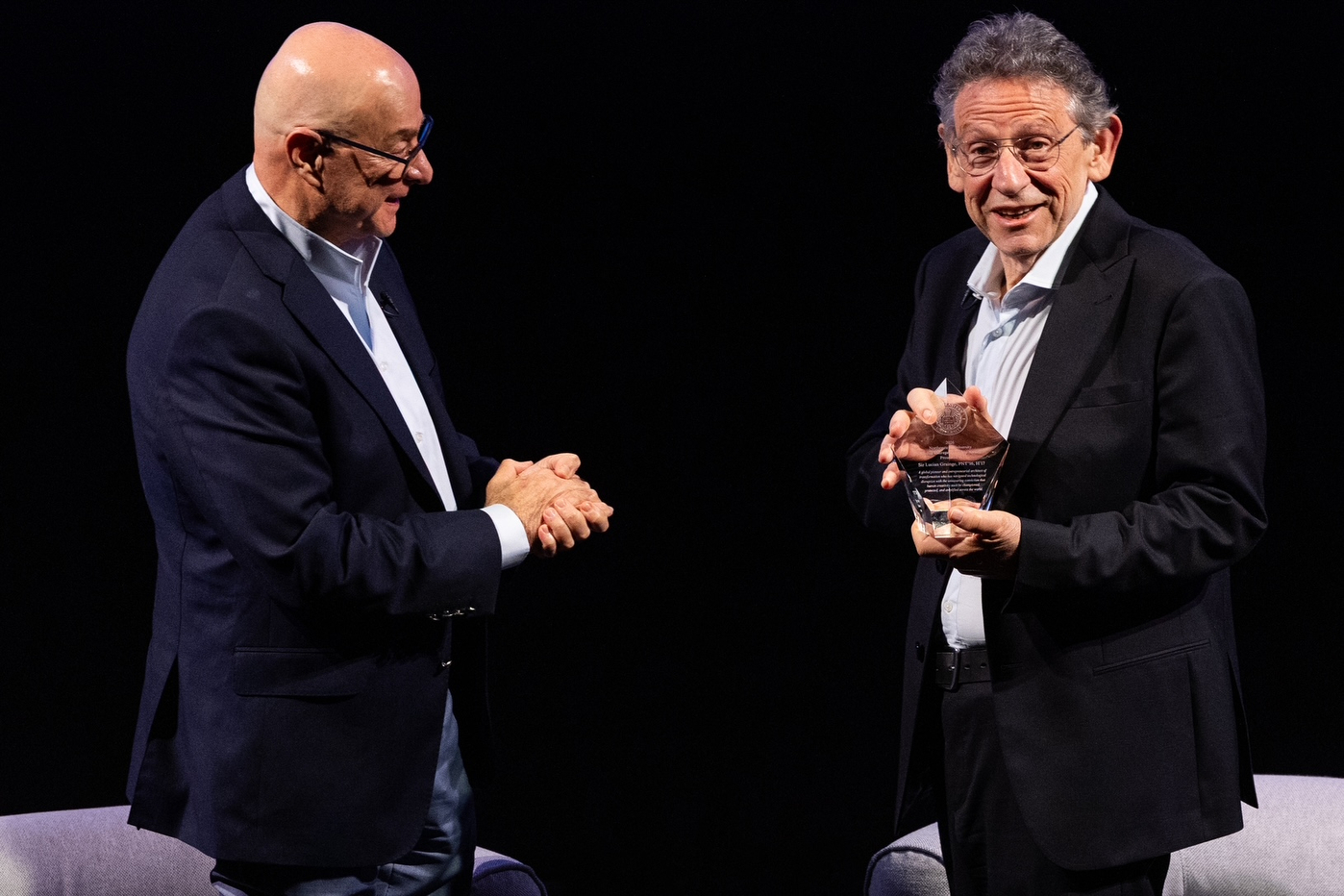
Grainge has navigated eras of tech change, since the cassette era to the age of AI, said Diane MacGillivray, senior vice president for University Advancement at Northeastern University. MacGillivray called him a true pioneer: “Someone who has not only shaped an entire industry, but continues to define it.”
Grainge began working in the music industry in the 1970s and has signed and worked with some of the world’s biggest stars including Elton John, Rihanna, The Rolling Stones, Amy Winehouse, The Weeknd and Migos.
He joined Universal Music in 1986 his continual rise culminated in his promotion to Chairman and CEO in 2011. The following year he led UMG’s takeover of legendary British record company EMI. He is considered by many to be the most influential person in music and has topped Billboard magazine’s annual “Power 100” list a record-breaking eight times.
In recent years he has built a reputation for betting against the pessimism around the music industry, during a period when revenues from traditional physical sales formats have collapsed and streaming has become the dominant revenue driver.
Aoun recalled the dawn of streaming, when many in the industry opposed it: “You said: ‘This is the turning point for me, content is going to be king. And therefore I’m going to make agreements with streamers — but I’m not going to get an agreement with one of them but all of them, because I don’t know which one is going to survive. We are in a similar situation with AI.”
The record industry has experienced 11 consecutive years of growth since bottoming out in 2014, with global revenues passing $30 billion for the first time in 2025, according to the latest Global Music Report by the International Federation of the Phonographic Industry. More than half of global revenues are now accounted for by paid streaming services, and Grainge was instrumental to the birth of today’s streaming services when he licensed UMG music to Spotify for its 2011 launch in the United States.
Editor’s Picks


Grainge said he sees today’s new tech in the longer history, from sheet music, through vinyl, to electronic music. He recalls when electronic synthesizers came along, there were widespread fears that it would kill off demand for musicians, opera houses, and concert halls, which failed to materialize.
Grainge concluded the talk by saying he hopes generative tools can sometimes help the blocked artist to get records made.
“I think AI is a brilliant stress tester for people’s imagination and people’s creativity,” he said. “If you’re a writer and you just can’t finish a song – you can’t get that middle eight, you can’t get the chorus, the lyrics don’t work – I think that technology can help you accelerate being the best of yourself on your best day.”
“I think that’s responsible AI, using the technology for brilliance, in the same way that sampling, when that came in, made an enormous difference. I mean, you wouldn’t have acts like Soft Cell or Human League, Depeche Mode, or any of them, without that technology.”