As Pokémon cards explode in value, should you too invest in cardboard?
Unlike the Beanie Baby craze that fizzled at the turn of the millennium, Pokémon cards today have the potential to be part of an investor’s diverse portfolio — provided they understand the risks, experts say.


It’s no secret that Pokémon cards are popular. But did you know that some cards can fetch thousands — even millions — of dollars?
Social media influencer and WWE star Logan Paul recently sold a vintage and rare “Pikachu Illustrator card” for an eye-popping $16.5 million — a sum that promptly earned a spot in the Guinness World Records. Paul reportedly netted more than $8 million after fees from selling the card on Goldin Auctions, a leading auctioning platform for trading cards and collectibles.
The historic sale bookended a white-hot year for the 30-year old collectible franchise, which has already raked in more than $100 billion in lifetime revenue across video games, trading cards, television, films and merchandise, according to Statista, an online market research firm.
According to The Wall Street Journal, Pokémon cards, which the Japan-based company behind the video-game turned global cultural phenomenon began printing in the late 1990s, can fetch up to a 3,000% return. And Ken Goldin, founder of Goldin Auctions, touted the cards and collectibles as viable alternative investments on CNBC’s “Squawk Box”.
Cao Fang, assistant teaching professor of finance at Northeastern University, who has studied experimental finance, said that unlike the Beanie Baby craze that fizzled at the turn of the millennium, Pokémon cards can be part of an investor’s portfolio — provided they understand the unique risks inherent to owning so-called collectibles.
Fang said Pokémon cards behave less like traditional financial assets and more like art, deriving value not from cash flow, or the ability to generate income, but from scarcity, cultural appeal and “organic demand.” A market for collectibles forms when there are groups of people willing to pay a specific price for an item, and it’s sustained when the demand for that item attracts new buyers.
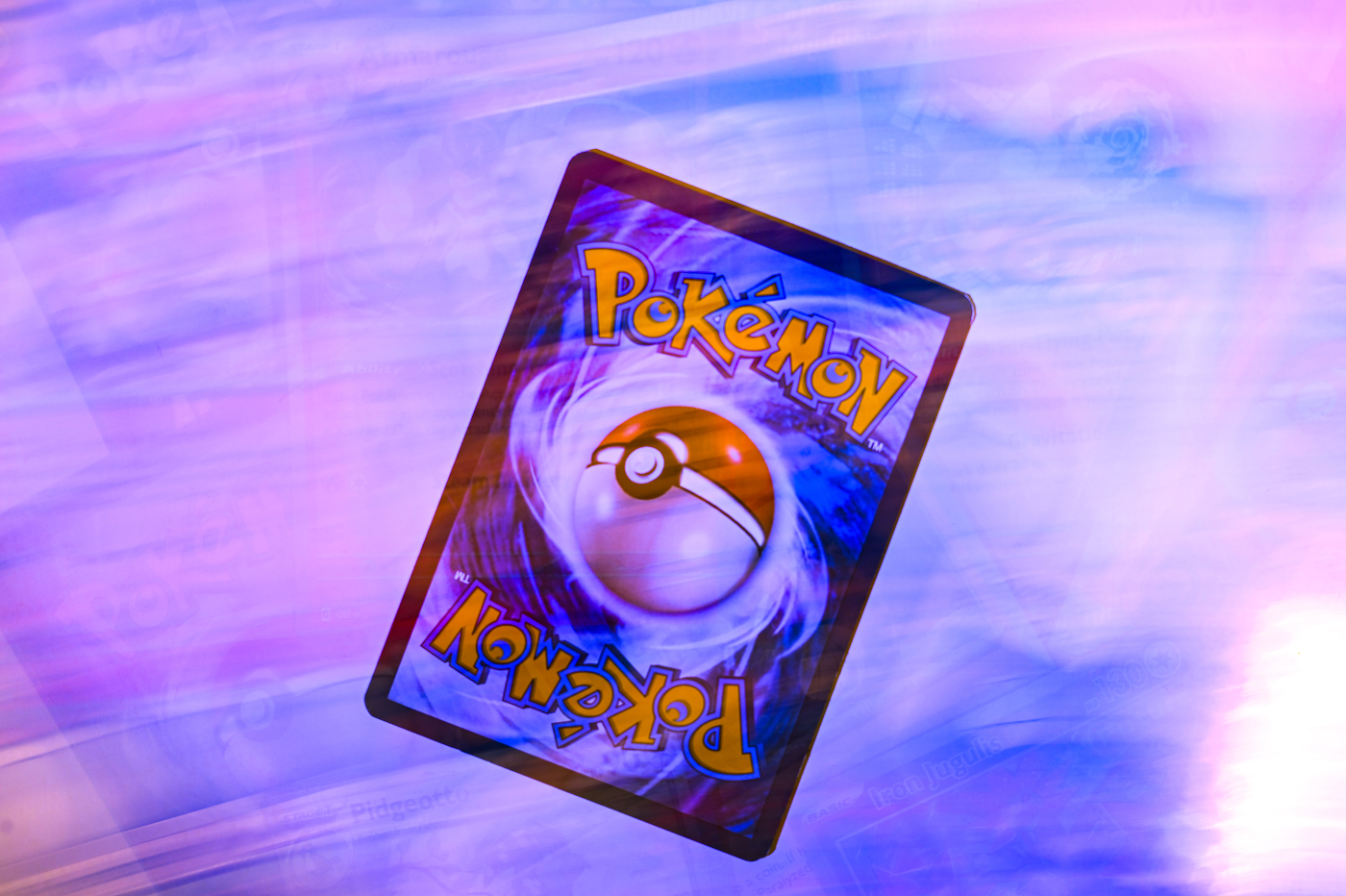
Scarcity, or how much of an item is available at any given time, and rarity, how difficult it is to acquire, play a role in determining prices as well, Fang said. But the intangibles also matter, she said; the “attachment, happiness and emotional satisfaction” associated with owning a collectible shapes market prices as well.
“It’s very hard to separate that personal satisfaction — the enjoyment of engaging with the culture of Pokémon — from the investment aspect,” she said. “Even if you don’t make money on your investment, as long as you don’t invest too much, you still enjoy the experience.”
Northeastern Global News, in your inbox.
Sign up for NGN’s daily newsletter for news, discovery and analysis from around the world.

Depending on who you talk to, Pokémon cards could be seen as so-called alternative assets. Fang said the definition of “alternative” investments is fluid, shifting with whatever investors consider mainstream at a given moment in time. Asset categories such as private equity and venture capital, once seen as alternatives to traditional stocks and bonds, have become more mainstream. Periods of inflation or currency devaluation can also push some investors toward alternative assets, experts say.
As that boundary moves, newer classes of investments — from real estate and rare coins to collectibles like Pokémon cards — emerge to take their place, Fang said.
“Alternative assets offer value because they may not move with the stock market,” Fang said. “A person’s stock can be going down in value, while at the same time their collectible may be increasing. So collectibles offer a diversification effect that is attractive to some investors.”
But not all alternatives offer the same stability or long-term reliability. For someone who wants to hedge against currency risk, there are other alternatives with longer and stronger histories of confidence — gold, real estate, art and other instruments, for example — compared with Pokémon cards, she said.
Featured Posts


Of course, dabbling in a collectibles market doesn’t come without downside risk, Fang said. Much like a Monet or Picasso artwork, Pokémon cards can’t be split into smaller denominations, which makes them impractical for everyday transactions.
It’s also why “these markets are not as accessible to the public as the stock or bond markets,” she said.
And because trading cards possess little intrinsic value, the market is strongly tethered to how people feel about the Pokémon franchise, which went through a period of stagnation in the 2000s in which many collectors moved on from the hobby altogether. Pokémon remains subject to shifting cultural trends, meaning prices can swing dramatically with hype cycles, said John Bai, Northeastern professor of finance.
Additionally, as collectibles continue to climb in popularity, the market increasingly depends on trusted third parties — from auction houses to grading services and other middlemen — to authenticate items and offer transparency to buyers and sellers.
Take eBay, an e-commerce platform through which millions of collectibles are bought and sold, for example. Companies like eBay must act as “impartial third parties,” connecting buyers and sellers in an “open and transparent” way.
“The reputation of these companies is everything in these markets,” Fang said.
Bai is less optimistic that Pokémon cards will outperform traditional markets in the long-run, not least because they do not yet have a proven track record of performance spanning multiple decades.
“This is a very speculative market,” he said. “Buyers of this kind of thing should be very careful.”