Amid ‘profound challenges,’ Lois Cornell tells School of Law graduates to find their ‘True North’
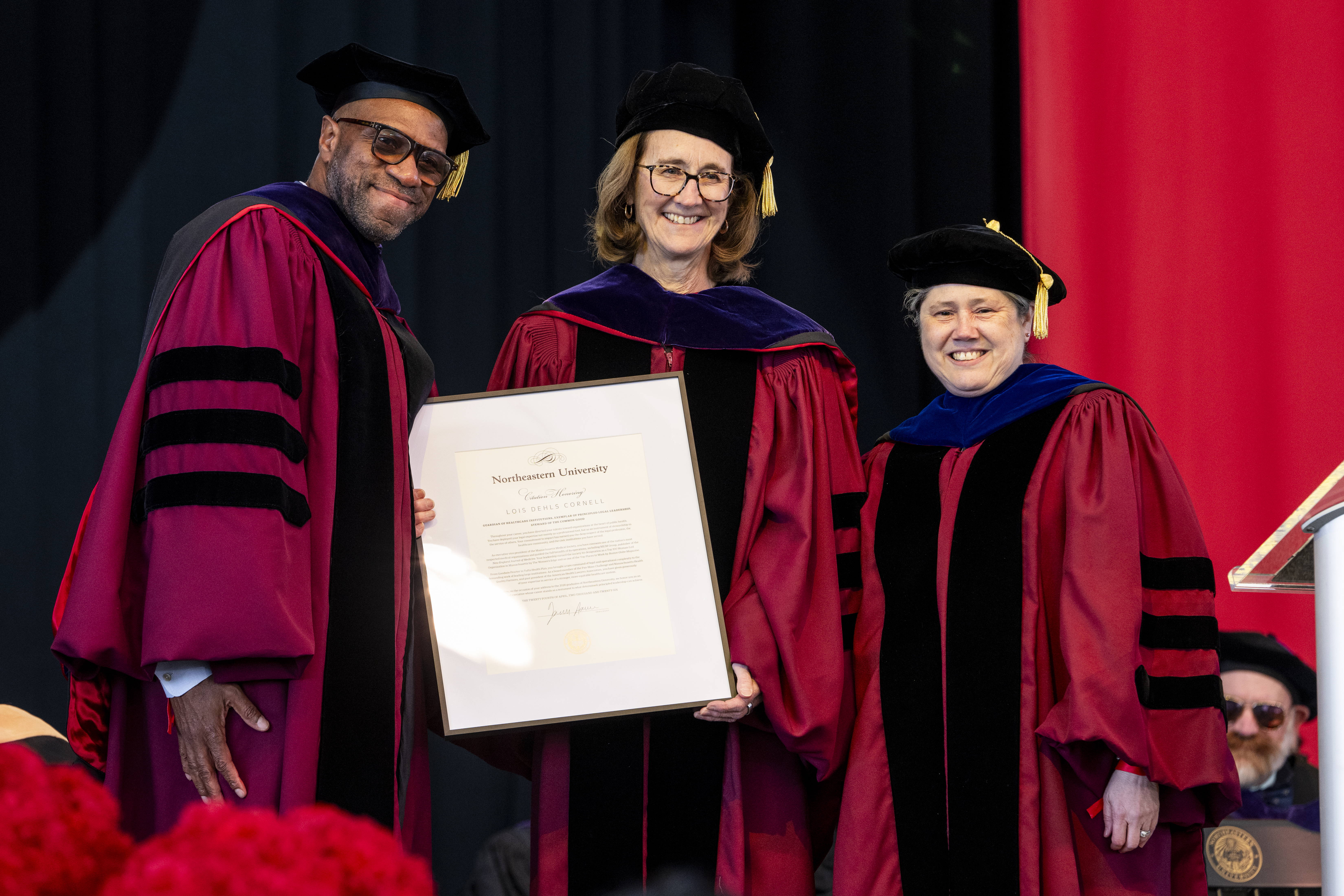
Lois Cornell brought a message of justice, advocacy and “remaining true to principles” to Friday’s School of Law ceremony.


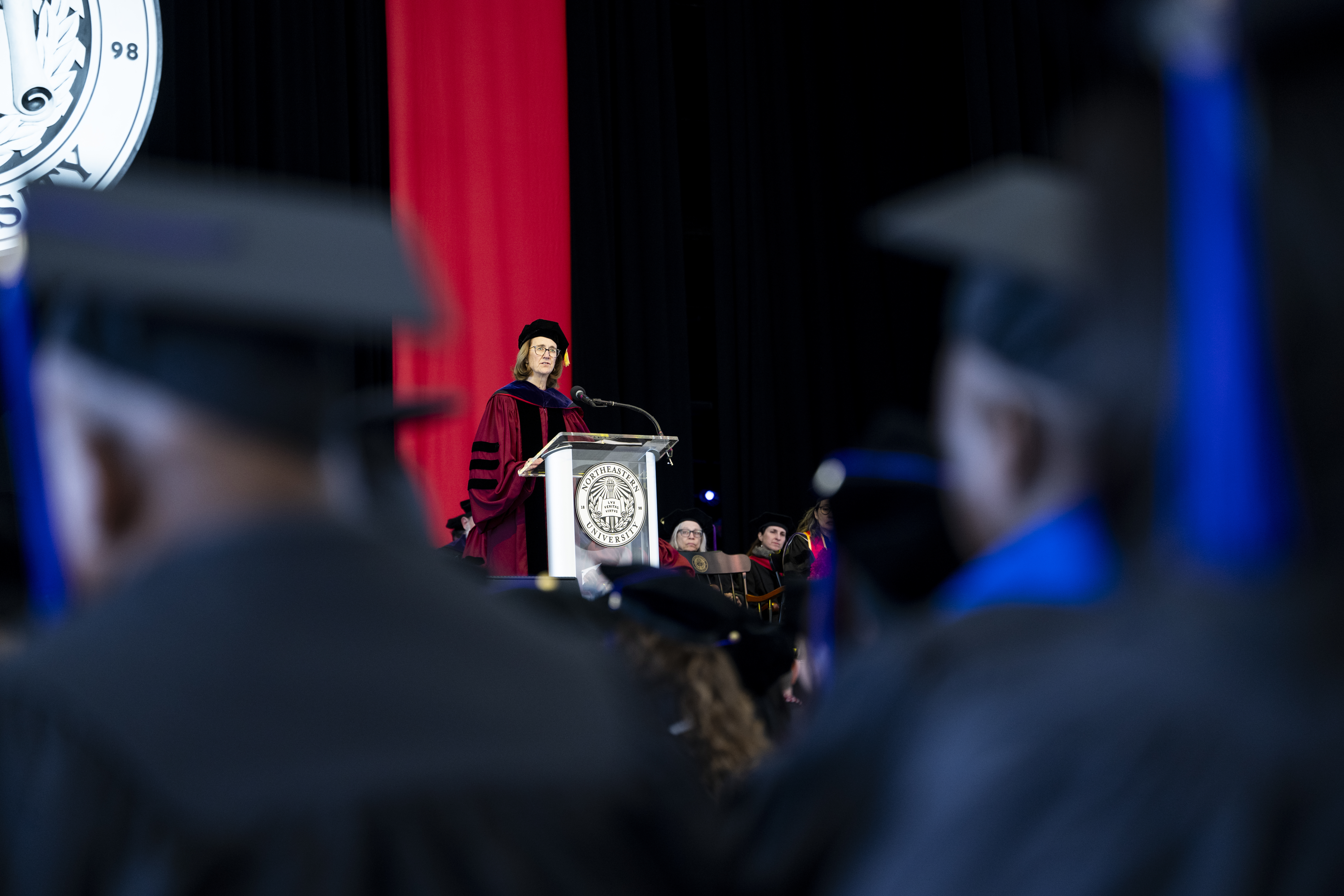
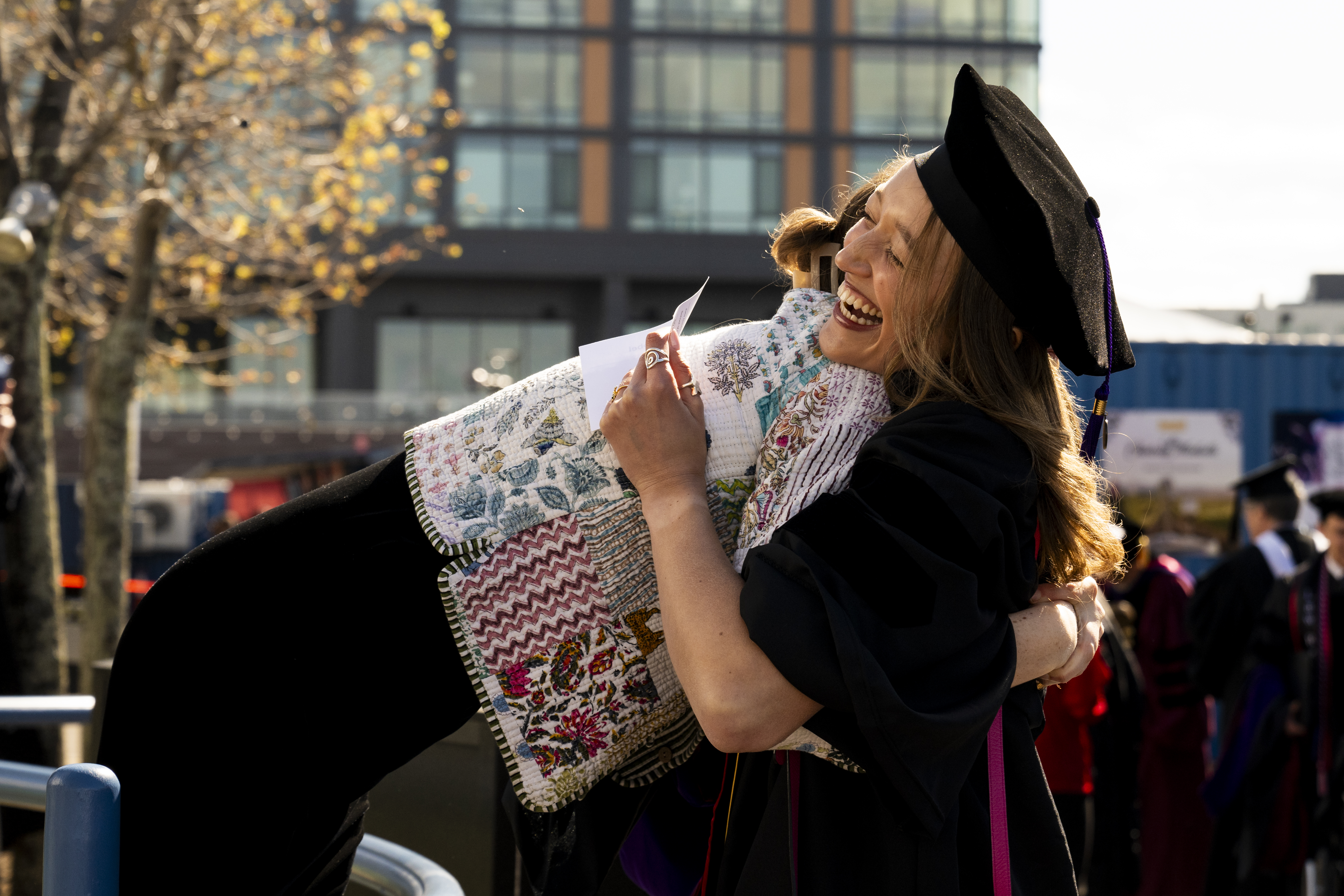
“Forty years ago, I sat where you are today, graduating from this law school,” Northeastern School of Law commencement speaker Lois Cornell told a crowd overwhelmingly dressed in black at the Leader Bank Pavilion in Boston’s Seaport District.
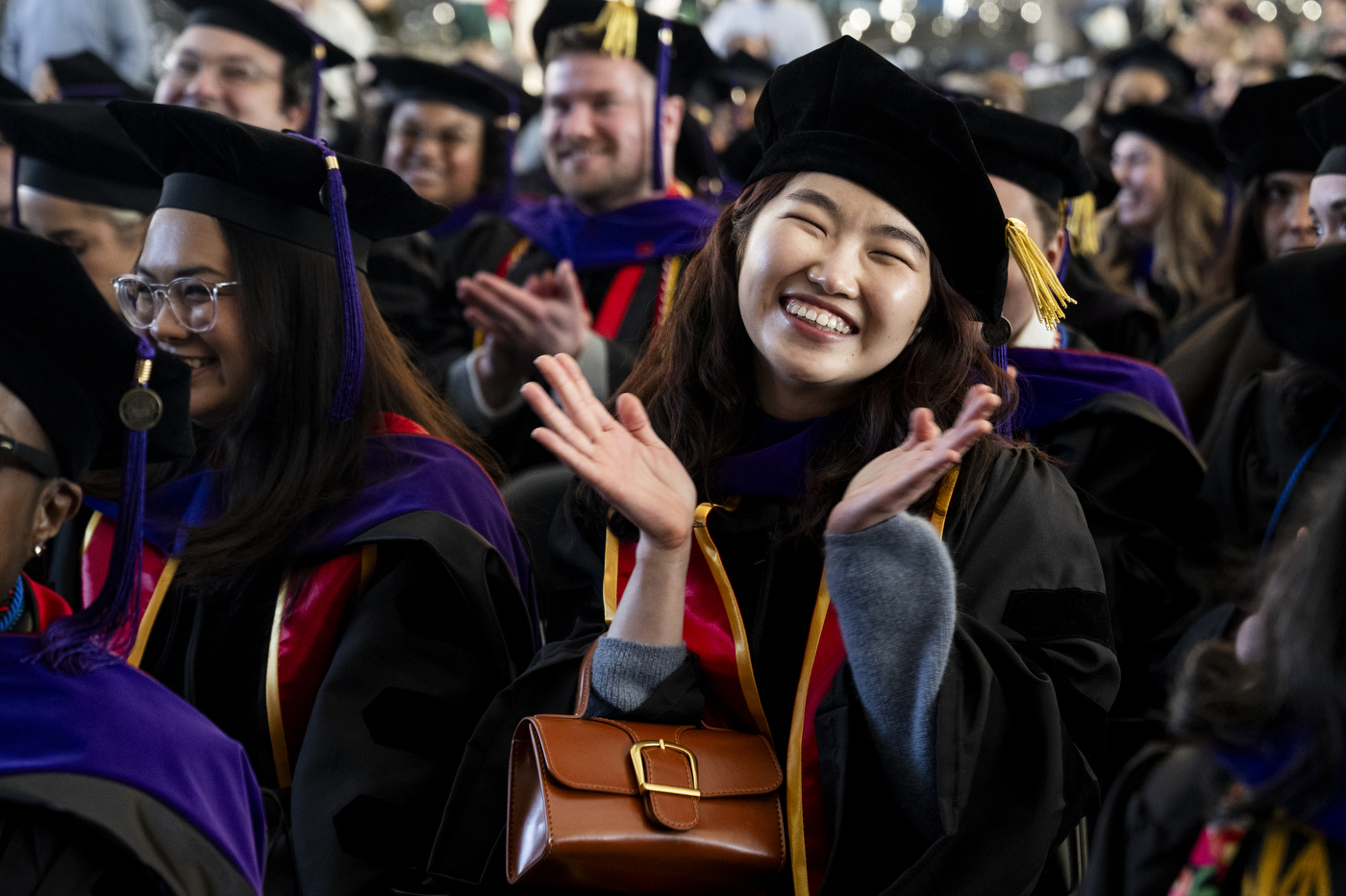
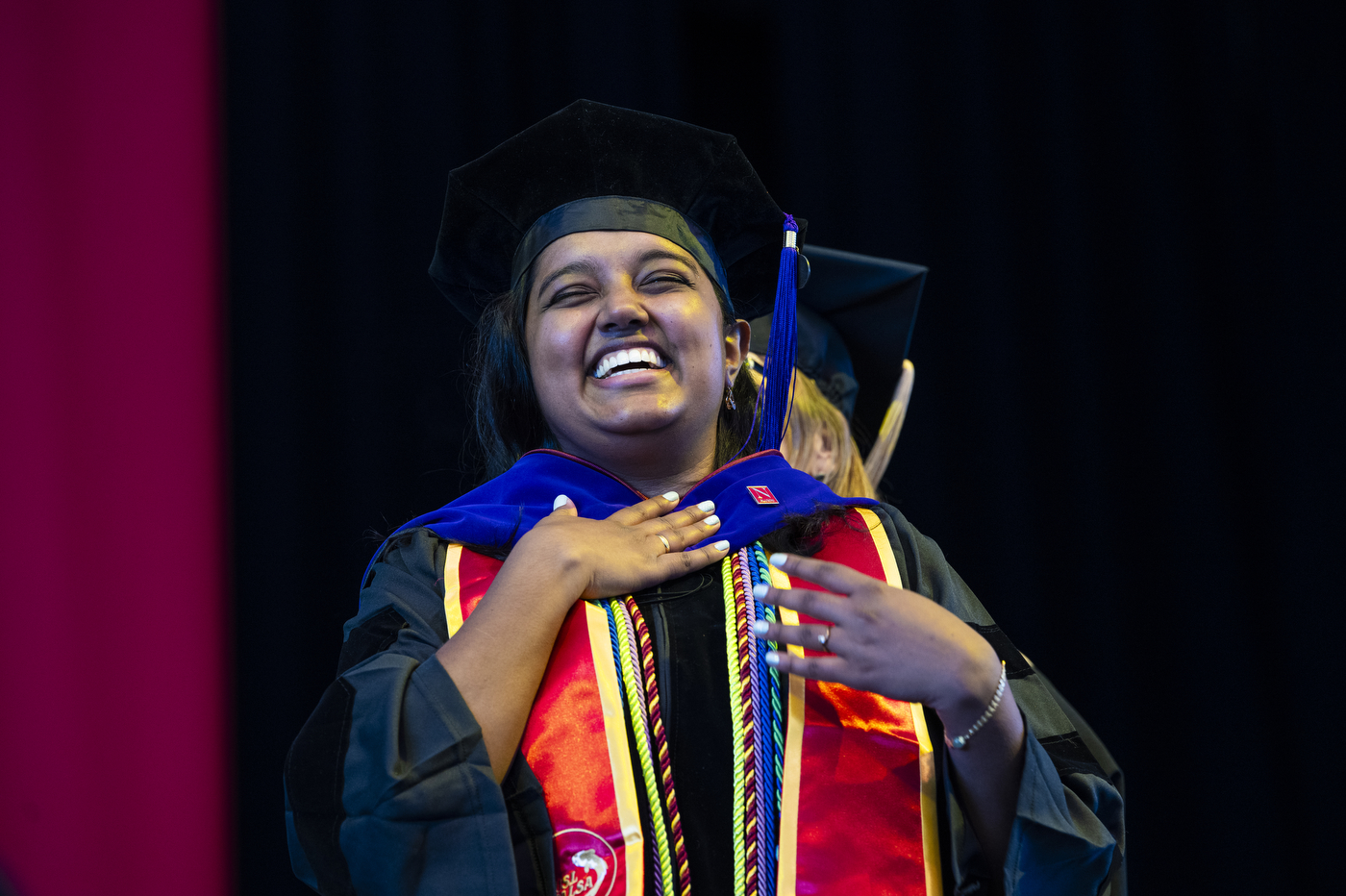
Cornell, who has served as the Massachusetts Medical Society’s executive vice president since 2016, was one of about a half dozen speakers present for the law school’s commencement exercises, which took place on a breezy but sunny Friday afternoon. The 308 graduates who were present were recognized and hooded as candidates for the juris doctor, master of laws and master of legal studies degrees.
Over the course of her 10-minute speech, Cornell brought a message of justice, advocacy and “remaining true to principles” — one that touched on some pressing issues of the day.
“As you graduate, you face a range of profound challenges — the political climate and federal policies affecting the rights of individuals in our country, rapid technological changes, the rollback of environmental protections, and ongoing wars and global upheaval — all of which create a deep sense of uncertainty.”
In the commencement opening, School of Law Dean James Hackney highlighted the scale and impact of the graduating cohort’s work as well as of notable faculty.
Four School of Law faculty members are soon moving to faculty emeritus status, he said, including professors Margaret Burnham, Karl Klare, Deborah Ramirez and Margaret Woo.
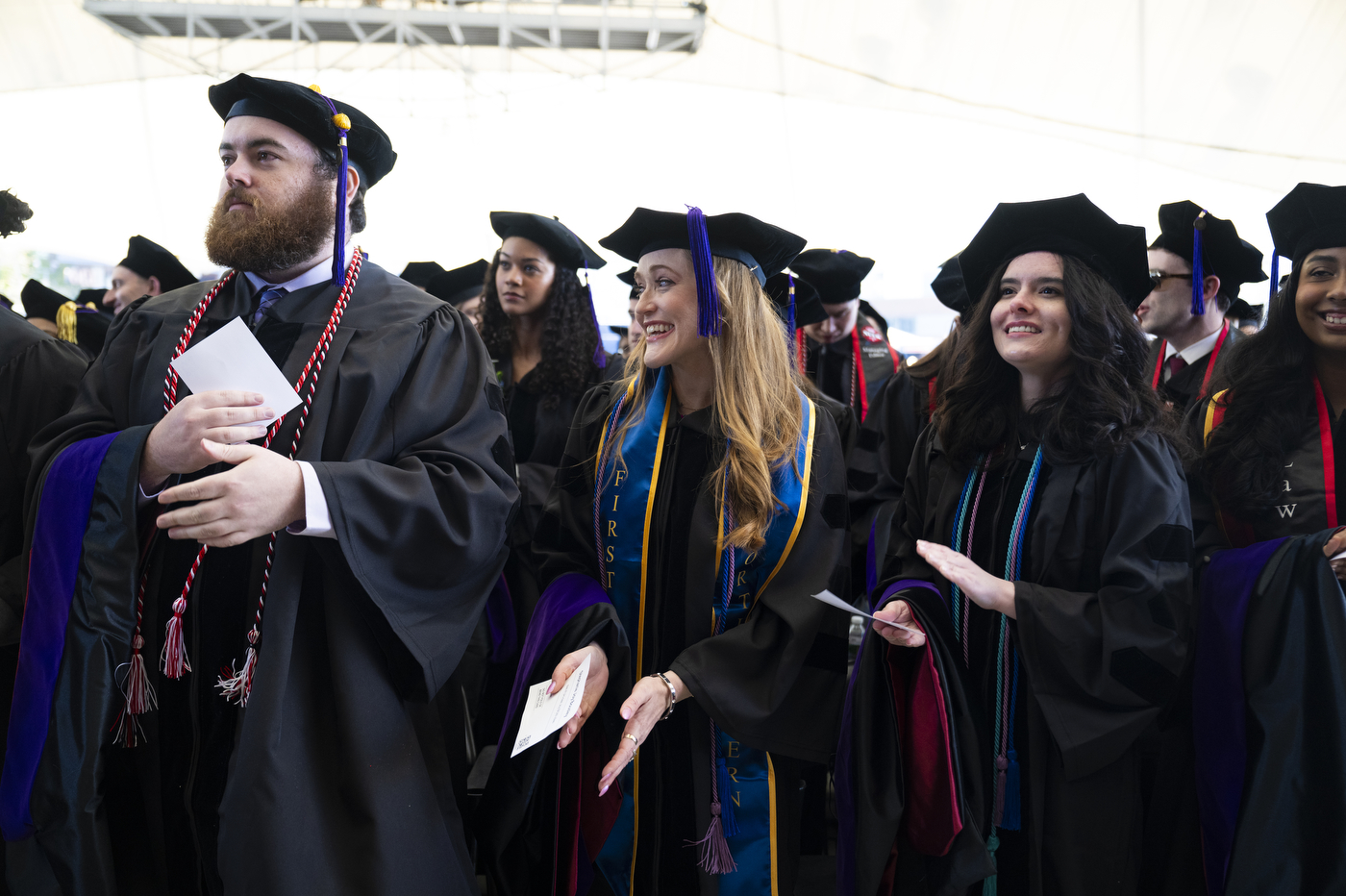
But the graduating class was the focus of much of the ceremony. Over the past three years, Hackney shared, the graduates completed more than 322,000 hours of legal work across 631 co-op placements, adding that more than 142,000 of those hours were dedicated to public interest roles.
“You came to Northeastern with a purpose, and you leave with the preparation to fulfill it,” Hackney said. “You lived our law school’s social justice mission and made a difference in the lives of those who too often suffer until lawyers like you help meet their needs.”
Their work also spanned 24 U.S. states and territories, and seven countries, he said.
Many of this year’s graduates have already secured jobs, including “prestigious fellowships, judicial clerkships, positions in major law firms and advocacy roles at leading public interest organizations,” Hackney said.
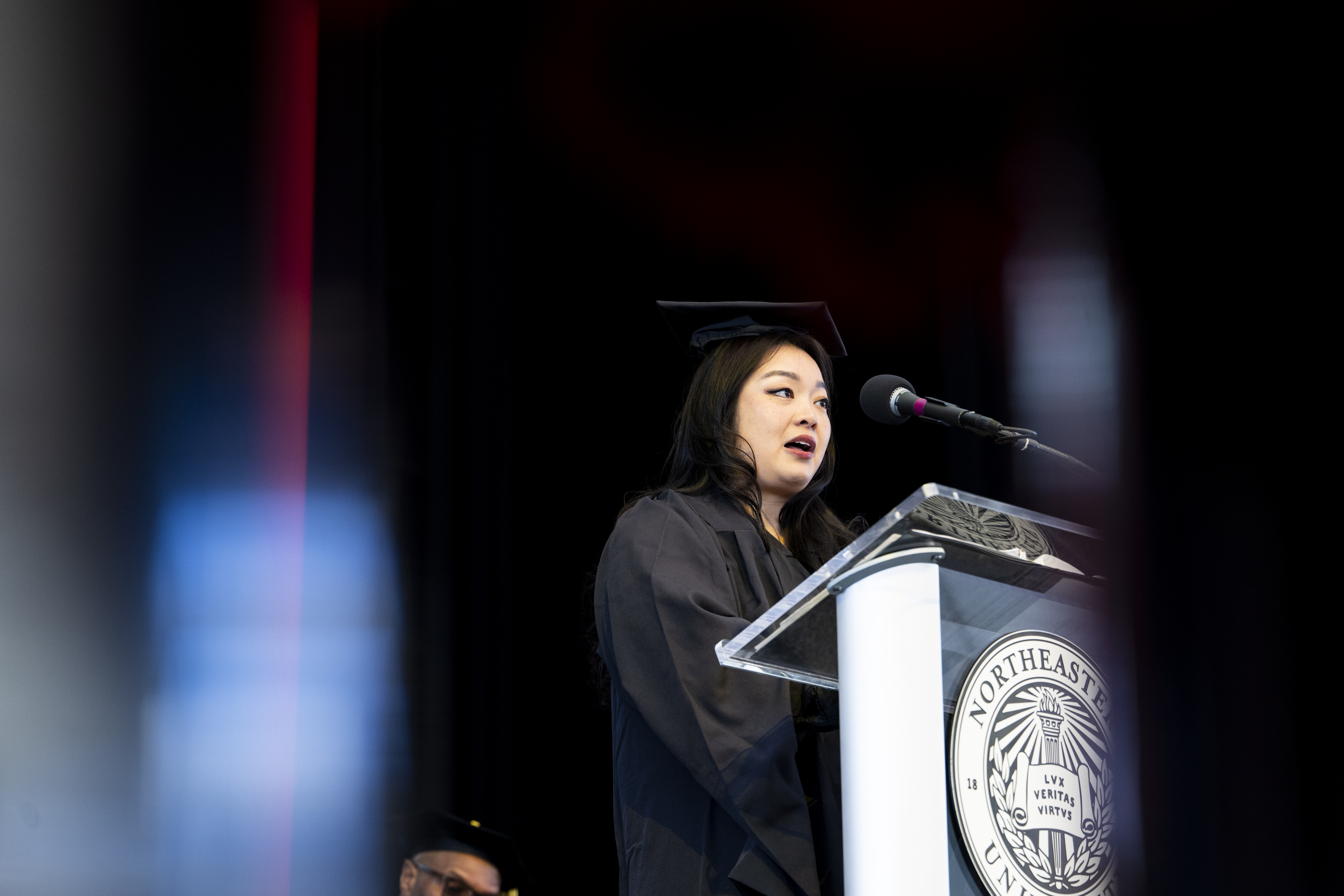
Speaker Hien Nguyen represented the master of legal studies graduates. A Boston native who earned a bachelor’s degree in pharmacy studies and a doctorate in pharmacy from Northeastern, Nguyen said she battled self-doubt when weighing whether to pursue another advanced degree in a different field while working full-time as a clinical pharmacist and medication safety officer in South Jersey.
“For those of us who work full-time and desire a practical understanding of the law, the [master of legal studies] program has been invaluable,” Nguyen told the assembled crowd.
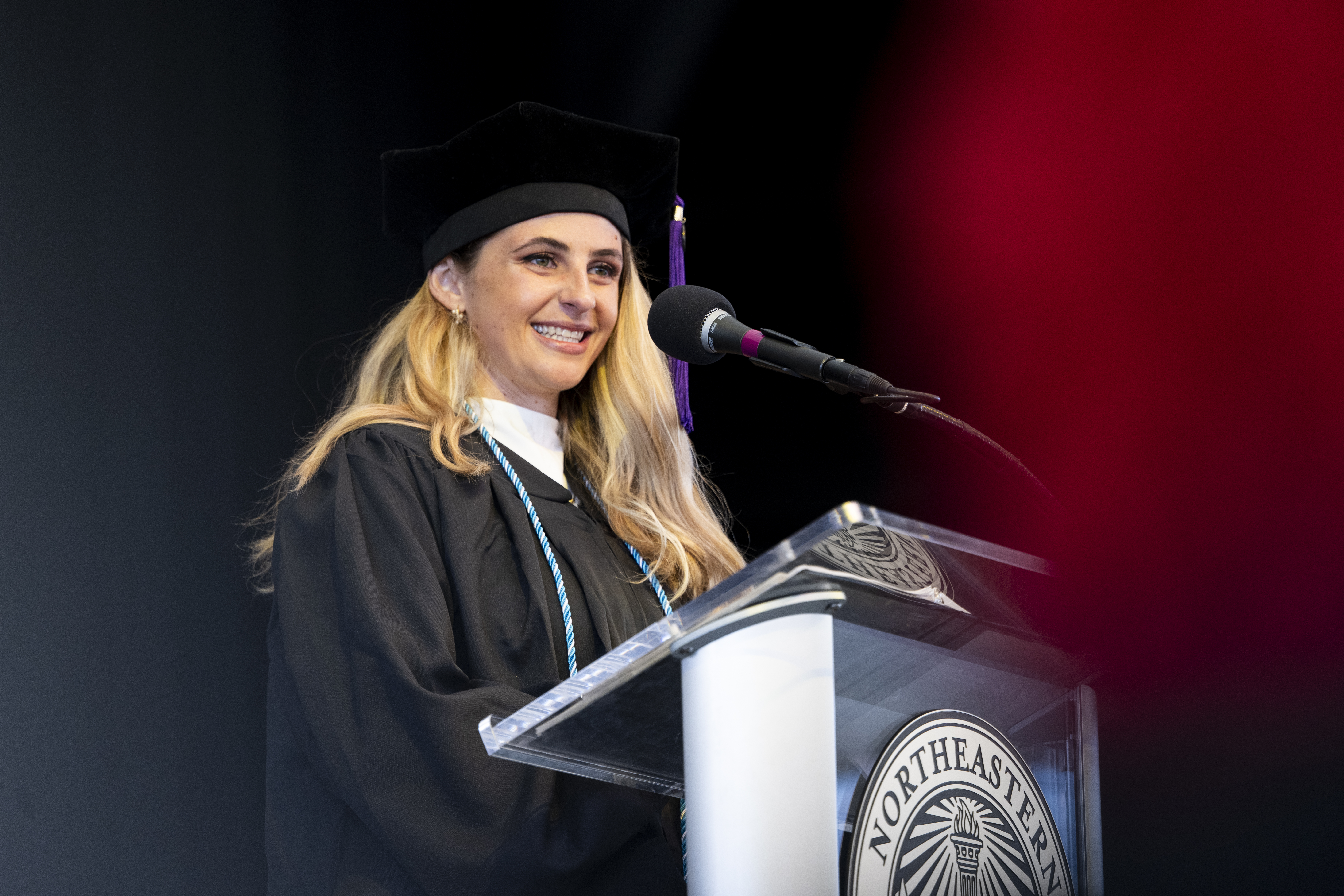
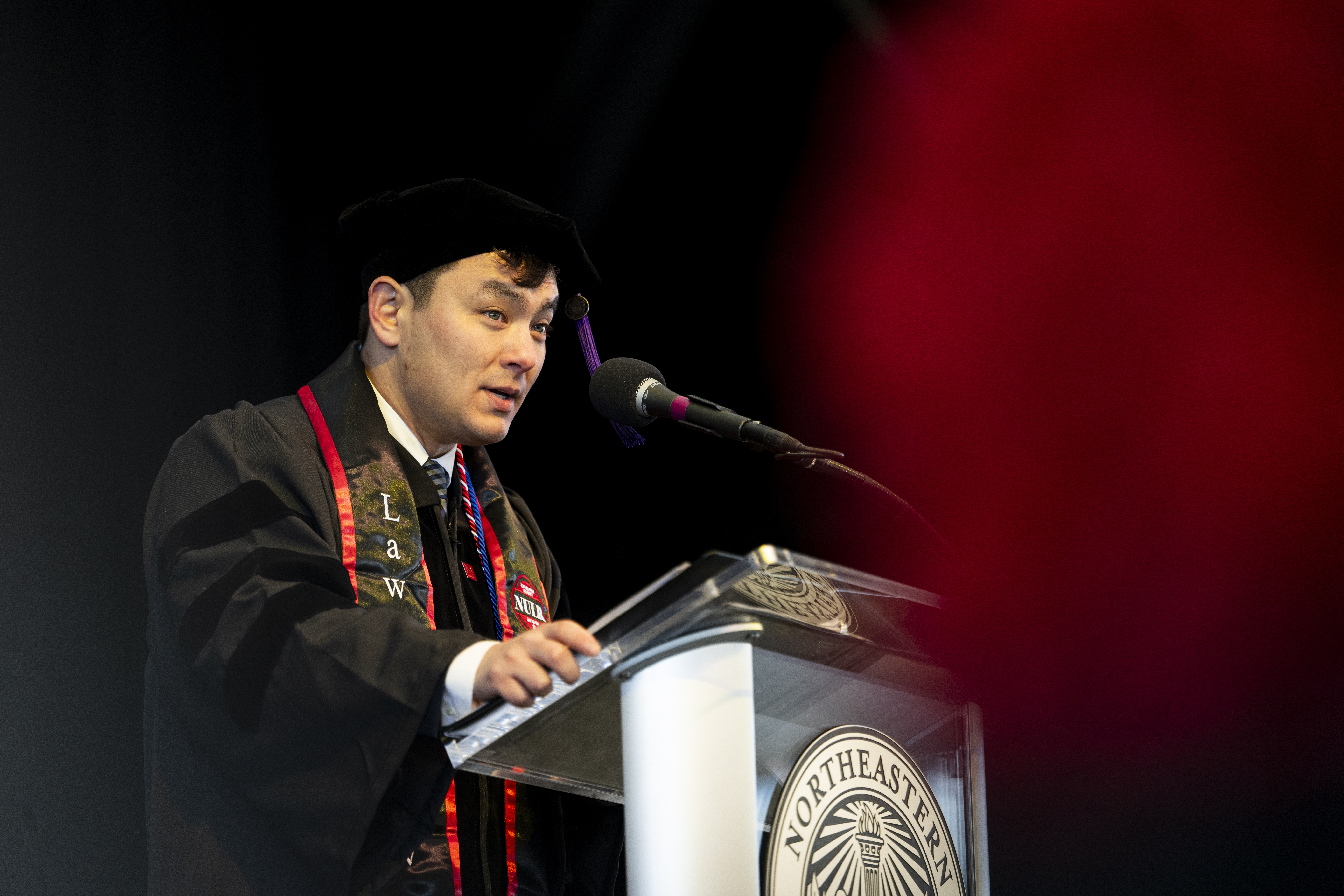

Mariana Xacur, who represented the master of law graduates, followed Nguyen, elaborating on the bonds forged across the last couple of years.
It’s what makes a School of Law degree meaningful, she said: “Here at Northeastern, we didn’t just build knowledge — we built friendships that crossed cultural and ideological boundaries.”
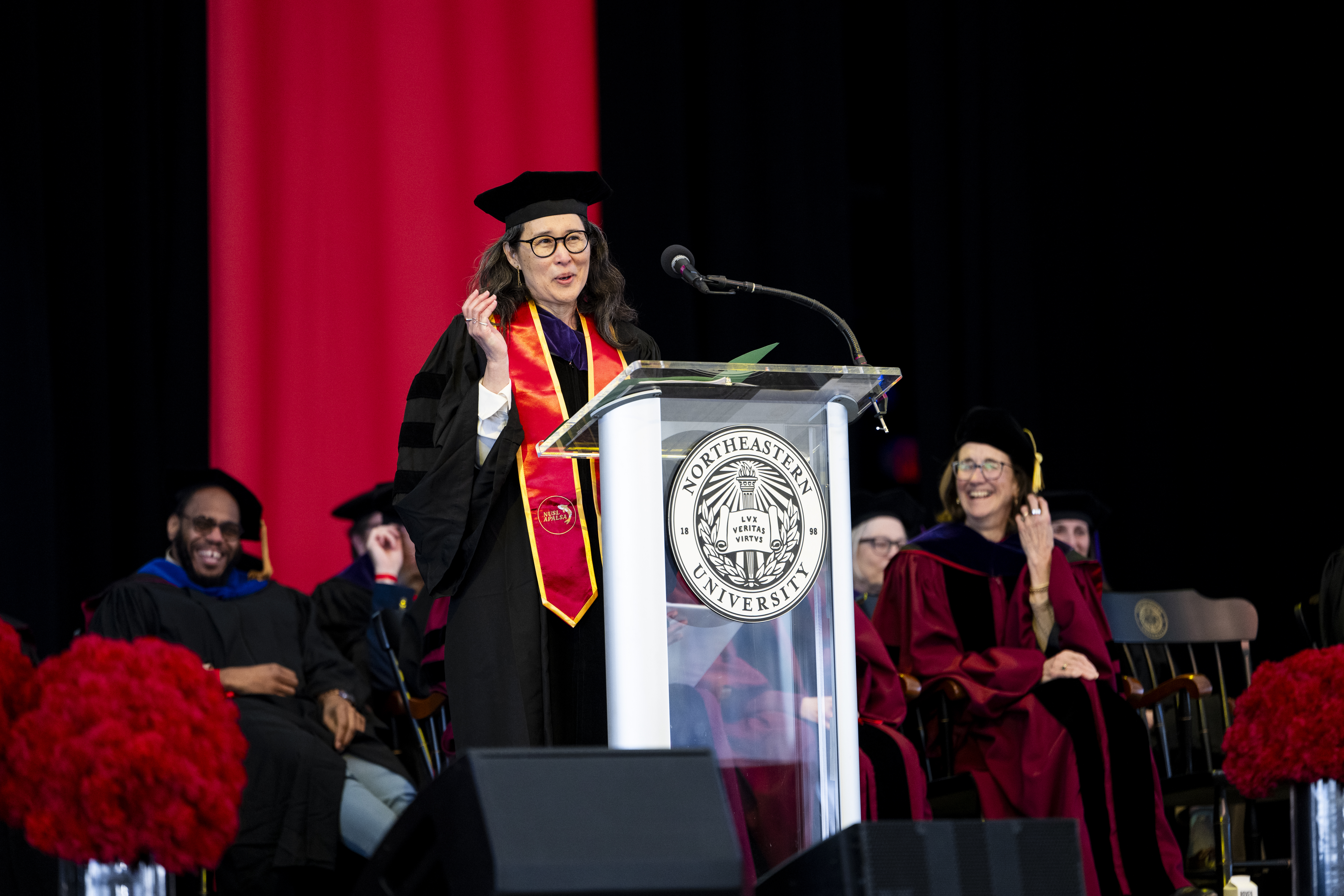
Law school professor Margaret Hahn-DuPont, who served as the faculty speaker, echoed Cornell’s sentiments about the social, legal and political challenges facing today’s graduates, but added that “the times we are living in, they are not that unique.”
“There has never been a moment in history when people have not suffered greatly, and needlessly,” Hahn-DuPont said. “And yet, I do not despair. Because when I look out at you, I have hope. You are an inspiration.”


From political polarization and shifting federal policies to technological disruption and ongoing global conflict, graduates will inherit a world of strife and uncertainty, Cornell said in her keynote. She framed these challenges not as deterrents but as a call to action.
Drawing on her own experience, Cornell set forth three guiding principles: work collectively rather than alone (“there is power in numbers”); embrace opportunities that arise, even if they lead you away from a pre-planned path; and stay grounded, with a clear sense of purpose — what she described as “your True North.”
She went on to describe the conviction shared for decades among physicians at the state medical society she leads: a “True North” centered on equitable patient care and the concept of healthcare as a human right. In recent years, that principle has translated into efforts to codify healthcare as a human right in policy documents and laws, at both the state and national levels, she said.
“Northeastern University School of Law is a place that teaches — and celebrates — activism and a passion for public interest and public service,” Cornell said. “You have had the wonderful opportunity to be trained in the law and exposed to ideas beyond the mainstream, to develop solutions to a public health problem, to see and tackle the inequities faced by underrepresented individuals in our country, to uphold laws that protect our planet.”

She ended her speech with a plea: “Don’t lose that focus or that passion.”
“Bring those values with you, into the offices you join in the public and private sector,” Cornell continued. “Bring others along your path in whatever form it takes — and remain true to your guiding principles — your True North.”


