Northeastern’s Marine Science Center is the go-to place for lobster captains and fishmongers with rare colorful lobsters
A rare “cotton candy claws” lobster is latest crustacean donation


With the latest donation of a rare “cotton candy claws” lobster, the menagerie of colorful crustaceans at Northeastern’s Marine Science Center in Nahant continues to grow, thanks to donations from lobster boat captains and a Marblehead fishmonger.
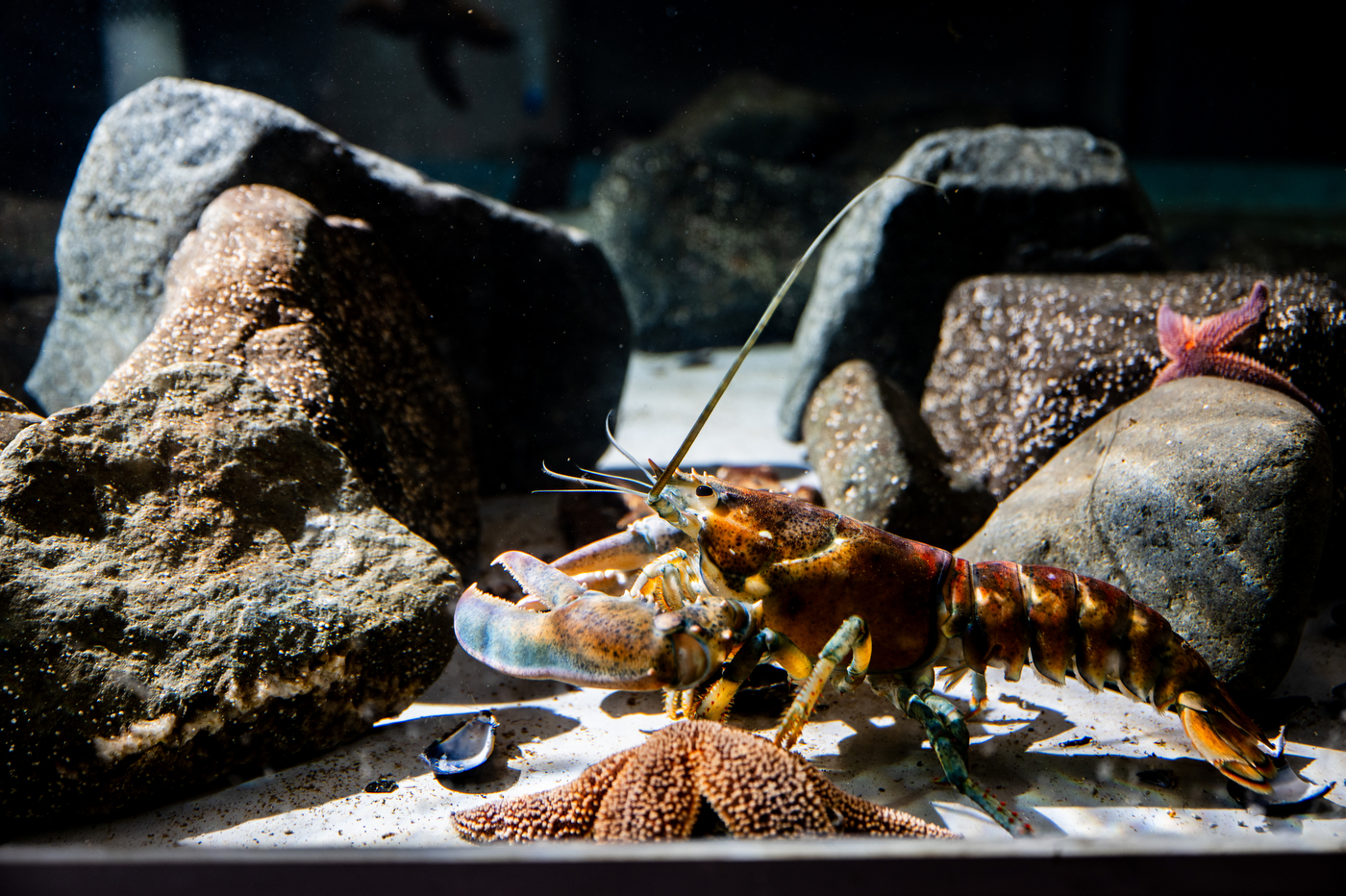
The collection also includes an electric blue lobster and an orange and black freckled crustacean known as a calico. Believed to occur no more than once in a million, the lobsters’ presence in Nahant testifies to conservancy efforts among those that capture and harvest the crustaceans and their faith in the science center’s ability to house them safely, said Sierra Munoz, outreach program coordinator at the Marine Science Center.
The first to arrive was Neptune, a brilliant cobalt lobster whose occurrence among the lobster population is one in 2 million. He was caught in July by Brad Myslinski, owner and captain of the Sophia & Emma in Salem.
The next lobster to join the Nahant touch pools was an even less common calico named Jackie, short for Jack O’Lantern in honor of her orange and black calico coloration and appearance in October, near Halloween. She was donated by veteran lobster boat captain Mike “Tuffy” Tufts of Nahant.
Northeastern Global News, in your inbox.
Sign up for NGN’s daily newsletter for news, discovery and analysis from around the world.

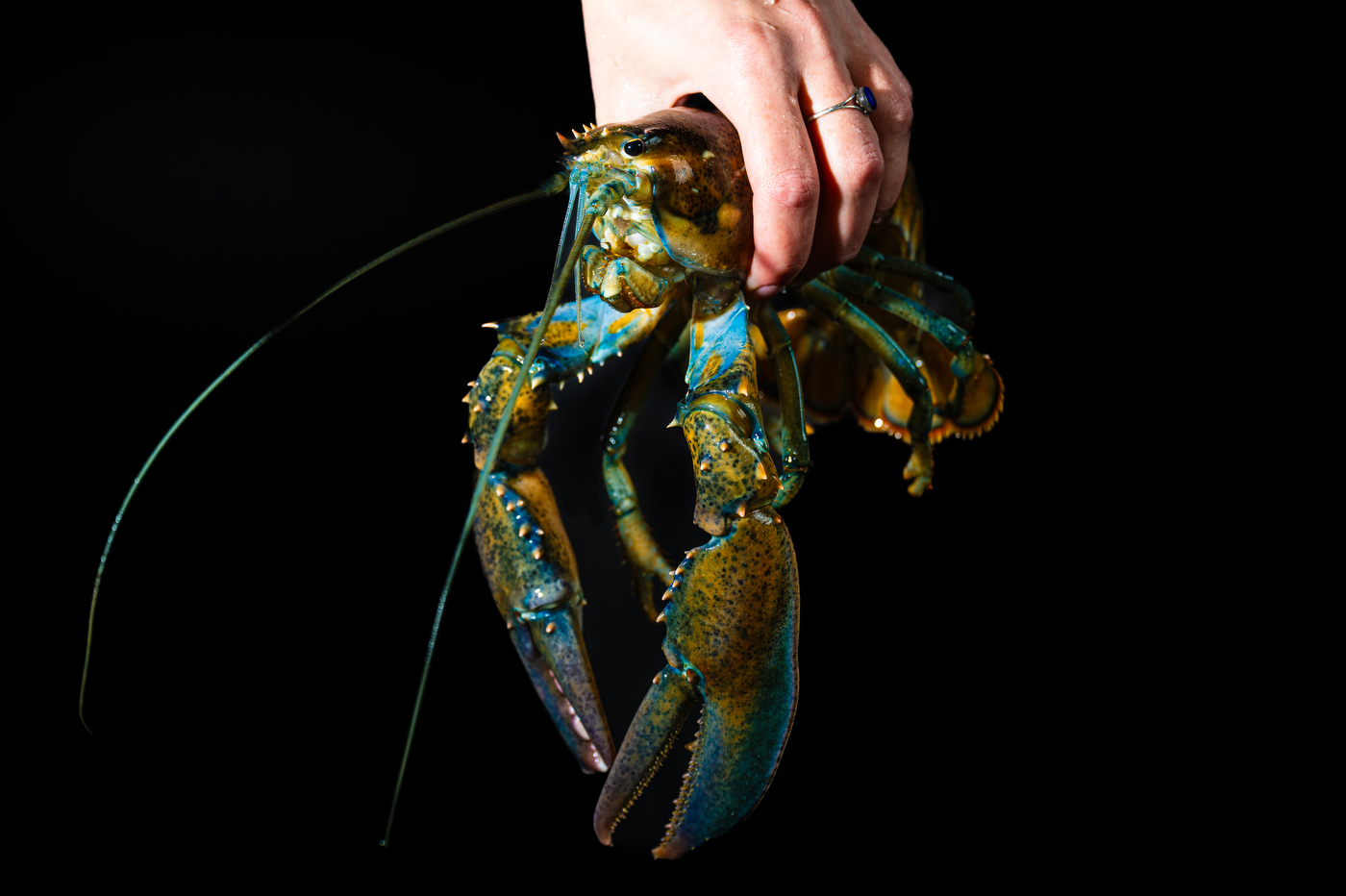
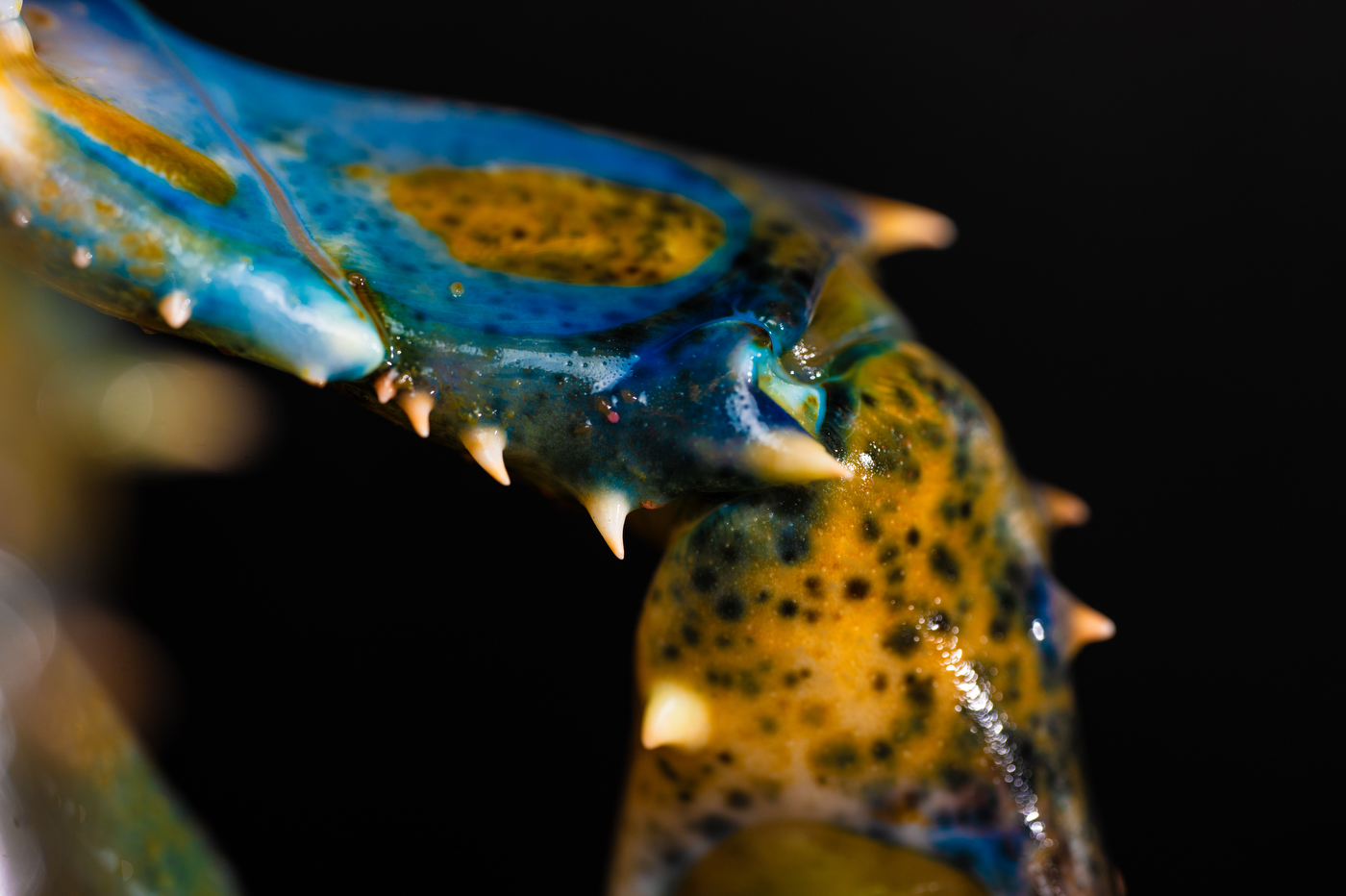
Most recently, Joseph, the cotton candy claws lobster named after a Bible figure known for his “coat of many colors,” has been charming visitors when he emerges from his underwater rock cave waving his orange, blue, purple, green and pink claws.
“This is the most colorful bunch we’ve had,” said Munoz.
She said Kevin Wolff of the Little Harbor Lobster Company in Marblehead, who donated Joseph in November, told her he’s on the lookout for “a yellow or other cool morph this year,” which would complete the kaleidoscopic collection by adding a colorful lobster to the center’s fourth touch tank.
While the marine science center has hosted other lobsters in the past, the collection of multihued crustaceans holds special appeal for the center’s thousands of visitors and helps create bonds with the local fishing community, Munoz said.
Tufts said when his now-grown daughters were younger, he brought rare lobsters home in his lunchbox for the two girls to view before going on a walk to Short Beach in Nahant to release the crustaceans.
“We’d watch them crawl back out to sea,” he said. “I wanted them to see how cool lobsters are.”
Shortly after reading about Neptune’s donation in the Massachusetts Lobstermen’s Association newsletter, his crew caught the calico that would be named Jackie, “probably the only one we got that year.”

After sending photos of the calico to Munoz, he delivered it to Northeastern, in his lunchbox, of course. Tufts also donated a miniature lobster trap, the kind used in the summer by amateur lobster fishers, to Munoz to demonstrate how lobsters are caught – and are allowed to escape when they are small juveniles.
Over the years, the marine science center has proved a good home for donated marine animals, said David Winchester, a marine and earth science teacher at Lynn Classical High School, who served as the middleman for Neptune’s donation to Northeastern.
The rocky aquaria touch pools recently have included small cunner and sculpin fish, Jonah and spider crabs and a few green sea urchins as well as winter flounder and moon snails in addition to the attention-hogging lobsters.
Winchester said most of his students, including the hundreds who recently toured the science center on a field trip, are familiar with how most lobsters are greenish brown, which helps camouflage them on the sea floor.
On the East Coast, the 10-legged crustaceans are found from Cape Hatteras, North Carolina, to Labrador, Canada, with New England having the highest concentration, according to the National Oceanic and Atmospheric Administration (NOAA).
Students are sometimes intimidated by lobsters’ large crusher claws, which the animals use for feeding and self dense. The candy colors of Nahant’s current residents may make the claws “look less menacing,” Winchester said. “The interesting colors, especially the blues, definitely intensify interest” among students, he said.
Once student attention is captured, “come the questions about ecology, genetics and resource management,” Munoz said.
One of the most common questions is “what color their baby lobsters would be,” she said. While mating is not an option because the somewhat territorial lobsters are kept in separate tanks, marine biologists don’t actually know what the answer would be, Munoz said.
Editor’s Picks




What scientists do know is that much of the vivid coloration in lobsters is the result of genetic mutations. All lobsters have a protein-base pigment in their shell called crustacyanin that turns it blue, but the effect is modified in most cases by a red pigment called astaxanthin. In the case of electric blue lobsters, the binding process doesn’t take place as usual, Munoz said.
In the freckled calico Jackie and cotton candy-clawed Joseph, mutations allow for a mix of pigments, she said. “Every lobster’s unique combination is essentially its own color fingerprint.”
Calico lobsters have been reported to be one in 30 million, while true cotton candy lobsters -– the kind mottled all over in pale blue and pink -– have been said to be one in 100 million. But Munoz said it’s “really hard” to narrow down the rarity of multi-colored lobsters due to the variety of hues, tones and color variations.
Lobsters can live to be 100, but don’t expect the resident trio in Nahant to be celebrating their centennial at the marine science center, Munoz said. “We often switch out animals and release them because we only like to have a few at a time.”
In the meantime, she is hoping her contacts in the lobster world will find another rare lobster for the waiting fourth tank, maybe a yellow lobster or even an all-white lobster called an albino.
When lobster boat captains set aside the colorful creatures for the public to view, it shows respect for and curiosity about the animals, Munoz said, adding that the fishers “are experts in their own right.”