The top 10 new additions to the Northeastern University Arboretum
Every year, the Northeastern University Arboretum adds hundreds of new plants around the Boston campus. Here are the top 10 most exciting additions to its collection.


Every spring, Northeastern University says a fond farewell to its graduating classes, but it also welcomes a new class that’s green but eager to grow.
These additions to Northeastern’s Boston campus aren’t studying in Snell Library. They are the hundreds of diverse new trees and shrubs that the Northeastern University Arboretum plants every year, as it adds more greenery to an already robust urban campus ecosystem.
This year, there are a few standouts that have joined the more than 2,000 plants that already call Northeastern’s 11.5-acre arboretum home.
“We’re essentially a museum collection for plants, so you want to have a diversity of different plants in different places,” said Indira Holdsworth, curator for the Northeastern University Arboretum. “We’re also an urban campus, so part of the reason we plant so much is we have unique conditions in a lot of different places on campus. The only way to know what will do well in those conditions is to try, so we’re doing a lot of experimenting a lot of the time also.”
From tulip trees that will blossom into green and yellow flowers to a species of redwood with more than 100 million years of history, the horticultural class of 2026 includes a diverse array of iconic plants and novel newcomers. Here are the top 10 most exciting additions to Northeastern’s Boston campus.
The Falling Waters bald cypress is located at the Koi pond behind the Curry Student Center on Thursday July 9, 2026. This variety of bald cypress mirrors its aquatic setting near Northeastern’s iconic, and recently restocked, koi pond. With cascading vegetation, this tree not only looks like a water feature but is well suited to growing in wetter conditions, arboretum curator Indira Holdsworth explained.

Location: Koi pond behind Curry Student Center
Photo by Alyssa Stone/Northeastern University
Planted not too far from the Falling Waters bald cypress at the Koi Pond, is a variety of the iconic Japanese maple, given the name Crimson Queen in reference to its leaves, which will turn a deep red in the fall.
Location: Koi pond behind Curry Student Center
Photos by Alyssa Stone/Northeastern University
Indira Holdsworth stands between the newly planted Mountain Sentinel aspens in Cabot Quad. The Northeastern University Arboretum planted a group of aspen trees, fast growers that will grow to anywhere from 20 to 80 feet and turn shades of yellow, gold and even fiery red in the fall. They are the only aspens on campus and were planted in Cabot Quad for both aesthetic and strategic reasons: the quad can get quite windy and “aspens are really flexible and good at being buffeted by wind,” Holdsworth said.
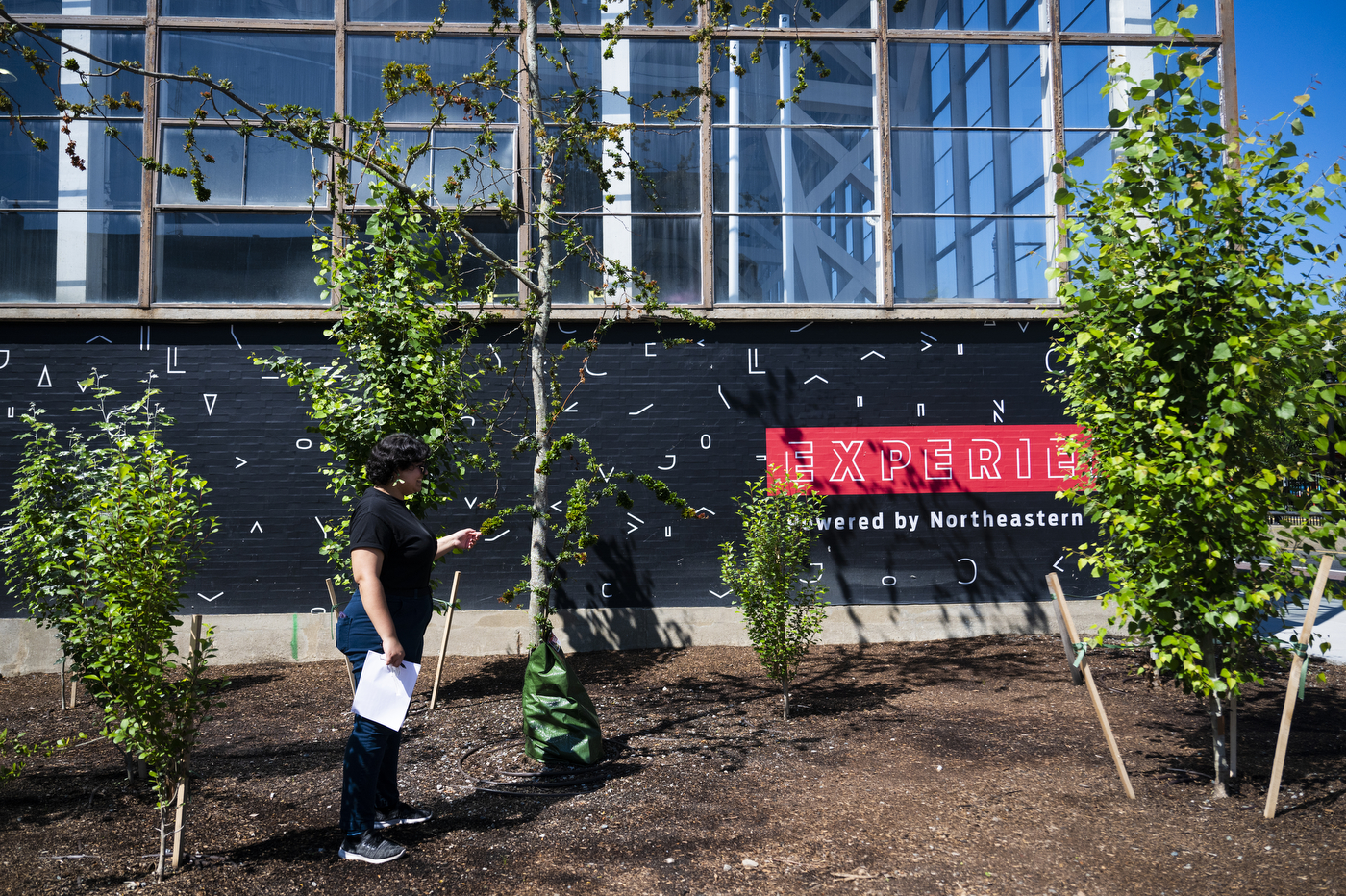
Location: Cabot Quad
Photo by Alyssa Stone/Northeastern University
A spindly yet distinct looking tree, this variety of honeylocust was selectively bred to have clumps of small, pointed leaves, hence its name. Its tall and skinny shape is an asset on an urban campus where finding plants that are tall and skinny to creatively fit the campus’ growing spaces is the name of the game, Holdsworth said.
Location: Cabot Quad
Photos by Alyssa Stone/Northeastern University
This compact tree is known for its year-round red coloration and is one of many crimson plantings around Northeastern’s Boston campus. Holdsworth said that’s not a coincidence: “We try to go for Northeastern red when we’re able to, which is a little kitschy but it’s fun.”
Location: Cabot Quad
Photos by Alyssa Stone/Northeastern University
Although New England has several native pine trees, they have largely been removed from urban centers like Boston. The new “Prairie Giant,” with its distinctively massive pinecones, is meant to connect the urban space with its natural roots. “The arboretum is a resource for students, so to have pines and aspens and stuff that’s not necessarily associated with the city but that students can look at and be reminded of their home or reminded that this is their home is really important to us,” Holdsworth said.
Location: Stetson West
Photos by Alyssa Stone/Northeastern University
The “Newton Sentry” variety of sugar maple planted near the Stetson East residence hall is a new addition to campus but a familiar face. These thin, toothpick shaped trees with classic maple-shaped leaves have a whimsical, Dr. Seussian quality that makes them a favorite of the Northeastern arboretum team.
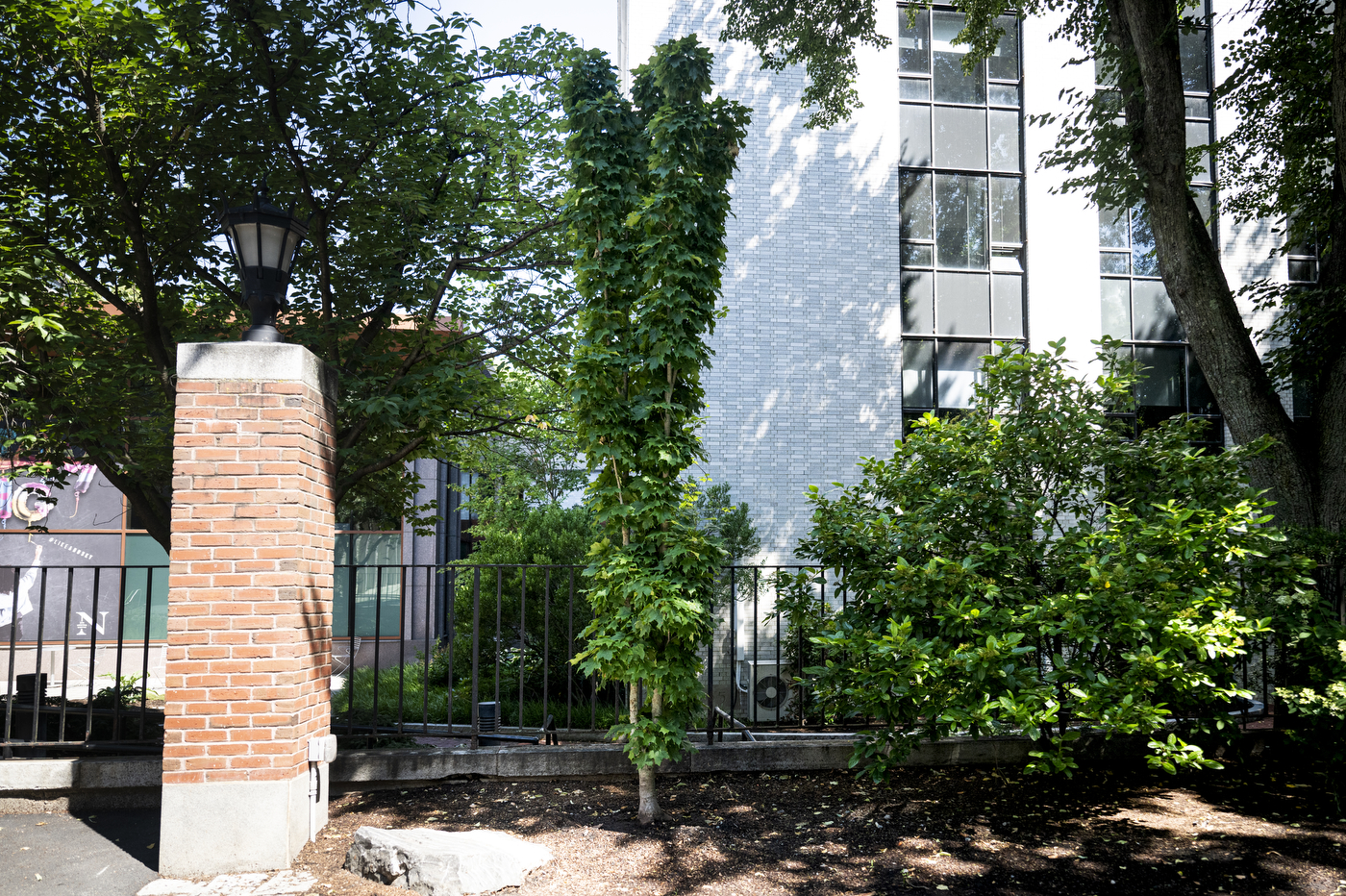
Location: Stetson East
Photo by Alyssa Stone/Northeastern University
Paperbark maples earn their name from the dark red bark that peels away from the trunk to resemble folded scrolls. Its addition to the Boston campus is a cornerstone in the arboretum’s “seasons of interest” strategy where curators are constantly “trying to find plants that look visually interesting year-round,” Holdsworth said.
Location: Stetson East
Photo by Alyssa Stone/Northeastern University
The Snow Bird tulip tree’s leaves, with their dark green centers and white edges, are only part of the tree’s distinctive appearance. In mid-spring, it will also produce light green and yellow flowers with a bright orange band at the base.
Location: Centennial Common in front of Ryder Hall
Photos by Alyssa Stone/Northeastern University
Its name might evoke a comic book character from the 1970s, but this variety of redwood is the sole living species of a plant family that dates back more than 100 million years. It was thought to be extinct until an exhibition led by members of Boston’s Arnold Arboretum found it growing in a Chinese valley and brought it back to the U.S., Holdsworth explained. This specimen is the only one currently planted on Northeastern’s campus.
Location: Between EXP and ISEC
Photos by Alyssa Stone/Northeastern University


