Why Massachusetts banned this addictive Asian plant
Massachusetts retailers are suing to block a new kratom ban. A Northeastern public health expert explains why the state issued the ban.
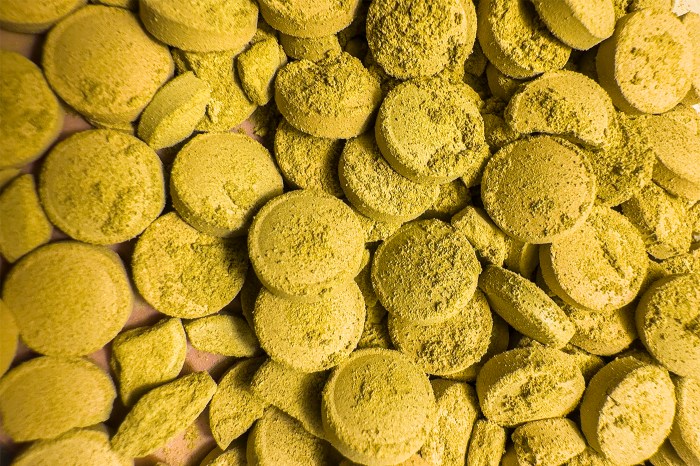

A group of Massachusetts retailers are aiming to block a temporary state ban on products derived from the Southeast Asian plant, kratom, that went into effect on Aug. 28.
The four Massachusetts retailers suing to block the order are the Rihaan Corporation in Salem, Bhakati, LLC in North Billerica, V&K Smoke Shop, LLC in Quincy and Ambreen & S Inc in Bellingham.
In their complaint, the retailers argue that the state failed to meet the legal and procedural requirements to issue the ban, including that it failed to show whether emergency responses related to kratom were tied to the kratom plant itself or to the concentrated or synthetic versions of it.
Massachusetts Gov. Maura Healy announced the emergency ban on all kratom-based products on August 13, citing, in part, the products’ harmful effects on young people.
As part of the ban, the products have been classified as Schedule 1 drugs, which the United States Drug Enforcement Administration defines as “drugs with no currently accepted medical use and a high potential for abuse.” The restriction, according to the state, could be in place for up to one year.
Kratom, which is popularly used as a stimulant and pain reliever, has been linked to hundred deaths around the country and about hundred directly in Massachusetts since 2020, according to the Massachusetts Department of Health.
Withdrawal of kratom-based products can have an effect on the body similar to opiods, according to the department, including “anxiety, agitation, muscle spasms, runny nose, hot flashes, loss of appetite, diarrhea, restlessness, and fever.”
Northeastern Global News spoke with Mark Gottlieb, executive director of Northeastern University’s Public Health Advocacy Institute, a public health law research center, to learn more about kratom and the case.
This interview has been edited and condensed for clarity
What is kratom and what is it used for?
GOTTLIEB: Kratom is a leaf from a tropical tree in Southeast Asia and has been consumed for hundreds of years by either crushing the leaf to brew with tea or smoking that leaf. It has caffeine and stimulant effects at low doses, but at higher doses, it can create a similar effect to an opioid.
Theoretically it provides analgesic (pain relief) effects but with a lower risk of addiction than one would get from morphine or heroin.
It was used as an alternative in Asia for opium when opium was scarce. It’s also been used as a way to satisfy cravings for opioids, which is why some people have discussed its utility as a natural harm reduction product in the context of the opioid crisis in the U.S where people are looking for ways to cut down or eliminate use of opioids.
It’s sold as a herbal supplement and is often sold in gas stations and convenience stores not as a natural leaf product that has been used for over 100 years in the medical literature in Asia, but rather as a synthetic version, which is many times more potent. It has 98% potency as opposed to 2% potency in its natural state.
Why is it controversial?
GOTTLIEB: It’s controversial because it’s considered, with this synthetic form in particular, addictive almost as much as opioids are. It can affect the opioid receptors of the brain in the same way that opioid drugs do such as heroin or fentanyl. It has been implicated in hundreds of deaths in the United States, and I believe over 100 deaths in Massachusetts in the last several years. So, it’s been completely unregulated until now, as we’ve got an emergency state regulation.
Why did Massachusetts issue this temporary emergency order?
Editor’s Picks


GOTTLIEB: Because kids were being harmed. It’s not an age-restricted product, and it’s a highly addictive product that has caused death. There have been parents that have come forward, who have lost their kids or young adults to kratom, who have been very persuasive advocates. They made their presentations last legislative session. A kratom ban was considered in the legislature as well. It’s pretty hard to say, ‘Eh, it’s no big deal, just a hundred deaths or so.’ Since there’s really no recognized medical use for this, we only hear anecdotal discussion of benefits from users. I think some kind of action has been overdue for a while.
Why make it temporary?
GOTTLIEB: I think it’s a temporary scheduling because they want to stop the sales immediately and then come up with a more permanent legislative solution. That is usually what the purpose of something like this would be. We saw this in September 2019 when then-governor Charlie Baker issued an emergency order banning the sale of all vape products. … In November 2019, the legislature passed a bill banning all flavored vapes as well as menthol cigarettes. That was a way to permanently address the problem.
What does it mean that it has been designated a Schedule 1 drug?
GOTTLIEB: A Schedule 1 drug means it has a high potential for abuse, has no currently accepted medical use in the United States, and [there’s] a lack of accepted safety use of the substance under medical supervision.
Why are these retailers trying to block this emergency order?
GOTTLIEB: They are trying to block this like they blocked tobacco regulations. Addictive products are profit centers for gas stations and convenience stores. I think it’s as simple as that. They want to keep selling it for as long as possible.
How strong of a case do they have?
GOTTLIEB: I think it’s possible that a judge could grant an emergency order and to take a closer look as to whether the commissioner of the Department of Public Health met all the procedural requirements for issuing an emergency order. It seems to me to be rather late in the game to be able to get a judge to do it in the last week of August in the summer. As a practical matter, it seems unlikely.
But in the case of the emergency ban on vaping, there was a legal challenge by retailers, and the Department of Public Health had to make some changes in the emergency regulation to ensure it met all the legal requirements. So, there’s always a chance that there could be some tweaking around this.


