How Northeastern is helping shellfishers and diners of a New England speciality
“The soft-shell clam has been a staple fishery in New England for generations,” said David Kimbro, associate professor of marine and environmental sciences at Northeastern.


It was a beautiful morning on the Parker River.
The sun peeked through the clouds from the previous weekend’s nor’easter, giving the golden marsh grasses an extra autumnal sheen.
Frenetic yellow-legged shorebirds took flight as the small boat navigated the curves of the meandering river, and even the looming Route One bridge could not mar the pastoral scene, as little traffic passed after the motor was cut and the boat drifted along the shoreline.
Unfortunately, Northeastern University graduate student Grace Abe was not exactly enjoying her surroundings. She had just sunk up to her knees in mud.
“I had it too easy with the first one,” Abe said, while prying a wooden box out of the mud.
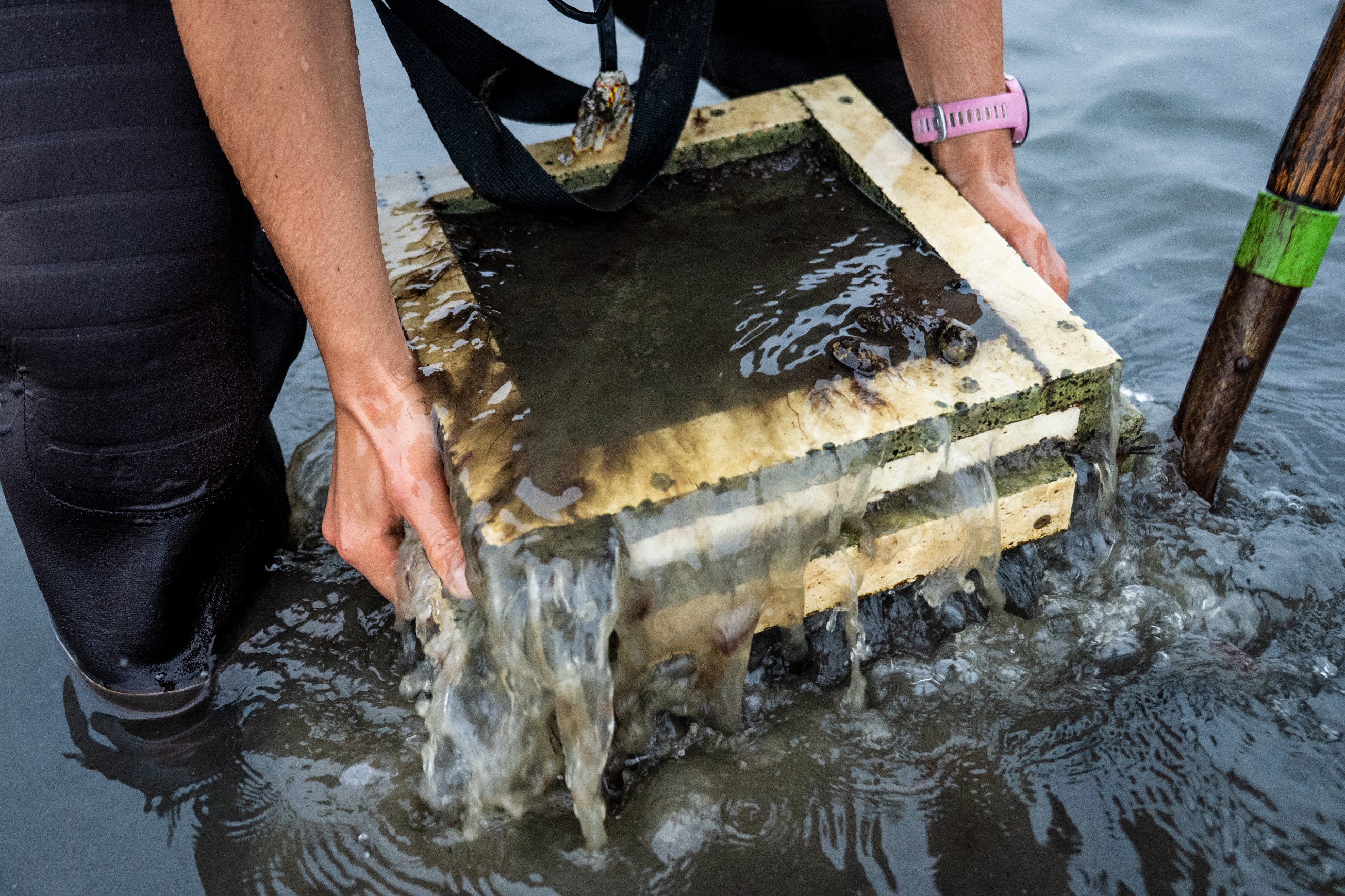
The container that emerged was 1-foot-square and several-inches tall, made primarily of wood composite with a mesh screen on its top and landscaping fabric on its bottom.
It did not look too high-tech. In fact, it looked like it might contain a small pizza.
But for the last six months, the Beal Box – named after its inventor, University of Maine marine ecologist Brian Beal – had been sitting in the mud flat and acting as a nursery for an iconic and delicious New England species, the soft-shell clam.
“The soft-shell clan has been a staple fishery in New England for generations,” said David Kimbro, associate professor of marine and environmental sciences at Northeastern.

But the species is under pressure.
Commercial landings in New England have fallen from an average of 5 million pounds each year prior to the 1980s to 1.75 million pounds in 2024, representing a nearly 80% decline, according to data from NOAA Fisheries, also known as the National Marine Fisheries Service, the federal agency entrusted to care for the nation’s ocean resources and their habitat.
New England commercial soft-shell clam landings: 1950-2024
Landings measured in pounds
| new_england_lb | year |
|---|---|
| 8907000 | 1950 |
| 6991900 | 1951 |
| 6753100 | 1952 |
| 5127600 | 1953 |
| 4741000 | 1954 |
| 3654100 | 1955 |
| 3048600 | 1956 |
| 2664400 | 1957 |
| 2381600 | 1958 |
| 2263800 | 1959 |
| 2810500 | 1960 |
| 2504500 | 1961 |
| 2516400 | 1962 |
| 2780500 | 1963 |
| 2663339 | 1964 |
| 3194420 | 1965 |
| 4155400 | 1966 |
| 4207400 | 1967 |
| 4492600 | 1968 |
| 5330700 | 1969 |
| 6534200 | 1970 |
| 6465100 | 1971 |
| 6975000 | 1972 |
| 7811900 | 1973 |
| 7293600 | 1974 |
| 7688400 | 1975 |
| 8503000 | 1976 |
| 8412600 | 1977 |
| 6466300 | 1978 |
| 6158100 | 1979 |
| 7447300 | 1980 |
| 6801700 | 1981 |
| 6318300 | 1982 |
| 5587200 | 1983 |
| 6529300 | 1984 |
| 5566000 | 1985 |
| 5044800 | 1986 |
| 3671700 | 1987 |
| 3204469 | 1988 |
| 3425100 | 1989 |
| 3498479 | 1990 |
| 2658586 | 1991 |
| 3716973 | 1992 |
| 3690544 | 1993 |
| 2074072 | 1994 |
| 1900955 | 1995 |
| 1608808 | 1996 |
| 1776453 | 1997 |
| 2388184 | 1998 |
| 2311814 | 1999 |
| 2318139 | 2000 |
| 2707155 | 2001 |
| 2478164 | 2002 |
| 2469988 | 2003 |
| 2524235 | 2004 |
| 3155037 | 2005 |
| 5414630 | 2006 |
| 3511359.09 | 2007 |
| 3253385.39 | 2008 |
| 3059082.05 | 2009 |
| 3336450.01 | 2010 |
| 3245533.76 | 2011 |
| 3243660.75 | 2012 |
| 2988929.59 | 2013 |
| 2502611.69 | 2014 |
| 2315689.94 | 2015 |
| 2237108.06 | 2016 |
| 2171200.68 | 2017 |
| 2216694.89 | 2018 |
| 2304672.68 | 2019 |
| 2023383.04 | 2020 |
| 2198993.25 | 2021 |
| 2116066.23 | 2022 |
| 1671352.23 | 2023 |
| 1745368.27 | 2024 |
This has economic and cultural ramifications for shellfishers and the communities in which they live. In fact, the bivalves are so important locally that they are even called “Ipswich clams” in reference to a nearby town.
The decline of the clams also impacts the larger ecosystem.
They are filter feeders, cleaning the water as they eat, and also, in turn, a food source for shorebirds, which attract birdwatchers and nature-lovers to the assortment of protected habitats in the region.
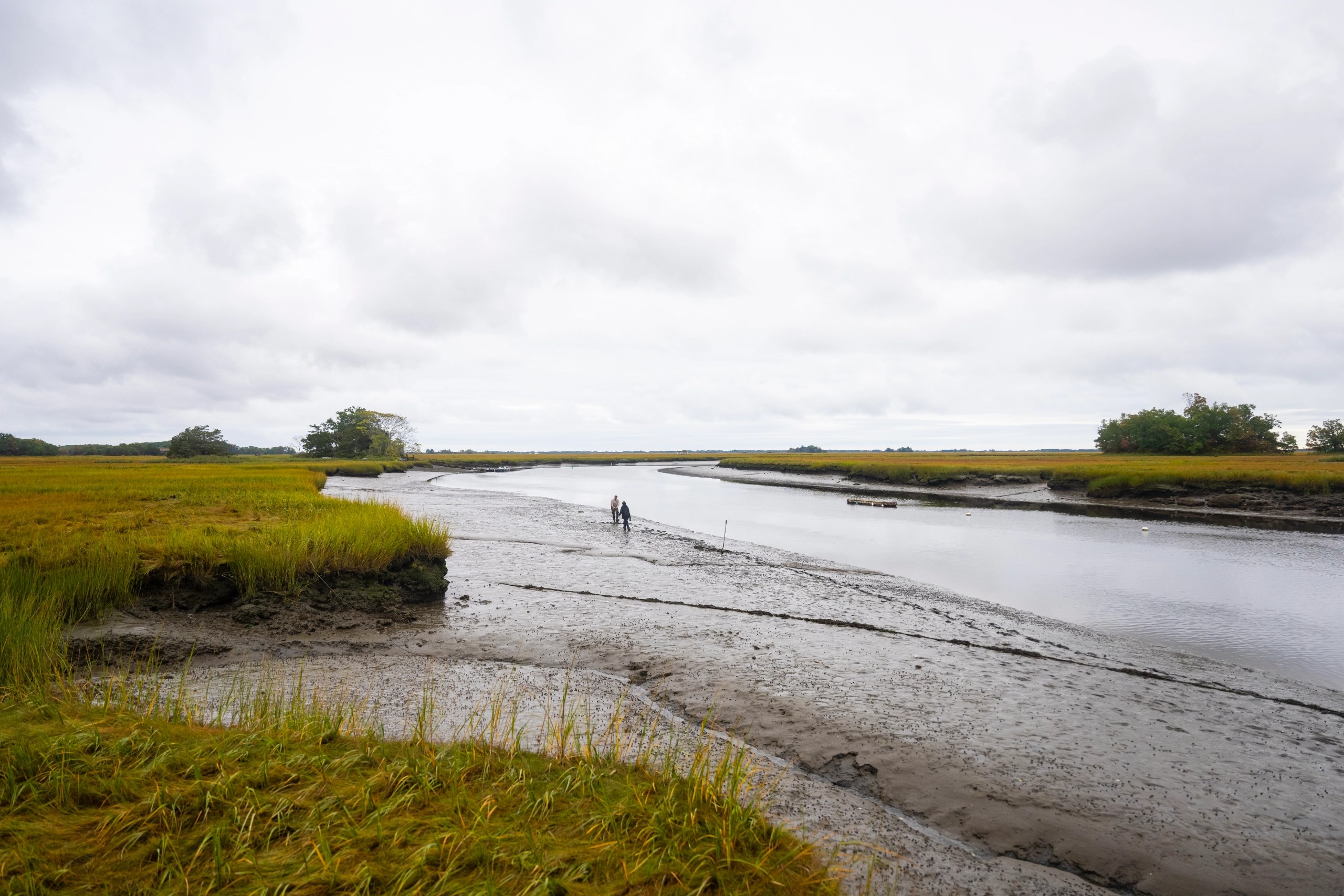
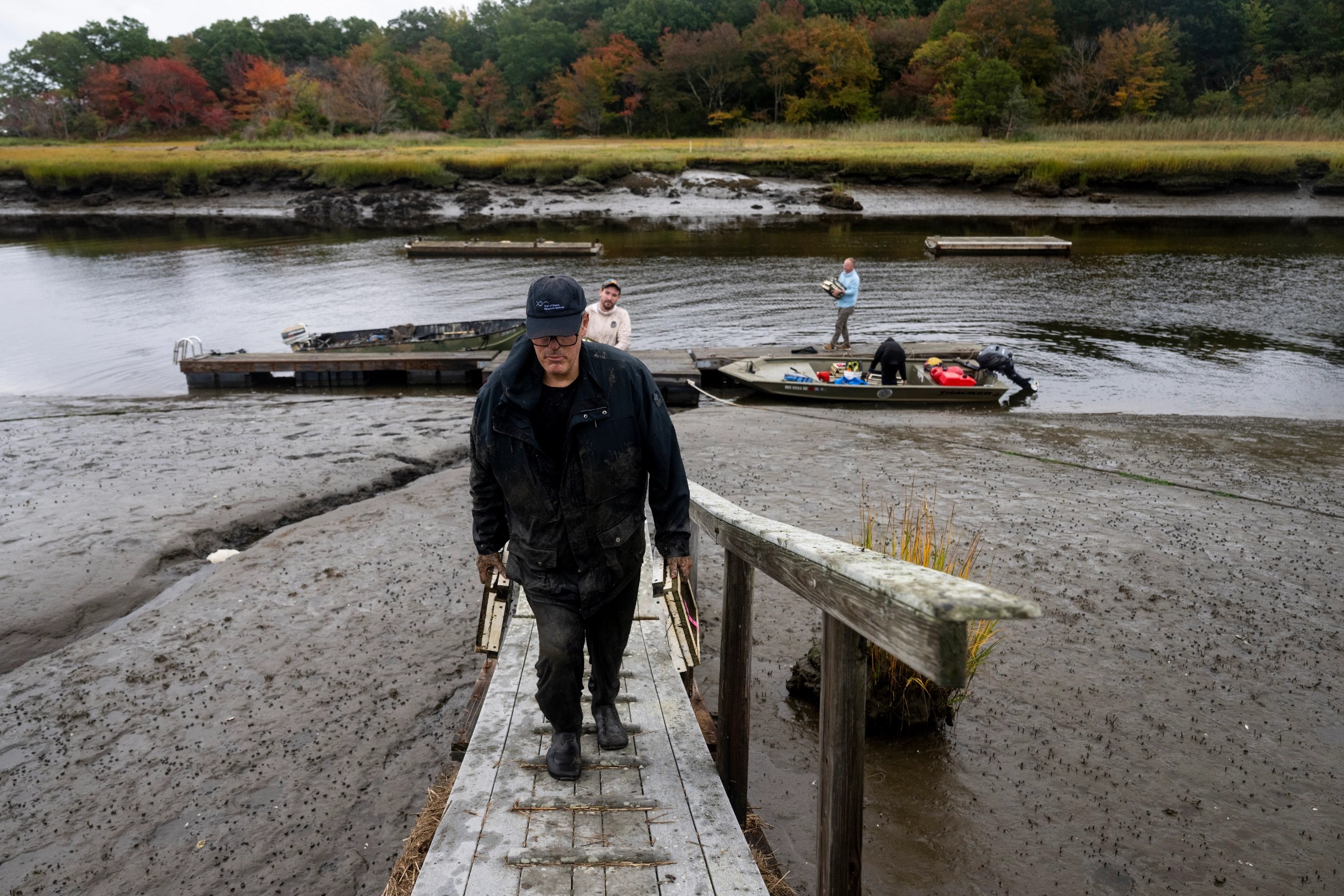
In short, the area – known as the Plum Island Ecosystem and consisting of multiple rivers and their watersheds, New England’s largest marshland, barrier beach, and other habitats on the North Shore of Massachusetts – is a pretty special place, according to Anne Giblin, senior scientist at the Plum Island Ecosystems Long-Term Ecological Research (PIE LTER) program, an integrated research, education, and outreach program which is a collaborator on the research.
But scientists are not exactly sure why the clams are having trouble.
So two years ago, scientists with the Plum Island research program consulted with local shellfishers who suggested two hypotheses.
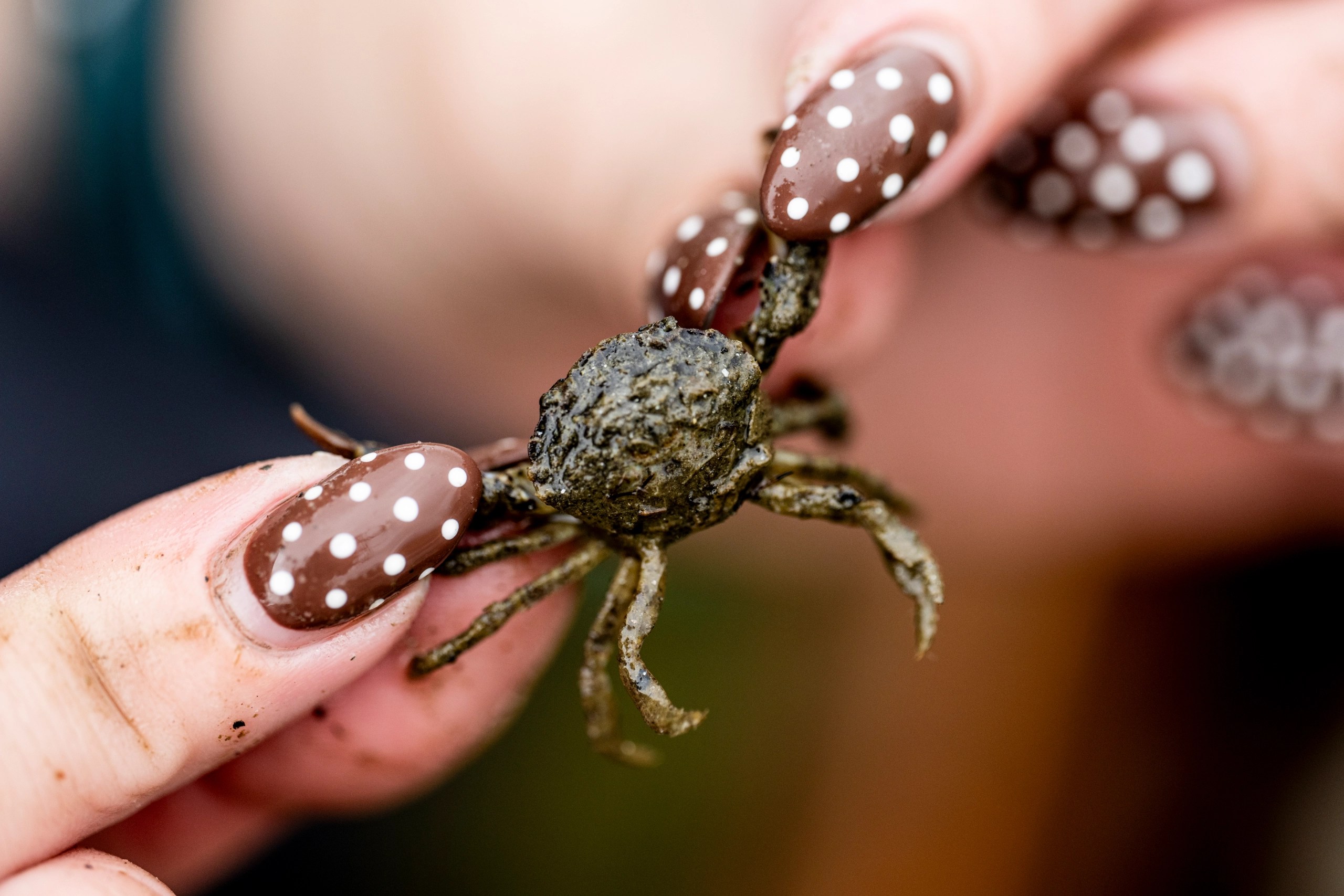
Climate change has warmed water temperatures and changed the water chemistry in the estuary, potentially affecting the clams’ ability to reproduce. Meanwhile, an invasive predator called the European green crab has increased in population over the past 100 years as the temperature warms.
“From talking with them we have learned that the loss of this fishery has been devastating,” said Giblin. “The idea that we could shed some light on the decline in clams and improve the fishery is something that everybody wanted to be involved in.”
Which is where Northeastern researchers including Kimbro, Professor of Marine and Environmental Sciences Jonathan Grabowski, Abe, and others come in.
“We want to test if the problem with soft-shell clams in Massachusetts is that they’re not making babies anymore, or is it because predators like the invasive green crab are eating all the clams before they reach market size,” Kimbro explained.
The Beal boxes are their primary tool.
Kimbro said clams reproduce by releasing millions of eggs and sperm into the water to be fertilized. The resulting larvae lives in the water, eating phytoplankton and growing until it can “settle” into the mud and develop into an adult clam.
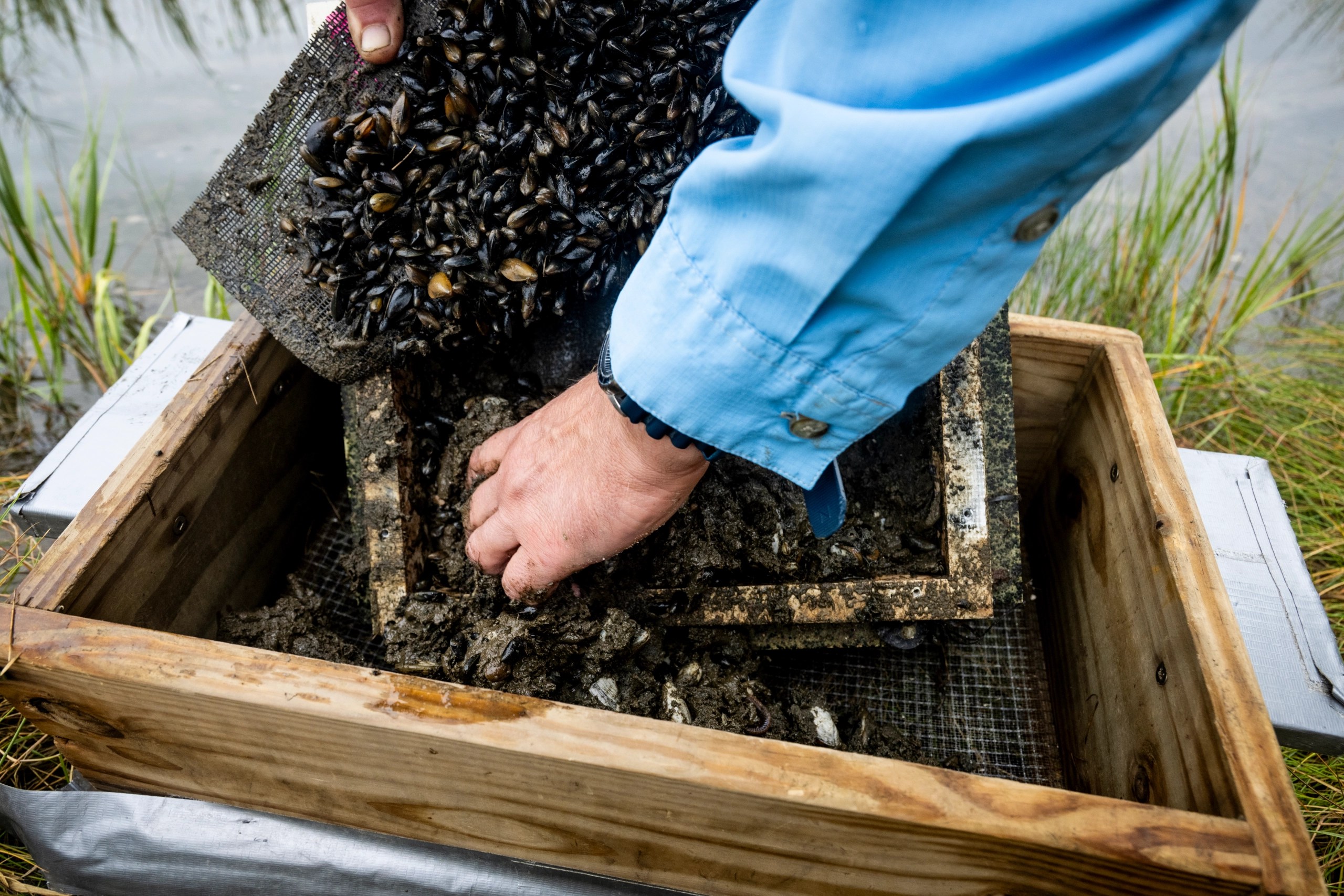
The boxes are covered by mud and water with the cycling of the tides, and the mesh is big enough to allow larvae in but small enough to keep predators out, Kimbro and other researchers on the project explained.
The boxes and their contents are compared with samples of mud from the flats that replicate normal conditions.
If the boxes contain no developing clams, that suggests that the clams aren’t reproducing normally, Abe explained.
But if clams are developing inside the boxes – especially if clams are absent from the control samples of mud outside these containers – then green crab predation is likely to blame, since the crabs are unique in their ability to dig into the mud where the adult clams develop, the researchers explained.
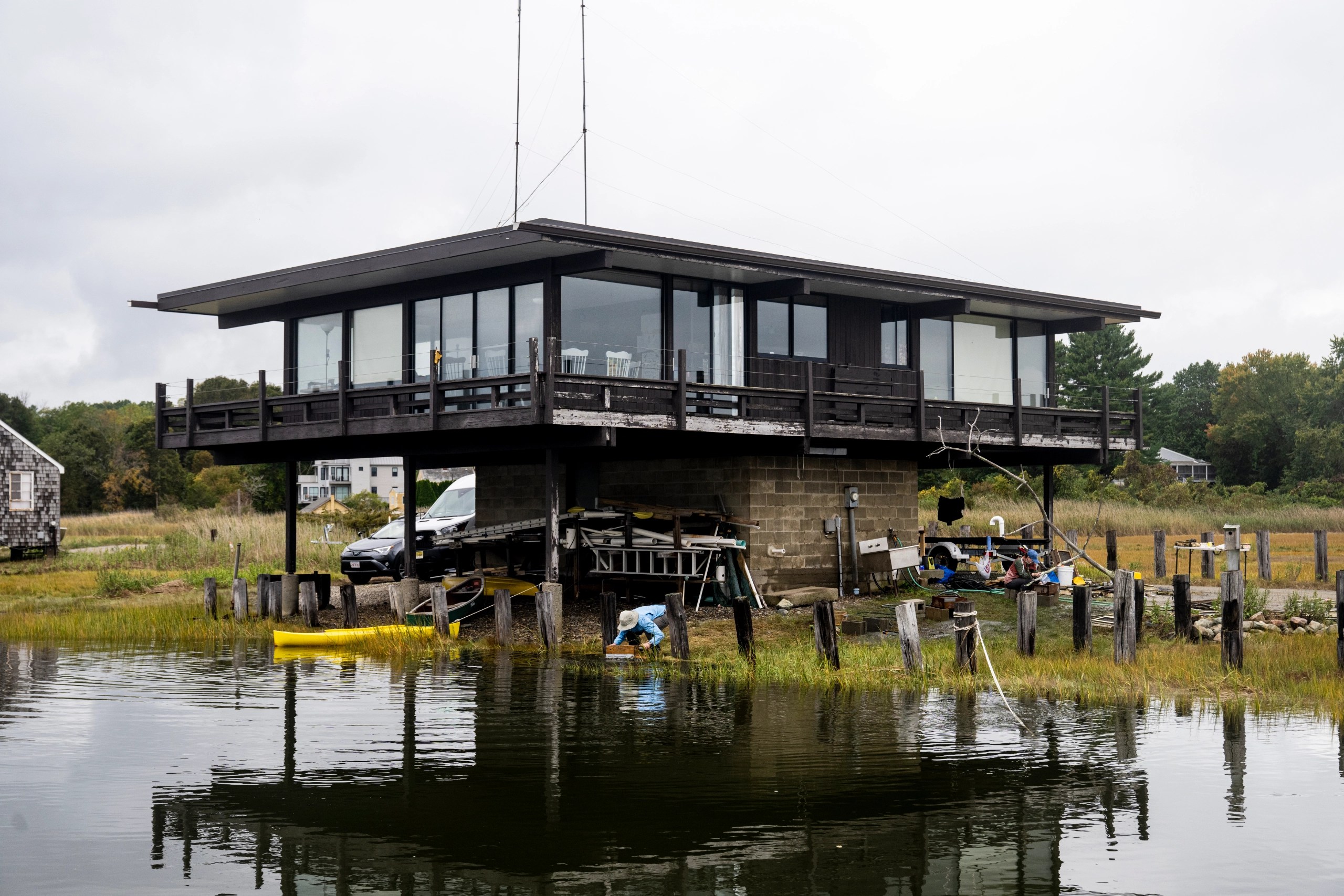
A few hours after returning to the dock from collecting the boxes, students and volunteers at PIE LTER’s Rowley Field House opened the containers to see what they would find.
“I’m actually from Rowley, Mass. so my whole life I’ve been eating at all these iconic seafood places – the Clam Box, Bob Lobster, Woodman’s of Essex – so it’s really cool to be a part of the research that’s helping that industry,” said Gillian Nichols, the lead research technician in the Kimbro lab and a master’s student at Northeastern.
“I think it’s really awesome to work with local shellfishers and super important to spread awareness to the community and give back to the local economy,” Nichols said.
First, co-op student Irleen Kaur measured the depth of the mud in the traps, then Nichols and other students used the mesh as a sieve, shooting water through the box and patiently washing away the mud.
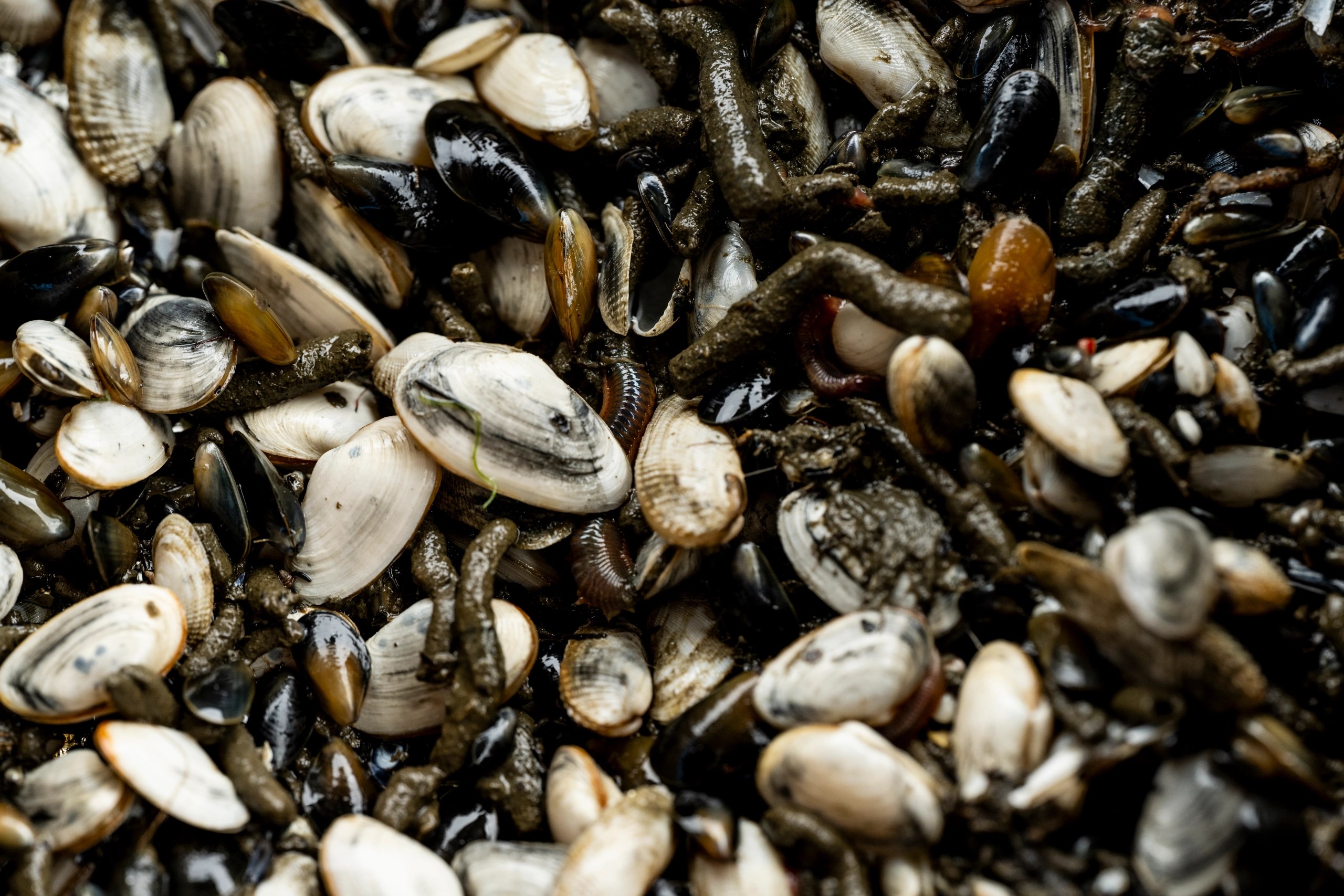
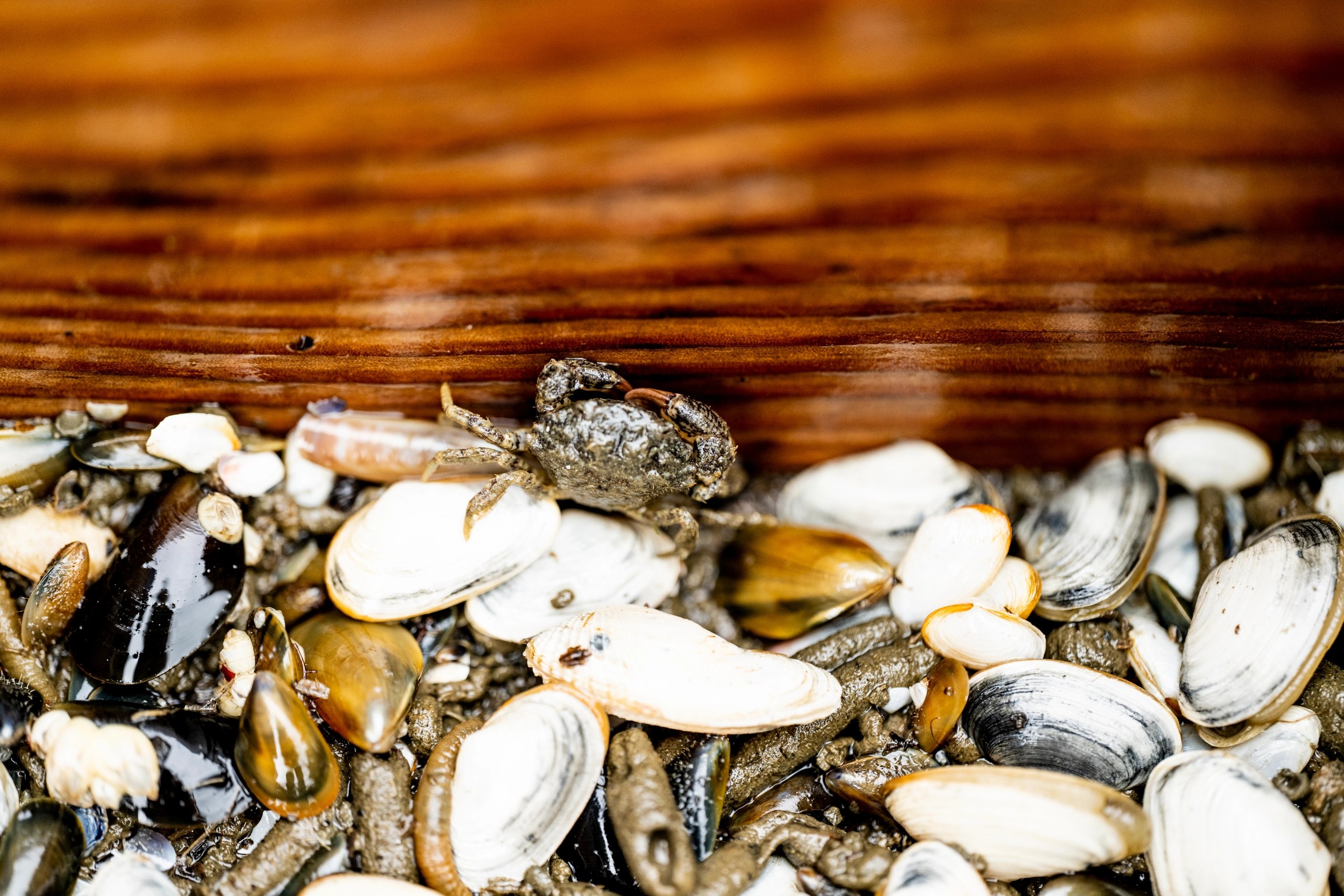
Eventually, the mud revealed its secrets – all sorts of vegetation, miniature mussels, marine worms, and different species of clams including tiny razor clams and false angel wing clams, Atlantic macoma, quahogs and – yep, there they were! – soft-shelled clams averaging about the size of a fingernail.
And while the occasional green crab got through the mesh, they were vastly outnumbered by bivalves.
“We’re finding more clams in the boxes than on the mudflats, and that’s showing us that there is settlement, there are larvae in the water, but that they’re not surviving outside the boxes on the mudflat, and boxes are protecting them from predation,” Abe said.
Editor’s Picks



She acknowledged that the boxes have limitations.
“Obviously, we can’t put mesh over the entire mudflat, nor would we want to,” Abe said.
But perhaps the boxes could shelter developing clams over the winter to allow them to grow to a harvestable size for shellfishers, Abe suggested. Because once clams reach maturity and are harvested, they make another stop: on a dinner plate.
About a mile and a half from the research station sits the Clam Box of Ipswich restaurant. A bit of a throwback to mid-century kitsch – the restaurant’s name references the shape of the original building, and the dining room’s nautical decor is a prerequisite of the New England seafood joint. Their specialty – the lightly breaded, golden fried whole-bellied native clams.
It’s an important delicacy to Patrick Saunders, a shellfisher whose family has used the marsh for fishing, clamming and farming since Rowley was founded.
“The marsh and clams have given my family everything,” Saunders said. “I feel a responsibility to give back whatever I can to it.”
So, he joined Grabowski and Kimbro on the study, harkening back to days when he helped his grandfather string large nets on the flats to protect clams from predators and put out Beal boxes with their inventor.
“I knew the boxes would work, it’s just nobody had been down there doing it,” Saunders said. “Maybe we can go somewhere from here.”
Photography by Alyssa Stone, Northeastern University.
Video by Neely Coe and Taijai Slaughter, Northeastern University.
Produced by Zach Christensen/Northeastern University