Co-op finds community priorities, and community, in Uganda
Zora Hynnek recently completed a co-op as a researcher with the Foundation for Sustainable Community-Based Development (FOSCOD) in Jinja, Uganda.


Northeastern student Zora Hynnek was nervous and a little uncomfortable.
It had been nearly an hour-long drive in a small car over bumpy roads. The morning rain had stopped and the tropical, early afternoon air was hot and getting hotter. And the community leaders of Naluvale, a village in central Uganda that Hynnek had never seen, were seated in a circle of folding chairs beneath a tree and introducing themselves in an unfamiliar language.
“I remember smiling a lot because something I’ve learned throughout traveling and being in unfamiliar settings with huge language barriers, is that a smile is pretty universal communication,” Hynnek recalled in a recent interview.
Then it was her turn to speak.
“Mwasuze mutya banyiabo ne basebo. Elinya lyange nze Zora,” Hynnek said, greeting the ladies and gentlemen and telling them her name.
The grammar may have been imperfect, but the proverbial ice was broken.
“They all smiled, and some of them clapped a little bit because it’s pretty rare that someone would be able to know so much (in their language) in such a short amount of time,” Hynnek said. “I could tell that they were thinking, ‘she’s really interested in integrating with us, not just coming here, speaking English and expecting that it’s going to be translated.’”
Hynnek is a fourth-year student in environmental studies and international affairs. She recently completed a co-op as a researcher with the Foundation for Sustainable Community-Based Development (FOSCOD) in Jinja, Uganda.
The non-governmental organization focuses on partnering with rural, underserved or under-resourced Ugandan communities to do development projects. But FOSCOD emphasizes that local residents determine what those projects will be.
“It’s not coming in with an idea and imposing it on a community,” Hynnek said. “It’s working with the community to understand their conditions, their struggles, their challenges and how they’re coping, and then working with them with the solutions that they always already have come up with, to build a project that would serve them best.”
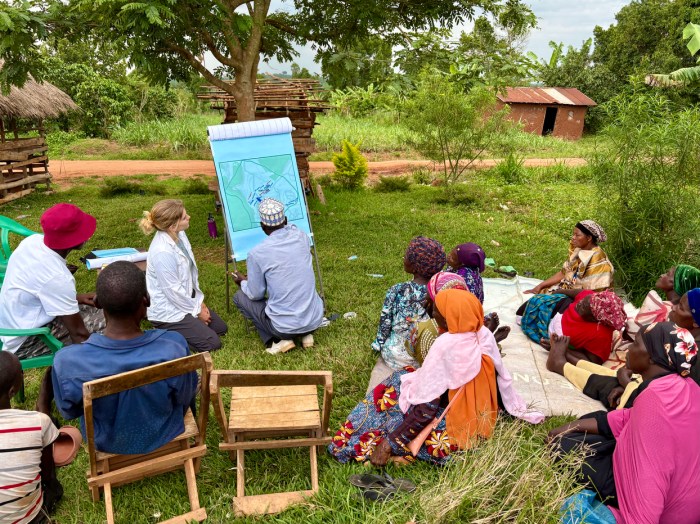
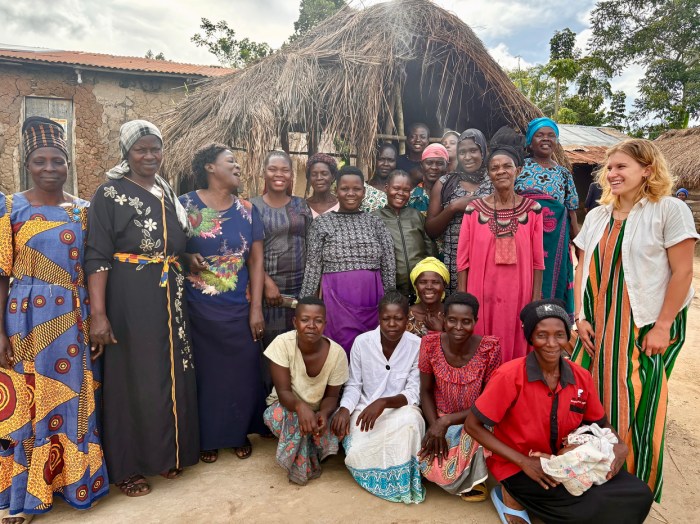
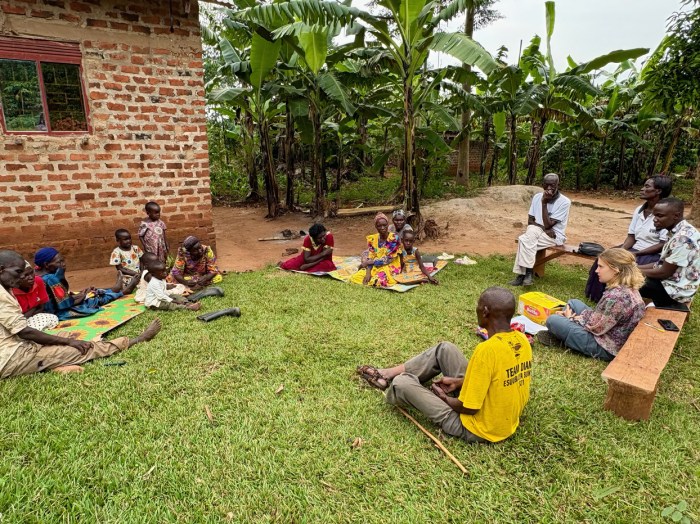
Hynnek’s role was relaying this understanding of local priorities to the organization, which she did by conducting individual interviews with the local people to understand how climate change is impacting their livelihood, their agricultural systems, their family dynamics, and the distribution of resources in the community, she said.
For example, Zora researched the commercialization of agriculture and the introduction of modern fertilizers and seeds.
“That is making people even poorer,” Margaret Nassozi Amanyire, FOSCOD’s executive director and a close mentor during Hynnek’s co-op, told Northeastern Global News.
Nassozi Amanyire explained that farmers in the region would traditionally preserve a part of the harvest for seeds to replant the following year. But Hynnek’s research found that the local people were only able to buy commercial seeds that germinate once, requiring an expensive cycle where seeds are bought annually.
Editor’s Picks


“All this came out with Zora’s research,” Nassozi Amanyire said. “We have hosted very many interns in the past. But I think she was very special.”
Hynnek said it took a different set of expectations and skills to develop the trust among the community that enabled her success.
She gained a lot of attention and curiosity as the new person in the area – particularly when she was working in more rural locations. Adapting to a more relationship-based and open culture – as well as a culture where time was not as strictly adhered to as in the West – also required an adjustment, she said.
“In the U.S., if I was approached by people and strangers asked how my day was or started having a conversation, you’re taught ‘oh, you don’t talk to strangers,’ especially as a woman,” Hynnek said.
But people in Uganda routinely would stop her on the street to start a conversation, Hynnek said. And no one took offense should a meeting or interview not start exactly on time, she added.
“Everybody has this laid back ease because their trust is built in the relationships that they foster,” Hynnek said. “It made me think about things in such a new way, and I really admire and value the way that time and relationships are managed there.”
Over the course of her co-op, Hynnek developed such relationships herself. Towards the end of her four-month stay in Uganda, she, Nassozi Amanyire, and another of her supervisors traveled to a community with a lot of young workers near a forest.
As always, the villagers recognized the car as belonging to FOSCOD. But instead of just waving and yelling greetings to Nassozi Amanyire, the villagers began calling Hynnek’s name and waving and saying hello to her, too.
“To know that I was able to do that work and represent the things that they’re telling me and take everything that they’re saying and give it a bigger voice, but also have that personal connection – that was really powerful,” Hynnek said.