Northeastern’s Vancouver graduates urged to ‘show up’ and shape the future
In a world of uncertainty, Northeastern University Vancouver graduate Lawrence Dass told his classmates to always “show up.”


The best course of action in doubtful times is not to wait for the moment when everything perfectly aligns, but to show up anyway.
Speaking to his fellow Northeastern University Vancouver graduates during the 2026 commencement ceremony on Thursday, graduate student Lawrence Dass shared that message as a reflection of how much the graduating class had accomplished and as encouragement for what they can achieve going forward.
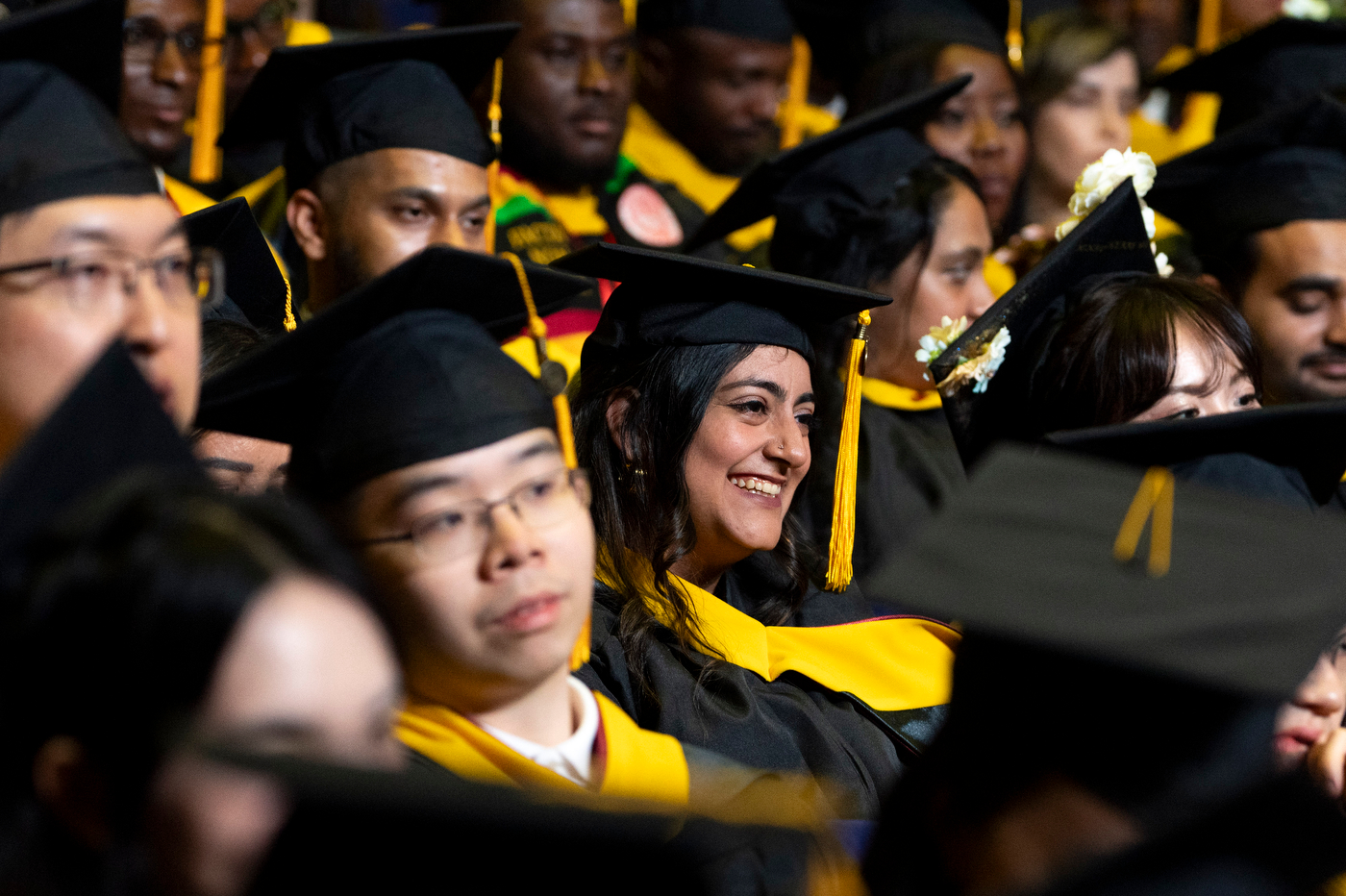
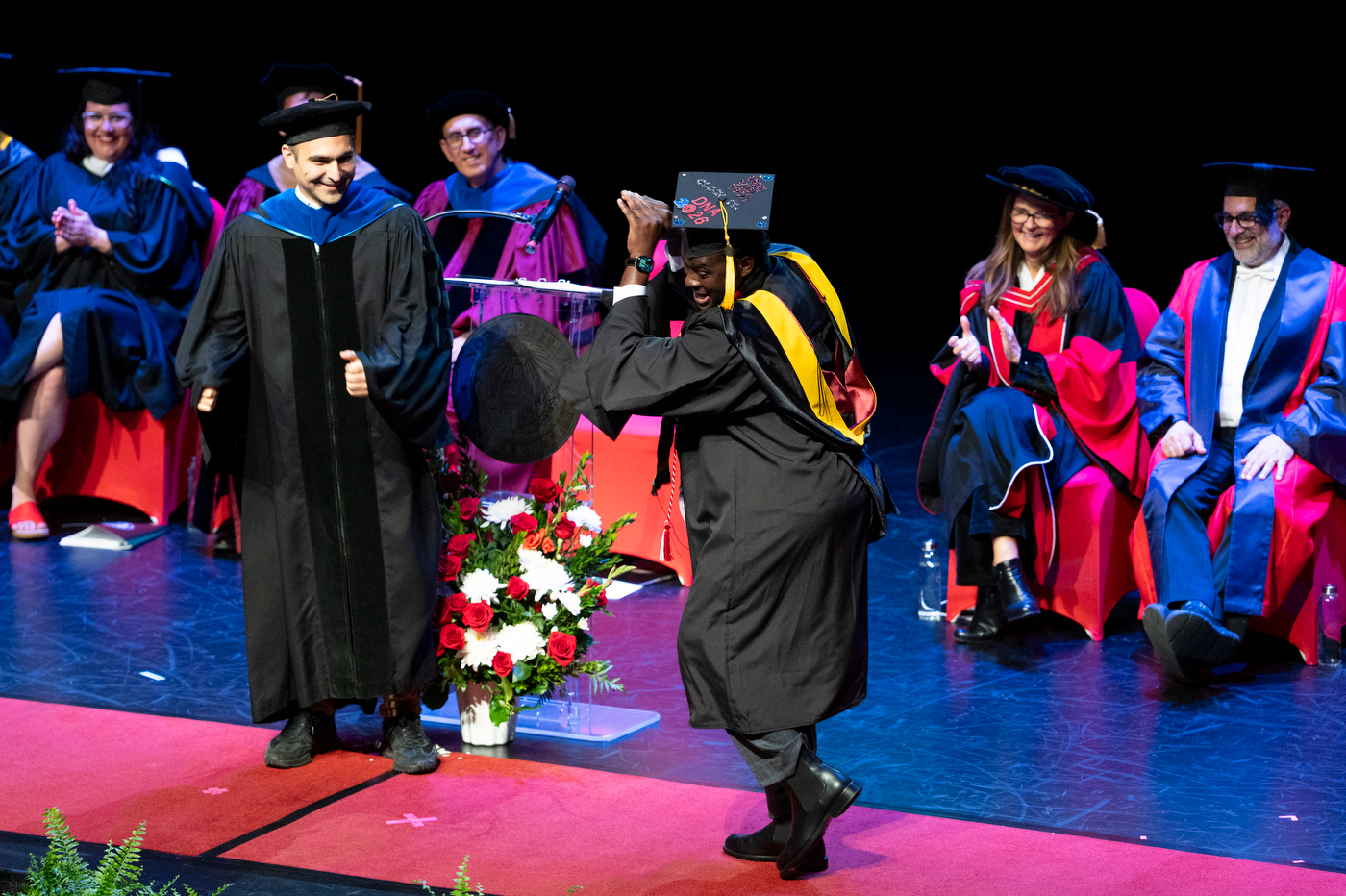
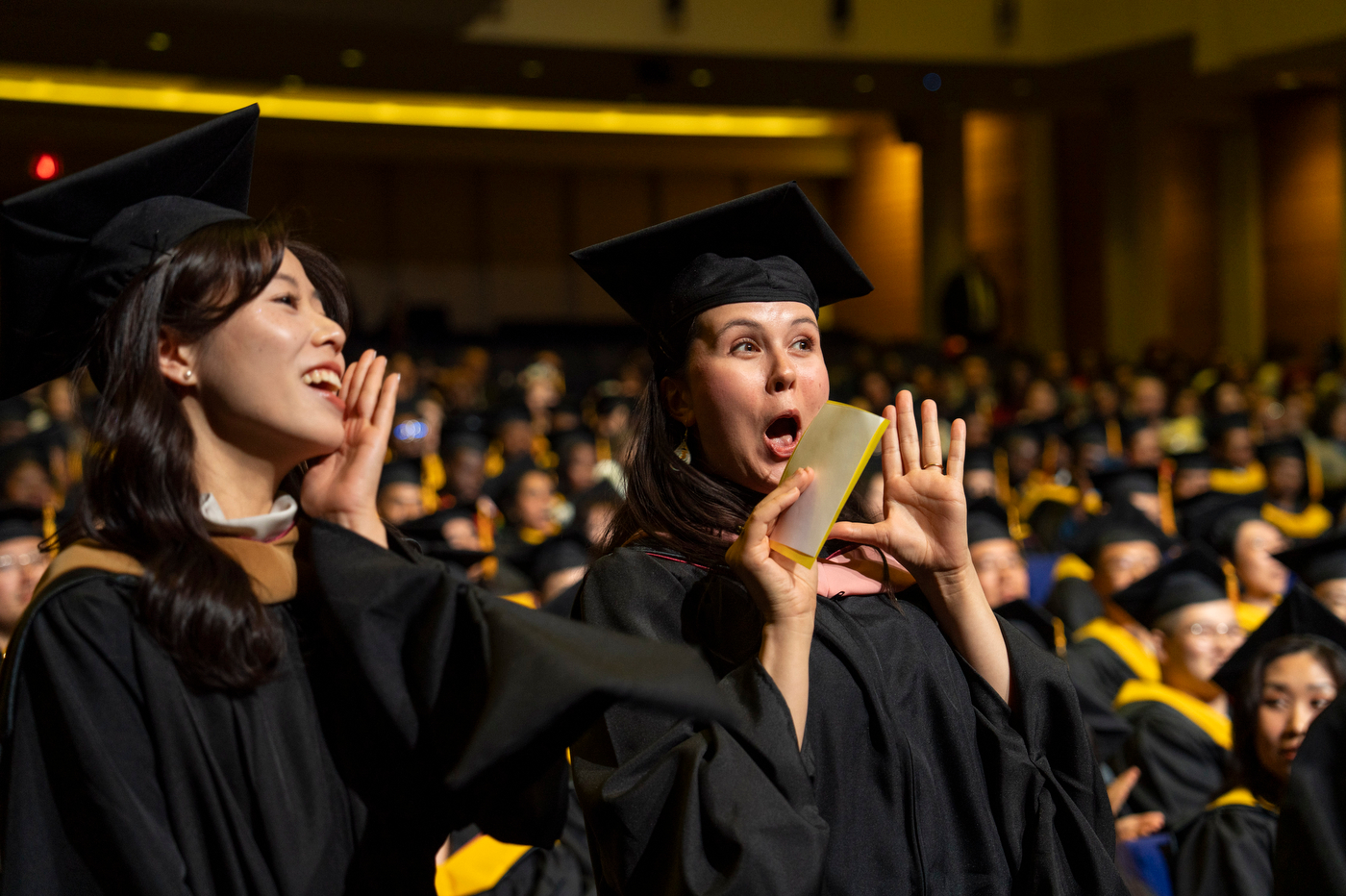
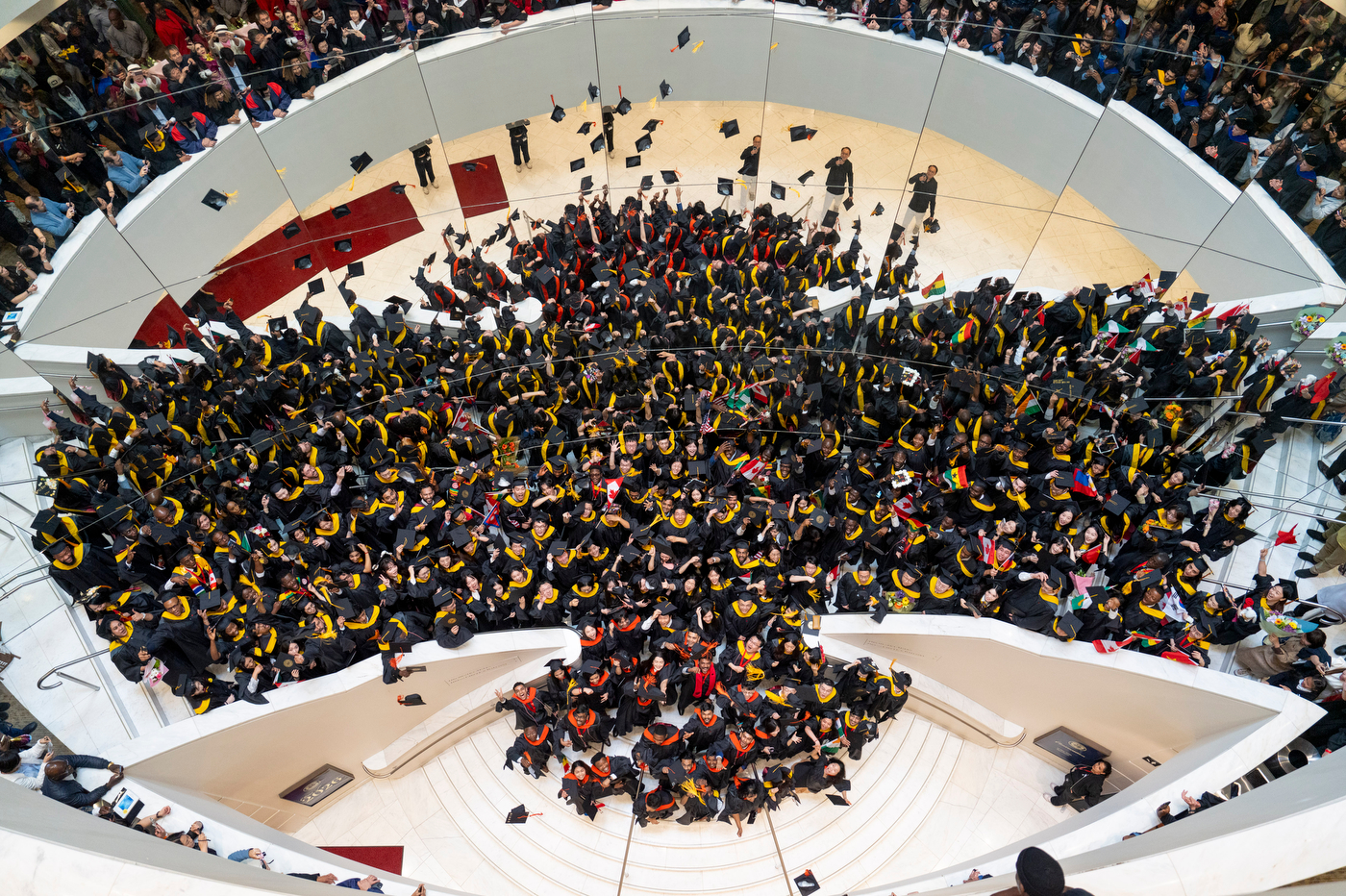
About 200 graduates were celebrated at the ceremony held at The Centre in Vancouver: Most of the graduates, including Dass, were from the College of Professional Studies, with other graduates representing the Khoury College of Computer Sciences, the College of Engineering, the College of Art Media and Design and the Bouvé College of Health Sciences.
Like many of the commencement addresses on the Boston campus, Dass noted that the graduates were entering a “world that’s changing faster than our courses can keep up with,” referring to how AI is transforming industries and to a fickle job market with roles that were created within the past few years.
Northeastern Global News, in your inbox.
Sign up for NGN’s daily newsletter for news, discovery and analysis from around the world.
“When things feel this uncertain, the temptation is to wait until you feel ready, until you have the perfect resume, until you have the perfect answer, the perfect plan,” said 37-year-old Dass, a software engineer who graduated with a Master of Professional Studies in analytics and a concentration in applied machine intelligence. “But that moment never comes. We just have to show up anyway.”
This was Dass’ second master’s degree, which he was inspired to pursue while building dashboards for financial analysts at a U.S.-based investment management firm.
“I thought, ‘This is the future,’” he told Northeastern Global News, because it combines “the best of both worlds: engineering as well as the analysis part.”

Sharing how he navigated such a moment, Dass said he dove headfirst into a Vancouver employment fair without fully understanding the intricacies of hiring in Canada.
“The only cure I have found is to treat this like a contact sport. You can’t think your way out of doubt. You have to do your way out,” he said.
He went to tech meetups, became a career peer adviser and participated in “hackathons,” which are computer programming competitions that are timed and collaborative. It also wasn’t uncommon for Dass to talk to his peers through moments of imposter syndrome, he said.
“Write code, run the model and ask the question you think everybody already knows the answer to.”
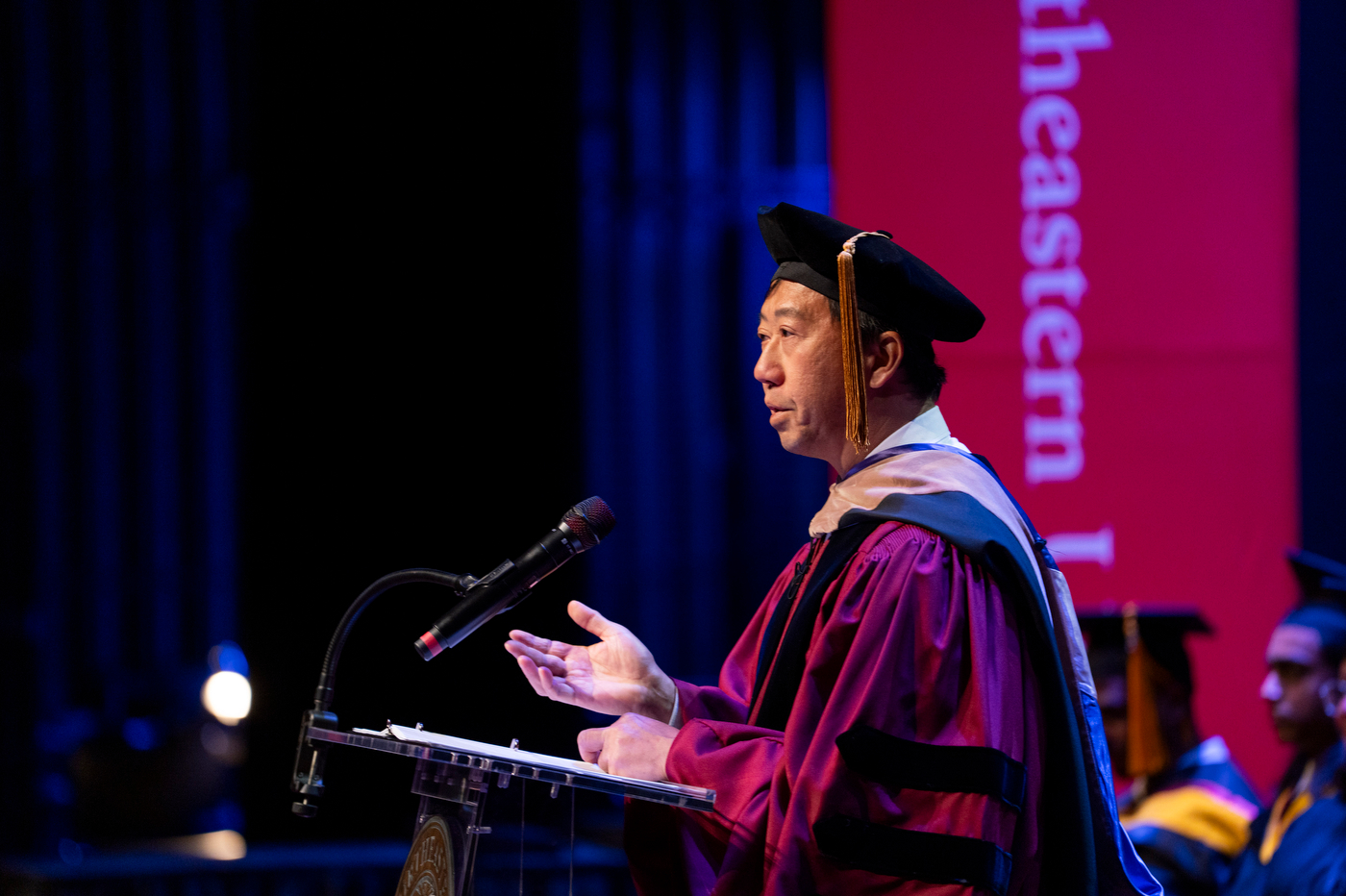
Like Dass, keynote speaker Bill Tam, who served as chief executive officer of the nonprofit British Columbia Tech Association, also spoke about uncertainty and rising to the occasion to shape the future. Tam also co-founded the Digital Technology Supercluster, which brings together companies, nonprofits, educational institutions and government entities in Canada to generate technological innovations and solutions.
Sharing his own experience with the graduates, Tam said it was difficult at times working with the entities that participated in the Digital Technology Supercluster. Their priorities and workflows differed from each other, and Tam wondered at times if it would be easier to “narrow the scope and make it more manageable,” he said.

Editor’s Picks


“What kept it moving was a shared belief that something larger was worth building, that if we could align around that, we could create something none of us could build alone,” he said.
The world today is “somewhat more complicated” than the one he faced during his own graduation, he said, marked by division, conflict and “the rapid rise of artificial intelligence, with all of its promise and its uncertainty.”
It’s up to the graduates how they will respond, he said.
“There’s a lot of focus on what technology can do, what systems can be automated, what artificial intelligence can create. All of that is important. Don’t get me wrong, it’s very important – but it’s not the whole picture,” Tam said. “What defines us is our ability to connect, to build relationships, to trust each other enough to work through differences, to have real conversations and learn from them. And that’s part of what does not get replaced in any AI setting.”
Tam also emphasized that the graduates must embrace their different backgrounds and work together.
“That is the art of the possible. Now it’s yours to practice,” he said. “The future is not something you step into. It is something you help create, together.”