Can Elon Musk pay the salaries of TSA agents during the partial government shutdown?
Using private funds to plug federal budget shortfalls is tightly restricted under law and widely discouraged as a matter of policy, Northeastern University legal and policy experts said.
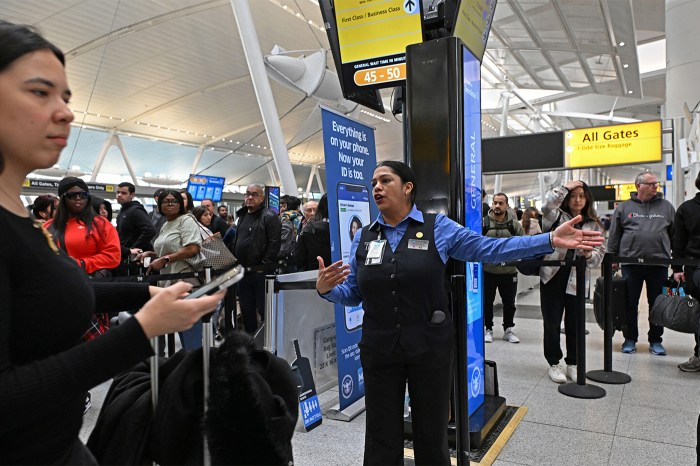

Travelers have been hit with long lines and delays at the nation’s airports as a result of the ongoing partial government shutdown that has left hundreds of Transportation Security Administration workers unpaid and calling out sick or quitting their jobs altogether.
Amid the chaos, billionaire Elon Musk has offered to pay the government workers in an effort to alleviate the pressures.
“I would like to offer to pay the salaries of TSA personnel during this funding impasse that is negatively affecting the lives of so many Americans at airports throughout the country,” Musk wrote in a recent post on the social media platform X.
But would U.S. law permit that?
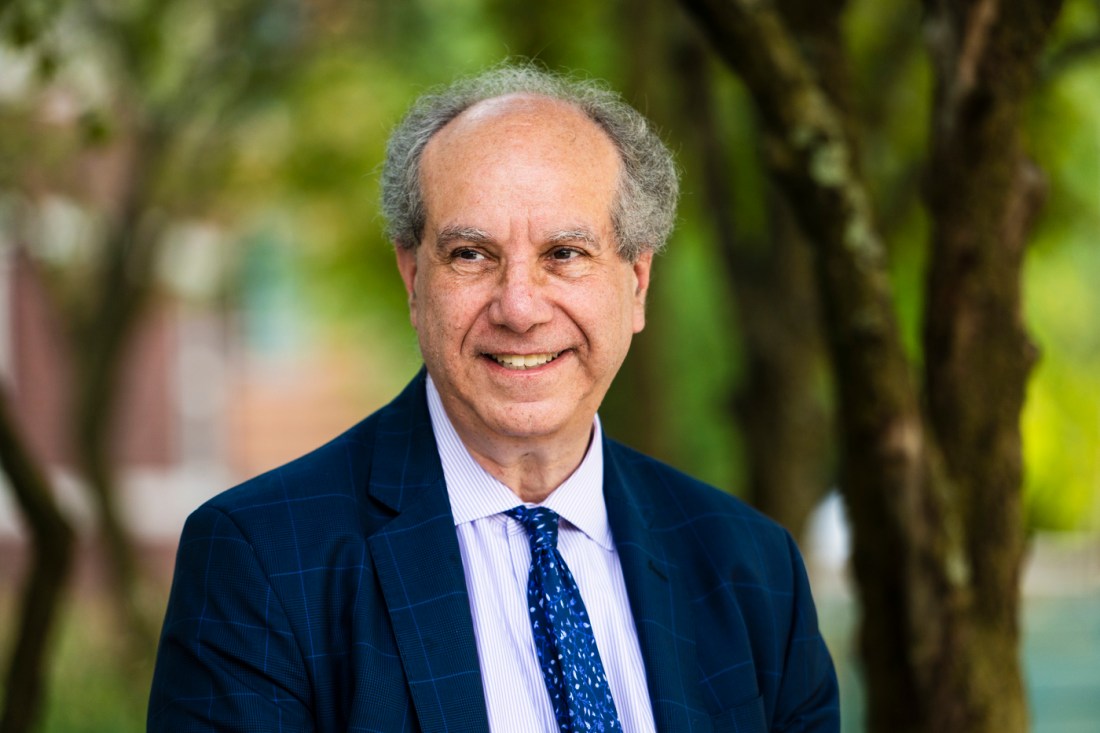
It’s complicated. There is a federal law — 18 U.S.C. § 209 — that prohibits government employees from being paid by any entity besides the U.S. government, said Jeremy R. Paul, a professor of law and former dean of the Northeastern University School of Law.
However, “He is free to make gifts to the federal government, but he would have no control over how the money is spent,” Paul said.
Christopher Bosso, professor of public policy and political science at Northeastern, added that private funds may be donated to the Department of Homeland Security, or DHS, which oversees the TSA. But the department would have no legal obligation to direct those funds to TSA.
If Musk decided to make good on his offer, it wouldn’t be the first gift from a private donor during President Donald Trump’s second term.
In October, the president said that an anonymous private donor had given $130 million to the U.S. government to help pay the troops during the then-shutdown — the first of two funding lapses since Trump took office last year. While some federal agencies have long been able to accept limited private donations for specific purposes, there is little precedent in recent administrations for using private money to offset core government costs during a shutdown.

Several federal agencies, such as the Department of Defense, Department of State, National Park Service and Department of Veterans Affairs, have authority to accept private donations for limited and specific purposes.
While each agency has its particulars, there is no legal limit on the amount a private citizen can give to the U.S government.
Editor’s Picks


That donor turned out to be billionaire Timothy Mellon, grandson of American banking magnate Andrew Mellon and heir to the Mellon banking fortune. Sean Parnell, a spokesperson for the Pentagon, said at the time that the donation was accepted under the “general gift acceptance authority” and was exclusively used to “offset the cost of service members’ salaries and benefits.”
It’s not clear how that previous donation was able to be used to compensate service members’ as the Pentagon has a policy stipulating that gifts generally cannot be used to cover routine operating costs or payroll, and using private funds to plug federal budget shortfalls is tightly restricted under law and widely discouraged as a matter of policy, Bosso and Paul said.
That could open the door to abuse, Paul noted.
“It would be an end run around Congress’ power of the purse if we treated such private contributions as a slush fund under presidential control,” he said.
As the shutdown drags on, the effects on TSA agents have begun to translate into incredibly long wait times and growing frustration for travelers. On Monday, federal authorities began sending hundreds of Immigration and Customs Enforcement, or ICE, agents and DHS investigations personnel to 14 airports across the country to assist with security screening, as delays stretched to three or four hours at some locations.
Also on Monday, nearly 11% of TSA officers nationwide — more than 3,200 workers — were absent from their posts, according to DHS.