Research into her great-grandfather’s past reveals what he left behind during the Holocaust
Northeastern University student Melina Coy’s old family suitcase sheds light on history.
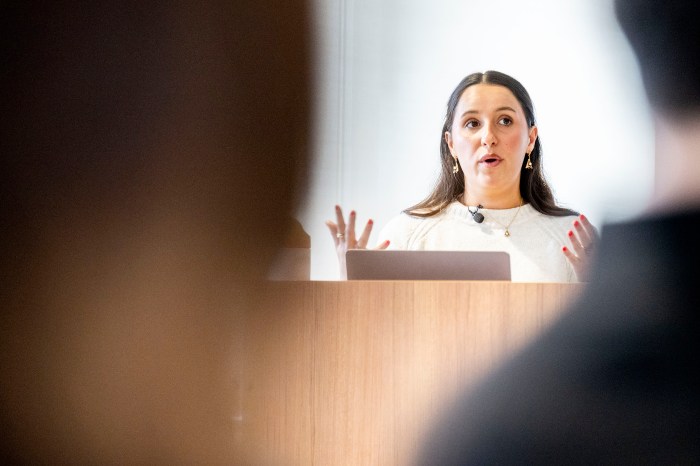

For the late Ralph Ettelson, “the past was the past” – even when he returned to his hometown in Lithuania, where his family and fellow Jewish citizens were systematically murdered during the Holocaust.
However, Ettelson’s great-granddaughter, Northeastern University student Melina Coy, disagreed with her great grandfather..
“I would love to challenge that,” Coy said. “I think the past does make a huge difference, and that is why his great-granddaughter is still studying his history and learning what he went through.”
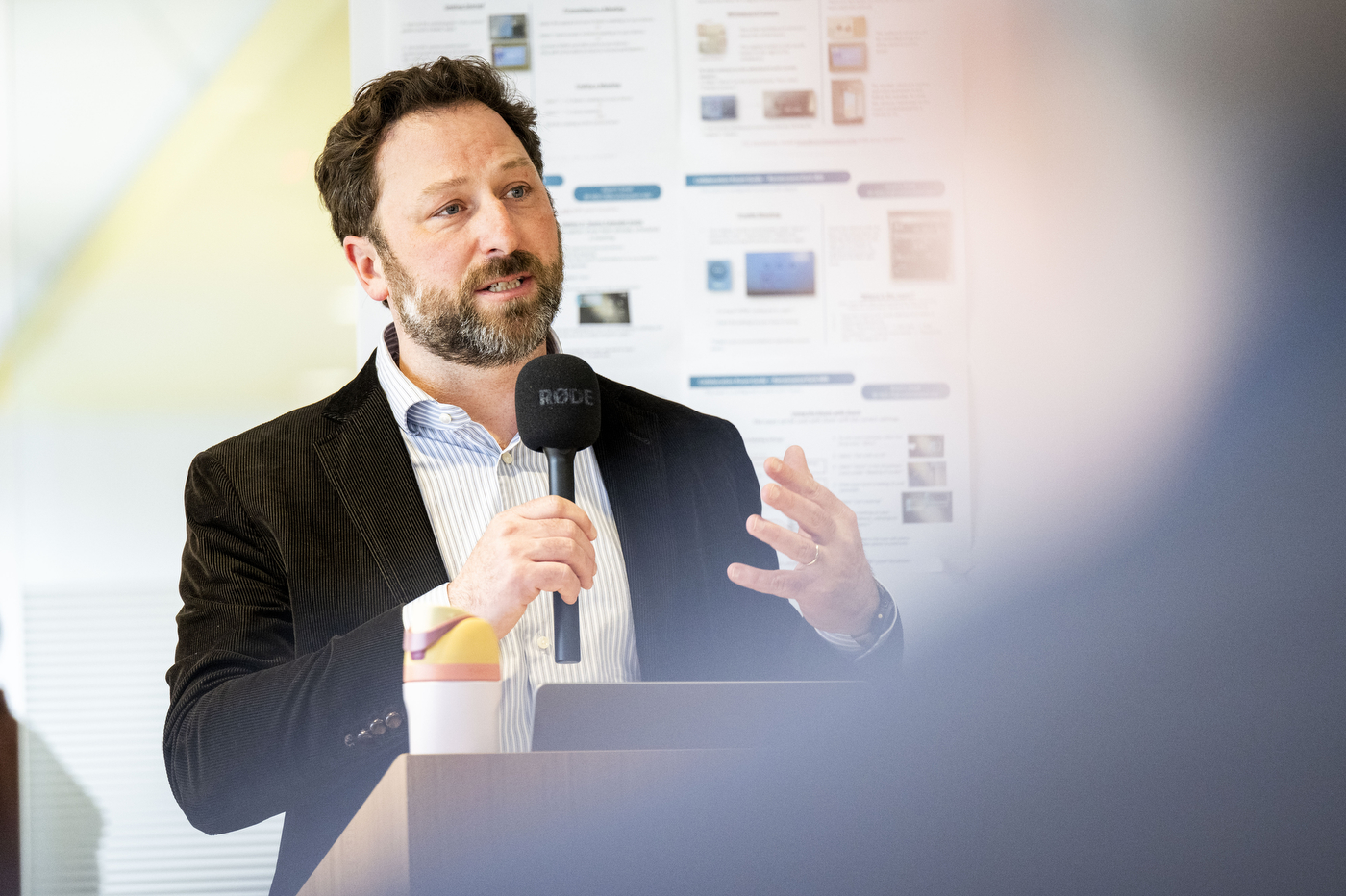
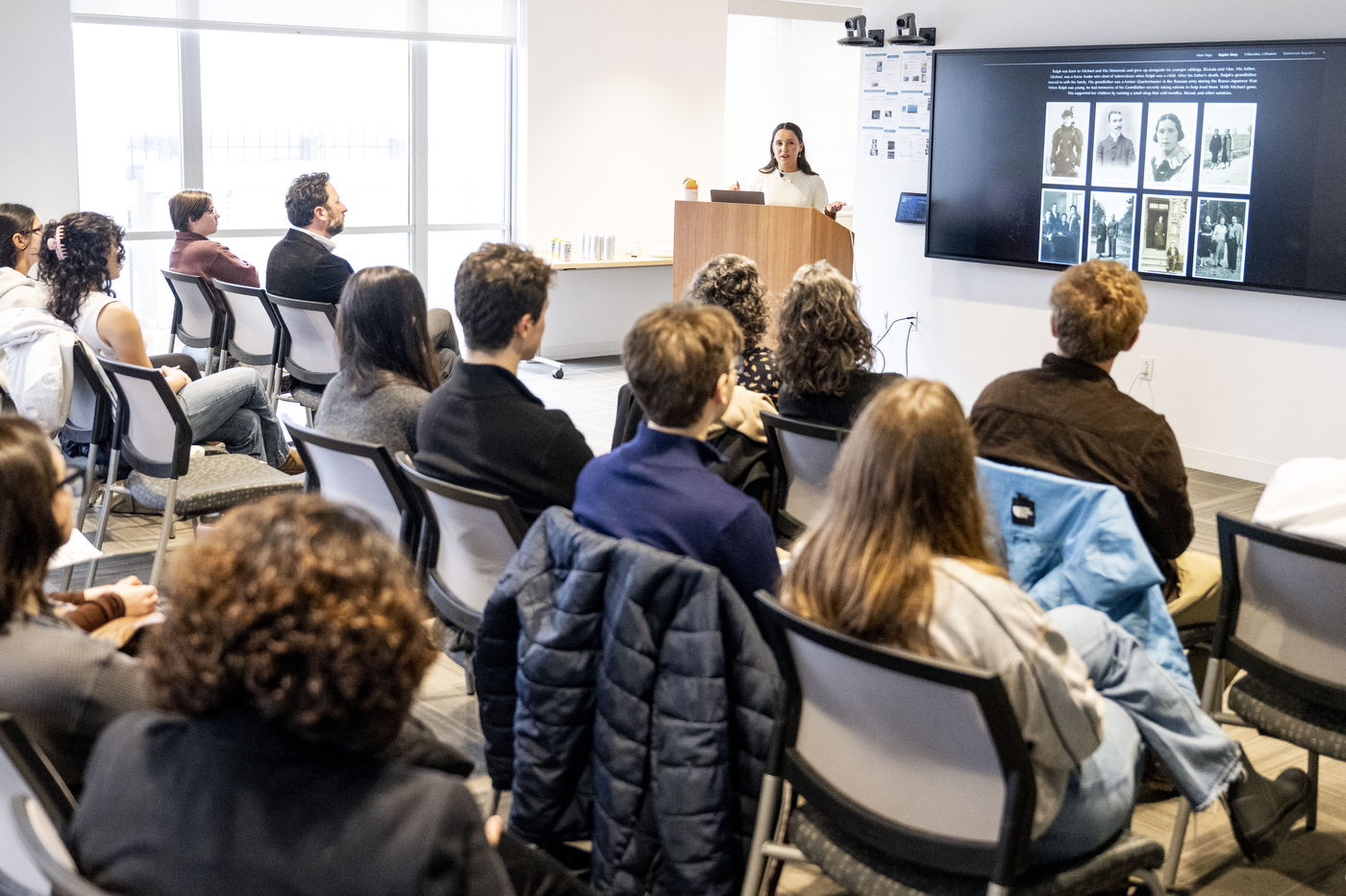
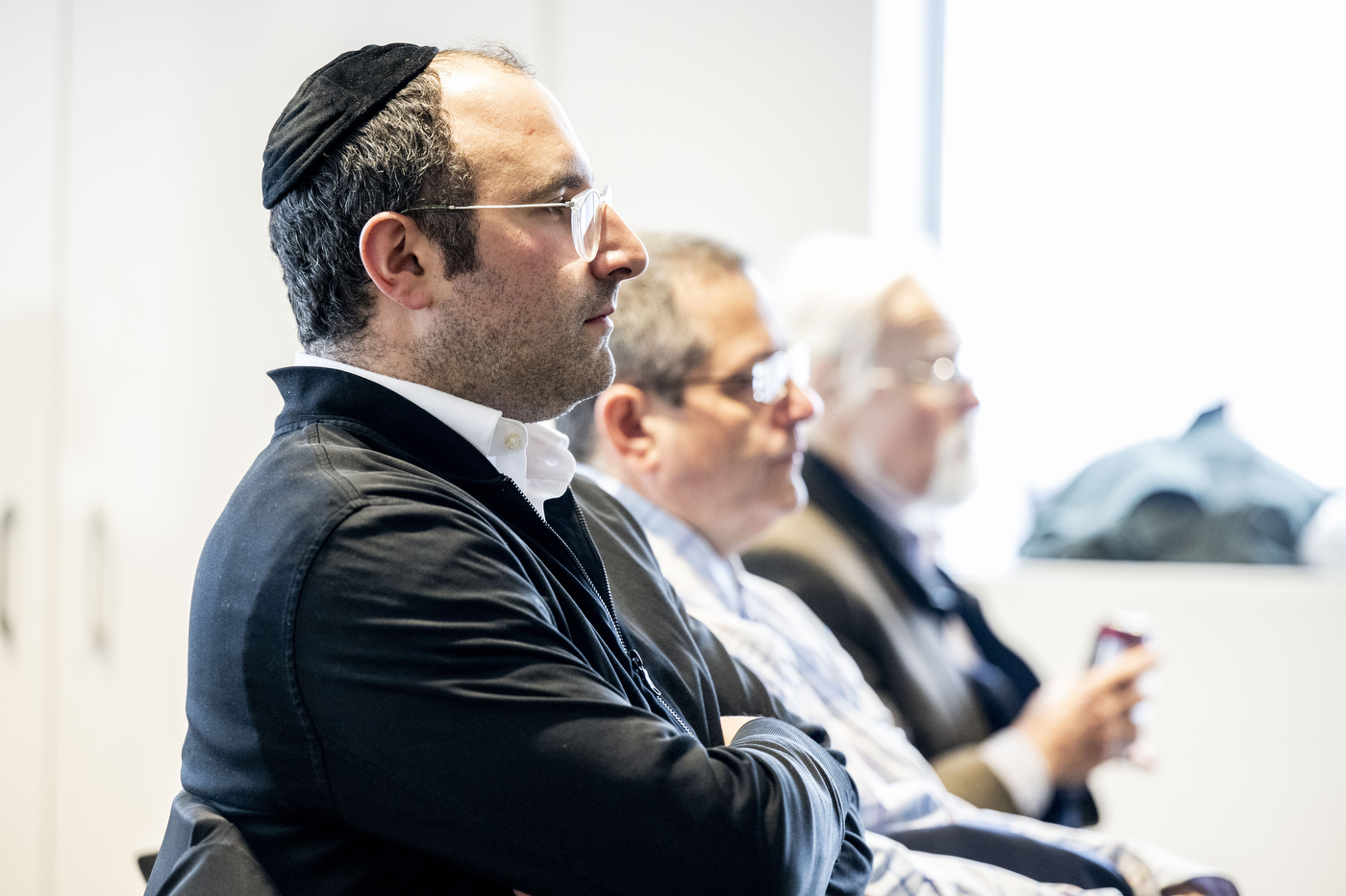
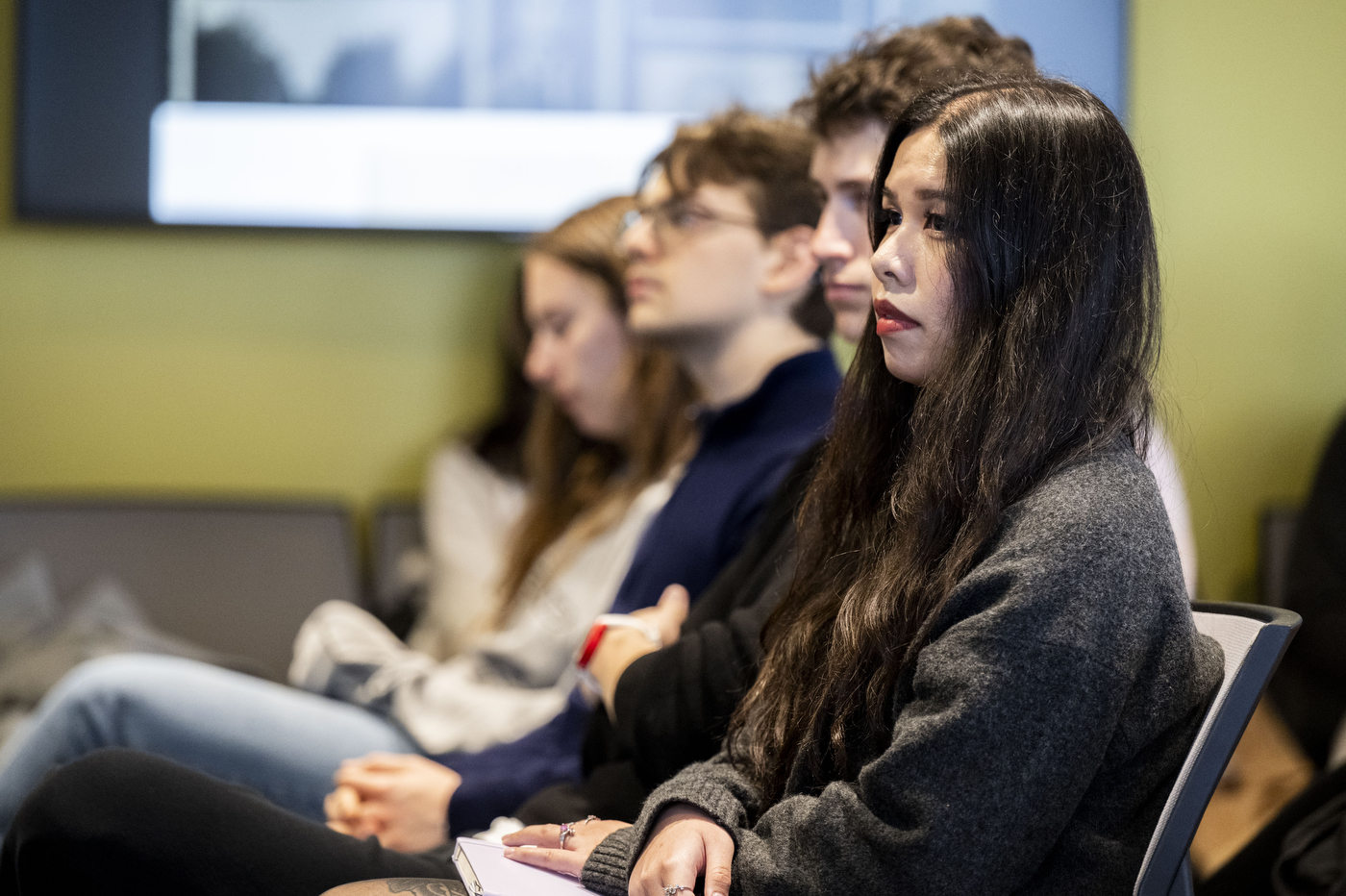
Coy made those comments as part of a lecture she gave on Monday as the recipient of this year’s Gideon Klein Holocaust Legacy Foundation Scholarship, an annual award and scholarship given to fund student research or performance relating to the Holocaust.
During her talk, Coy presented her research on her great-grandfather Ralph Ettelson’s (1911-2000) journey from the village of Vilkaviškis, Lithuania, to the Dominican Republic, and eventually to New York City. The presentation focused not just on Ettelson’s life and experience, but also on the Jewish communities in each of those locations prior to, during, and after the Holocaust.
The discussion, held on Northeastern’s Boston campus, was also the first event of this year’s Holocaust and Genocide Awareness Week, the university’s annual week-long series of events dedicated to remembering the Holocaust.
“She has an incredible family story that she has gone to great lengths to research, to categorize, to shape the narrative of and to build both an exhibit and a website that will continue on in future,” said Simon Rabinovitch, Stotsky Professor of Jewish Historical and Cultural Studies at Northeastern and the chair of the committee that organizes the Awareness Week.
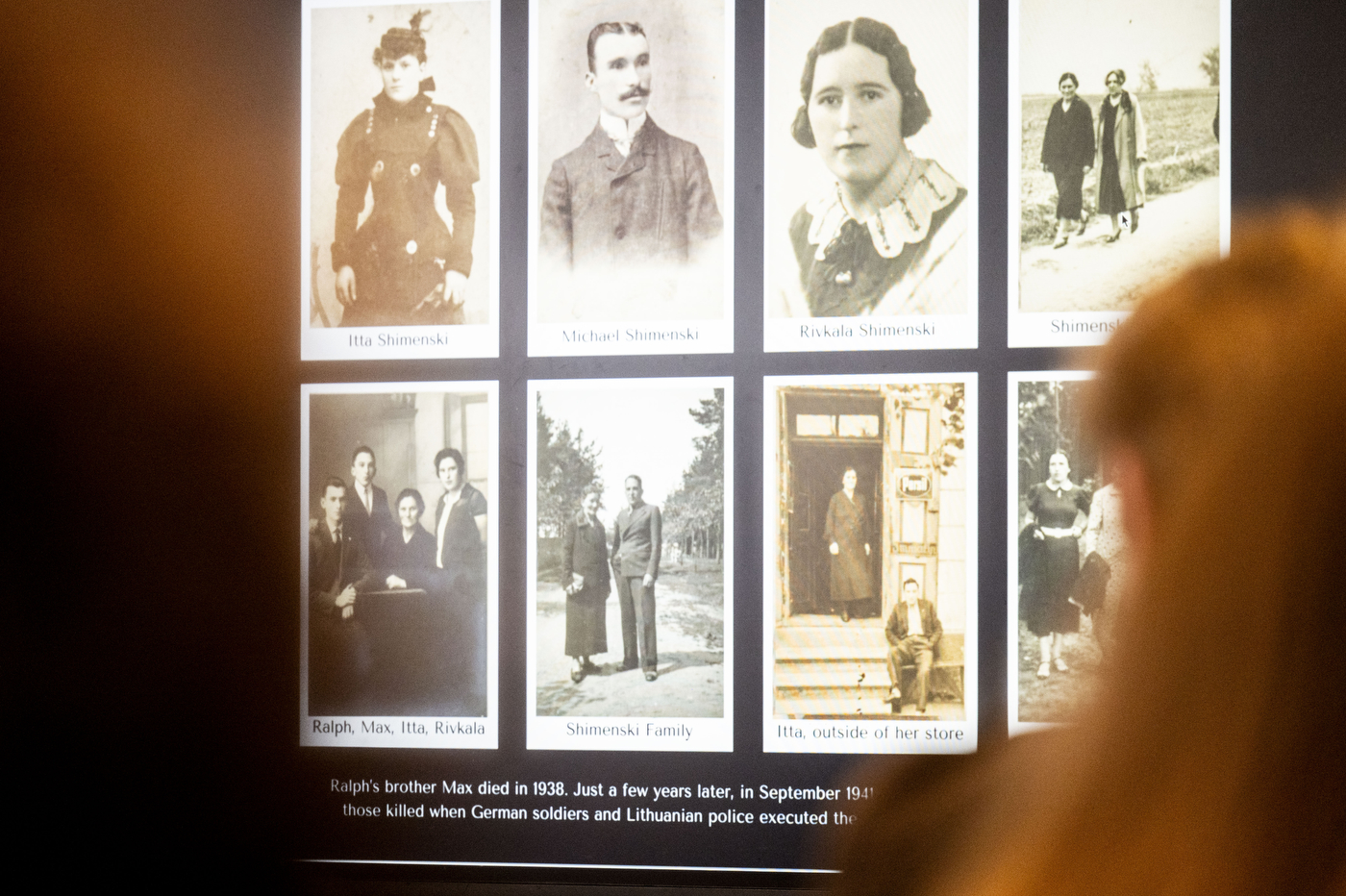
Coy, a fifth-year political science and business student, said she had been curious about her great-grandfather’s story since the age of 12, when representatives from the United States Holocaust Memorial Museum showed up at her home to look through a suitcase her great-uncle — Ralph’s son — Richard had kept. Inside the suitcase were 577 letters from the mid 1930s to 1941 between Ralph Ettelson and his family in Lithuania, photographs, business cards and other printed material.
Northeastern Global News, in your inbox.
Sign up for NGN’s daily newsletter for news, discovery and analysis from around the world.

“This suitcase, in many ways, had become a window into what Jewish life was like in that place at that time,” Coy said Monday.
And even though only nine of the letters have so far been translated from the original Yiddish into English, they reveal a lot about not only the family but the issues of the time.
In them, Ettelson’s mother, Itta, expressed grief over the loss of one of her children, worried about Ettelson’s sister Rivka, and implored her son to write more often.
“By reading these letters that still exist, it preserves that memory in some way,” Coy said. “At a time when the Holocaust history is being increasingly denied, reading this raw, emotional suffering and pain of these people is the least we can do.”
Letters from Ettelson’s mother ended in 1941. Germany invaded the Soviet Union in June of that year.
On July 27, 1941, the Nazis surrounded the Jewish ghetto in the village where the Ettelsons lived and made the men dig trenches purportedly for oil tanks. Approximately 800 men, including 65 non-Jewish communists, were shot and killed and then buried in the trenches.
Editor’s Picks


By Sept. 24, according to Soviet records, 3,056 of the remaining Jewish citizens were killed, and there were no Jews left in Vilkaviškis by the end of 1941.
But Ettelson wasn’t around to experience any of that. He had left in 1927.
It is currently unclear why he left, Coy said, but as the eldest son of a poor family, he was likely sent abroad first, with the rest of the family expected to follow.
There is also a gap in the historical record, but by the mid 1930s, Ettelson was part of the Jewish refugee population in the Dominican Republic, which, along with China, was the only country willing to accept Jewish refugees in the 1930s, according to Coy. Even though the Caribbean nation offered to resettle 100,000 people, only 750 Jews ever made it to the country, Coy said. Like Ettelson, they settled in Sosua, an agricultural settlement where the populace could freely practice their religion.
Still, “[T]heir living conditions were not easy,” Coy reported, showing clips from a documentary depicting the settlement as well as pictures of her ancestor astride a horse in the tropical heat. “They were given cattle and land and expected to build this settlement up.”
Ettelson worked a menial job in a cheese factory in Sosua, but left for New York City soon after, his great-granddaughter revealed. He settled in Brooklyn and established a wholesale tropical fruit business, a job that enabled him to maintain ties with the Dominican Republic. In 1938, Ettelson married and, in 1946, Coy’s grandfather was born.
And though she never met her great-grandfather, Coy said she feels a connection to him, particularly after she made a recent trip to Holocaust sites in Poland.
She hopes to take time following graduation this April to get the remainder of the letters translated and learn even more.
“These letters and photographs are an arc, a remnant of a world at the brink of destruction,” Rabinovitch said. “That’s a link that makes them extremely valuable.”