Here’s what you need to know about cancer vaccine development
A new review study from Northeastern looked at the possibilities and pitfalls in this rapidly developing field.
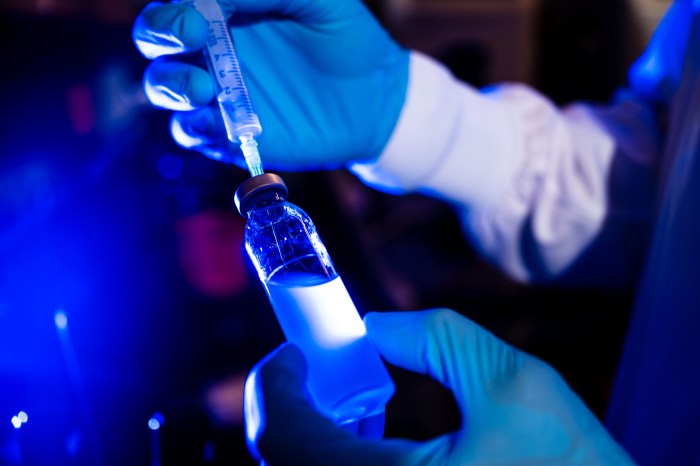

Cancer is the second-leading cause of death in the United States, accounting for over 613,000 fatalities in 2023, per the Centers for Disease Control. But the field of cancer vaccines, which can be used as a form of treatment, is rapidly growing. Over 400 trials testing this form of therapy have been initiated globally over the last 3 years, per data from the National Library of Medicine.
Biotechnology company Moderna and pharmaceutical company Merck recently announced that an experimental vaccine they developed reduced the risk of death or recurrence in patients with late-stage melanoma by nearly 50 percent over the course of five years. Given this success, Merck and Moderna said they are also testing other mRNA vaccines to treat different types of cancers, like renal cell carcinoma.
Mansoor Amiji, a university distinguished professor of pharmaceutical sciences at Northeastern University, recently published a review in Biomaterials that examined the discovery, delivery and development methods of nearly 220 studies and trials working on cancer vaccines in order to see how the field was progressing and what challenges fellow researchers were facing.
Northeastern Global News spoke with Amiji, study co-author Kenneth Anderson, director of the LeBow Institute for Myeloma Therapeutics and Jerome Lipper Multiple Myeloma Center at Dana-Farber Cancer Institute and Zhongkun Zhang, a postdoctoral student at Northeastern also involved in the research to learn more about the landscape of cancer vaccines and what they found in their research.
How do cancer vaccines work?
Cancer vaccines utilize the body’s immune system to attack an existing tumor, Amiji said. He added that researchers design these vaccines to identify a tumor’s antigens (proteins produced by cancer cells that serve as markers) and train the body’s immune system to recognize the cancer cells as foreign materials to destroy. The feasibility of the approach depends, in part, on researchers’ ability to successfully screen tumor antigens to ensure the treatment is targeting the right molecules, he said.
These vaccines use the same mRNA technology applied to the Covid vaccine, Anderson said, adding that mRNA is a really exciting new approach that in the Covid epidemic was life saving and that’s now being applied in cancer. These vaccines are scalable, adaptable and can induce strong immune responses, he said.
What is the latest in the field of cancer vaccines?
This clinical success of personalized mRNA vaccines in Moderna and Merck’s melanoma vaccine trial demonstrates that antigen-based cancer vaccines have potential to improve patient outcomes, said Zhang, adding that cancer vaccines are entering a new era driven by AI-enabled antigen discovery, mRNA delivery platforms, and combination immunotherapy. AI, for instance, is being used to help identify the antigens in the tumors, Zhang said, which can help improve the efficacy of these vaccines.
Editor’s Picks




Amiji shared that there are trials examining vaccines to treat a range of different variations of the disease, including breast, pancreatic, colorectal, and lung cancers which are some of the most common diagnoses in the United States.
What are some of the challenges of developing cancer vaccines?
Cancer is heterogeneous, meaning patients with the same type of breast cancer might have tumors with different molecular signatures, Amiji explained. Cancer vaccines work best when they’re individualized to target a patient’s specific tumor which is not always realistic given the strain on time and resources this type of therapy creates, he added, saying that these drugs also need to be applicable to a large group of patients.
He further said that vaccine approaches start to fail because a lot of the differences that…ultimately lead to an efficacious product is unique to that patient. We need to almost go towards a personalized therapy model, but personalized therapy is hard to do, Amiji said.
Additionally, these vaccines occasionally target the wrong cells and create immune responses to healthy tissue which can limit the patient’s ability to fight cancer, Amiji said.
What can be done to improve the efficacy of cancer vaccines?
The team’s review found that tools like AI, mRNA delivery and immunotherapy can help with creating more efficient therapies.
AI-assisted models have the ability to screen the antigens in tumors to help better identify what vaccines should target, Zhang said. These same models can also be used to help create better delivery systems to target the right cells in the body instead of going after a patient’s healthy tissue, he and the others found. Otherwise, the vaccines could attack healthy cells and weaken a patient’s immune system further.
Some tumors also have suppressive immune microenvironments that inhibit the body’s ability to respond to them, Zhang said.
Even highly [sensitive] vaccines may fail if the surrounding immune environment is suppressive, Zhang said, adding that future strategies must incorporate immune reprogramming and precise design [that will allow the vaccines to have an enhanced response from the immune system]. These vaccines also need to be used with other forms of treatment, like chemotherapy or radiation, in order to be most effective, he said.