Making green space ‘part of the game’: How considering urban forestry at multiple scales can improve city planning
Northeastern University research used a deep learning model to integrate satellite photography with Google Street View images to create a city-wide green index of Washington, D.C.


Urban greenery — like trees and other green spaces in what are otherwise concrete jungles — can help cool down cities, clean the air and encourage foot traffic, which might have the added benefit of reducing vehicle traffic. In this way, greening our cities is an important tool in our fight against climate change.
But those tasked with caring for such green spaces and planning for future ones are faced with a highly complex system whose moving parts are difficult to track and manage in full: the city itself. Now, new research from Northeastern University describes a deep learning AI model that processes both satellite imagery and Google Street View photography to analyze the green spaces in Washington, D.C., in three dimensions rather than just two. This work gives urban foresters, who plant and maintain the public green spaces in urban environments, a new planning and assessment tool that will provide them with a fresh perspective for their work.
Washington has done a good job using urban forestry and green space to create a more livable city for its residents, says Fang Fang, an associate teaching professor in Northeastern’s College of Social Sciences and Humanities. But the city, like other metropolitan cities, also faces a problem of scale, she says.
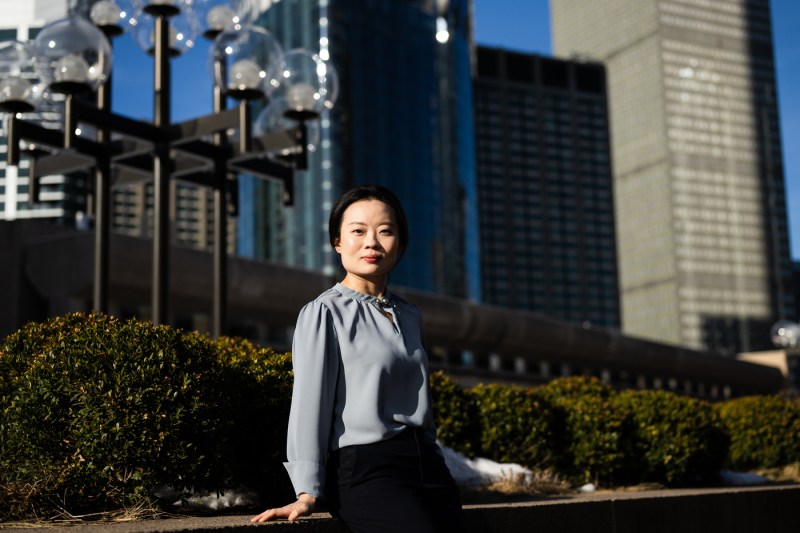
Urban foresters do have city-wide plans and enact large-scale tree surveys while also caring for individual trees as needed, but “they want to have a more effective way to monitor the entire system,” she says.
To assist in this effort, Fang and her team, in collaboration with the District Department of Transportation’s (DDOT) Urban Forestry Division, analyzed over 80,000 satellite and Street View images. By combining perspectives — satellite images for the top-down view and Google Street View for a vertical, ground-level orientation — this effort provides urban foresters with a new point of view, says Fang.
According to the paper, this combination of techniques allows the researchers to study the city’s green spaces at multiple scales, from the entire city all the way down to individual trees, which supports the foresters in their efforts to understand the full ecology of the city and points out places where their program can potentially expand.
Editor’s Picks


One of the things the new imaging underscores, for instance, is how densely-populated parts of the city tend to not have as many green spaces. “For our practical, operational purposes, [Fang’s work is] helping us understand in a new way the limits [of] our program,” according to Earl Eutsler, the associate director for the DDOT Urban Forestry Division. While his division currently maintains and adds to public green spaces, privately-owned facilities are outside its purview. Fang’s work “suggests that we need to be looking at commercial landlords,” he said.
While the Urban Forestry Division already offers free tree planting services on private property, he notes, new kinds of outreach are necessary to reach those landowners, who may not necessarily live on the property they rent out and therefore may not be aware of the opportunities.
The opportunity to add more tree cover and green space is particularly important because trees serve as more than just decorative elements, Fang says. They provide real quality-of-life improvements, like shade, improved air quality and even socioeconomic benefits like increased property value.
Green space is “not an isolated element in the city, it’s actually integrated with the entire system. It’s part of the game,” she says.
Eutsler echoes this sentiment, saying that the history of green spaces and trees in cities has shifted away from simple beautification toward a “critical item of infrastructure” with as much utility, he says, as upgrades to lead-free water pipes or the addition of bike lanes.
“The more we look for ways that trees improve people’s lives, the more we find,” Eutsler says.
Fang hopes that this work can help lay the groundwork for the future of the smart city, a city suffused with AI technology. She sees a world where the combined top-down and bottom-up visualizations, like those she described in her work, can be used to make effective “digital twins” of real-world cities that can provide simulations of the city’s environment and infrastructure for urban planning under climate change.


