Northeastern’s lead physician and Patriots doctor heads to the Super Bowl
Dr. Gian Corrado will be part of the NFL’s “blue tent” medical team on the sideline during Sunday’s Super Bowl, which is set to take place at Levi’s Stadium in Santa Clara, California at 6:30 p.m. Eastern Standard Time.

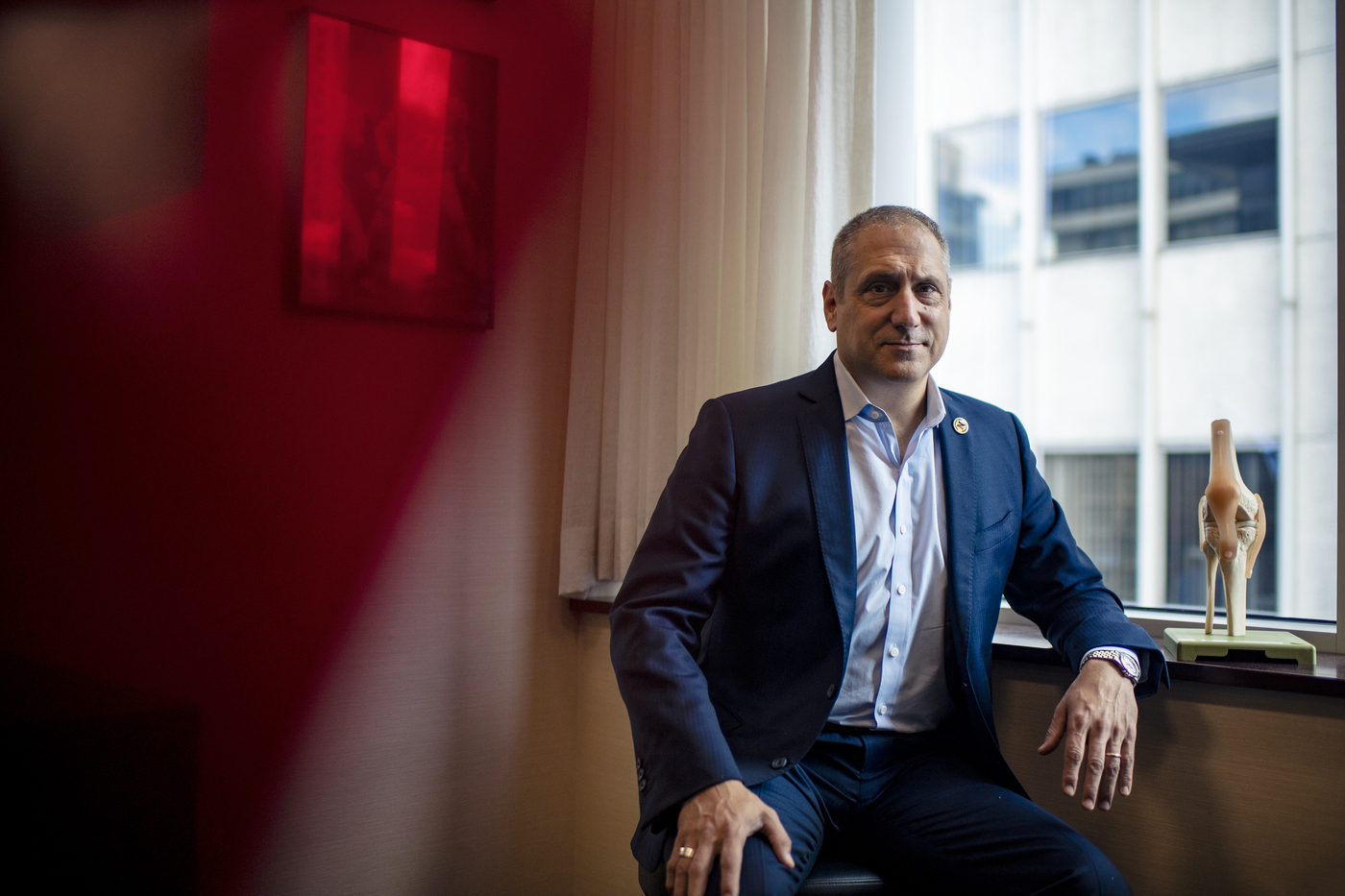
Corrado, who has worked for the Patriots for four years, said the Super Bowl is so much bigger than any other NFL game. Courtesy photo

On Sunday evening, you can find Dr. Gian Corrado, head team physician for Northeastern University athletics, under the blue tent on the sideline at Levi’s Stadium in Santa Clara, California, for Super Bowl LX.
That’s because Corrado is also the head medical team doctor for the New England Patriots, who will play the Seattle Seahawks for the NFL championship.
Northeastern Global News caught up with him on Wednesday evening, and he could hardly contain his excitement.
“I haven’t been this excited about football since the 1985 Chicago Bears,” he said from a Stanford University practice stadium where the Patriots are preparing for the big game.
If there’s anything that Corrado has come to appreciate over the years, it’s the regimented spectacle of football on the road. “Football is like the military,” he said, from the air-tight travel and practice logistics, to the medical protocols that keep the athletes healthy, and the evening socializing and media obligations that help fill out the schedule.
True to form, Corrado lives a pretty regimented life. He used to wake up at the crack of dawn and ride his bike to work. That’s 10 miles in all, from his Brookline residence to Mass General Hospital, then to Northeastern’s Boston campus and back home.
All of it, mind you, without breakfast (like many health and fitness gurus, he said he only eats between noon and 7 p.m.), but “lots and lots of coffee.”
“I did that for 18 years,” Corrado said. Now that he commutes from Brookline to Foxborough, Massachusetts, he’s given up on biking for now.
Corrado will be part of the NFL’s “blue tent” medical team on the sideline during the Super Bowl.
So, what happens in the blue tent that we see so often at National Football League games?
“Oh, just evaluations,” said Corrado, who is working his first Super Bowl.
It’s simply there to protect player privacy.
“They’re in the spotlight all the time, but their medical concerns shouldn’t be,” he said. “And they shouldn’t be evaluated in front of everybody in the world.”
Corrado, who has worked for the Patriots for four years, said the Super Bowl is so much bigger than any other NFL game.
It takes five buses, he said, to transport more than one hundred people — players; coaches and trainers; and a medical staff that includes an orthopedic surgeon, chiropractors and physical therapists — from Santa Clara to Palo Alto’s Stanford Stadium, where they set up for practice as if back home in Foxborough.
Instead of his typical routine from Brookline, Corrado is rising at 6 a.m. this week to head over to the Patriots on the West Coast training room at Stanford University, where he can tend to players in manifold ways: from the familiar musculoskeletal injuries to eye problems, infections of all kinds and the odd rash.
Editor’s Picks


Corrado has worked at Northeastern University for 20 years, tending to all the university’s Division 1 athletes. He calls Northeastern home, and noted that the caliber of athletes Northeastern produces is virtually on par with professional athletes.
For two decades, Corrado has been a familiar sight on the sidelines at Northeastern men’s and women’s basketball and ice hockey games. In addition to his Northeastern post, Corrado was at Boston Children’s Hospital for 16 years, and now is program director for the Emergency Sports Medicine Fellowship Program at Mass General Hospital.
“Taking care of the athletes at Northeastern is also an incredible honor for me,” he said. “I’ve told the president this, but this university has made my career. I owe everything to Northeastern University.”
Over the years, Corrado said he has seen just about every kind of injury you can imagine on the field, so he and his team will be vigilant on Sunday — especially for any injuries players may try to push through.
“We’ve got to watch them closely because the adrenaline, the excitement and the drive to be in the game is so great that sometimes the medical team has to step in and insist that they be evaluated,” he said.
The top concerns for Corrado, whose clinical interest includes the sudden cardiac death, or SCD, in athletes, and his team are concussions and cardiovascular problems. (On average, every three days a competitive athlete in the U.S. dies from SCD, research shows.)
Whatever the outcome of Sunday’s game, Corrado said he is looking forward to going back home and dusting off the old Brompton folding bike.
“That’ll be like a 25-mile bike ride every day, so I look forward to testing myself out that way,” he said.