Monarch butterflies face possible extinction without more care to preserve their habitats
America’s favorite bug is fluttering to Mexico for the winter


At a cruising altitude of 1,200 feet and all but invisible to people on the ground, millions of eastern monarch butterflies are riding tailwinds and thermal plumes overhead in the northern U.S. and southern Canada. And they’re also fluttering to Mexico.
They’re headed south to avoid the frigid northern winter in the “great procession,” a moniker for their annual migration north and south, in spring and fall – a journey that takes four generations of the insects to flap and glide 2,800 miles each way.
While you won’t see the clouds of pretty bugs overhead, you’re more likely this year than last to see them in your autumn gardens, when they stop for a nectar snack. That’s because their population has seen a 64% increase, according to the World Wildlife Fund, an international conservation group.
But don’t clap too loudly just yet for the star of the butterfly world, known for its tangerine orange wings with a 4-inch span and bold black trim and white spots, warns a Northeastern University insect expert.
“Any jump in their population is a good thing for the monarchs, but this isn’t near enough to applaud,” said Damon Hall, an associate professor at Northeastern’s marine and environmental sciences department.
The new number hit an estimated 61.5 million, according to non-profit conservation groups, including the Xerces Society for Invertebrate Conservation. The calculations are based on a count from the World Wildlife Fund that measures the number of acres where the monarchs converge at their winter home in central Mexico. Last season it was 4.4 acres, which jumped to 7.2 acres in 2026. The average is about around 21 million butterflies per acre, said Scott Black, executive director of the Portland, Oregon-based society.
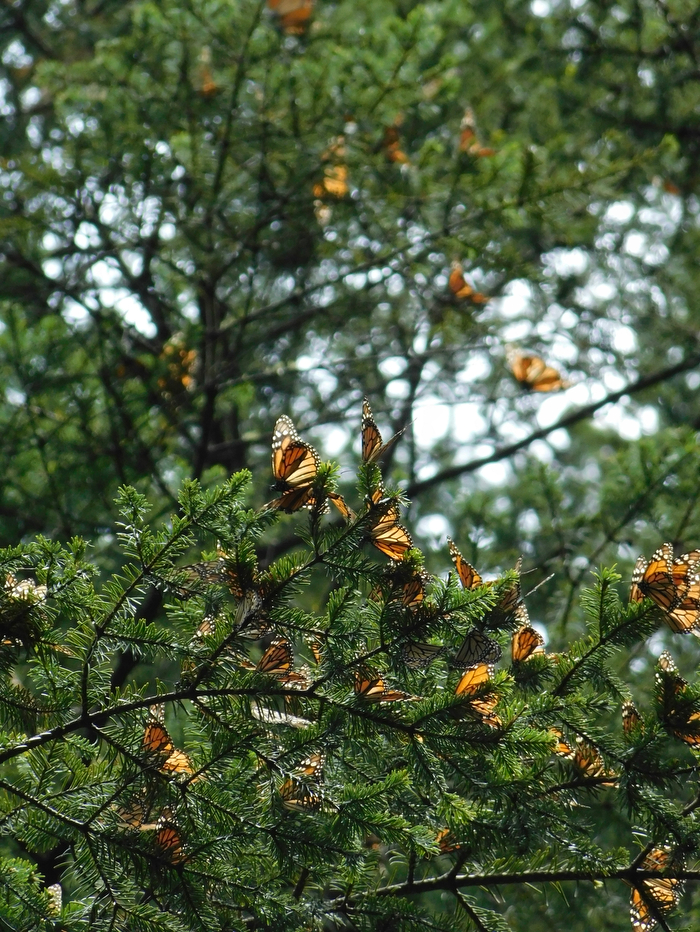
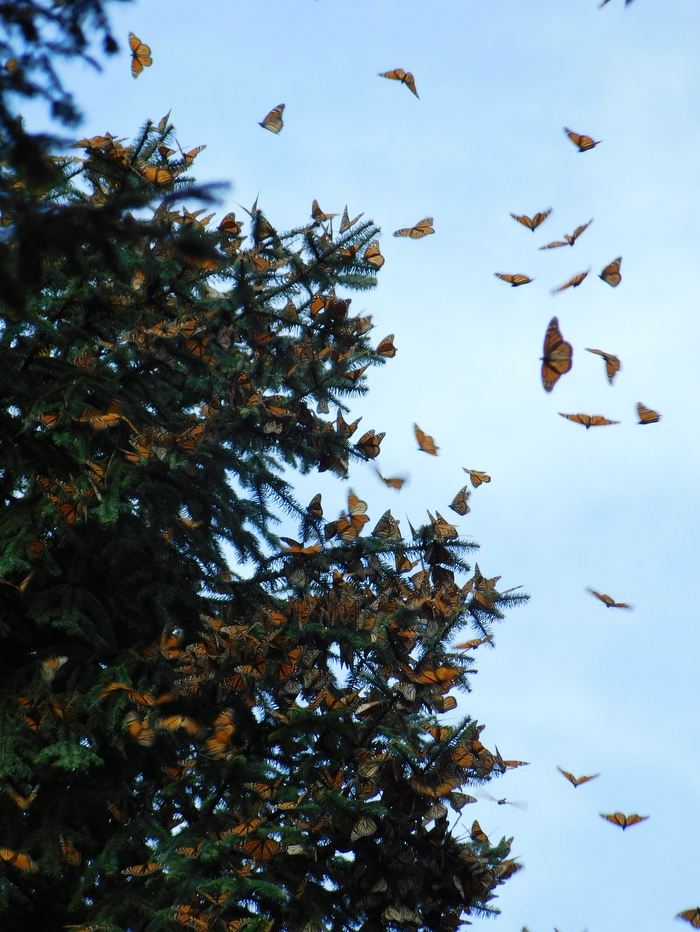
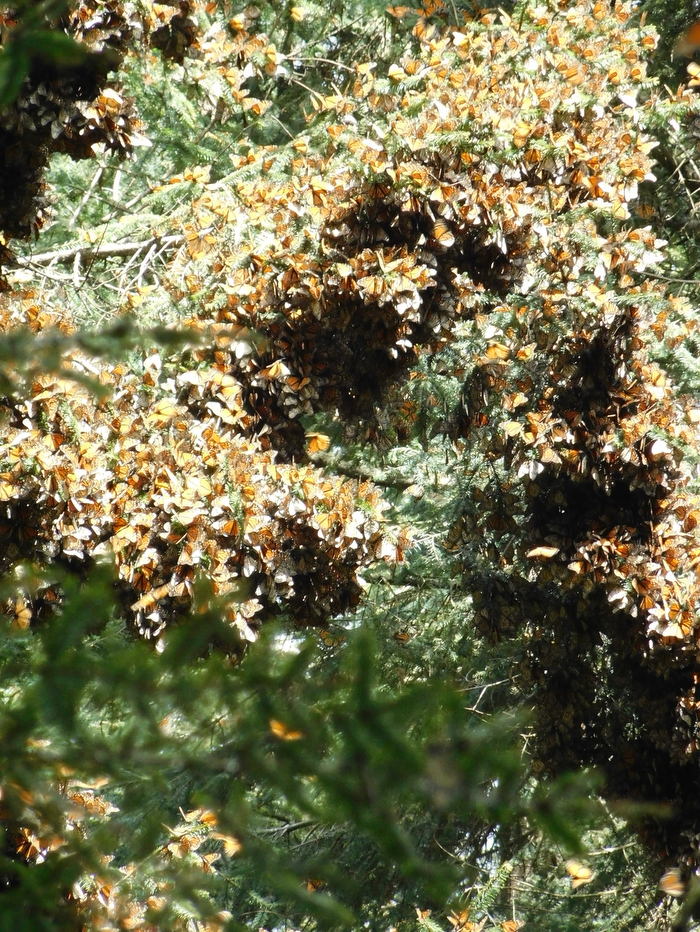
But 30 years ago, there were 380 million butterflies covering at least 45 acres for hibernation, according to the Monarch Joint Venture, a non-profit group dedicated to protecting the insect’s vast habitat.
Hall said the farther south in the U.S. the more likely it is to spot the butterflies especially in mid-October when they tend to concentrate in the U.S. South.
It’s as if the species goes through a geographical “funnel,” moving from thousands of miles of range across America and southern Canada, to just a few Gulf states by Halloween, said Hall, who has studied monarchs.
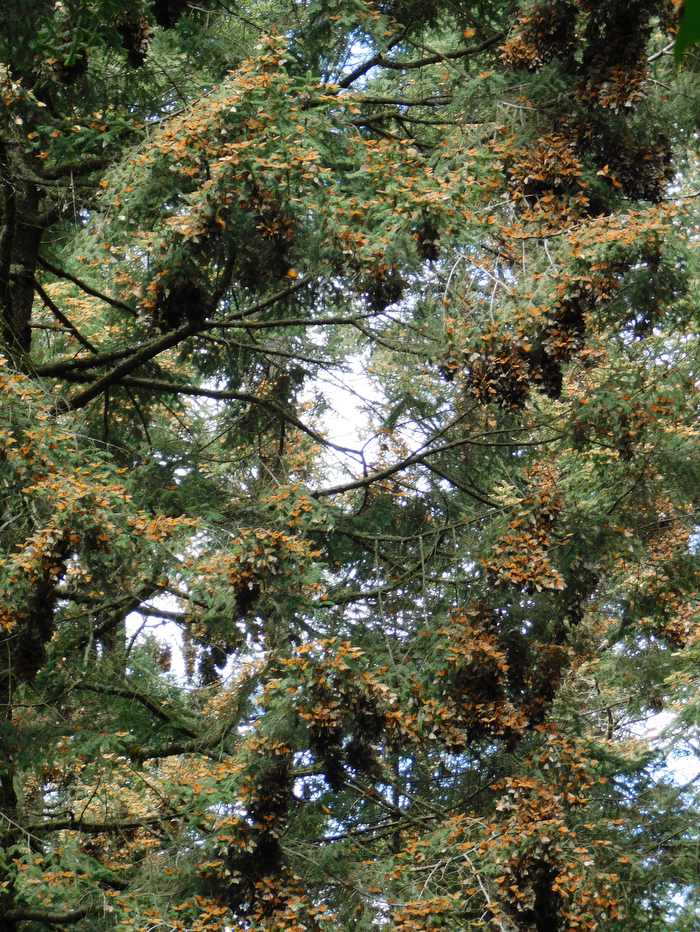
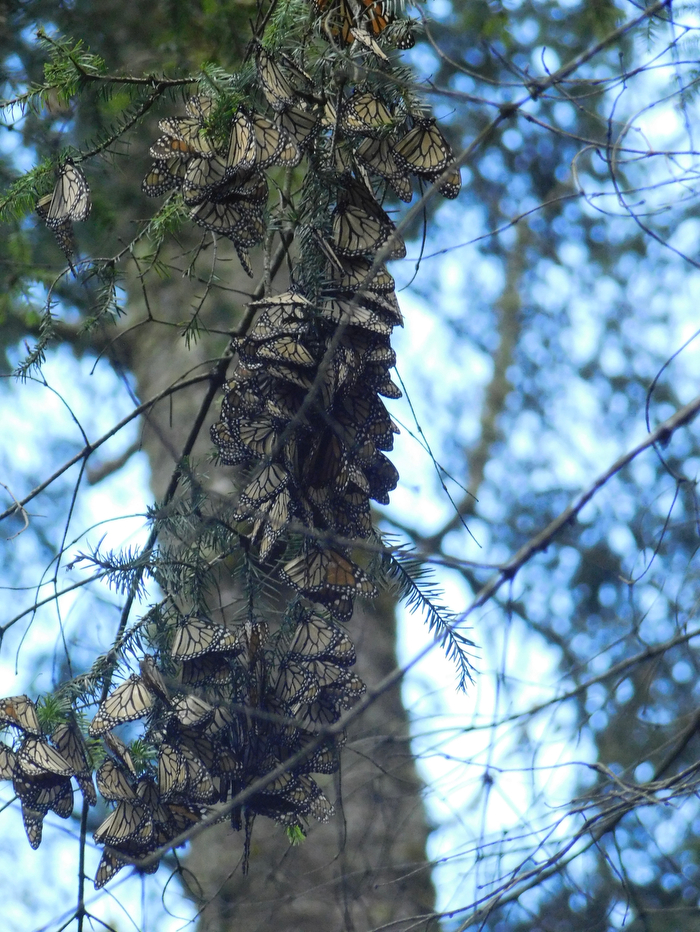
By early November, they’ll settle in east Texas as they head southward. Later in November, millions of the insects will converge in massive clusters on just a few acres in the oyamel fir tree forests of central Mexico.
“This migratory phenomenon is almost unique in the insect world for its distance and it is currently threatened,” said Hall explaining that pesticide use on gardens and farms and highway medians, along with deforestation is destroying their habitat.
A scientific research paper on the monarch populations that Hall co-authored in 2023 noted that the eastern monarch butterflies were decimated by pesticides, fungicides, farming and housing and commercial development in once open fields or forests. The study, published in 2023 in Conservation Letters, a journal for the Society of Conservation Biology, focused on policies that states could make to help protect the habitats on their migration routes such as land use regulations and planting more wildflowers along highways, which would create more places for the insects to feed.
Editor’s Picks


“It’s death by a thousand cuts,” Hall said. “We’ve become very effective in making more land usable for farming and removing plants that are not crops.” In turn, this has destroyed the butterflies’ favored natural environment.
In fact, the U.S. Fish and Wildlife Service estimated in 2024 that unless changes are made, there’s a 74% chance that the eastern monarch butterfly could be extinct by 2080, and a 90% chance for the eradication the western monarch butterfly, which is a much smaller population of the same species but its habitat is west of the Rockies.
Two years ago, the wildlife service proposed putting the insect on the federal Endangered Species Act list, which would give it habitat protections under law. But so far, the federal government has not acted.
“Monarchs are in real danger,” said Black of the Xerces Society, adding that a listing on the Endangered Species Act list could help force federal regulations to protect the butterfly’s migratory route.
Absent an Endangered Species Act listing, it’s up to states and communities to protect the monarch – only one Americans are likely to know by name, Hall said.
“When it comes to nature, we like pretty and flashy things,” he added.