To combat gender bias in the police, they got cops to role play. It was shockingly effective
Researchers in India developed a police training program based on techniques from theater to help mitigate gender bias in domestic violence cases. It proved to be much more effective than they expected.


In 2024, 200 police recruits at the Bihar Police Academy in India underwent an unorthodox form of training.
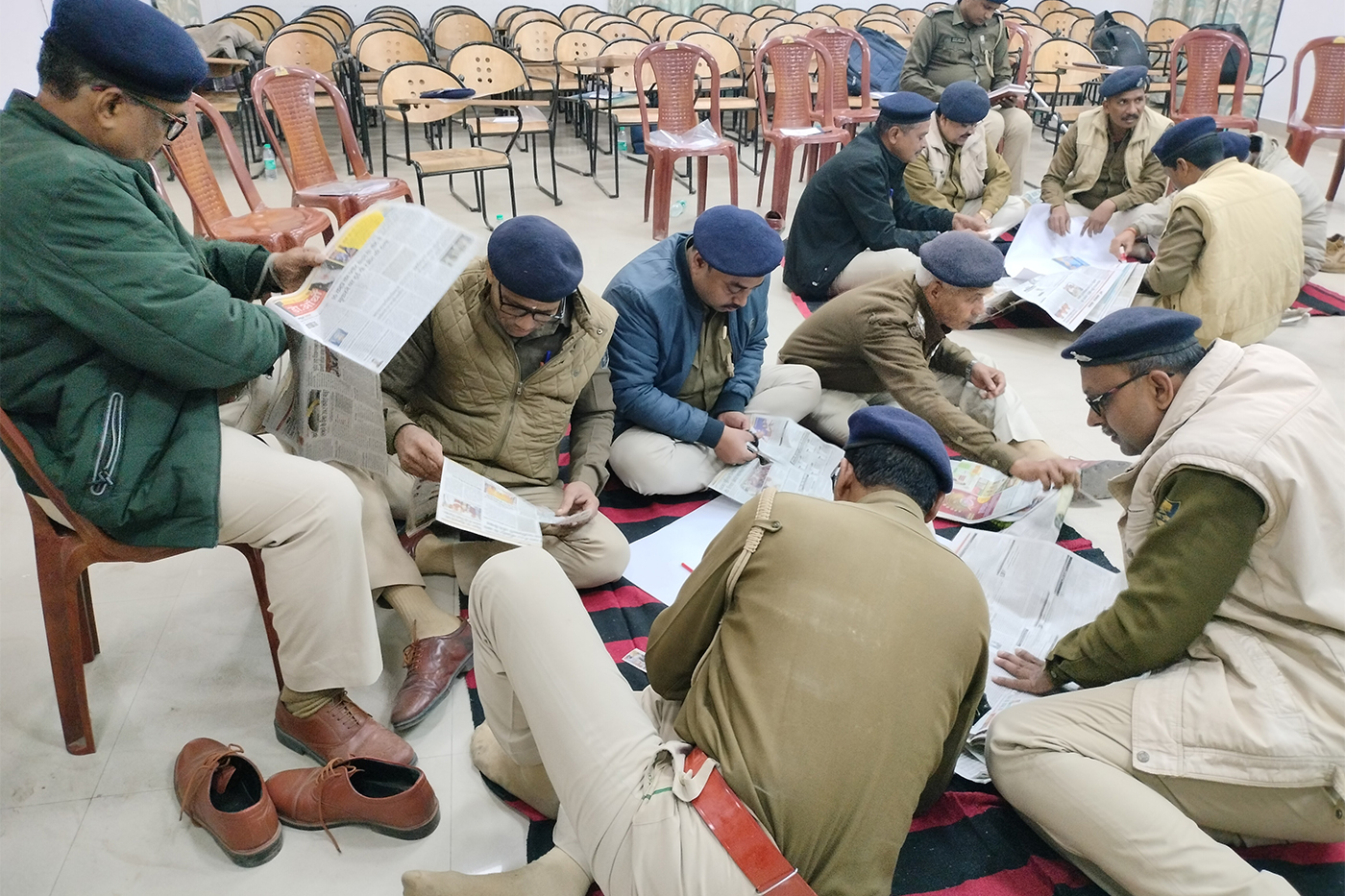
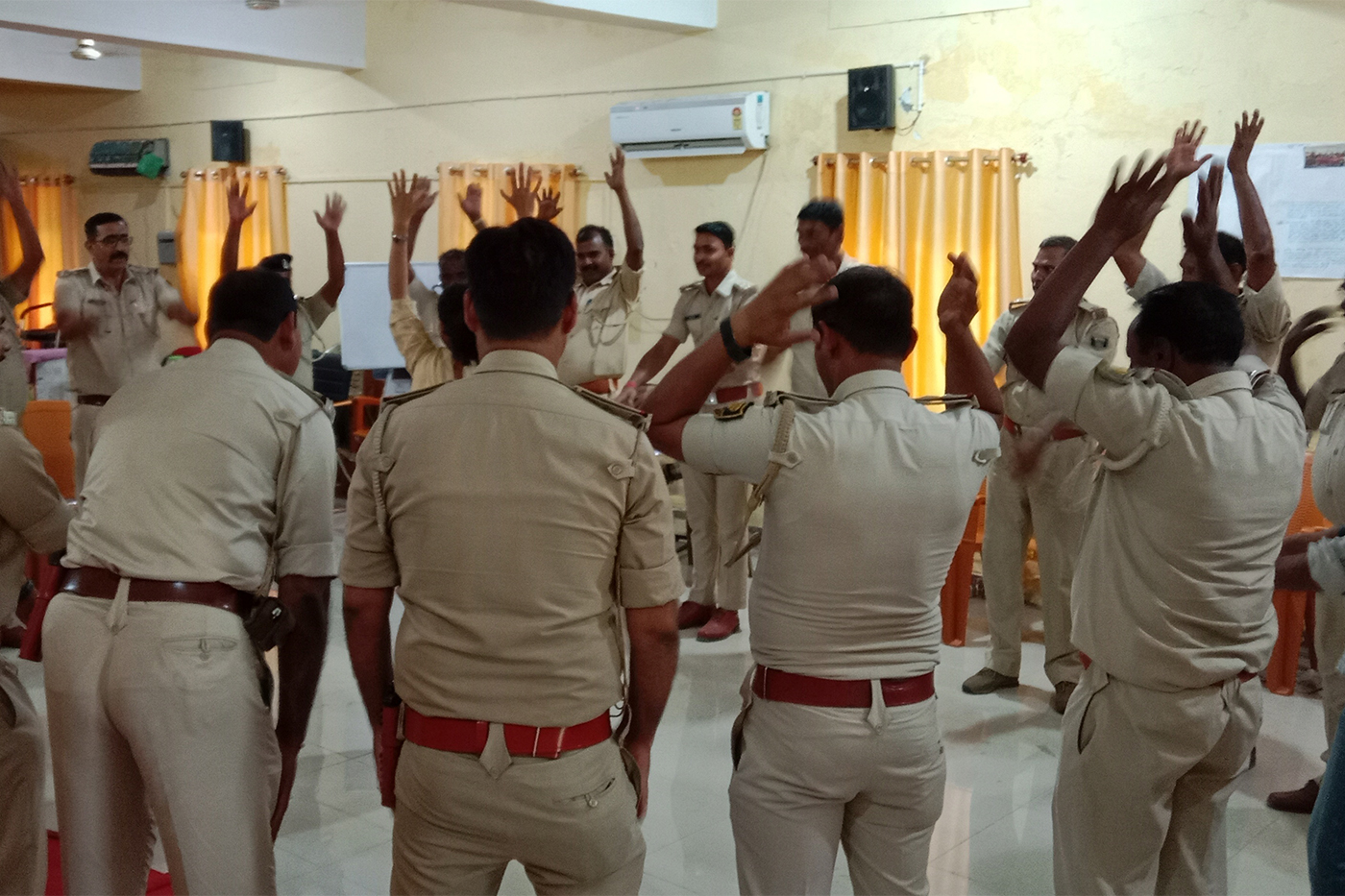
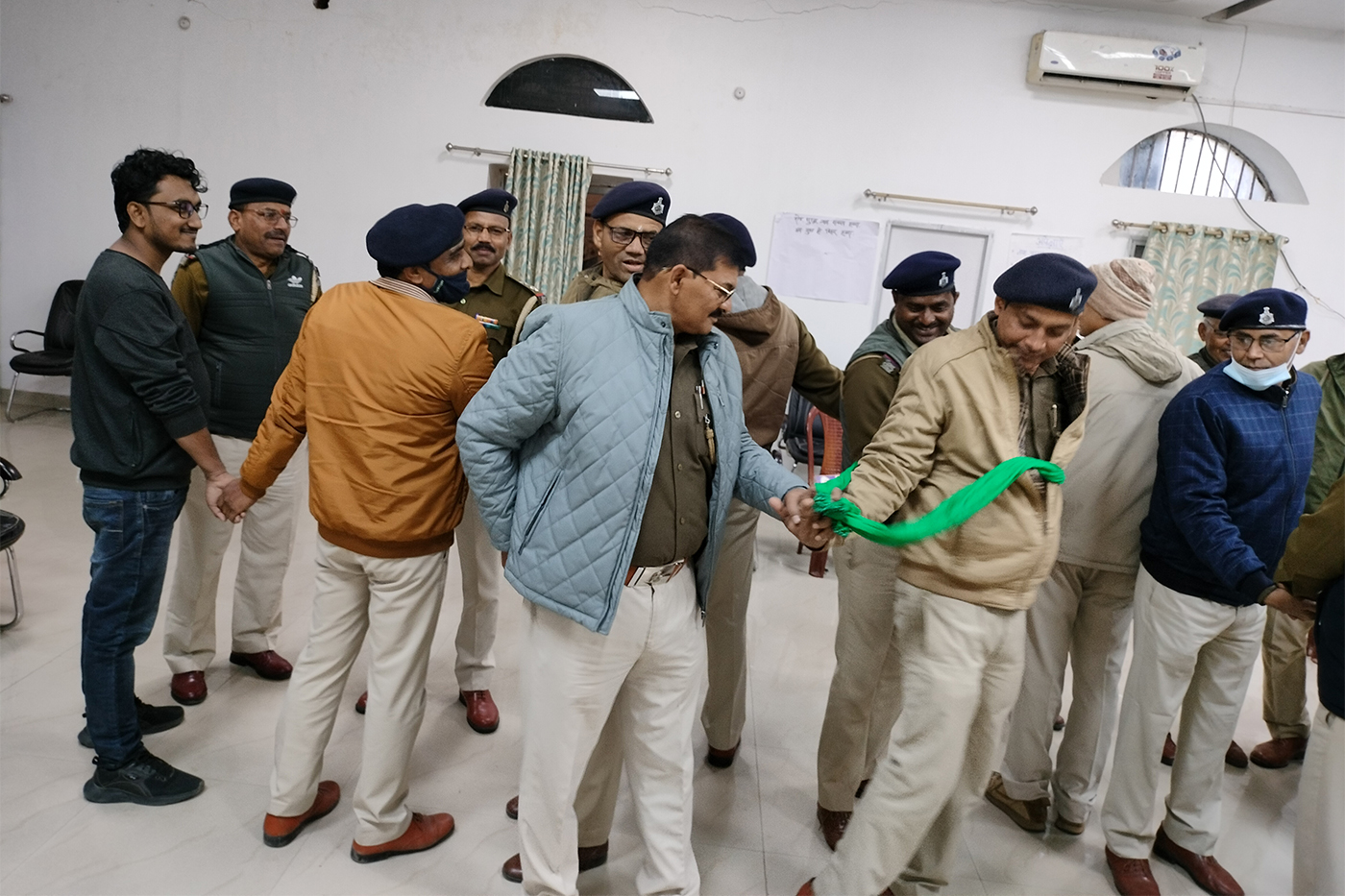
Instead of sitting through lectures, reading exhaustive manuals or even performing physical training exercises in an academy, these officers were dressing up in costumes and roleplaying more like a theater troupe. Despite the recreational nature of the setting, the training had been designed to address a serious issue: violence against women.
By acting out everyday scenarios faced by women in India, and even donning headscarves worn by women, officers stepped into the shoes of a population that faces high levels of violence and police bias.
Could this kind of empathy-building training really be the key to change?
That was the question that Nishith Prakash, an economics and public policy professor at Northeastern University who led the project, had in mind when designing the unusual experiment, which was first implemented among around 3,000 police officers in Bihar in 2022. But he hadn’t expected it to prove as effective as it did. Officers who went through the program were more empathetic, less likely to blame victims and more likely to treat reports of violence against women seriously.
“The question always is, ‘If I teach you something, do you carry it forward?’” Prakash said. “Most training programs don’t work, so I’m very happy and surprised that it worked.”
A collaboration between researchers, NGOs, lawyers, theater artists and members of the Indian police, Prakash said the training program is a first of its kind, combining academic rigor, police expertise and theater teaching techniques inspired by the Brazilian playwright Augusto Boal.
Throughout the program, officers take on different perspectives and even roleplay as female victims, which “allowed them to reflect and improve their performance and treatment of women over time,” said Sofia Amaral, an economist at the World Bank and co-author on the project who helped develop the program.
About one in three women worldwide experiencing either physical or sexual violence, largely from intimate partners, according to the World Health Organization. Gender-based violence is particularly acute in India. Around 29% women ages 18 to 49 have experienced physical domestic violence from their spouse or sexual violence, according to the government’s National Family Health Survey conducted between 2019 and 2021.
Despite how prevalent gender-based violence is in India, only 2% of women approach the police to report it, according to the survey. It’s representative of a systemic failure within the police, where officers often dismiss violence and harassment against women, blame victims and construct administrative barriers that make it difficult to report cases of violence, Prakash said.
“Police officers are often the first point of contact for survivors of [gender-based violence], and their responses can determine whether victims receive protection, support and access to justice,” said Maria Micaela Sviatschi, an economist and co-author on the project.
Efforts to recruit more women into the police haven’t been the silver bullet that police hoped for. Instead of changing who serves in the police, Prakash and his collaborators focused on changing how officers think and behave.
To do this, the researchers developed a three-day program for active duty officers, including senior officers, in Bihar. The first day, trainers had to work to break down the often sky high walls that male officers had built up around themselves that made it challenging to talk with officers openly about issues of sexual harassment and violence against women. But by the third day, police were jumping at the chance to dress up as a female victim during one of the program’s more inventive exercises, Prakash said.
Some officers pretend to be the female complainant while others roleplay as the husband, neighbors and members of the police receiving the report. The goal was to show how victim blaming can impact women’s willingness to report sexual assault and domestic violence. During the program, some officers become so involved that they adopt different postures or mannerisms depending on who they are in the scene, Prakash said.
In another part of the training, officers stand in concentric circles and try to grab pieces of candy thrown by the trainer. The activity uses this simple game as an interactive metaphor for how economic inequities play out in society: The officers closer to the center, representing those with more resources, have a leg up in getting more candy, while the officers in the outer circles, representing those with fewer resources, have to fight harder to get it.
The program proved so engaging that despite receiving no financial incentive to go through the training, there was, on average, 84% participation from officers, with an average of 35 hours put into the training.
“It is important to try different approaches to teaching topics as it takes away the monotony of classroom learning and fosters emotional engagement with the content,” Mavjeet Singh Dhillon, Bihar’s deputy inspector general of police, said in a statement.
Courtesy Video
The researchers conducted decoy experiments to test how much the officers took the training to heart. They trained fake victims and sent them to police stations to report both gender-based and non-gender-based violence cases. Officers who went through the training were 8% less likely to dismiss them as false and 15% less likely to blame the victim than those who didn’t take the training.
The researchers were even able to evaluate how well the lessons transferred to the handling of real cases by analyzing 600,000 reports of violence from before and after the training. Typically there is a delay between when a victim files a complaint and when the complaint is logged by officers. It’s a sign of how seriously officers take these crimes, Prakash noted. After the training, however, the time between when the complaint was filed and when it was registered by police plummeted by 41% in stations that received the training.
Editor’s Picks


The training also seemed to have a sustained effect. When trained officers transferred to another station that didn’t undergo training, those positive behavioral changes started to manifest, Prakash noted. When an officer who hadn’t received training moved to a station where the training had been conducted, they adapted to the new norms of their new station.
While the training is effective in its own right, it only becomes more successful if officers “spread the word and act as role models” both among themselves and among the public, Pramod Kumar Thakur, a retired Indian Police Service officer and former Director General of Police for Bihar, said in a statement.
Findings also suggest the training decreased sexual harassment reported by female constables, the lowest on the police hierarchy. It’s particularly noteworthy given that Bihar has made a concerted effort to hire more female police officers, Prakash said.
After an initial large-scale pilot, which covered 419 police stations in 12 districts of India’s Bihar state and around 3,500 officers who serve 42 million citizens, the program has already been adopted fully at the Bihar Police Academy.
But Prakash said he has also received interest from police chiefs in the U.S. and Ghana in using the program. Violence against women is not limited by national borders, so he’s hopeful that a program like this could become a new foundation for law enforcement worldwide.
“If I could pull this off in a resource-constrained state [such as Bihar], it can be done anywhere if you have the intent,” Prakash said. “Take [this program], use it the way you want.”