How would permanent daylight saving time affect your health?
The House passed the Sunshine Protection Act, which would make daylight saving time permanent across the United States. The legislation awaits Senate action.
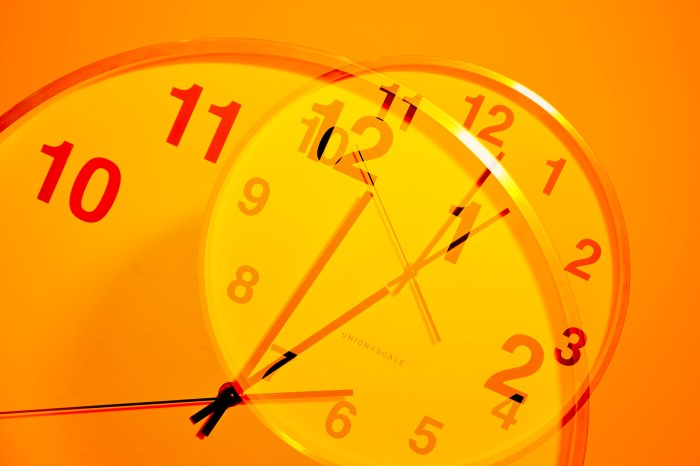

Remember that brief panic when you catch a glimpse of your microwave clock in the morning and think you’re an hour late, only to remember it’s daylight saving time?
Since the Uniform Time Act of 1966, most states have been winding the clocks one hour forward in March to start daylight saving time (DST) in an effort to catch some evening rays. In November, winding the clocks back on hour brings about the return to standard time (ST), which restores light to the early morning.
The days of “springing forward” and “falling back” might soon be relics of the past.
Most members of the U.S. House of Representatives were on the same page about the clock-changing tradition. A 308-117 vote passed the Sunshine Protection Act, which aims to put an end to all the rewinding and fast-forwarding.
It remains to be seen what the Senate decides. It’s not clear when a vote might come. The upper chamber is currently reviewing the legislation passed by the House.
Great news, right? Not so fast.
What the Sunshine Protection Act proposes is making daylight saving time permanent. This means darker winter mornings — an issue that raises potential health and safety concerns, especially for northern states that will bear the brunt of the impact.
In fact, the American Academy of Sleep Medicine, a professional society dedicated to sleep science, issued a statement saying that “permanent standard time … aligns best with human circadian biology,” or natural 24-hour cycles regulating various processes in the body.
At the same time, there are arguments in favor of permanent daily saving time as well. The flip side of darker mornings is lighter evenings, which come with their own advantages.
Northeastern University Bouvé College of Health Sciences pharmacy and health systems sciences professor John Devlin shared his thoughts on the subject. Here’s what he said.
How does light in the morning and darkness in the evening affect our health?
Circadian rhythm is the 24-hour “internal clock that regulates many physiological processes,” Devlin said, adding that each cell actually has its own version of the mechanism. The biological clock is controlled by three factors: light, movement and eating schedules, which influence sleep and waking patterns and control core body functions.
Daylight gets the circadian system going in the morning. Darkness at night, in turn, signals that it’s time to sleep.
Hormones such as melatonin and cortisol “circle through this and help the process,” Devlin added. Cortisol spikes when you’re exposed to light in the morning, giving your system a jumpstart. Melatonin, on the other hand, is triggered by darkness and supports sleep.
A clash between any of the three factors and your natural circadian cycles can set disease processes in motion, Devlin explained. For example, light at night or darkness in the morning gets the circadian rhythms out of sync. When this happens, cellular processes go awry and inflammation amps up.
Why are clock changes a problem?
Research clearly shows that springing forward and falling back gets the body clock misaligned for several days by shifting the timing of light exposure in the morning and evening. “There are more fatal traffic accidents, more strokes, more myocardial infarctions,” Devlin said. The disruption also contributes to sleep deprivation, which the Centers for Disease Control and Prevention (CDC) links to a host of mental health disorders and chronic conditions.
U.S. Senator John F. Keenan issued a statement elaborating on the negative effects of the time switch based on the Massachusetts Special Commission Report findings. The switch from ST to DST in particular “impacts sleep during the week that follows” and causes a “5.7 percent increase in the number of injuries … and a 67 percent increase in the number of days lost” in the labor force, the statement said.
Between permanent daylight saving time and permanent standard time, which one is better?
Devlin said a large-scale study based on data from the CDC suggested that standard time is the clear winner. For example, it led to fewer strokes and less obesity.
Permanent daylight saving time, in turn, is associated with a lack of morning light, which “can be pretty extreme” in the north, Devlin said. In the dead of winter in Boston, the sun doesn’t come out until people have left the house for the day, and the effects can be devastating. “You see increased disease,” he added.
Darkness in the morning causes illness by disrupting metabolism and making it more difficult for the body to repair itself. It has also been linked to cardiovascular problems, mood disorders and cognitive difficulties.
Jay Pea, president of the nonprofit Save Standard Time, told Northeastern Global News that if the Senate approves the bill, “it would put sunrise in Boston past 8 a.m. for 2 months,” sometimes “as late as 8:15 a.m.”
The verdict? According to Devlin, “The worst thing is to switch. The best thing is to stay on standard time, and then the middle thing is to stay on daylight saving time all the time.”
Editor’s Picks


That said, there are some arguments in favor of permanent DST, especially in southern states where the benefit of brighter evenings outweighs the problem of dark winter mornings. Even in Massachusetts, evening light associated with permanent DST has advantages. According to the Massachusetts Special Commission Report, it could decrease traffic fatalities and workplace injuries associated with evening darkness and encourage physical activity on winter evenings.
Scott Yates, founder of Lock the Clock Alliance, an advocacy group that brings together medical and business groups to lobby Congress about doing away with time changes, said that “the best place to decide the best alignment between social time and solar time is in each particular place. Ideally, it would be in each county, but in our federalist system, the best we can do is decide in each state.”
What can we do to make this work for us if the bill passes through the Senate?
There are steps you can take to take charge of your health — such as investing in a bright lamp to give the darkest mornings a boost.
“It has to be bright light,” Devlin clarified. A new mushroom lamp won’t cut it. Instead, aim for about 10,000 lux, according to Luminette, a light therapy company.
Turning it on for half an hour or so before you leave the house will work wonders, Devlin said. “It will obviate a lot of the effects of going to work or school in darkness,” he said.