Spotted a bear lately? You’re not alone — why sightings are on the rise
Bear populations are increasing. So are strange encounters with them from Massachusetts to Japan.

By the time Kim Ring arrived at her neighbors’ yard that spring afternoon in 2022, their chicken coop was a flattened pile of lumber surrounded by feathers.
The poultry had been raided by a bear.
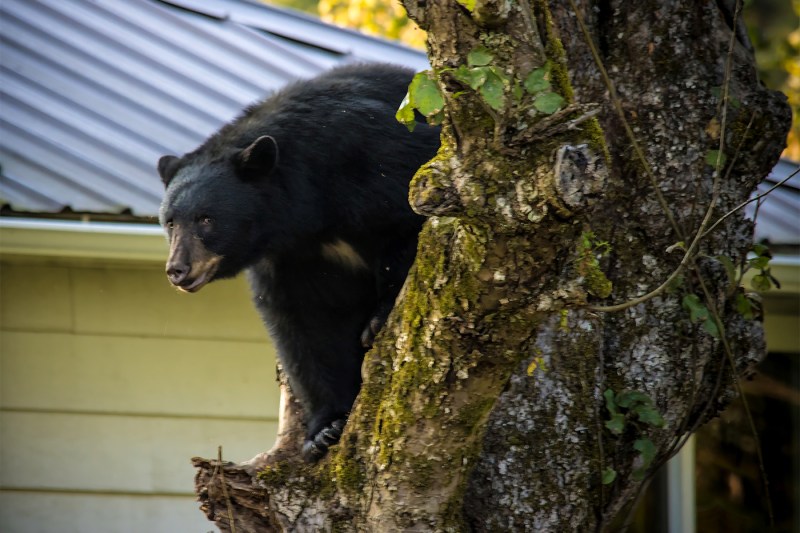
At the neighbor’s request, Ring and her husband headed into the woods abutting their home in the rural Massachusetts town of Ware, in the hopes of finding any fluffy survivors. What they encountered instead was a bear with her two cubs in a tree — the mother bear downing one of their neighbor’s chickens.
It was the first of what would be many bear encounters for Ring after she moved to a new house with a big backyard in Ware, where she could also raise chickens. She soon discovered that among her neighbors were the four-legged kind who viewed her flock as an all-you-can-eat buffet.
“We knew there were bears around, but we didn’t anticipate interacting with them,” said Ring, who has since spotted bears munching on berries from her dogwood trees and chased them away from the outdoor shed where her cats live. “They do a lot of damage. It’s really scary.”
Her experience isn’t unique. Bear sightings have increased in most areas of the United States and Canada over the last five years, according to data from the International Association for Bear Research and Management (IBA), a non-profit dedicated to protecting bears. There have been reports of the carnivoran mammals wandering the suburbs of Los Angeles, Calif., and in Colorado State Parks, bear encounters hit a peak of 52,999 in 2025.
Northeastern Global News, in your inbox.
Sign up for NGN’s daily newsletter for news, discovery and analysis from around the world.

The problem spans the globe. In 2025, Japan experienced a record 235 bear attacks that resulted in 13 fatalities, according to the country’s environment ministry. The U.S. embassy in Tokyo even issued a travel alert warning Americans traveling to Japan about the risk of bear encounters in the northern parts of the country.
Rebecca Kleinberger, director of Northeastern University’s INTERACT Animal Lab, which develops technology for animal users, attributes this increase to several factors. For starters, black and brown bear populations have grown in many of the areas with increased encounters. In Massachusetts, for example, the Division of Fisheries and Wildlife report the black bear population now numbers over 4,500 compared to 100 only 50 years ago.
Even as their numbers have increased, food supplies for these furry creatures have dwindled. Bear populations “correlate with the availability of natural food,” Kleinerger explained to NGN. In years where the nuts, acorns and berries that make up these animals’ diets are scarce, they will expand their range to more residential areas in search of food.
Gabriela Garcia, an assistant professor of marine and environmental science who studies plant ecology, said that bear sightings also correlate with high and low yield years for crops. During years with more crops, there will also be more predators as there’s more access to food, but animal populations dwindle again in low yield years.
That trend may become more pronounced as climate change is making high yield years more frequent. Garcia said, meaning animal populations are just continuing to grow without these “famine years” to help cut back.
“There’s just bigger and bigger populations and those populations will be sensitive to the years when [yield] does fail,” Garcia added. “That relationship is being disrupted by climate change.
This crop shortage is what experts say is likely behind the bear spike in Japan.
When crop yield is low, bears are forced to move elsewhere looking for food. Some even wander into stores or homes, and if they’re successful, will return to those sites (like Ring’s neighbor’s yard) thanks to their strong sense of smell and spatial memory.
Once a bear identifies a spot as a food source, it can be difficult to keep them away.
“Bears are highly adaptable and opportunistic animals, and they are good at identifying and remembering reliable food sources,” Kleinberger said. “They can often become habituated to human presence and lose some of their natural avoidance of people.”
Editor’s Picks





On top of this, Kleinberger said development in some areas is expanding into bears’ natural habitats. In Japan, declining population in rural areas has led to an abandonment of farmland leaving less of a buffer between forests and residential areas, she added.
There are steps people can take to protect themselves, however. Wildlife officials advise people to keep their distance when they encounter these creatures as most will still avoid humans. If a person (or chicken coop) does catch a bear’s eye, experts say it’s best to remain still, stay calm and make yourself look as large as possible.
Otherwise, too much interaction with humans — in addition to posing danger — can train bears out of their natural avoidance of people, leading to the type of encounters we’re seeing now, said Kleinberger.
“Human behavior plays a major role in shaping wildlife interactions,” Kleinberger said. “It is important to maintain clear separation between human spaces and wildlife habitat. Bears are large, powerful animals, and encounters should always be treated with caution.”
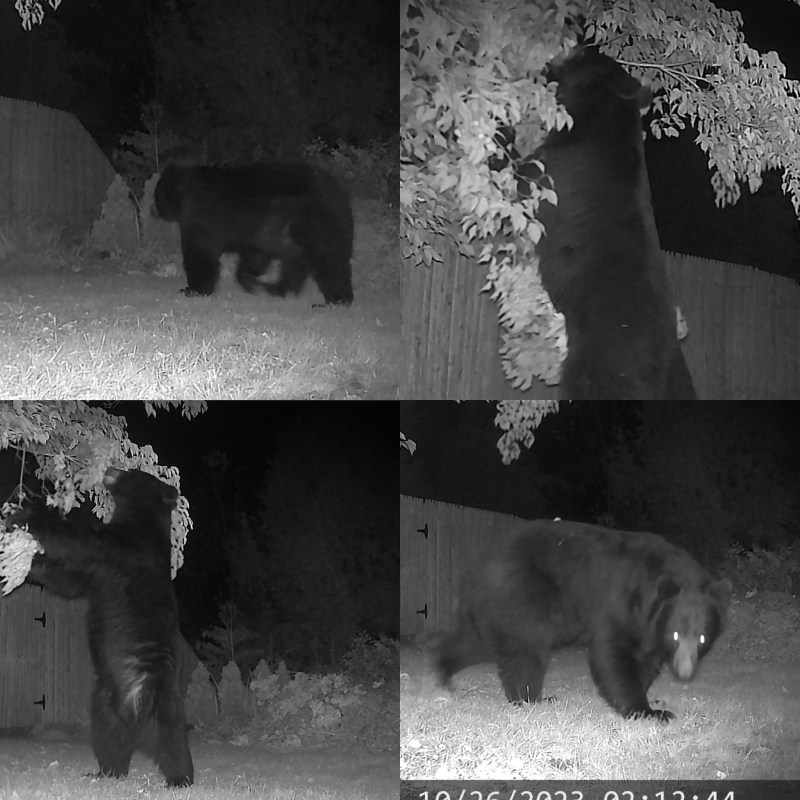
Meanwhile, Ring, who has since invested in an electric fence, continues to spot bears in her yard where she now also keeps goats. She started a Facebook page tracking “where in Ware is the bear,” where people report incidents like the time when one of the burly creatures killed two 180-pound sheep.
As long as people keep raising chickens and providing easy food sources, like accessible bird feeders, filled with sunflower and millet seeds, she suspects the bears will keep returning.
“You see McDonald’s, you know you get food there,” Ring said, equating her farm to a fast-food drive-through.