Northeastern’s tunnels offer respite from the Arctic cold
How do you use the Northeastern tunnel system? Students and staff find a way to put it their best advantage


Temperatures outside were hovering in the high teens recently when second-year Northeastern University students Delia Zhong and Zahra Shah walked past the bookstore inside Curry Student Center and entered a subterranean corridor to escape the cold.
The tunnel system that connects 11 buildings on Northeastern’s Boston campus is no secret, Shah said. “The first day we got here, they told us about it,” she said.
But with the recent frigid temperatures, the underground route holds added appeal. “It’s both a shortcut and a way to keep out of the cold,” said Zhong, who uses the tunnel system to get to classes in Dodge and Richards halls.
Construction of the 16,705-foot underground network began with the building of Richards Hall in 1938 and was completed in 1988 with the construction of the Snell Library, said Mark Boulter, Northeastern’s assistant vice president for facilities services.
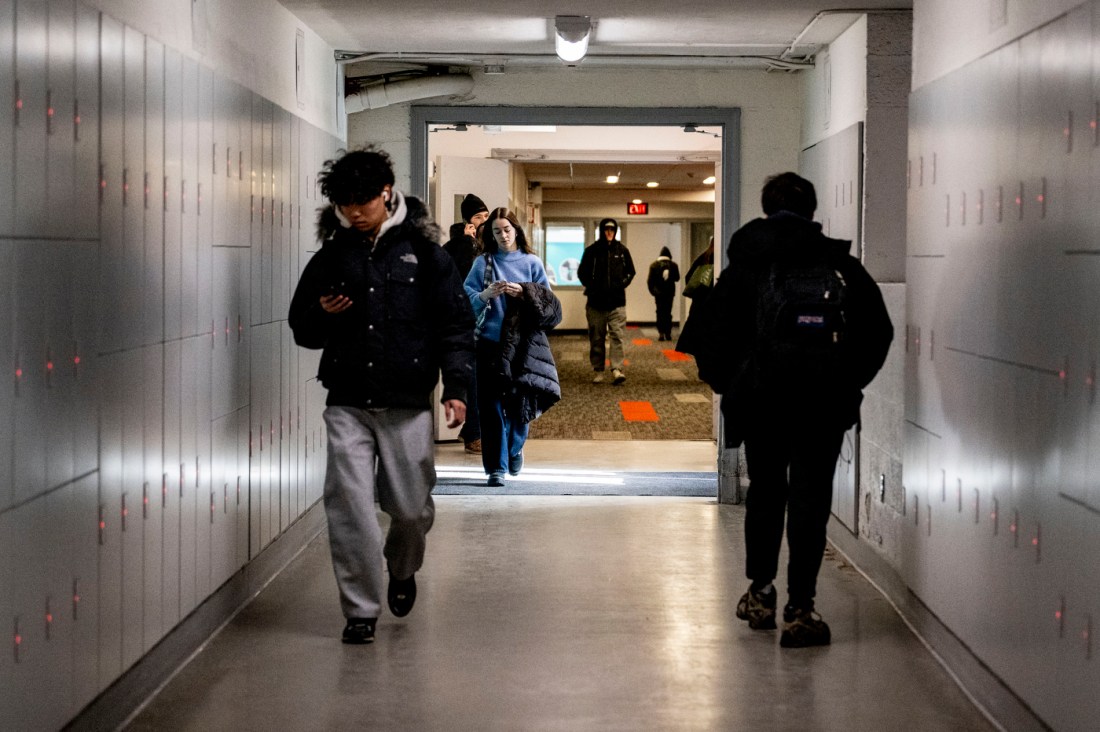
A Northeastern graduate who started working at the university in 1983, Boulter remembers the days when the tunnels were as crowded as high school corridors and rang with the clang of the metal lockers that used to line the tunnel walls. Commuting students made good use of the lockers to store their books between classes, he said.

These days the tunnels aren’t nearly as busy, except during inclement weather. “Rain and snow and cold” bring the tunnels to life, said Donna Murrell, supervisor at Northeastern’s Reprographics Center who can look into the tunnel through an interior window by the student center and Ell Hall.
It’s not just students who use the tunnels. Reprographics team members use them to transport materials from the printing center to offices, classrooms and laboratories, and delivery people push bins of supplies through the corridors, Boulter said, “to help minimize the amount of traffic up above and make it safer for our pedestrians.”
The Dunkin’ hack
As if use of the tunnels isn’t itself a kind of “hack,” a favorite way to utilize the system is to use the underground route to get to Dunkin’ Donuts in Hayden Hall.
Nate Butze, director of customer success at Collegiate Press, used to make the circuitous walk from the Reprographics Center to Ell Hall and then past Blackman Auditorium to the outdoor quad before entering Hayden Hall from an exterior door. At that point, it was another staircase to Dunkin’ Donuts.
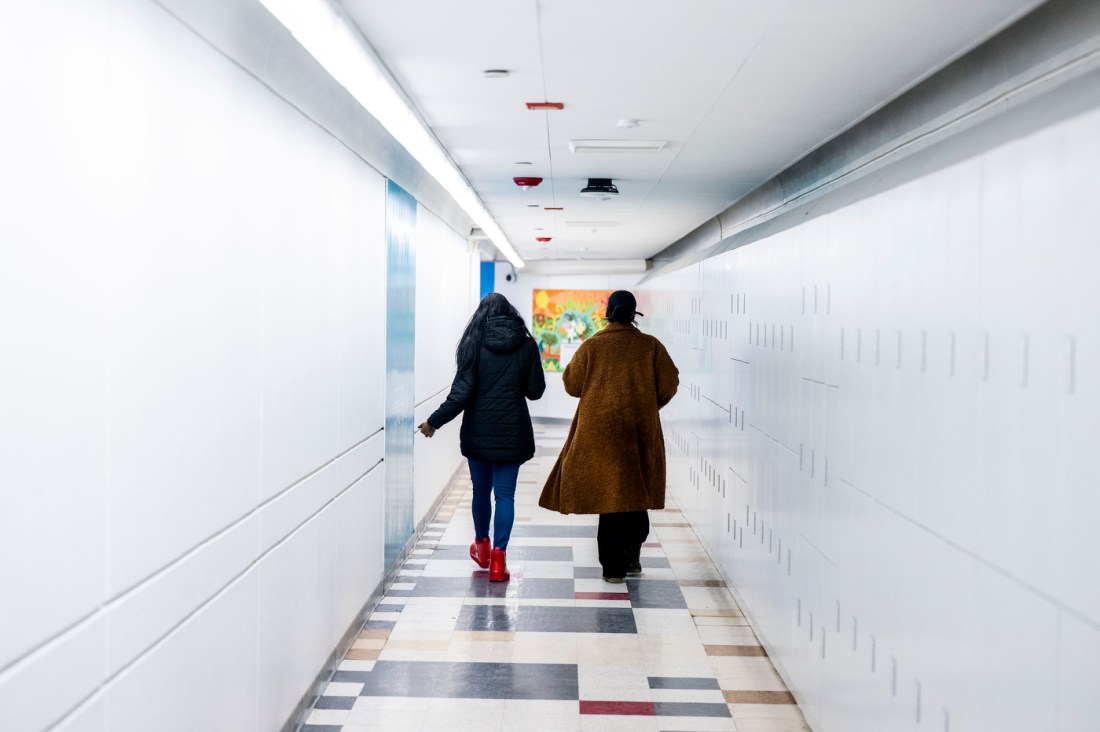
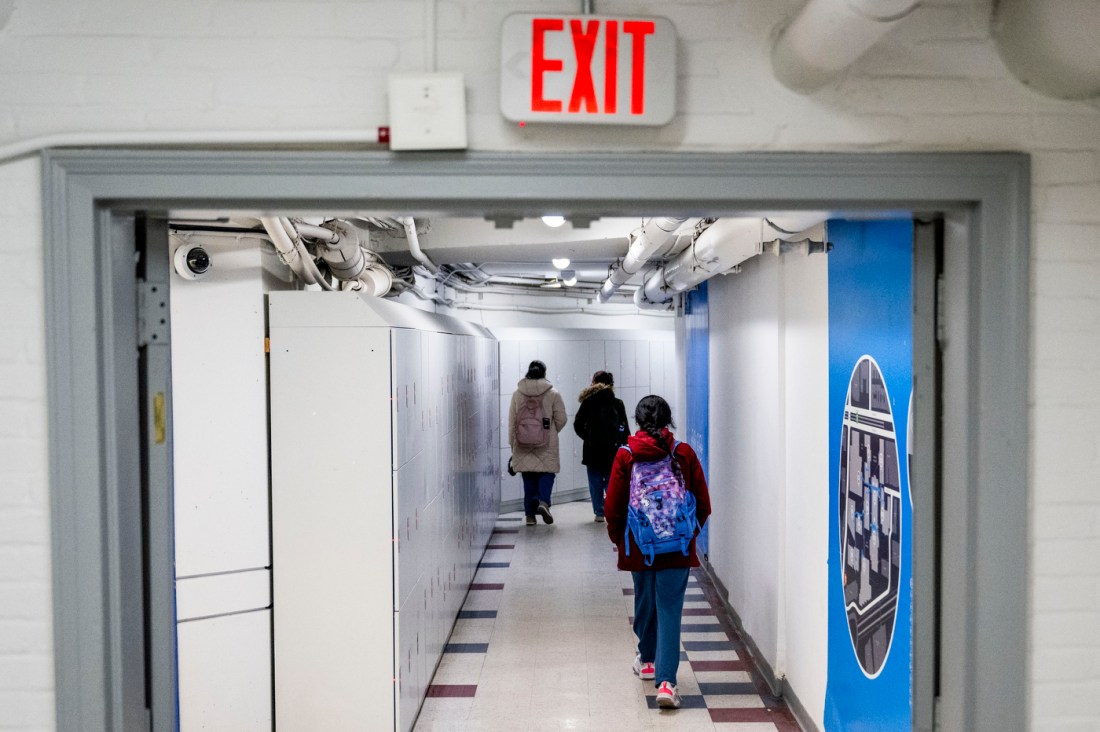
The day Butze discovered it was just a short stroll in the tunnel from the Reprographics Center to a Hayden Hall stairway opening directly to Dunkin’ Donuts, he forever ditched the overcoat, hat and gloves during coffee breaks.
“On cold days, it’s nice to stay inside,” Butze said. And if he wants a change of scenery, he can exit the stairwell at the other end of Dunkin’ and enter the tunnel via Richards.
A color-coded tunnel system
Despite its popularity, the tunnels can be confusing to navigate, at least at first.
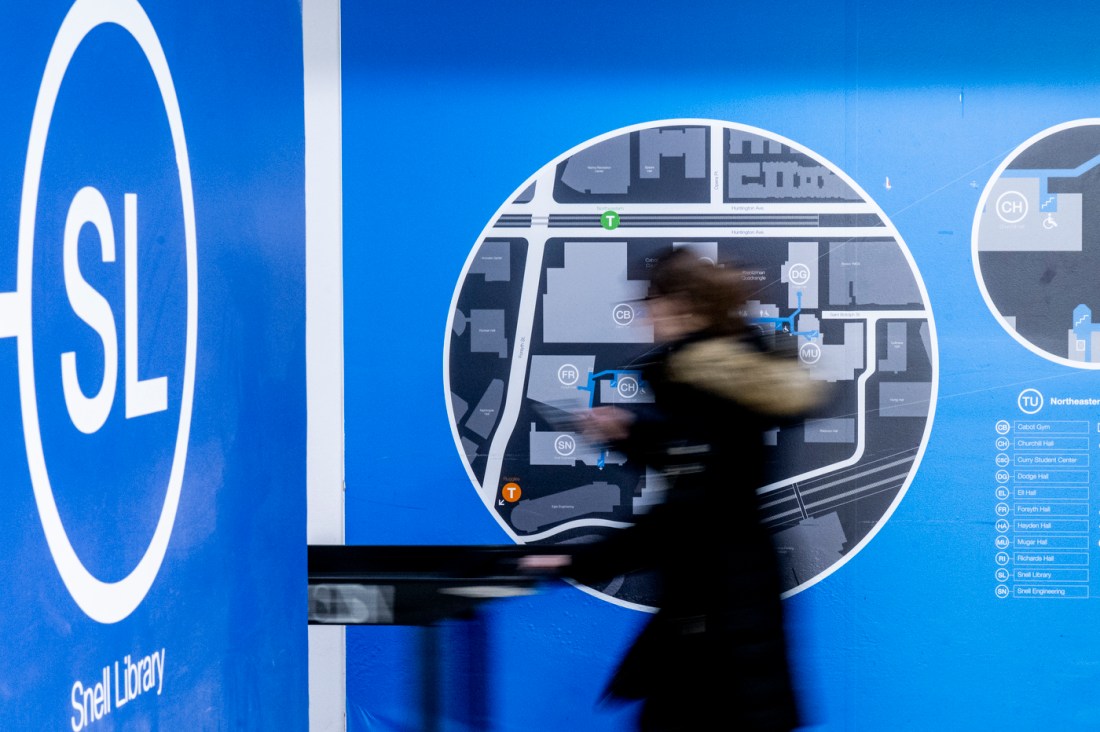
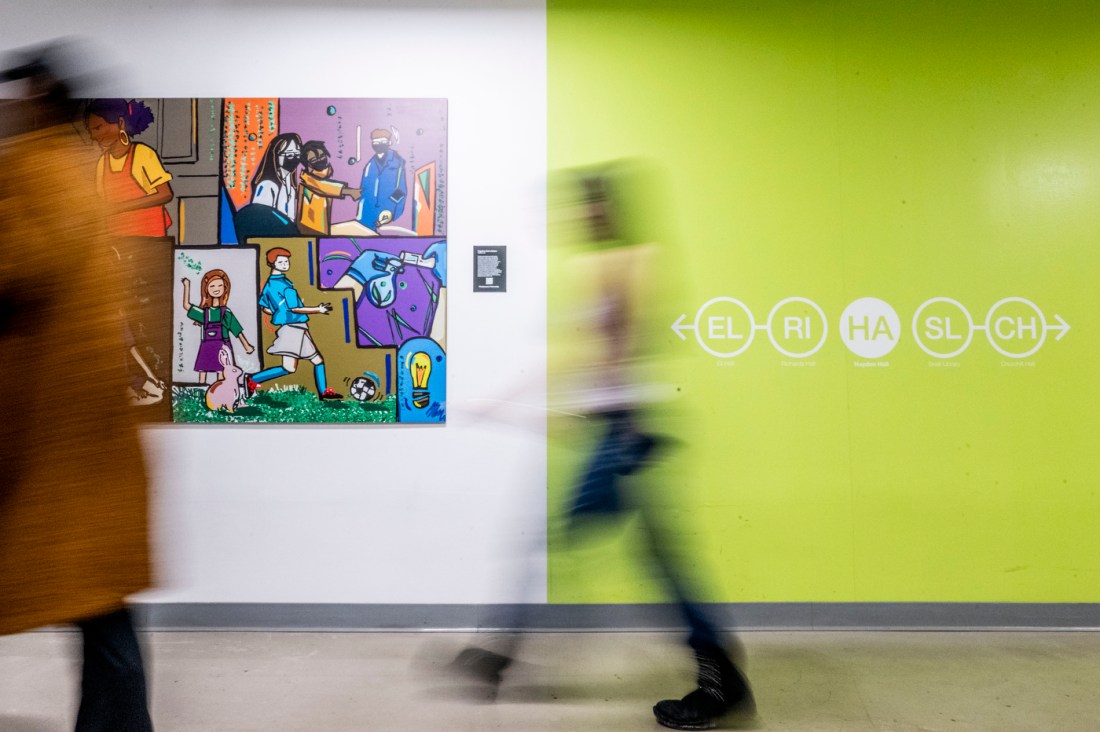
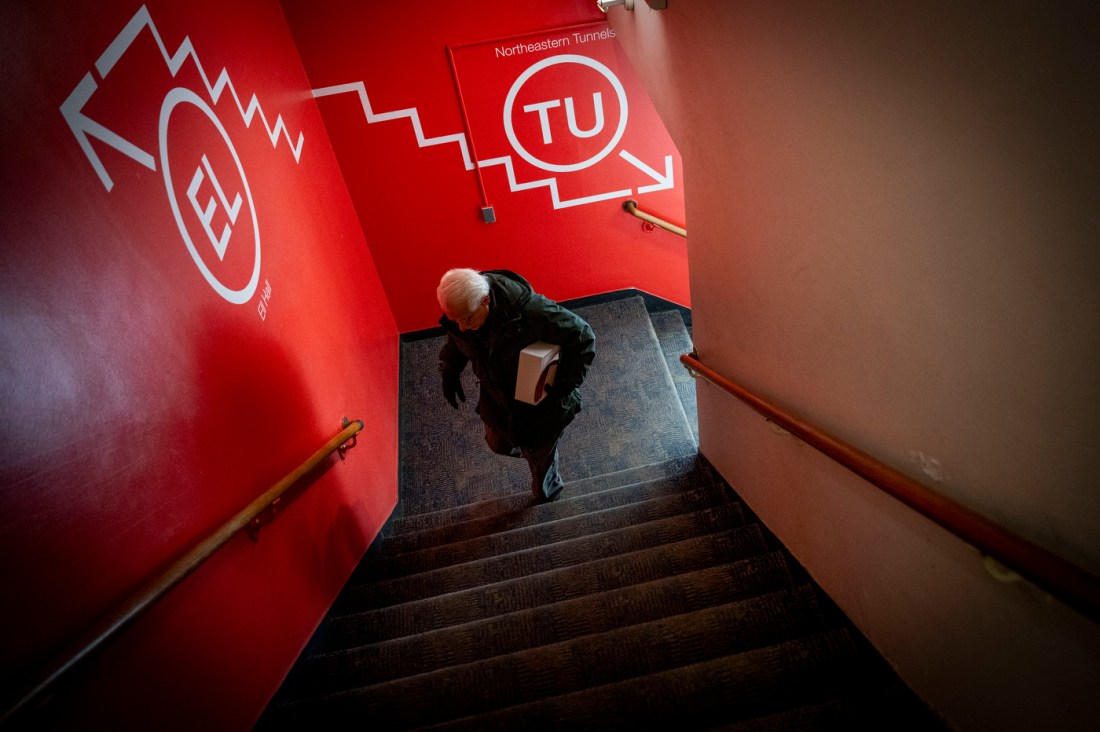
To help, Northeastern building officials identify the buildings with painted signs and arrows and assign colors to each of the entrances. The entrance to Ell Hall is red, for instance, and Hayden’s is chartreuse.
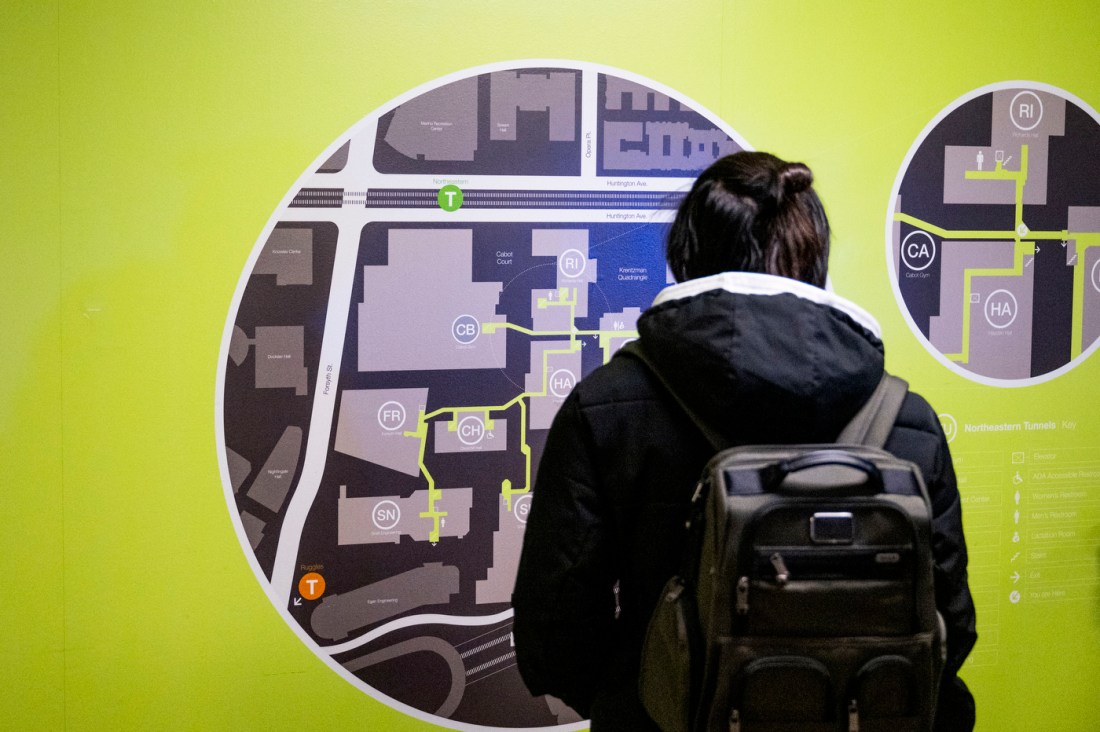
Zhong first mapped out the tunnels with her parents in tow. As Long Island residents, Zhong’s family was used to cold winters but thought the tunnels would offer a nice break on cold days.
“Once I learned the routes, it was very easy to track which entrances to use,” Zhong said.
Second-year student Emily Smith is still finding her way around.
Editor’s Picks




On a recent day, she walked past the “Cultivating Community” painting, one of several pieces of vibrant art that enliven the underground space, into Mugar Hall while looking for the closest exit to EXP. After a little backtracking, Smith found the best way out, through Curry Student Center.
Confused? Maps help the lost find their way underground.
The tunnel stops here
The MBTA’s green line along Huntington Avenue, the orange line off Columbus Avenue and the Stony Brook culvert leading from Forsyth Street to the Muddy River form natural boundaries to any future expansion and are a major reason the tunnels don’t extend to the residence halls, Boulter said.
To get to lunch at Stetson East, Zhong and Shah took the tunnel from Curry Student Center to Richards Hall, which deposited them along Huntington, within easy walking distance of the Stetson complex.
Even when it’s nice outdoors, the tunnels can be a good way to avoid crowds of students, Shah said, “especially when you’re already late to class.”