The ABCs of Boston campus housing for continuing students
Northeastern has opened Boston campus housing applications for summer, fall and spring 2027, urging continuing students to apply early.
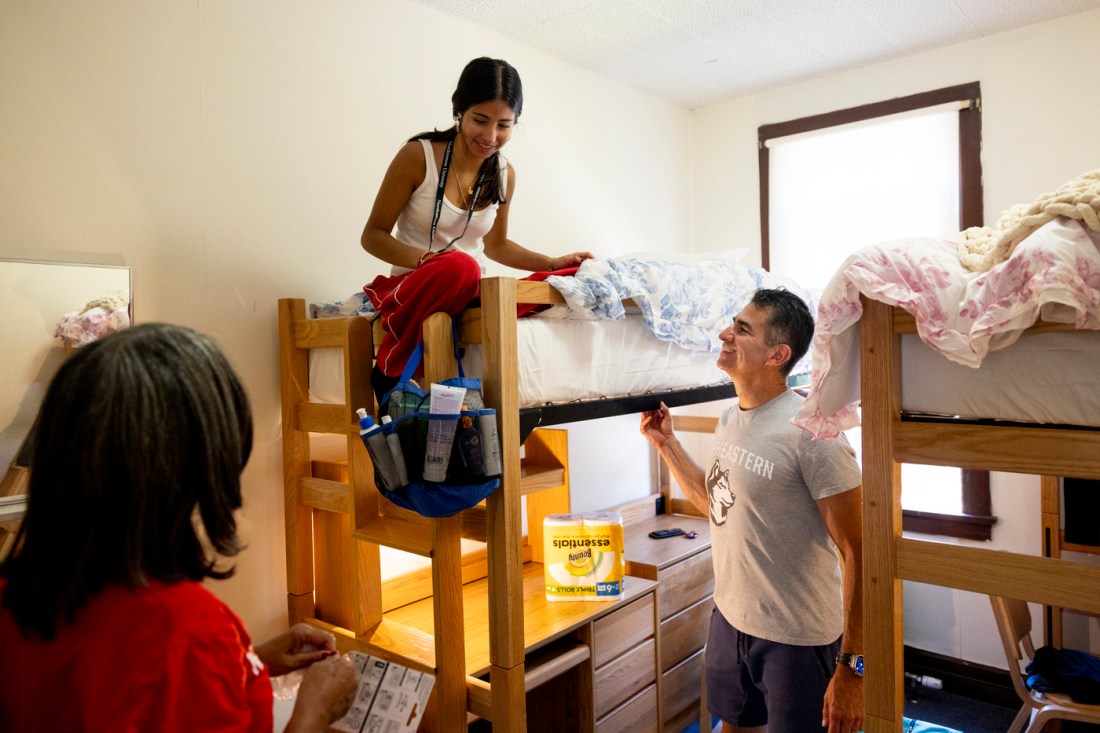

Students who have yet to finalize their plans for fall or spring 2027 are encouraged to apply for housing now, Northeastern University housing services officials said, as applications for the Boston campus open for summer, fall and spring 2027.
“I would encourage any students, who believe they will be eligible for and are interested in university housing, to apply now for any periods that they think they might need housing,” said Dan Nelligan, director of Housing Services.
Applications for the fall and spring will close on Jan. 16, while those for the first half of summer are due on March 1. Applications for the second half of summer can be submitted through May 1.
The housing services division strives to support the university’s academic mission by providing flexibility for students pursuing global opportunities and co-ops, Nelligan said. Housing services staff will work with such students if their plans change in the future, he said.
Timelines and cancellation deadlines are available on the Housing and Residential Life website.
Nelligan spoke with Northeastern Global News about the housing application process and common student questions. The conversation has been edited for clarity and brevity.
Where does the application process start for students who are going to be continuing their studies at Northeastern next summer, in the fall and spring 2027
Housing guarantees and requirements are different depending on how students were admitted to the university and what program they’re in. That is an important component of how they will experience university housing. It gets people asking us questions the right way, and we try to highlight that as much as we can on our website.
For example, undergraduates who entered the Boston campus as first-year students through fall admission are required to live in university housing for their first two years. They should refer to the “Required Students” section on the website.

Students completing NYC Scholars and London Scholars should consult the “Non-Required Students” section ahead of their first year in Boston, while students in programs such as NU Immerse or Foundation Year should review the information for transfer students.
It’s important for families and support systems to understand that the person who’s going to have direct access to information like housing applications or preference forms is going to be the student. We target students with careful communication and reminders. Parents won’t directly get this information from us.
Does the Boston campus provide housing for upperclassmen and rising seniors?
We are able to house any student who is guaranteed housing. We also do have a large number of students that are not guaranteed housing, but that we are able to provide with university housing.
It is a highly sought-after resource that differs year to year. This application period is for anyone who’s a continuing student.
At the end of the application period, we review application data and make a determination about who we’ll be able to offer housing to for the coming year. We try to do that far enough in advance to allow folks to plan.
What should students with medical or accessibility needs know?
We work closely with Disability Access Services on accommodations for students with substantially limiting disabilities. Anyone who believes that they would require medical or disability-related accommodation should register with Disability Access Services. I always encourage students to start that process early, because it can take some time.
If Disability Access Services approves an accommodation and the student has met the appropriate deadlines for application and deposit, Housing and Residential Life will provide it.
Who typically uses university housing in summer?
We offer university housing in summer on a space available basis to any interested students, and a lot of students take advantage of that.
We have two distinct summer terms in housing that students can apply for separately. Some students take classes in the first or second half of the summer. Others are on co-op from January through the end of June or from the beginning of July through the end of the year.


Not all buildings remain open in summer, but we try to limit the number of times that students need to move. If the building that they’ve lived in from fall to spring remains open, we try to keep them there.
Can students remain in the university housing while on co-op in Boston?
Students who are on co-op, in general, are still eligible for university housing. They don’t need to move out, because they are on co-op.
Another question we get is, “What if I am supposed to be living in housing but I accept a co-op that is outside of the Boston area?” We’ve developed a cancellation schedule that allows students to cancel their housing if it is no longer needed. We confirm the information that they’re giving us about the location of their co-op with their co-op adviser or their employer, and then we cancel [their housing] without any financial penalty. Allowing that freedom is an important part of our model.
What is PAWS?
PAWS stands for Placement Assistance with Staff. That’s when students can be assigned housing based on a set of preferences that they submit to us. It could include living with specific people, room type, building, price structure or preference for all-gender housing.
So, students submit their applications, and, if offered housing, submit their deposits, typically in early February.
After that we go into a series of housing selection processes for different student categories, including those with medical accommodations and required or non-required status. Most students log in and self-select available spaces.
Some students choose not to participate in that self-selection process. They have an option to submit a form with their preferences for housing.
Because many students cancel housing to pursue opportunities away from Boston, spaces open throughout the summer. We’re able to place students who submitted preferences to us into those available spaces.
How does the waitlist work?
A student could be on a waitlist for a variety of reasons. We maintain a waitlist for each term. Many times, that’s because students miss an application or deposit deadline and get in touch with us later asking about being on the waitlist.
We, of course, try to accommodate as many students as we’re able to, but it differs depending on what term we’re talking about and what the timeline is. A student asking for spring 2026 housing today is very different from a student who’s looking for fall housing in March.


