Mass killings hit a 20-year low in US, Northeastern data shows — but public perception hasn’t caught up
As 2025 winds to a close, new data show a surprising trend: this year is on track to record the fewest mass killings in two decades.

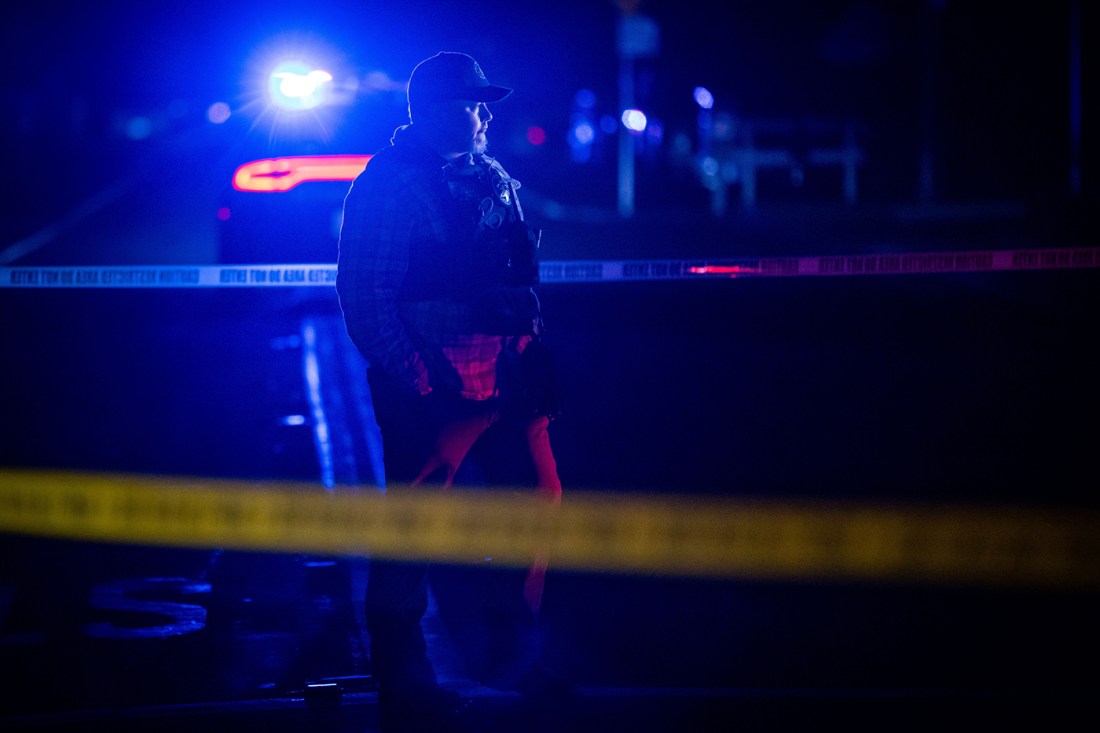
As 2025 winds to a close, new data show a surprising trend in the United States: this year is on track to record the fewest mass killings in two decades. That is according to data collected by James Alan Fox, a Northeastern University criminologist and leading expert on mass murder.
Fox manages the Associated Press/USA TODAY/Northeastern University Mass Killing Database. He has had his finger on the pulse of mass murder and violence in America for decades, insisting more recently that there is something of a discrepancy between the prevalence and scale of “mass shootings” as a subset of “mass killings,” and the public’s perception of the problem. That is largely a product of wall-to-wall media coverage of what he said are in fact rare events — that is, mass shootings involving the deaths of four or more people.
Mass shootings, Fox noted, make up about 1% of all gun deaths in the United States. In a typical year, they claim between 100 and 200 lives, compared with roughly 17,000 lost to gun homicides.
But mass killings fell by roughly 24% this year compared to 2024, which follows about a 20% decline from 2023 to 2024. This year’s tally is down a whopping 59% from 2019, when a record 41 mass killings occurred, which Fox noted was an anomalous year.
Northeastern Global News spoke to Fox about the findings, and what they mean moving into 2026.

You’ve been tracking mass shootings and mass killings for decades. For starters, what stands out to you about recent trends, and how they’ve been handled by the mainstream media?
I have frequently pointed out that when mass shootings and mass killings increase, there’s lots of coverage in the news about it. But the downturn we’ve seen — almost half, a big downturn over the last two years — there’s been almost nothing. I did write two columns: one for the Globe last January in the Ideas section, and one in May in the Washington Post. But it’s not something that really has been out there — that there’s this big decline, until just this week. So I’m glad it’s out there, but I think there’s more to say about it.
What do you think is driving that downturn?
Editor’s Picks





The downturn is largely just a return to a more normal or usual level that we saw prior to the spikes in the past few years. What goes up must come down. A lot of it is just that statistical artifact of volatility: when you’re dealing with things that happen a few dozen times, it can change a lot from year to year without any particular reason. But since we did see this increase, now we’re coming back down — and that’s a good thing.
But we should recognize that there may be some increase. How do we make sure it’s not substantial? You have to consider the fact that almost half of these cases occur in private residences, where safe storage [of firearms] is critical. And also despite recent prosecutions of parents who don’t keep guns away from their kids — who may take them to school — that doesn’t happen very often. What does happen often is kids getting their hands on guns and committing suicide or killing a family member. If that reality isn’t enough to deter a parent, the criminal justice system won’t.
Even though the lion’s share of mass killings are in private homes or in the streets of America involving gangs or drug traffickers, the public ones are the ones that scare people. Those can happen to anyone, at any time, any place. And that’s the reason why as many as one-third of Americans, according to surveys, say they avoid certain public places for fear of becoming the victim of a mass shooting. Now, those numbers have come down too. Hopefully that idea eases some fears, because some of these fears have been the result of tremendous media coverage of rare cases. Of course, as they say, one is one too many, and we’ll never get to zero, unfortunately.
Are there any industrialized nations that have experienced mass shootings and managed to reduce them to zero — or close to it?
Australia actually got to zero. They had a big mass shooting in 1996, and they followed that by passing very strict gun rules, basically eliminating private ownership of guns. They didn’t have another mass shooting for more than 20 years. That’s not going to happen here because we have the Second Amendment, which isn’t going anywhere. But even with the Second Amendment, it doesn’t mean we can’t make improvements in terms of things like universal background checks, even though they’re not perfect.
In terms of public mass shooters, I did a very detailed analysis of nearly 100 of these shooters for a lawsuit down in Texas. And two-thirds of them were able to buy their guns legally because they had no criminal record and had not been institutionalized involuntarily. The other third got them from private sales, gun shows, borrowed them, stole them. So there are things we can do with that portion.
You’ve talked a lot about how the media has shaped public perception of these killings, with the 24-7 news cycle. Can you say more about exactly what contributes to what you see is a misunderstanding of the scope of the problem?
Let me say this: there were lots of big mass shootings back in the ’80s and ’90s that few people remember. There were 23 people killed at a Luby’s cafeteria in Texas in 1990. There were 21 killed in a McDonald’s restaurant, mainly children, in San Diego in 1984. And there was an elementary school massacre in 1989 in Stockton, California, with five children killed and 30 injured.
But there was no video of these events. We didn’t have satellite trucks beaming images into people’s living rooms during and after an episode. They didn’t have cable channels. CNN started in the mid-1980s, but they had a very small number of subscribers then. They didn’t grow until much later. And that was the only one. The traditional broadcast media — CBS, NBC, ABC — they weren’t about to preempt the soap operas to report on a shooting when they didn’t even have anything to show.So the technology — satellite trucks, helicopters carrying images — that didn’t exist then, but it does now. And there’s the whole thing: “seeing is believing.” People believe there’s an epidemic because they see it.