‘It is OK to be different’ — says Northeastern London’s new student group
Kaylee Burkett and Malaika Okelo-Odongo, co-presidents of the African, Black and Caribbean Union, explain what drove them to found the group and put on their first major event.


LONDON — Kaylee Burkett and Malaika Okelo-Odongo had a shared vision when they established the African, Black and Caribbean Union.
But Okelo-Odongo wants it known that it is not the fact they are Black that brings the two London-based Northeastern University students together. It is because they wanted somewhere they could represent their differences.
“I feel like we tend to homogenize all Black people,” says Okelo-Odongo, a third-year student who grew up in South Africa.
The 21-year-old says she takes the view that “it is OK to be different”. She wants the Black community to celebrate its vibrancy, making room for what it is to be Black in America, Britain, Africa and elsewhere, rather than attempt to “oversimplify” it into a single culture.
“I know we share the same struggles,” says Okelo-Odongo. “I guess by recognizing that we’re different, we’re able to be more connected.
Okelo-Odongo was born to a Kenyan American father and a Cameroonian mother in the U.S. before moving to Johannesburg when she was 4 years old. Burkett, a second-year student, grew up in Chicago but today calls Washington, D.C. home. Her maternal grandmother migrated from Ghana to America in 1973 with a child already in tow as she went in search of better educational opportunities for her growing family.
Burkett says the purpose of the ABC Union is to allow Black people from different backgrounds to share their perspectives in a single “safe and dedicated space,” where people of all ethnicities are welcome.
“I think what Malaika is speaking to is the importance of acknowledging those differences,” the 19-year-old says, “and working together to make sure that all of those different narratives and experiences are highlighted in a way that is unifying but also supportive of the fact that they’re different.”
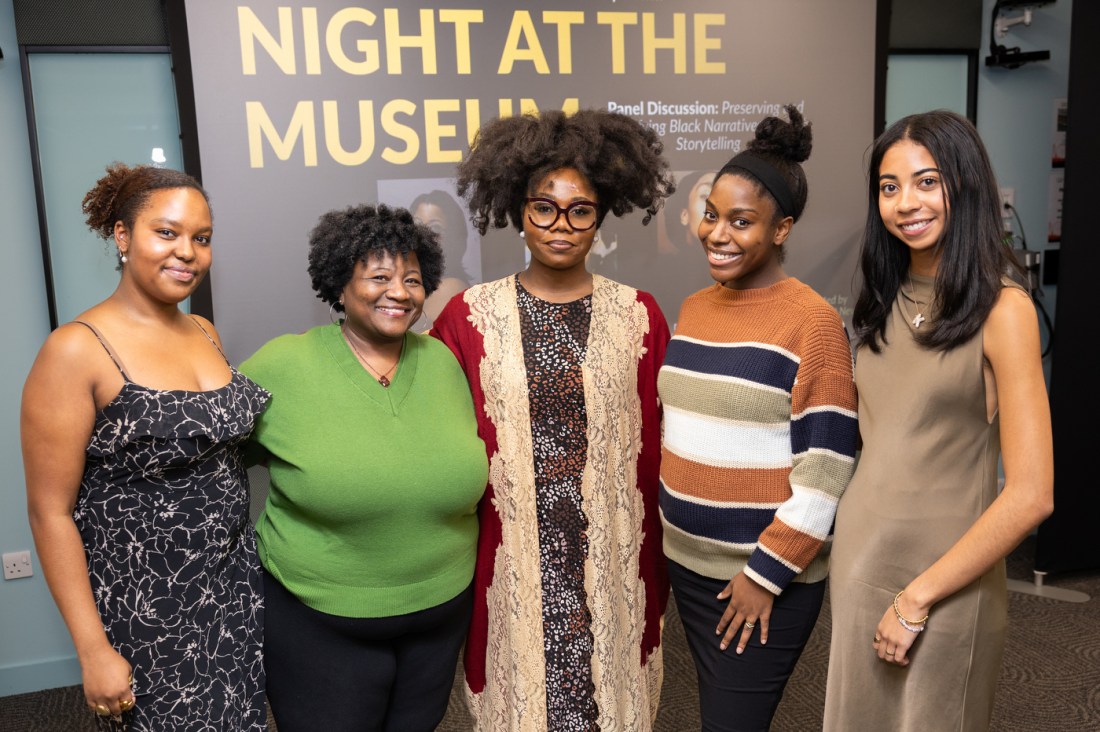
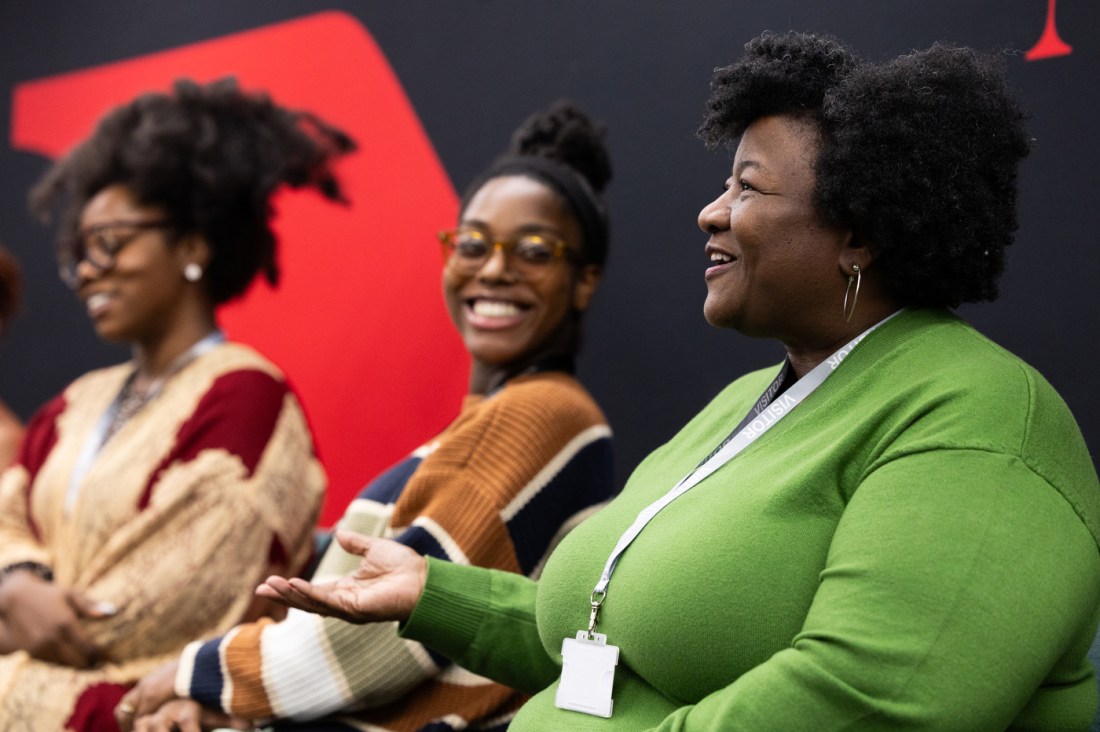
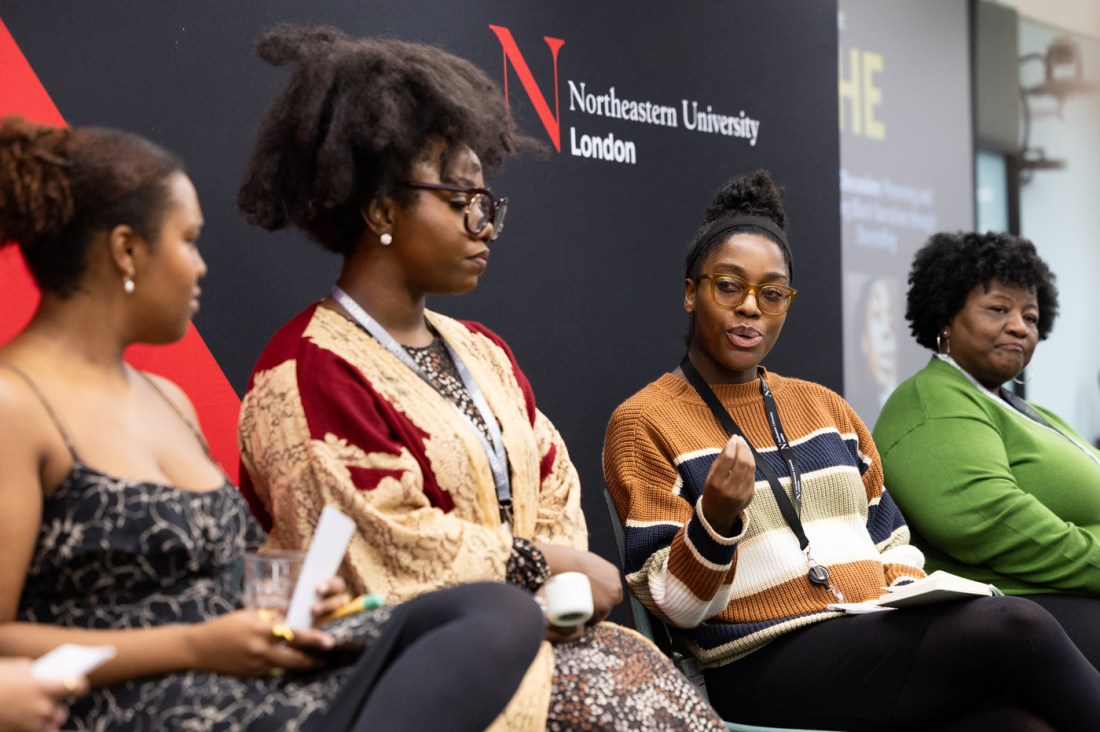
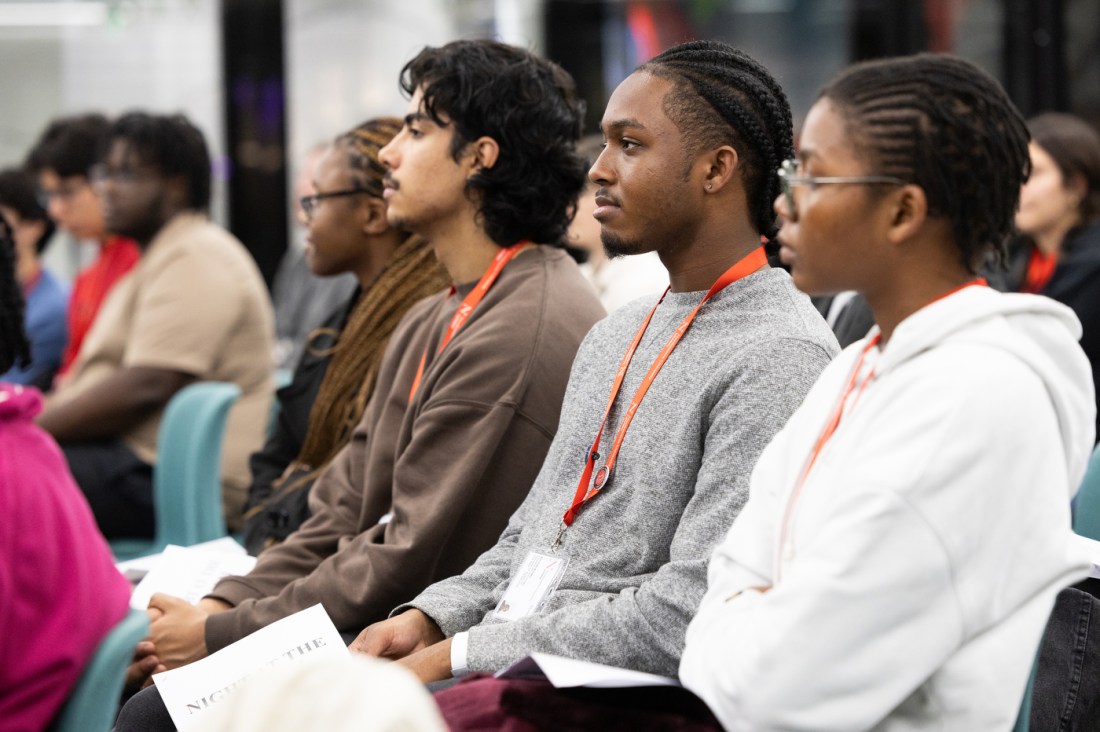
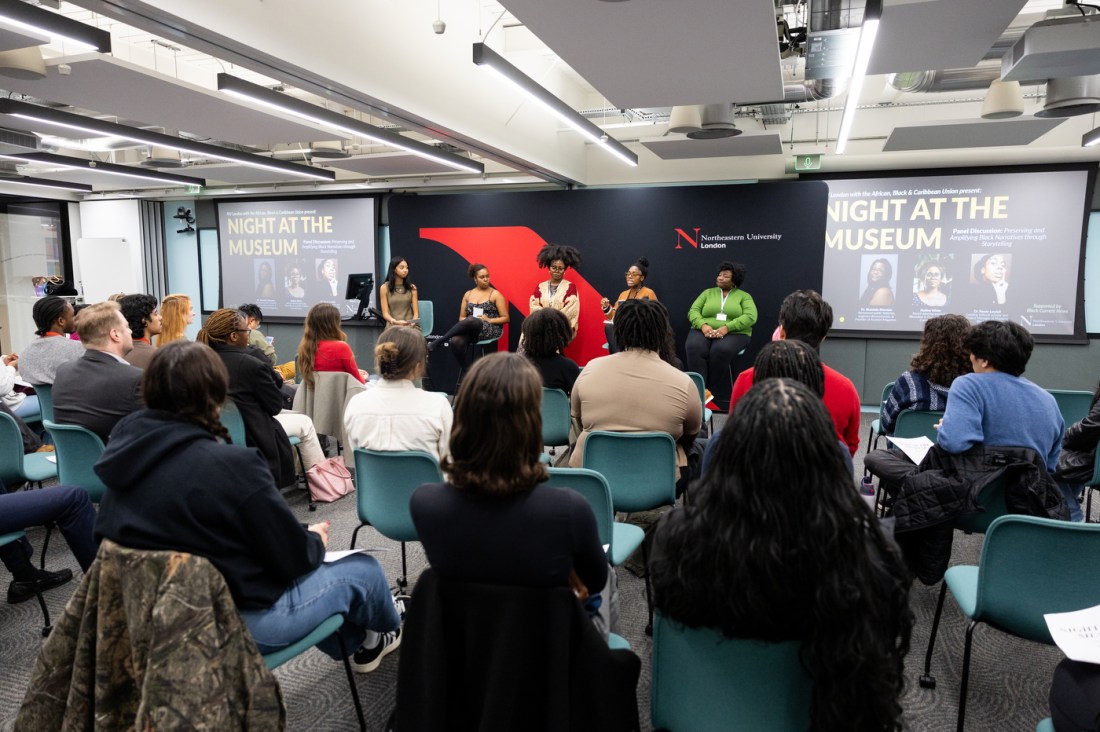
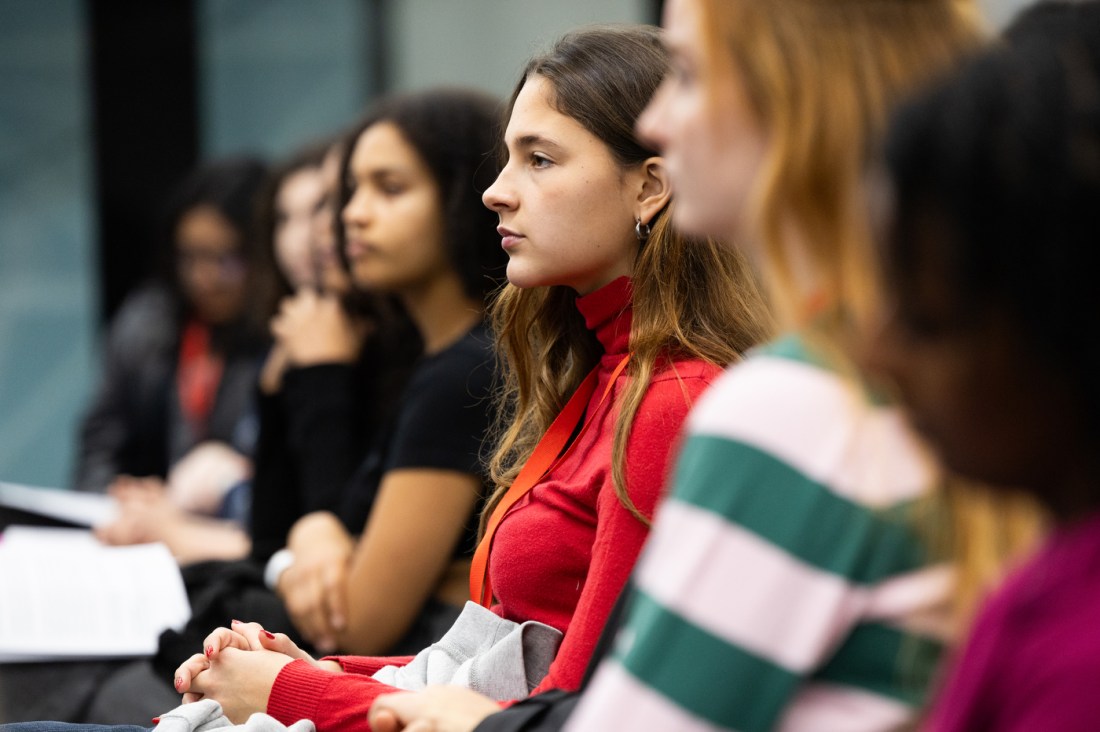
That diversity of perspective was on full show at ABC’s first major event, “Night at the Museum”, on Oct. 29. The event’s opening panel discussion on the London campus brought together a journalist, a researcher digging into British Black history stretching back to the 15th century and an American historian specializing in unearthing eugenic atrocities against her countrymen.
Following the talk, guests were treated to an array of exhibitions, videos and stalls where they could speak to the panelists afterwards, while food was supplied by Black-owned catering businesses.
The evening was arranged to coincide with the U.K.’s Black History Month in October and followed Northeastern’s theme of “celebrating black brilliance.”
Burkett and Okelo-Odongo, both studying politics and international relations, say they wanted to mark the ABC’s founding, having only been set up in April, with a “capstone” event.
“We really did want it to be like a celebration, where people leave and they feel like they learned something or really enjoyed themselves,” says Burkett. “It was less that learning about Black history or Black stories is a chore or something that’s a part of your coursework, but instead something that can be really exciting and done creatively and as a social space as well.”
The panel featured Nadine White, the U.K.’s first race correspondent to be hired by a major newspaper, historian Shantella Sherman and Renee Landell, project manager of Northeastern’s Mapping Black London research initiative.
Burkett and Okelo-Odongo, ABC’s co-presidents, chaired the discussion that centered around storytelling.

Landell told the audience that Mapping Black London project, which involves using public records to uncover the lives of black Londoners in history, was helping to counter the threat of “historical amnesia” in a time of anti-migrant sentiment in Britain.
Editor’s Picks


She pointed to the example of the Windrush Generation, when people from the Caribbean were invited to the U.K. to help rebuild the country after World War II.
“You have to ask yourself,” Landell continued, “what happened in between being invited to come here to help because they recognized that we have expertise that this country needs, to thinking that now we are disposable.”
It is why, said Landell, the work of Mapping Black London is “so important” as it is raising awareness of contributions made by “these really incredible early black Britons and recognizing that we’ve been here for a very long time — centuries, in fact.”
White, who has founded her own news organization, Black Current News, said she is driven to “amplify marginalized perspectives.”
After the panel discussion, visitors were able to engage with presentations on Mapping Black London and watch a trailer for White’s documentary, “Barrel Children: The Families Windrush Left Behind,” which focuses on the accounts of children left behind in the Caribbean when their parents emigrated to Britain for work in the middle of the 20th century.