Mass shootings in Michigan, North Carolina paint complicated portrait of military veterans, experts say
The two incidents aren’t necessarily emblematic of a trend among military veterans, says James Alan Fox, a Northeastern University criminologist.

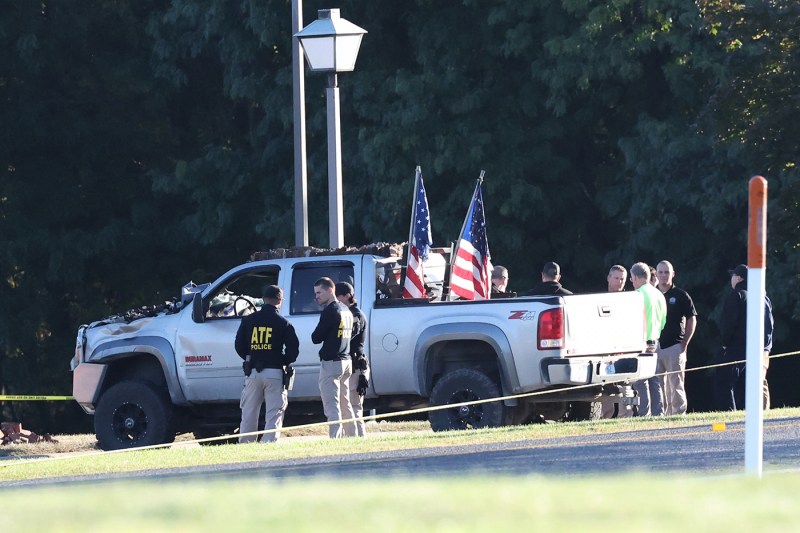
Two separate mass shootings — one at a Michigan church and the other at a North Carolina bar — involved suspects who were reportedly Iraq War veterans. The incidents highlight the complex and “often misunderstood” link between military service and mass violence, says James Alan Fox, a Northeastern University criminologist.
The two incidents are not necessarily emblematic of a trend among military veterans, Fox says. He notes that about 23% of all public mass shootings (defined by four or more victims) are committed by individuals with some military service, though not necessarily combat experience.
Thomas Jacob Sanford is alleged to have crashed a vehicle into the Church of Jesus Christ of Latter-day Saints in Grand Blanc, Michigan, during Sunday services before opening fire on hundreds of worshipers and setting the building ablaze. The 40-year-old former Marine was killed in a shootout with law enforcement.
Sanford is reported to have completed tours in Japan and Iraq after graduating from high school.
Nigel Edge was arrested Sunday for allegedly carrying out a mass shooting in Southport, North Carolina, from the water while driving his boat up to a dock-front bar and opening fire on diners.
Edge, who reportedly changed his name from Sean Debevoise, is a decorated combat veteran who served in Iraq in 2005. In 2006, he was awarded a Purple Heart, according to NPR. Edge is said to have suffered from post-traumatic stress disorder.
Roughly 13.4% of U.S. men are reported to have served in the armed forces in some capacity, compared to just 1.4% of women, data shows.
Fox says military veterans are “somewhat” overrepresented in the data, but that shooters’ profiles — at least in the U.S. — don’t fit any particular stereotype.
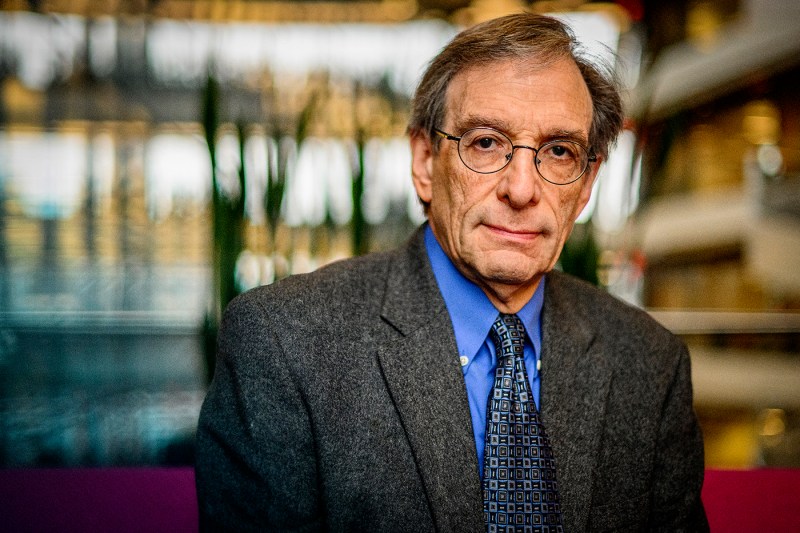
Still, he adds, “it’s not surprising” when former service members are involved, given the training and the psychological challenges some may face after returning to civilian life.
“While most who enlist in the military do so because they want to serve and defend our country,” says Fox. “However, some enlist because they are eager to fight. This personality type would be more apt to engage in a shooting rampage than someone who is a pacifist.”
At the same time, Northeastern University psychologist Laurie Kramer says it’s important to counter the perception that combat veterans are more likely to be mass murderers, noting that vets face a host of issues when returning from war.
“Traumatic events do happen when you’ve been in wars, and when you return from service and reintegrate back into civilian life — that can bring a lot of difficulty as well,” Kramer says.
Service members who suffer from PTSD may experience “flashbacks, distorted reality, anxiety, negative thought patterns and confusion” that could lead to them acting out, Kramer says.
Editor’s Picks





“Still, veterans do not constitute a majority of mass shooters,” Fox qualifies. “It’s less than a quarter.”
There have been several significant mass shootings carried out by military veterans involving 10 or more fatalities in recent years. In 2018, a former Marine machine gunner walked into a bar in Thousand Oaks, California, killing 12 people. Investigators then said the shooter had a “strong disdain for civilians, or individuals not associated with any branch of the U.S. military.”
In 2017, a former member of the U.S. Air Force killed 25 people, including a pregnant woman, and wounded 22 others at the First Baptist Church in Sutherland Springs, Texas, in what was the state’s deadliest mass shooting.
It’s true that combat veterans experience higher rates of PTSD, chronic traumatic encephalopathy and depression, Fox says. Chronic traumatic encephalopathy is a progressive brain disease linked to repetitive head trauma.
“Many come out of the military, having been trained in guns, and depending on what kinds of experiences they’ve had in the military, they could be depressed, they could have PTSD, they could have relationship problems,” he says.
Roughly 7% of U.S. military veterans will experience PTSD in their lifetime — just one point higher than the general population, according to data from the U.S. Department of Veterans Affairs. The condition is also more common among female veterans (13%) compared to men (6%), the data shows.
The department notes that it is still gathering data about transgender and non-binary veterans.
Rates of PTSD vary by service eras, with veterans who served in Operations Iraqi Freedom and Enduring Freedom seeing the highest lifetime rates (29%) compared to other wars, according to the U.S. Department of Veterans Affairs.
Including both incidents, mass shootings are down this year compared to 2024, Fox notes.
“We’ve had fewer than any year since at least 2006,” he says.