London museum collaboration with Northeastern secures research and fresh perspective on ancient collection
Students on the Global Objects course in London studied historic artifacts, putting together research papers and descriptive labels about them for the Museum of the Order of St John.

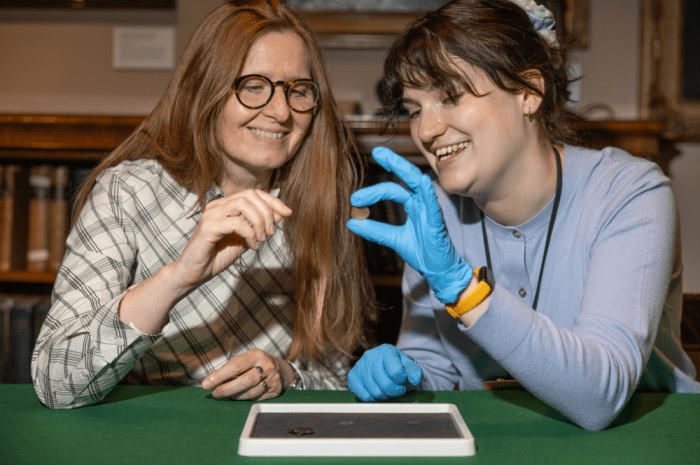
LONDON — Students had history in their hands as they played the part of curators at a London museum that is home to objects dating to ancient times.
They delved into the back stories of 12th-century coins from Armenian Cilicia (now modern-day Syria), scoured for information about a sword from the 1300s and studied religious statues thought to date to the late Middle Ages.
The items all form part of the collection belonging to the Museum of the Order of Saint John, which has been operating in central London for more than 100 years. The research the students at Northeastern University in London conducted on the objects is set to be used by the museum as it launches a new online collection website providing details about the 43,000 records that it holds.
The descriptive labels that the students also wrote, which could be no longer than 60 words and followed guidelines used by the Victoria & Albert Museum in Britain, will inform an update of its display that the museum is putting together.
“Some of them were really amazing,” says Rebecca Raven, one of the curators at the museum, about the public-facing descriptions. “They will act as a basis for actual museum labels.”
The museum tells the story of the Venerable Order of Saint John, an order of hospitaller knights founded in Jerusalem in the 11th century to care for sick pilgrims. The museum is based at St John’s Gate in Clerkenwell, which was once part of the English headquarters of the order before the dissolution of the monasteries during the 16th-century Reformation forced the priory’s closure.
The order was reestablished in Britain as a Protestant institution in 1888 and would result in the founding of the St John’s Ambulance Brigade, a charitable and largely volunteer-run organization that provides first aid education and emergency medical services throughout the Commonwealth.
Those behind the order’s revival bought up artifacts for its collection, including paintings, illuminated manuscripts, rare armor and ancient coins, the type of which would likely have been in the hospital’s possession before the dissolution.
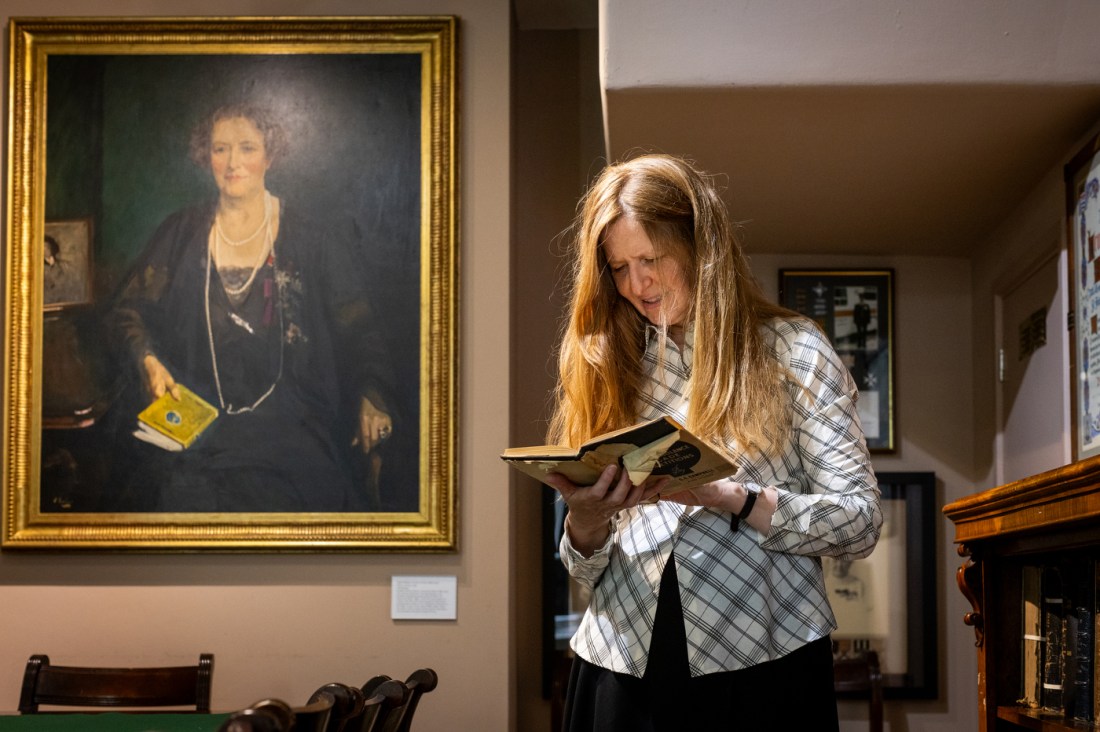
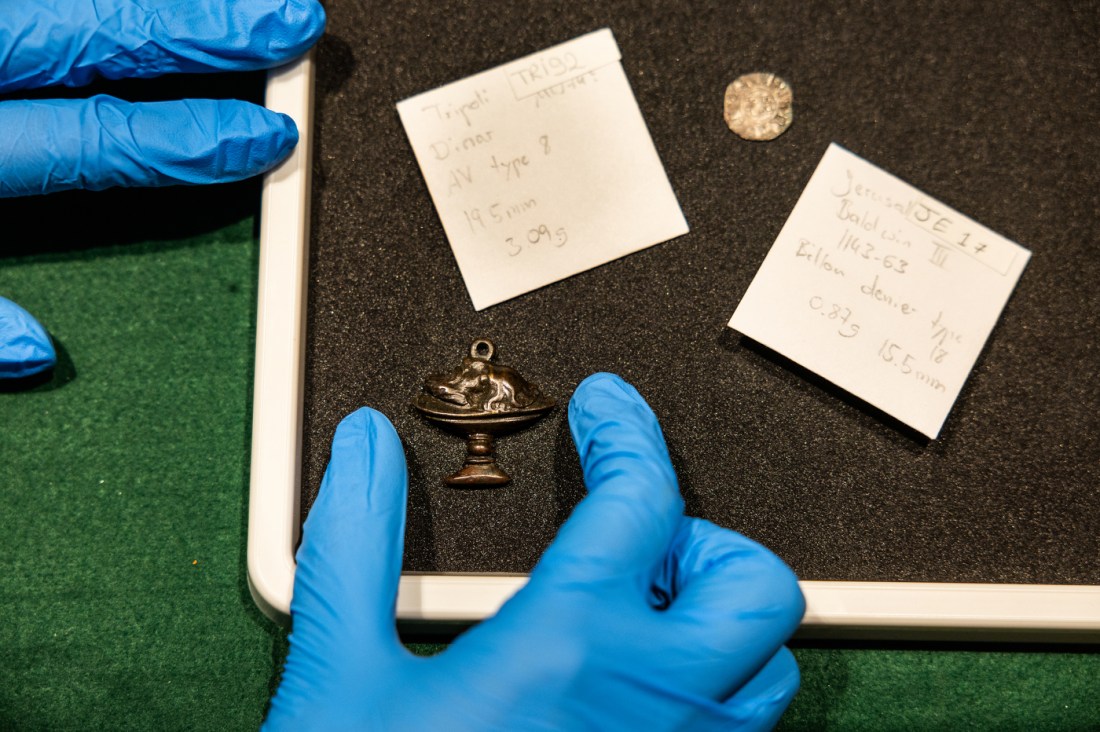
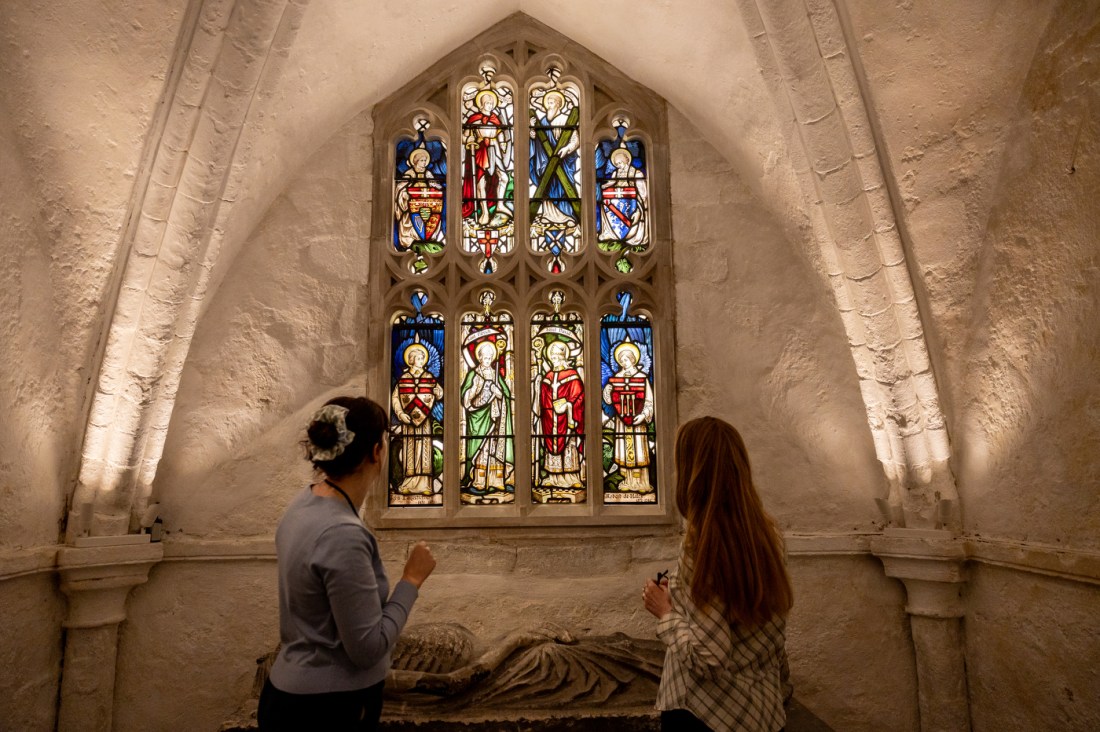
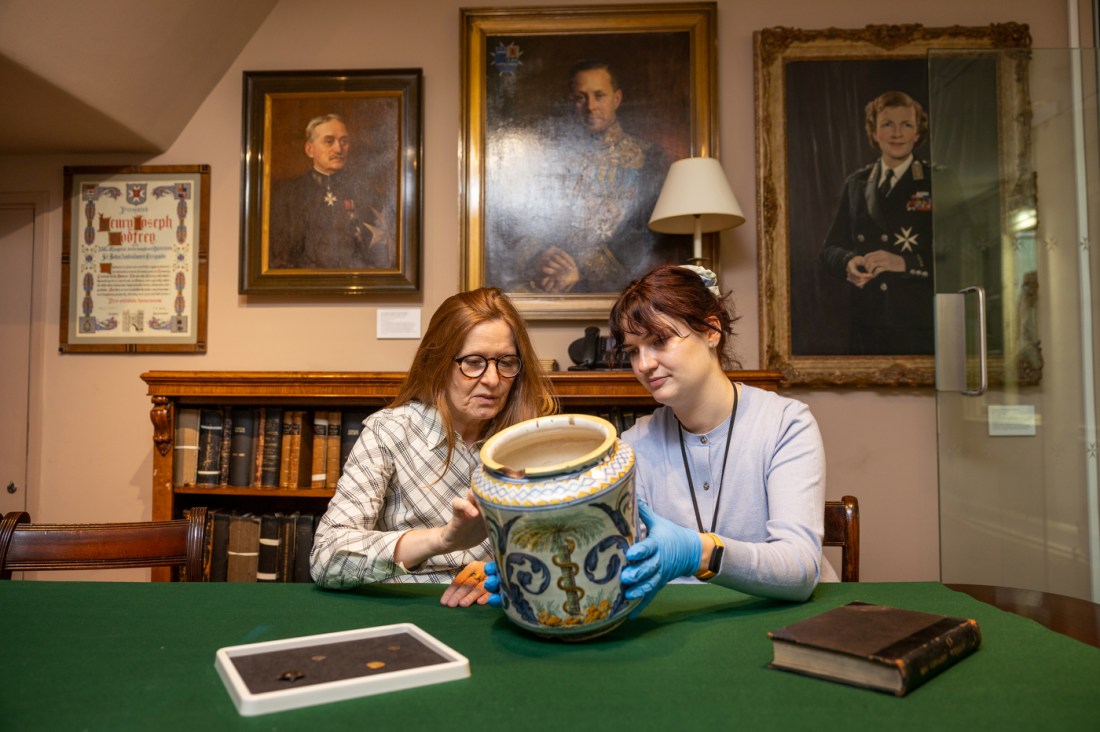
Students undertaking the Global Objects course, run by Sue Jones, an assistant professor in art history, visited the museum to view and study specific objects from the collection that curators were keen to understand more about.
Raven, who also put on guest lectures during the course, says Northeastern’s global mix of students was able to provide a “fresh perspective” on the museum’s collection.
“It was really nice to have the students come in and actually spend a bit of time researching the objects because there are so many in the collection,” says Raven.
“We curators are looking after all aspects of the collection in terms of conservation and the data that we keep about them, so we don’t always have the time to individually research each object. The students were able to gain new skills but the fact that it also helped us out was really beneficial.”
Research by Annika Gelber led the political science and international relations major to conclude that the item she had been given to study was possibly not what the museum believed it to be. The rising third-year student was tasked with looking into the history of what the museum suspected was a 14th-century Venetian ink stand.
Editor’s Picks




But Gelber, from Miami, says it “didn’t really match up” with other comparative inkwells from northern Italy that she could find.
After researching the online databases of the British Museum and The Met in New York, she found the object, which contained holes in its body, more closely resembled incense holders from the Middle East. By piecing together bits of information and reading specialist books, she was able to put together a case that the object had Islamic origins and had potentially found itself traded to the major port of Venice.
Gelber, 20, says the project forced her to confront what she understood about museums. “Definitely at the beginning of working on this paper, I felt like it was actually pretty scary to disagree with the museum,” she says.
“We see museums as these arbiters, these institutions of truth and all-knowing. When you go to a museum, at least before this assignment, I had never really thought, ‘This information could be wrong’ or that I should be questioning it and should be investigating further. You think, ‘This is the truth, this is the full story.’
“But the course definitely made me realize that museums are only as good as the people who visit and the people who run them. It changed my perspective a lot on how we should be interacting with museums and using them as a tool to dig deeper into things that we’re interested in, for our sake, the sake of the museum and also the public at large.”
Raven says Gelber’s argument, especially in pointing out that the holes in the object would have limited how useful it was as an inkwell, was an “eye opener” for the museum. It is possible, Raven adds, that it was a repurposed object that had later been turned into an incense holder.
Daisy Turner, who is undertaking a double U.S. and U.K. degree in English literature, was given the assignment of researching a medieval sword that the museum has in its display cases.
The rising third-year student was told that the weapon probably dated to the early 14th century, was made of steel and iron, and was said to have been found on the battlefield of Flodden — the site of the largest battle between the English and the Scottish troops in 1513.
Following extensive reading, Turner concluded that, without expensive scientific testing, there was “no way to confirm” whether the sword had been at Flodden. But she was able to verify that it was likely forged in northern Europe in the time period the museum suspected.
It was the writing of a descriptive caption, which could potentially be displayed in the museum alongside the sword, that was most rewarding, Turner says.
“It made me feel extra pleased with myself once I’d completed the research and created the caption — I looked at the piece of work that I created and realized, ‘This could actually be attached to an object,’” says the 19-year-old from the Isle of Wight in England who has aspirations of going into academia.
“I felt like it had value. It had added value to art history and especially for the order. So it did feel good — it felt like I’d been effective and successful in something.”
Jones, the course leader and a former museum curator, says the experiential component of the study gave the students a sense of “purpose” and a way of making a “cultural impact” through their research.
“The whole course is about the application of the subject of art history to a job, to the real world job of being a curator,” explains Jones.
“The experiential part is for them to step into a different role and to use the art history that they’ve learned and to apply it to curatorial tasks. That means conducting research, working on communication and also thinking about what kinds of audiences a museum has, from the local community, to schools, tourists and the global audience online.
“I want to develop student skills and that is what experiential is about — about creating skills that they can take into their future careers and which enable them to develop personally.”