Expertise
Arun Bansil in the Press
Gizmodo
New Study Highlights Carbon Fiber Weakness That Sounds All Too Familiar After Titan Fiasco
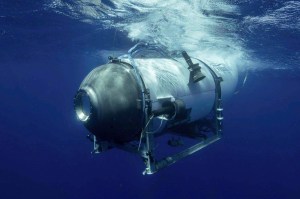
Arun Bansil, a physicist at Northeastern University’s campus in Boston, told a campus publication that the “degrading effects of water absorption on the epoxy binding the carbon fibers in the composite” were worth paying attention to in “assessing the failure of Titan.”

What to know about the Titan sub and its tragic final dive to the Titanic
The water pressure at the Titanic is roughly 400 atmospheres or 6,000 pounds per square inch. Arun Bansil, a Northeastern University physics professor, likened the pressure to the force of a “whale biting on somebody.”

What to know about the Titan sub and its tragic final dive to the Titanic
The water pressure at the Titanic is roughly 400 atmospheres or 6,000 pounds per square inch. Arun Bansil, a Northeastern University physics professor, likened the pressure to the force of a “whale biting on somebody.”

Why Delta Flight 4819 Flipped After Landing, According to a Physicist
“Various forces acting on the airplane must remain in proper balance for the airplane to fly, and to land and take off smoothly,” Arun Bansil, a physics professor at Northeastern University, told Northeastern Global News.
NHL
Pettersson, Chara help break down science behind Hardest Shot at All-Star Skills
“The trick in hitting the puck with great speed boils down to the ability of the player to convert as much potential energy as they can into the kinetic energy of the puck,” wrote Dr. Arun Bansil, University Distinguished Professor of Physics at Northeastern University in Boston, in an email.
Daily Mail
Passengers on ill-fated Alaska Airlines Flight 1282 likely would have died if blowout occurred at 40,000 feet, says physicist
Physics professor at Northeastern University explains loss of pressure at altitude.
The Independent
Titanic sub debris and human remains have been recovered. But we still don’t have answers to these 9 questions
But Northeastern University physics professor Arun Bansil said the wreckage is consistent with what officials determined happened to the Titan.
The Independent
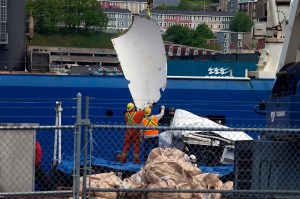
What photos of the Titanic sub debris tell us about its implosion
Arun Bansil, a professor at the physics department at Northeastern University in Boston, told The Independent that “although it seems counterintuitive, large objects do not normally split apart into smithereens in an implosion or explosion”.

Why Big Pieces Of The Titan Sub Survived Implosion But The Crew Didn’t
“Implosions like explosions are very violent,” explained Arun Bansil, physics professor at Northeastern University. “As the hull breaks apart under the huge external pressure, a large amount of energy is released, and the five occupants would have died instantly.”
The Independent
SCIENTISTS’ ‘HOLY GRAIL’ BATTERY DISCOVERY COULD MAKE COMPUTERS FASTER AND LONGER-LASTING
“It’s like discovering a new element,” physicist Arun Bansil, who led a team of researchers from Northeastern University to make this discovery, said. “And we know there’s going to be all sorts of interesting applications for this.”