Break a sweat, hear more? Early results point to a surprising link between fitness and speech perception
There’s another reason to make time for a Peloton session or squeeze in a run before work — it could be good for your hearing. Northeastern researchers found that fitness boosts speech perception in a noisy environment.


It’s easy to take hearing for granted.
A podcast playing in the background. Your kids making animal noises and debating who gets to be the cheetah. An orange Maine Coon cat purring in your lap.
But what if the sounds start slipping away?
“By age 80, something like 80 percent of adults will have hearing loss,” said Northeastern Bouvé College of Health Sciences professor Jonathan Peelle.
Isn’t that what hearing aids are for?
It’s not that simple.
Say you’re in a crowded restaurant. Voices, clattering dishes and the live band in the corner might blur into one sea of sound. This makes it hard to pick out what you actually want to hear — words being addressed to you.
If understanding speech in a noisy environment were just about making it louder, hearing aids would do the trick, said Bridget Carey, a Ph.D. student in Peelle’s lab.
But hearing loss doesn’t just boil down to volume. The challenge is also untangling speech signals from the rest of the auditory vinaigrette for the brain to process. You also have to remember who said what and hold up your end of the conversation.
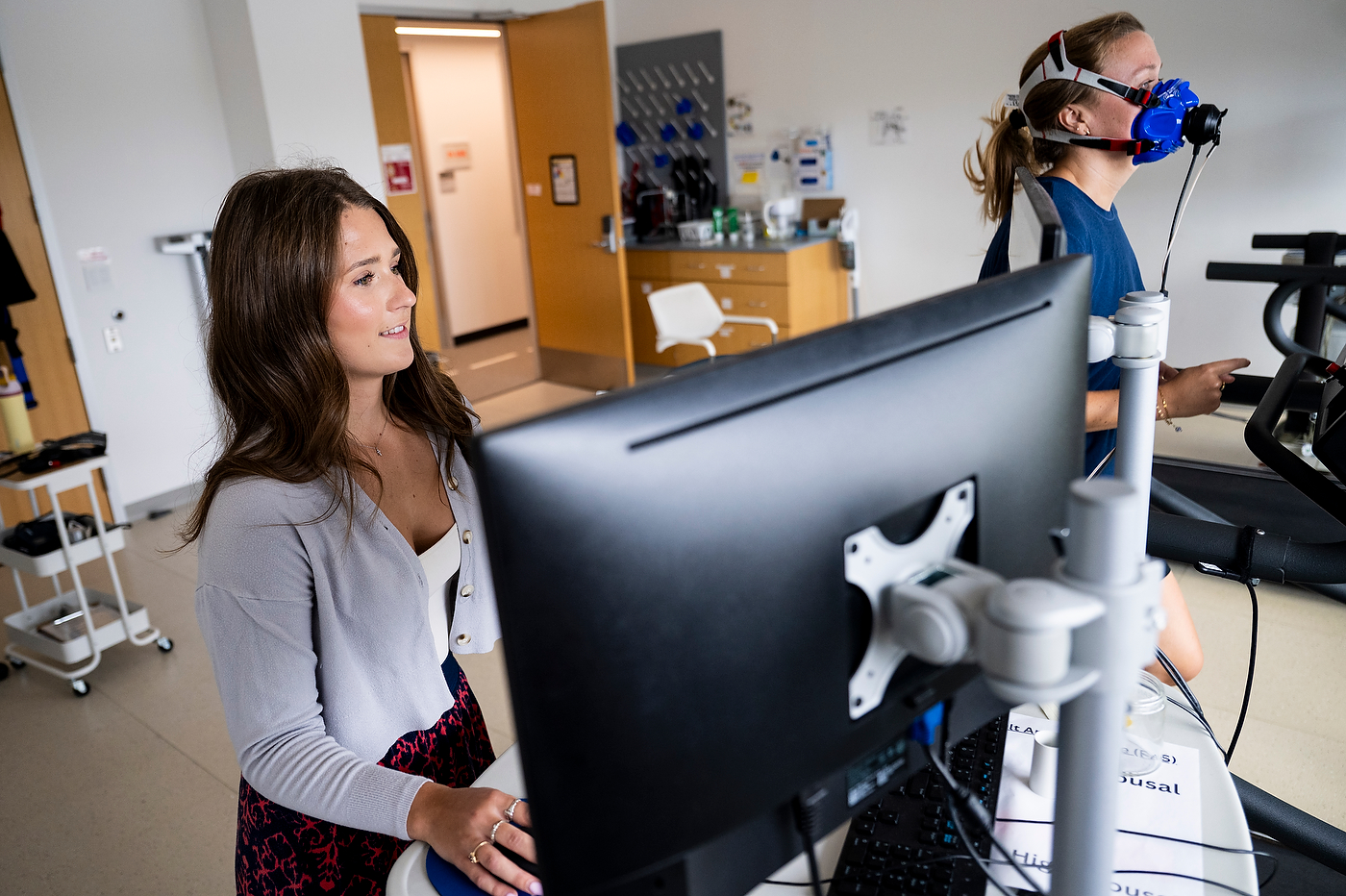
Scientists study these mental maneuvers through speech-in-noise tasks, which rate how well someone can pick out voices from other sounds.
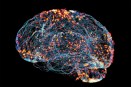
Peelle’s previous research showed that analyzing speech under difficult conditions engages the prefrontal cortex. This brain region handles executive functions — higher-order mental skills that allow the brain to manage information, self-regulate, make decisions and switch between tasks.
This area is particularly vulnerable to age-related damage. As a result, the ability to parse speech from competing sounds can take a hit with time. But since it’s a neurological problem, there’s no hearing aid that will make it better.
That said, there’s a promising solution in the works.
Research has shown that aerobic exercise supports many systems in the body — and hearing is no exception. Exercise is also linked to brain health, the other part of the puzzle.
An ongoing study in Peelle’s lab is asking if the secret to navigating tricky listening environments might be as simple as regularly logging a few laps around the track.
Editor’s Picks



If speech-in-noise tasks rely on executive function — and we know that physical activity helps it — then couldn’t exercise also benefit speech perception, Peelle and Carey pondered. They set out to find out.
Now in its first phase, their study is trying to establish a link between these concepts.
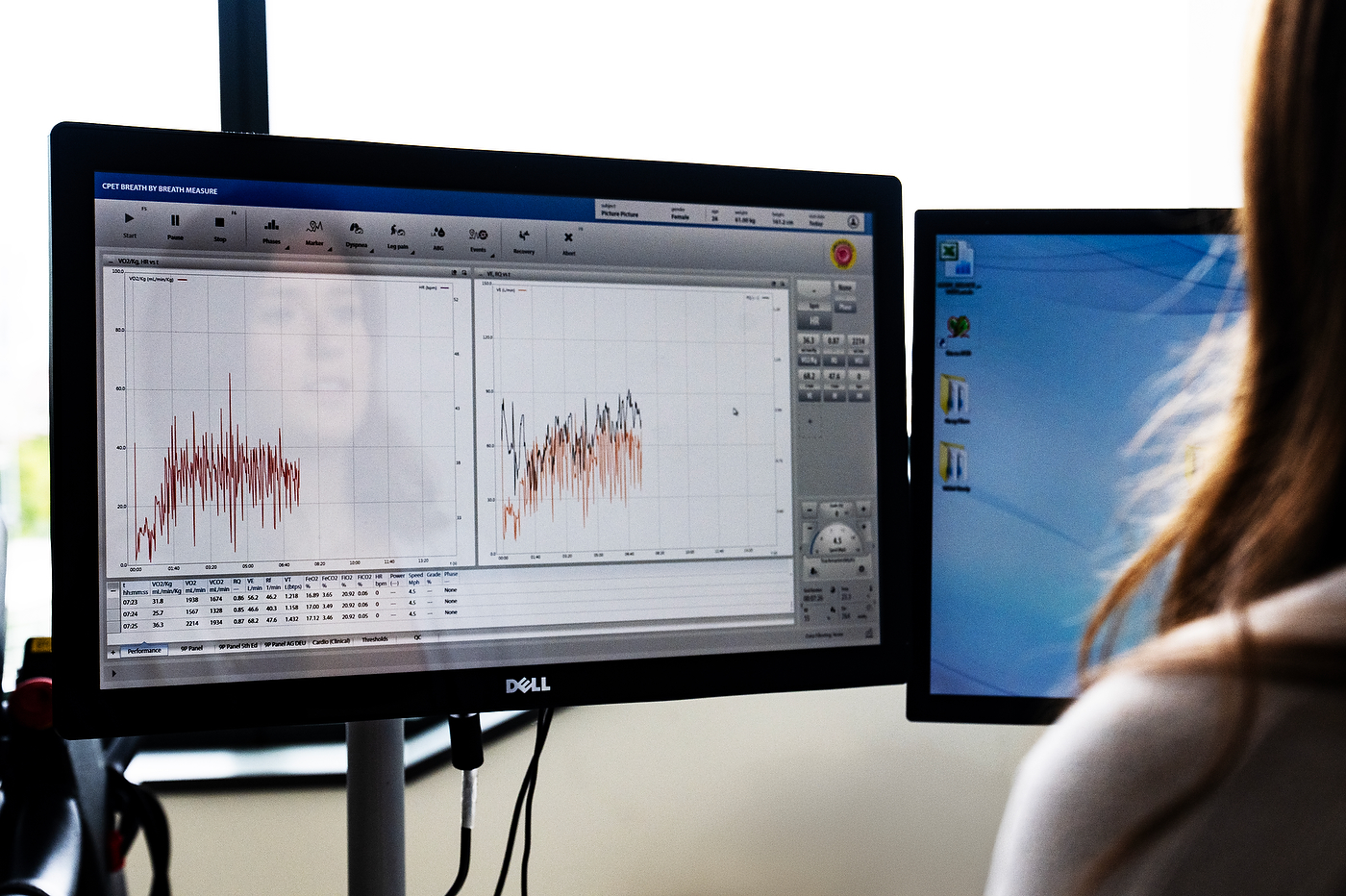
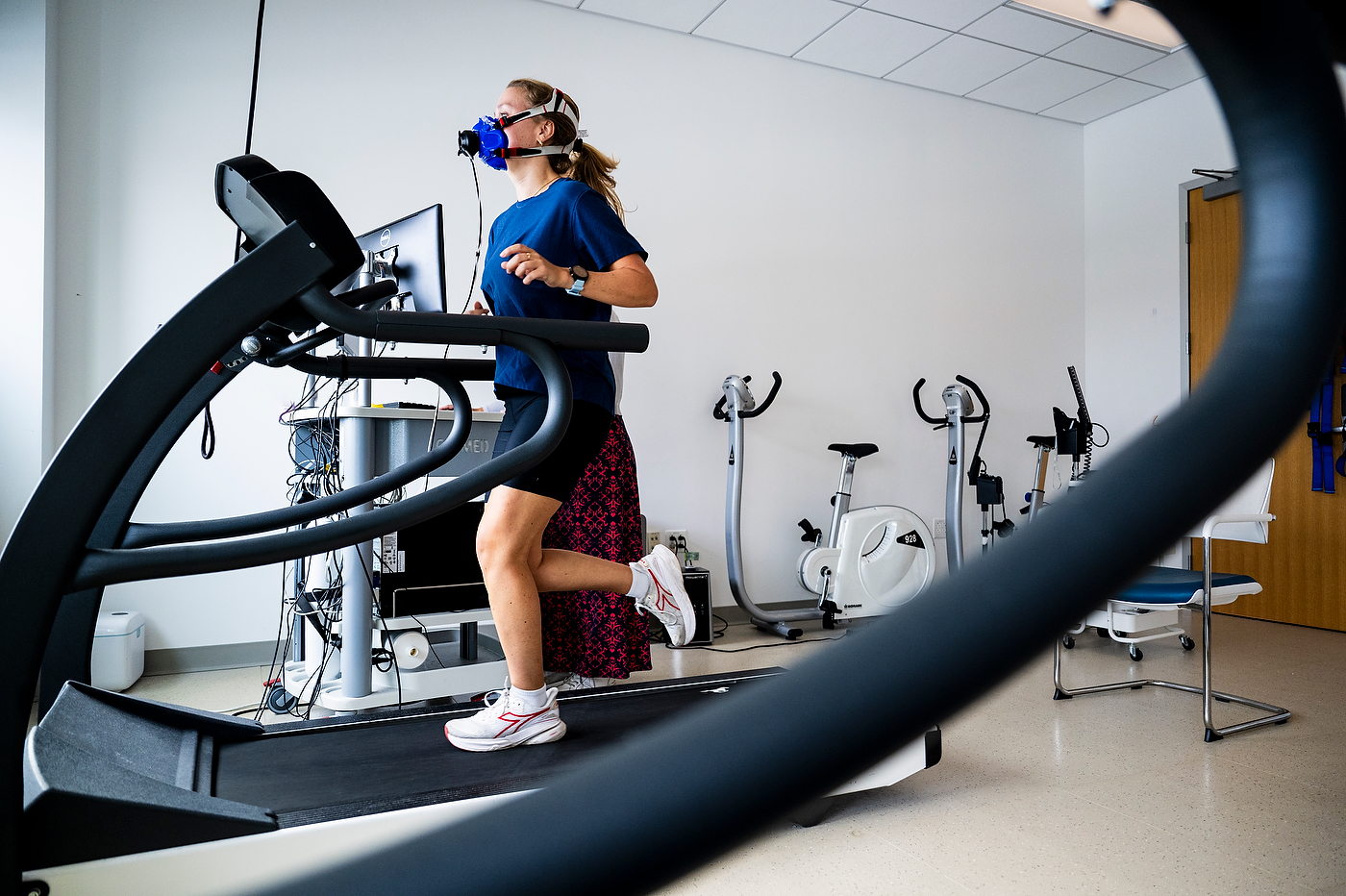
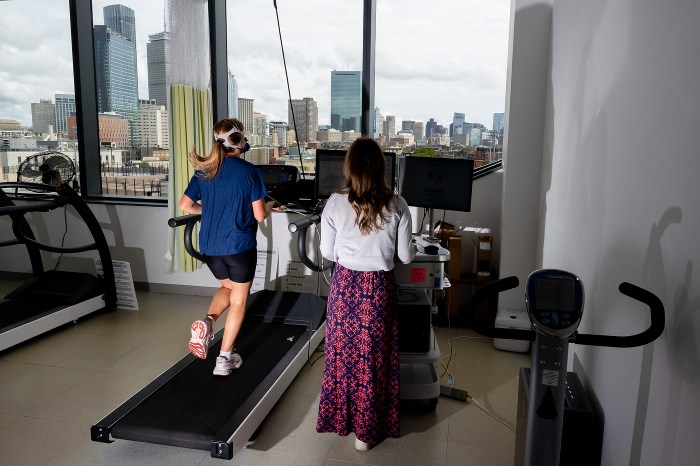
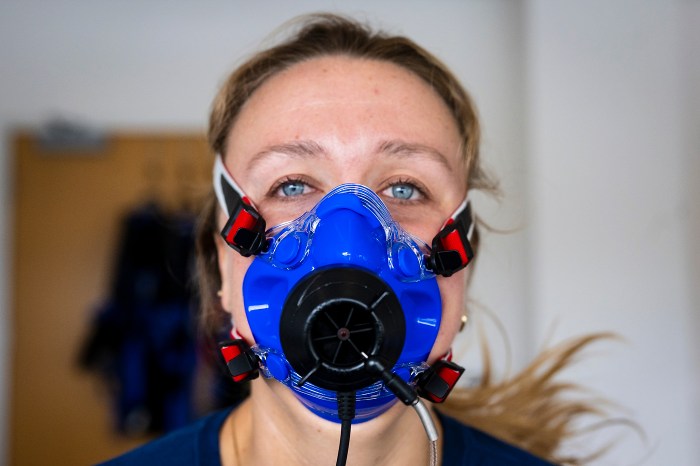
Volunteers run on a treadmill while wearing masks tracking how much oxygen they consume during exercise. The method determines their VO2 max, a measure of cardiorespiratory fitness. They also complete a test asking them to repeat recorded sentences played against various levels of background noise.
So far, participants with higher fitness levels are performing about 15 percent better on speech-in-noise tasks than their less athletic counterparts, Peelle said.
“It may not sound like a ton, but that’s one or two words per sentence more that you’re able to get, which means you can get more context,” he added.

The early results line up with what scientists already know about exercise, brain health and the effects of fitness on executive function.
Brian Sandroff, assistant director of the Center for Neuropsychology and Neuroscience Research, a division of the Kessler Foundation for research into disabilities, talked to Northeastern Global News about the link between fitness and cognition. He said that working memory and attention — processes involved in speech-in-noise tasks — benefit from “even a single bout of aerobic exercise.”
In the next phase of Peelle and Carey’s study, subjects will spend 20 minutes exercising vigorously on a treadmill. They will then have their speech perception performance tested for signs of improvement. This single session will serve as a prototype for a six-month intervention that will involve regular workouts.
“The goal would be to turn this into basically a clinical trial … where we can improve people’s functional communication,” Peelle explained.
Northeastern professor Charles Hillman studies exercise and brain health. He has demonstrated that exercise improves how the brain works across the lifespan and has particular benefits for executive function.
But Kirk Erickson, director of translational research at the hospital network AdventHealth, raised an important point. The preliminary findings sounded plausible, he said. However, the correlation between greater fitness and better speech perception doesn’t mean that one actually caused the other through a neurological mechanism, he added.
Even the intervention phases won’t reveal exactly what’s happening in the brain.
Perhaps “fitness helps people allocate cognitive resources more efficiently when listening becomes challenging,” he said. If so, demonstrating this could serve as a “useful bridge.”
In fact, Peelle and Carey plan to look for that very bridge with the help of brain imaging technology known as functional near-infrared spectroscopy (fNIRS). It uses light to track changes in blood flow associated with brain activity.
With sensors attached to a cap, it’s a portable cousin of functional magnetic resonance imaging (fMRI), which uses magnets to measure neural activation patterns. But while an fMRI scanner requires a person to lie inside a giant magnet, an fNIRS cap can be taken on the road for experiments in more natural settings.
You can wear it in a noisy coffee shop and measure brain activity as you try to follow a conversation, Peelle said.
For now, though, the prescription is simple: get moving. Anything that gets your heart rate up is fair game, the researchers said.
Carey, for one, is living what she preaches.
She’s currently training for her fourth marathon, with a fifth on the horizon in the spring.