These researchers seek to quiet ‘the noise’ in quantum computing
These Northeastern University researchers are working to make quantum computers more efficient
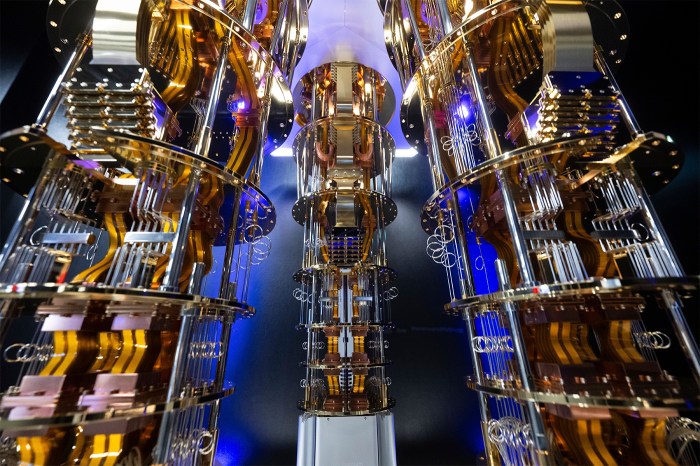

Quantum computers are poised to transform the world – enabling everything from advancements in drug discovery and material science to breakthroughs in supply chain routing and financial risk modeling.
Yet the cutting edge technology is fragile and can be difficult to deploy, explained Ivana Dimitrova, a professor of physics and electrical engineering at Northeastern University.
That’s partly because a single quantum computing machine today is too “ small and noisy” to process the hundreds of thousands of qubits — the units of information built from individual particles such as atoms, ions and photons — that power these machines to solve real challenges, Dimitrova, said.
One solution is linking quantum computing processors together to share their power in a process known as modular quantum computing. It’s a model that’s taken the quantum computing industry by storm in recent years, Dimitrova said, but it is similarly plagued with its own computational challenges. For instance, the links between the processors can be slow and have their own data interference issues.

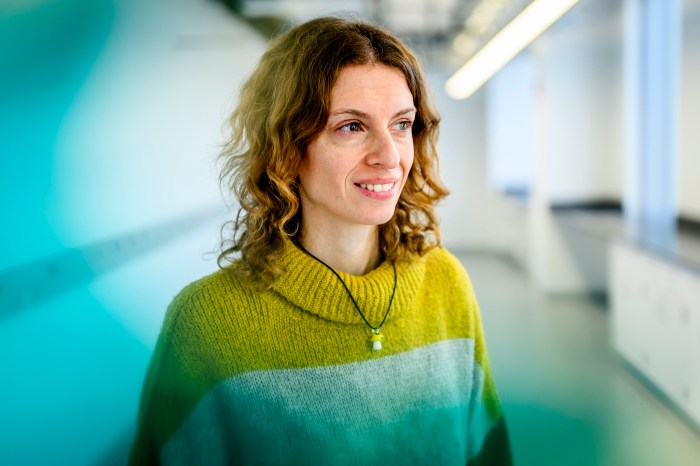
Now, with support from the U.S. Department of Energy, Dimitrova and Hessam Mahdavifar, a Northeastern electrical and computer engineering professor, will spend the next two years working to address those issues head on by developing algorithms to make modular quantum computing systems more reliable.
For the two-year project, the team will look to reduce the impact of noise — errors and unwanted interference — that occurs in the physical links that connect quantum computing machines together as well as in the quantum computing processors themselves.
Editor’s Picks


They will do this by creating specialized software to identify errors in the system and correct for them. The goal is to provide those tools to the quantum computing community so it can use these systems to solve large-scale optimization problems.
“Our project addresses how to make many of these smaller quantum processors work together in a reliable error-free fashion,” Mahdavifar said.
Mahdavifar will work on writing the code and testing out its reliability using simulation software. Dimitrova will work on the hardware side, integrating Mahdaviar’s software algorithm in an actual machine for further testing.
“In the first year, we’ll focus on designing the error-correction codes themselves: figuring out mathematically what codes to use and how to most efficiently split a code across modules,” she said. “In the second year, we will test these codes against realistic models, to make sure what looks good on paper actually holds up on real, imperfect qubits.”
Mahdavifar said he is hopeful this research will unlock new areas of innovation in the quantum computing field, particularly in use cases for the development of artificial intelligence technologies.
“Quantum together with AI are the enabling technologies of the future,” he said. “We are very excited about this project and the prospect to develop practical solutions to enable these technologies.”