Spirit gone, airfares high. Is it a good time to fly?
Some travelers taking to the skies have been faced with dwindling loyalty benefits, increasing airfares and one less airline in the marketplace. What could happen during the busy summer travel season.
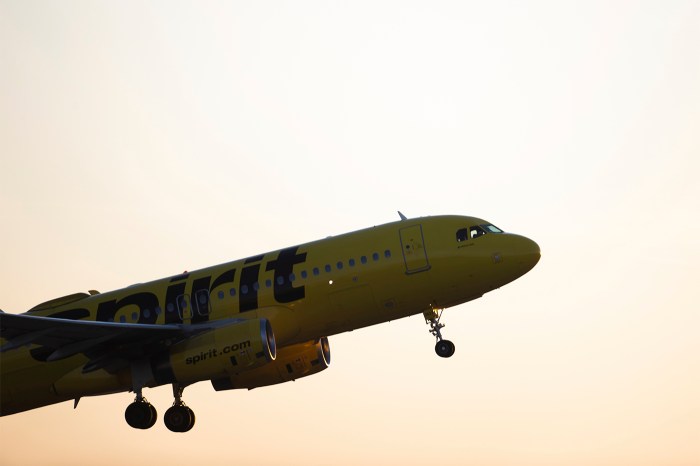

Shrinking airline options. Dwindling benefits for average travelers. International conflict driving higher fuel, and therefore airfare, prices. And the busy summer travel season hasn’t even officially begun.
Is it a good time to be traveling by air?
While some experts say no, others describe the circumstances as more nuanced.
“I think it’s going to get worse this summer,” said John Kwoka, Neal F. Finnegan distinguished professor of economics at Northeastern University.
Summer travel costs increase as the season goes on, he said, but “the escalation will be steeper this year” because the ongoing conflict in Iran is affecting jet fuel prices.“You tell me how the war is going to go, and I’ll give you my prediction,” Kwoka said.
The airline industry has been “in a relatively stable equilibrium” over the past few years, Kwoka said. But recent events threaten to disturb that, he said.
Spirit Airlines shuttered on May 2, leaving consumers with one less carrier from which to choose. Several issues contributed to Spirit’s downfall, but surging fuel prices from the U.S.-Israel campaign in Iran that began Feb. 28 gave the airliner no choice but to end operations, its lawyers said.
Spirit isn’t alone in feeling these effects. Jet fuel comprises about 20% or more of an airline’s budget. U.S. major carriers reported spending 56% more on fuel between March and April, according to the Department of Transportation.
“This will be a greater problem as time goes on,” Kwoka said, with the conflict’s end unclear.
Michael Taylor of JD Power, the analytics firm that released a rosy outlook on airline customer satisfaction, added: “It’s going to be a summer of uncertainty and expense.”
Making plans
Given the uncertainty, some groups have been trying to get a sense of how the public is thinking about the upcoming season. According to summer travel forecasts by the U.S. Travel Association and Bank of America, higher-income households will spend as they usually do — or maybe even more — this summer while lower-income households are less likely to have any travel plans.
Pre-planned trips may soften any impact higher fuel costs may have on summer travel, according to the Bank of America survey. Almost half of the 2,004 people who participated in the summer forecast survey during the week ending April 3 said their summer plans were already set, up from 38% in 2025.
If it weren’t for her friend’s bachelorette trip to Nashville in June, 27-year-old Northeastern PhD student Sophia Koleva wouldn’t be flying anywhere this summer, she said.
She watched airfare prices before making the purchase in March. The cost? Around $650, with a layover, she said.
“It was unreasonably expensive, but I love my friend,” Koleva said.
She had not checked to see if prices for that trip had gotten better or worse.
“I don’t really want to know,” she said. (As of May 20, a June weekend getaway to Nashville without baggage or other fees costs anywhere between about $260 to $600, according to the travel search engine Google Flights).
Koleva felt lucky she could plan for the expense and make the trip. But for the rest of summer, she’ll stay local and travel in her hybrid car, she said.
‘Passenger-focused or bottom-line focused?’
Airline costs like fuel are passed onto customers through fees, which not only affects customer satisfaction, but “annoys the passengers the most,” said Taylor, JD Power’s senior managing director of travel, hospitality, retail and customer service.
Airlines must pay a 7.5% excise tax on base fares. But they profit and get around that tax by levying fees, like baggage, extra legroom, better boarding.
Southwest Airlines, once an industry outlier, started charging checked bag fees in mid-2025 and raised them by $10 in April, citing “an ongoing analysis of the business and against the evolving global backdrop.”
The result? Southwest’s previous 31-point lead over Delta in JD Power’s annual study for economy class customer satisfaction shrunk to just 3 points this year, Taylor said.
Editor’s Picks


“It has a great deal of effect on how people view the airline: is the airline passenger-focused or bottom line-focused?” Taylor said.
Airlines are “always looking for an advantage” to save or make money, Kwoka said.
Citing time constraints, Delta Air Lines’ announced recently that it would cut complimentary in-flight service for all but premium customers on routes shorter than 350 miles, like New York to Boston (190 miles). Such routes account for 450 of the 5,500 daily flights that Delta operates.
Missing from those headlines, said Northeastern associate marketing professor Paul Fombelle, was Delta simultaneously expanding full food and beverage service – beyond tea, coffee and water – to 600 flights over 350 miles. Subtracting from one place, but adding to another, he said.
“Are we seeing headlines that the average consumer is having an inferior experience? Yes, but it’s because the airlines have figured out how to extract value from segments in different ways,” Fombelle said.
This market segmentation – dividing consumers into groups, like boarding zones or classes – will be a lasting strategy, Fombelle said, partially due to Spirit’s business model of no frills flights with a-la-carte amenities forcing the rest of the market to adapt and add their own version of a bare-bones ticket.
“I think it’s more of a mixed bag than the media is trying to make it out to be,” Fombelle said, when asked about the current state of being an air travel consumer.
There’s one way that a consumer can express how they’re feeling, Fombelle said.
“If consumers get fed up with all of the fees, they have to speak with their wallet. If a large enough group changes their behavior, the airlines will have no choice but to follow suit,” he said.