Finals, projects and presentations — this semester is a wrap
From intricate engineering designs to final projects that blend research, reporting and multimedia storytelling, the last push can often bring a sense of excitement and an opportunity for reflection.


The final week of college classes is often a mixed bag. For some, the countdown to the last class comes with a winding down of work, but for others, the final week spells crunch time, especially for those putting the final touches on major projects.
From intricate, multi-semester engineering designs aimed at solving real-world problems to capstones that blend research, reporting and multimedia storytelling, the last push can often bring a sense of excitement and an opportunity for reflection.
That was certainly the case for fifth-year Northeastern mechanical engineering student Peter Reis, who was tinkering with his prototype device in the Capstone Lab in the Forsyth Building when he spoke to Northeastern Global News (NGN) on Wednesday. More than a year ago, he said, he began his capstone designing and building a new cleaning system for solar farm mirrors, which are large reflective panels used to concentrate sunlight in utility-scale solar fields.
Northeastern Global News, in your inbox.
Sign up for NGN’s daily newsletter for news, discovery and analysis from around the world.
These surfaces, which are also called heliostats, are prone to dust and grime buildup from being out in the open in wide, often hot, landscapes. And cleaning them currently involves blasting them with high-pressure water, but the problem with that is it uses large amounts of water and can be inefficient at scale.
So, Reis and four classmates came up with a “non-immersion ultrasonic system” — meaning it does not need to be submerged in water — to clean heliostats. Their design involves using ultrasonic vibrations to loosen and remove debris, and uses far less water than traditional methods.
“Efficiency and sustainability are the goals,” Reis said.
Their design involved months of planning and research, before moving into design, machining and testing in recent weeks. Now in the home stretch, he said the group has spent many long hours in the lab troubleshooting all the moving parts.
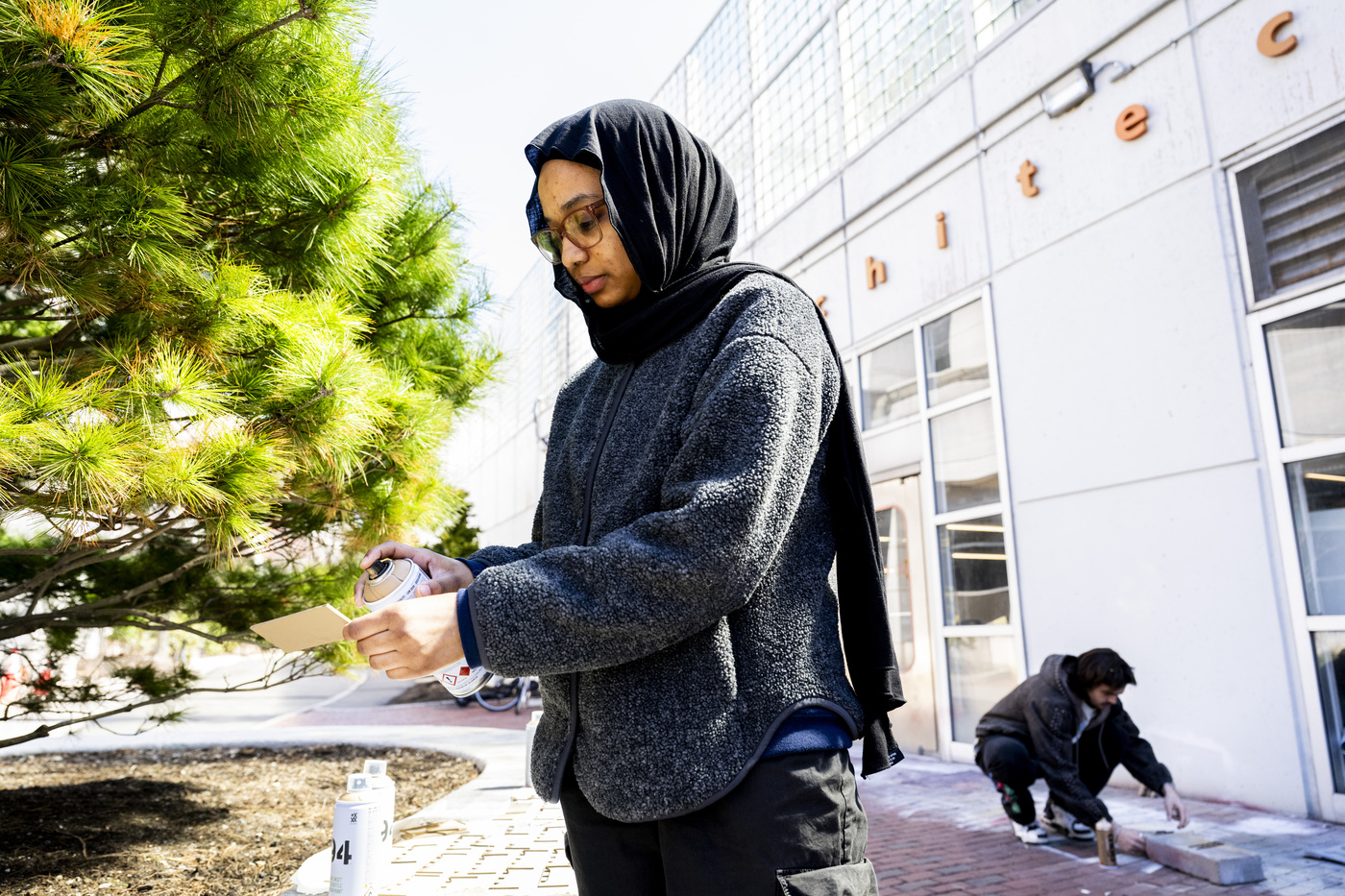
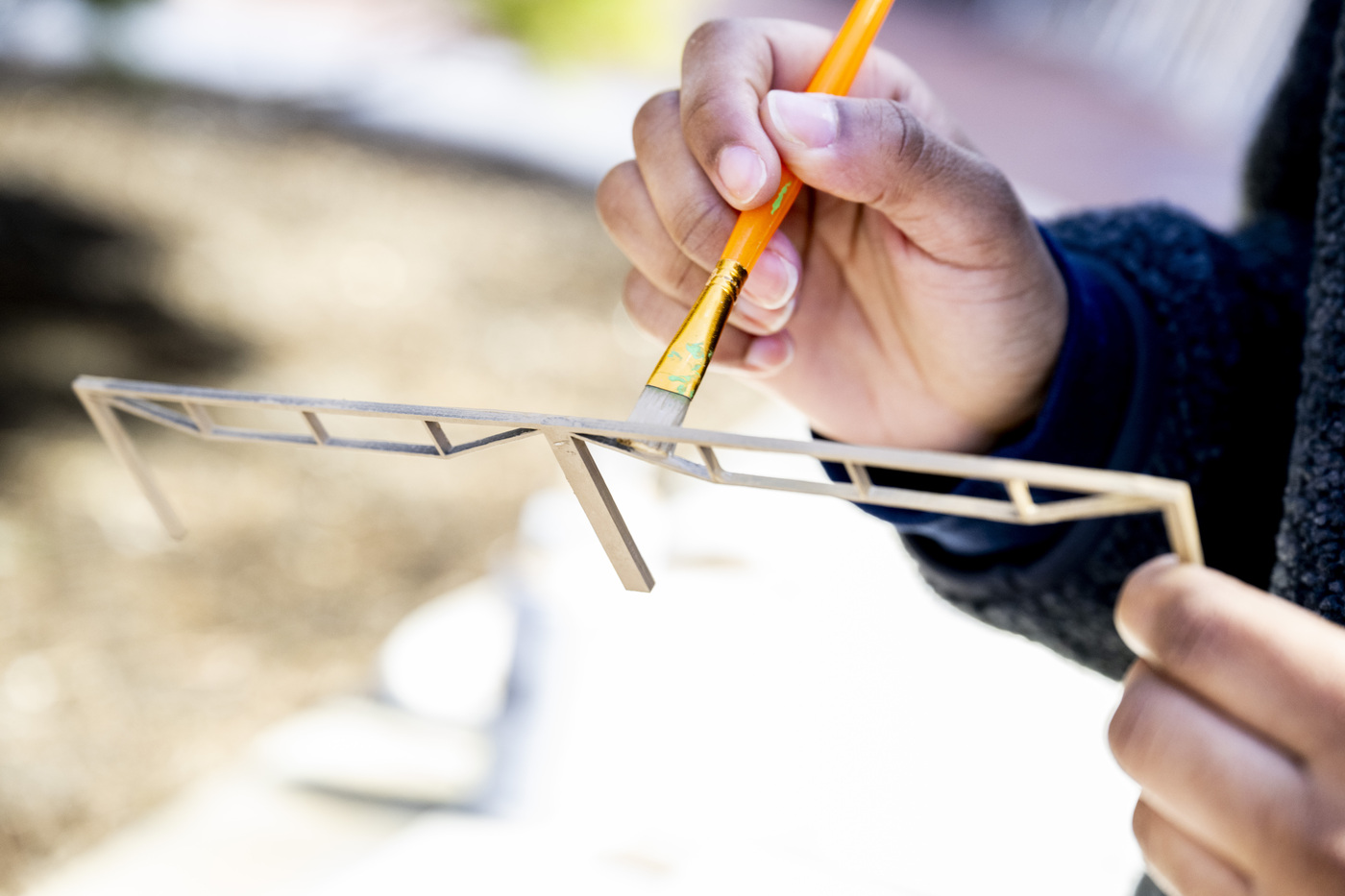
“It’s been a lot of work, but especially these past couple of days, when we pulled some all-nighters,” Reis said ahead of a final presentation on the finished design on Thursday. “But we got the thing working and did some testing, and it’s been a lot of fun.”
Just across the street, in the journalism department, some graduating seniors have been juggling exams with final projects that dive into the issues of the day. For John Wihbey’s “Digital Storytelling and Social Media” class, students are gearing up to report on “a cultural or online trend” and publishing online a fully designed digital project around that trend.
Alyssa Enright has her topic mapped out in her head.
“My project will explore how TikTok created the rise of modern dating terminology,” the 22-year-old said. “I plan to take the three most common vocab terms that Gen Z uses in their dating experiences, so ‘ghosting,’ ‘situationships’ and ‘love bombing,’ to see how that viral vocabulary has reshaped the way Gen Z thinks about, talks about, and ultimately engages with romantic relationships.
She noted that while naming these behaviors may have helped Gen Zers better understand some of the dynamics of modern dating, it also reinforces a sense that dysfunction is the standard. That fact, she argued, contributes to “dating fatigue” and makes once less common experiences feel routine.
The project will involve research, writing and data visualization, which will include fetching any supporting statistics she may need from credible published studies and surveys, Enright said. From there, she plans to write the story, develop individual analyses for each term and finish with a “multi-platform social media strategy.”
She hopes to complete it in one or two days — or about eight to ten hours of work.
Across campus, in the basement of Ell Hall, fifth year computer engineering and computer science student Hanson Cao was flexing his right bicep.
Cao wasn’t building muscle at the gym. Rather, he was using his contracting bicep muscles to play the children’s rhyme “Mary Had a Little Lamb” on his Enabling Engineering team’s final project — developing a digital musical instrument that converts electrical signals from muscle contractions into musical notes.
Editor’s Picks



The project, called Muscle to Music, is intended to help students at the William E. Carter School, a Boston Public School that provides specialized education for students with significant cognitive disabilities and complex medical needs. The instrument allows students with limited movement below the neck to use muscles to create music — the harder the muscle contraction, the higher the pitch. The electrical signals from the muscle contraction are displayed on a computer, so users can either play preprogrammed nursery rhymes by matching the amplitude threshold of certain pitches requested — or just jam.
“We wanted the student to feel like they were actually creating and playing something,” explained Dawson Rose, a team member and first-year electrical and computer engineering student.
Northeastern students on the team said that working on a project was more collaborative, interactive and applied as opposed to isolating oneself in the library to study for an exam.
“There are a lot of things we’ve learned conceptually in classes before, but now we’re applying them to actual use,” Alan Huang, a computer engineering student, said of the project.
He compared the experience to being on a co-op.
“It gives you the experience of a real-world scenario when you are assigned a task and given a deadline and you have problems and circumstances that you have to overcome to achieve that goal,” Huang said.
And after several prototypes, experimenting with different electrodes, and lots of coding edits, the team also learned one lesson that perhaps no exam can teach.
“Nothing ever works the first time,” Rose said.


