Northeastern students secure first place finishes at Model NATO and Arab League conferences
In both competitions, students are tasked with stepping into the role of diplomats, representing a single country across multiple committees, and working with peers from other universities.


The next generation of problem-solvers is bracing to inherit a world rife with geopolitical instability, complex societal challenges and shifting norms of global governance. At Northeastern University, in keeping with its experiential learning model, students are encouraged to dive straight into those real-world problems through organizations like the International Relations Council, or IRC.
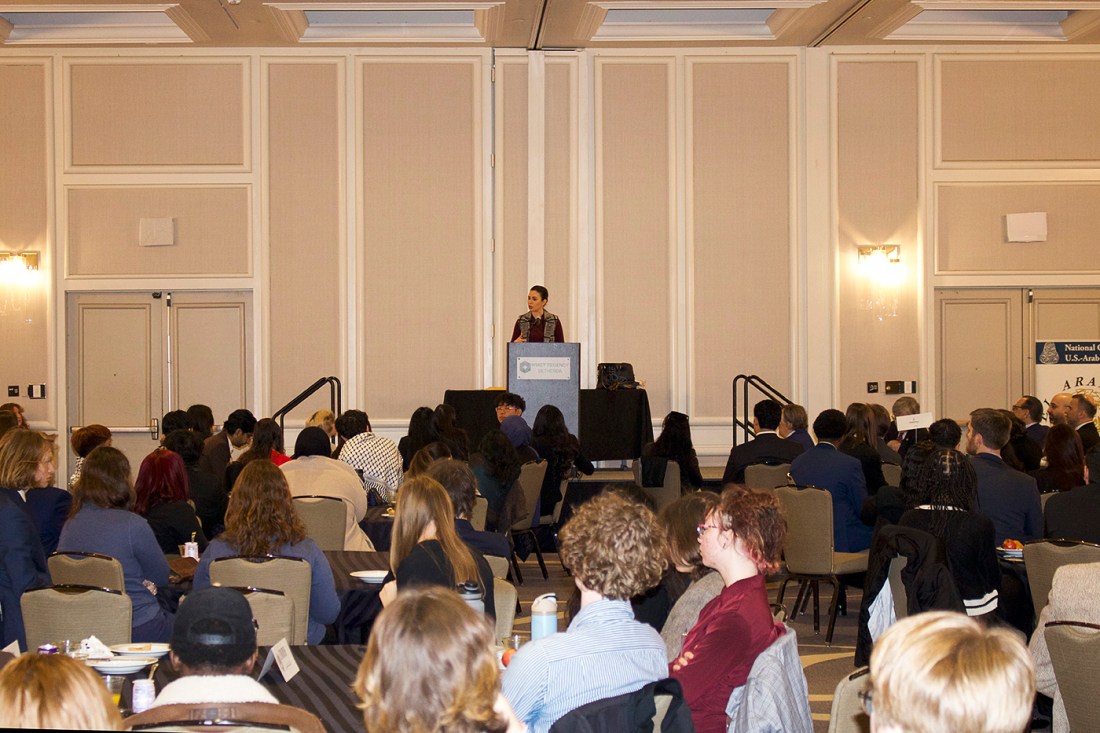
This year, a delegation of Northeastern student leaders with the IRC took home first place finishes at the Model NATO and Model Arab League national conferences, which took place in Washington D.C. on February 15 and March 29, respectively. Fifteen students were part of the winning delegation at the Model NATO conference, which included 19 university teams. Twenty three students shared the top prize at Model Arab League, which included 23 university teams.
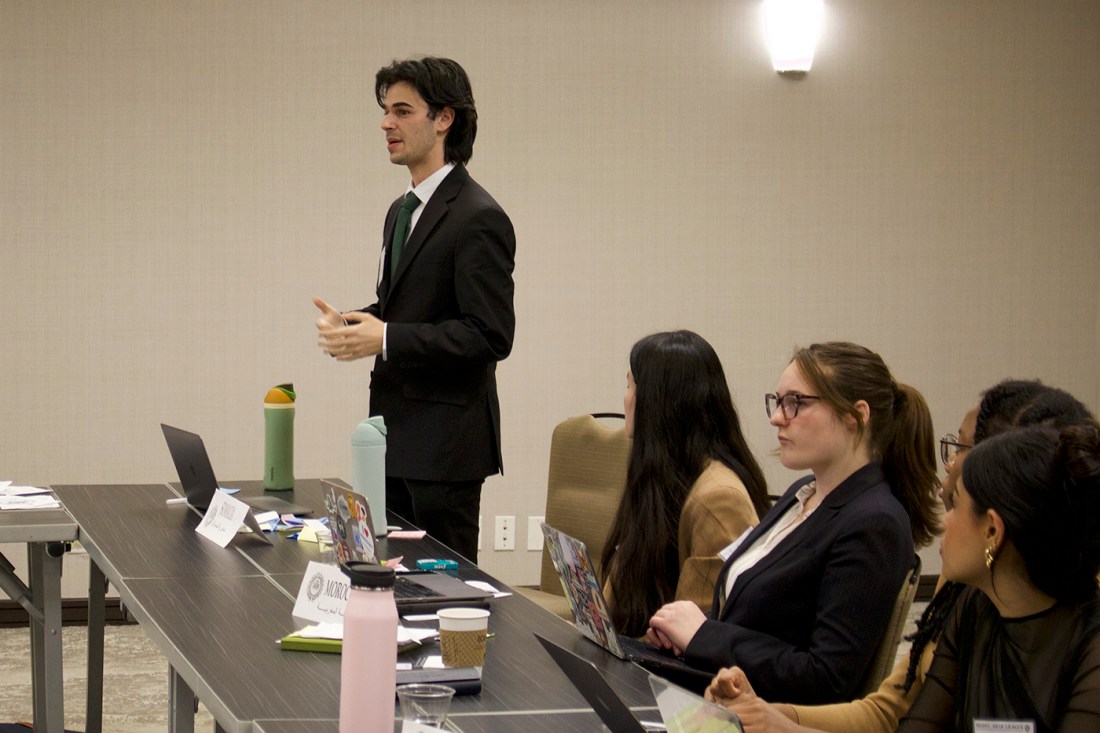
In both competitions, students are tasked with stepping into the role of diplomats, representing a single country across multiple committees, and working with peers from other universities to draft resolutions on a variety of pressing global issues. The process involves a degree of preparation and extensive subject matter research; but it plays out in real-time through extemporaneous negotiation and debate.
It mirrors real-world international diplomacy through the actual United Nations procedure: setting the agenda; debating in formal and moderated sessions; negotiating in informal caucuses; drafting and amending resolutions; and ultimately securing enough votes to pass a particular measure.
Northeastern Global News, in your inbox.
Sign up for NGN’s daily newsletter for news, discovery and analysis from around the world.
Northeastern sent full delegations to both conferences, with students spread across multiple committees and leadership roles, including chairs and upper secretariat positions responsible for guiding debate.
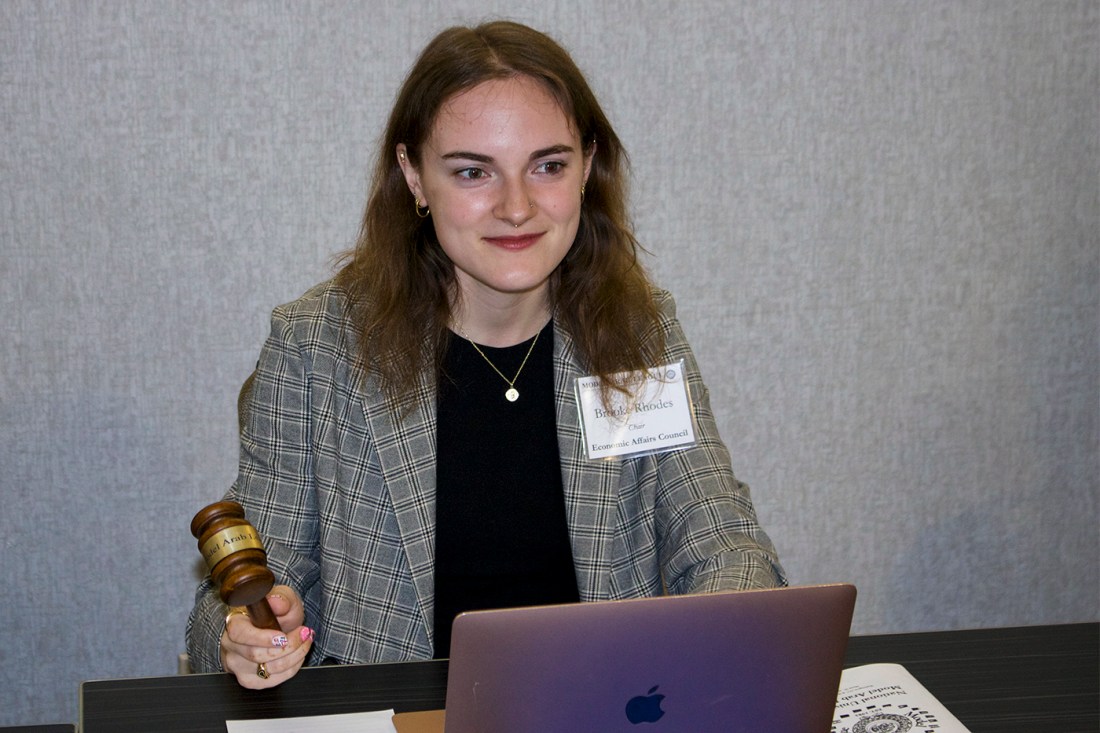
Brooke Rhodes, president of Northeastern’s IRC, and Amanda Gomes, its vice president, were among those who played key roles in the mock events, representing their peers in high-level negotiations and conference leadership positions.
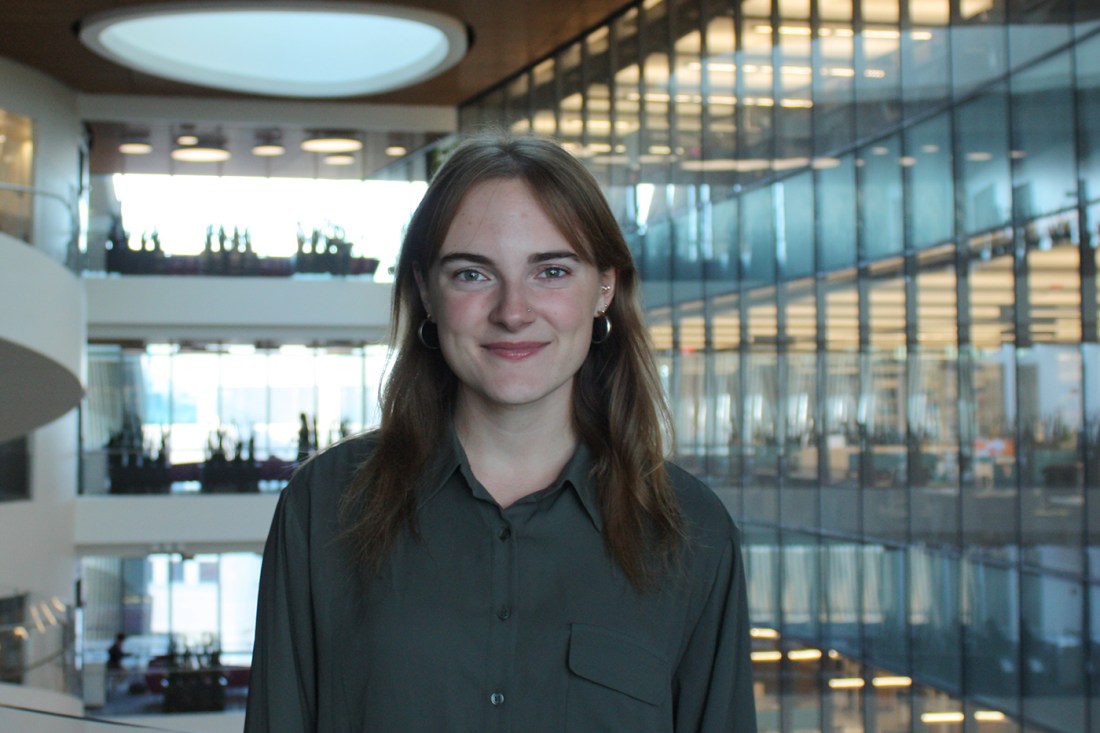

Rhodes served as a committee chair for the makeshift “council of economic affairs ministers” at the Model Arab League, focusing on economic development in conflict zones across the Arab world, including the ripple effects of tensions involving Iran and displacement crises in Gaza. She also competed — meaning, she was judged on her speeches, negotiating skills and diplomatic sway by her peers — in the “military committee” representing Germany at the international Model NATO gathering.
“We really can focus on very contemporary issues,” Rhodes said. “It’s fascinating because we’re looking at the same geopolitical tensions that are shaping the world right now.”
At the NATO conference, Gomes competed in the “partnerships and cooperative security committee” under a fictitious German flag. The bulk of Gomes’ subject matter focused on the expansion of NATO partnerships, particularly in the transatlantic and into Asia. Her fellow delegates were debating such topics as transatlantic unity, the future of NATO and burden-sharing, or how member states divide defense spending and responsibilities across the military alliance.
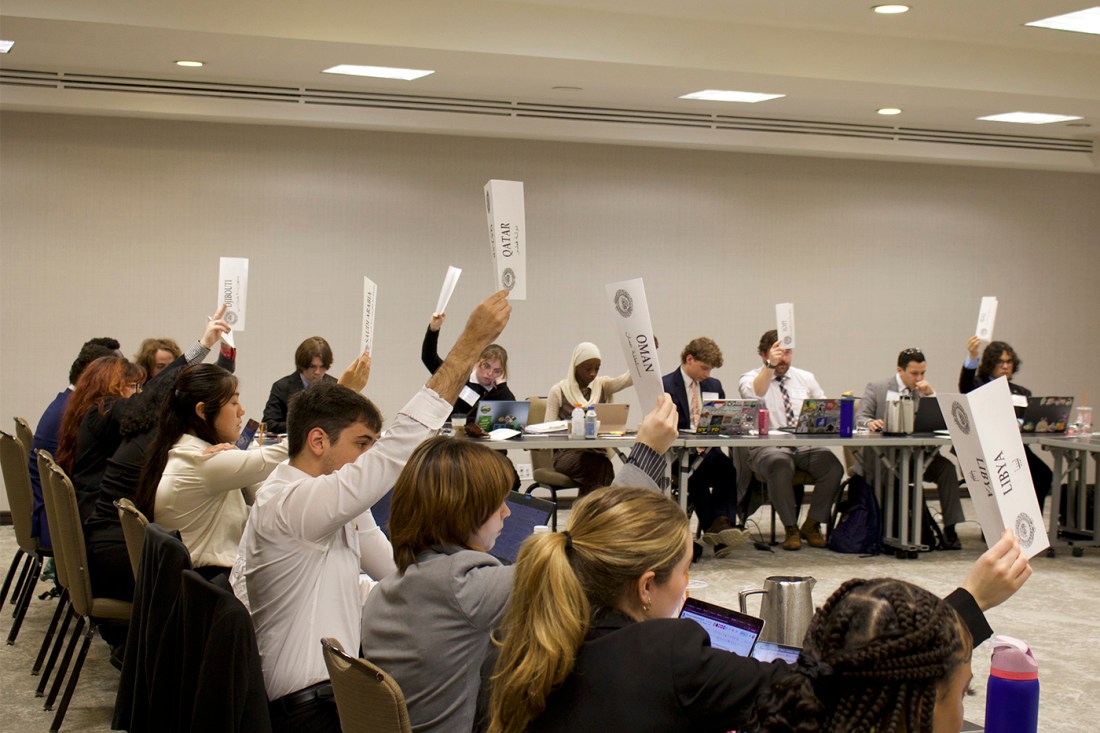

Gomes was also at the Model Arab League competition, she represented Somalia on the “joint defense council.” Each of the nine committees in the League take up four topics each, Gomes explained. Her focus included missile defense systems and non-state actors such as Hezbollah in Lebanon and Hamas in Gaza — topics with obvious real-world relevance for that region today.
“It’s not just about stating your country’s position,” Gomes said. “It’s about using that to come up with solutions and figuring out what’s actually going to work in the room.”
Editor’s Picks


Of course, as in the real world, delegates must build consensus to succeed. Resolutions cannot pass without broad agreement, forcing students to balance their assumed “national interests” with that of their peers in an effort to achieve compromise.
“You need consensus to pass anything, so it really becomes a matter of teamwork,” Rhodes said.
That emphasis on diplomacy is something of an art form that turns on tone and delivery: “It’s not all about what you say, it’s how you say it,” Gomes added.
Northeastern typically does well at these events, having placed first in Model NATO last year and second in Model Arab League, said Rhodes, who added that “it was really satisfying to climb back to first this year.”
“I’ve gained so many hard skills, my research abilities have improved, I’m better at problem-solving on the fly, and I feel much more confident overall,” she said. “It’s done wonders for my public speaking.”
Gomes echoed those sentiments, adding that the experience translates well beyond the mock competitions.
“It’s not just international affairs or political science majors,” she said. “We’ve had members from D’Amore-McKim, engineering — there’s a wide range of disciplines because the skills are so broadly applicable.”