Erin Islo receives University Excellence in Teaching Award for exciting students with vital legal lessons
Legal procedure and the federal court system are complex topics, but Erin Islo, an assistant professor of law at Northeastern, transforms them into engaging legal lessons for her students.


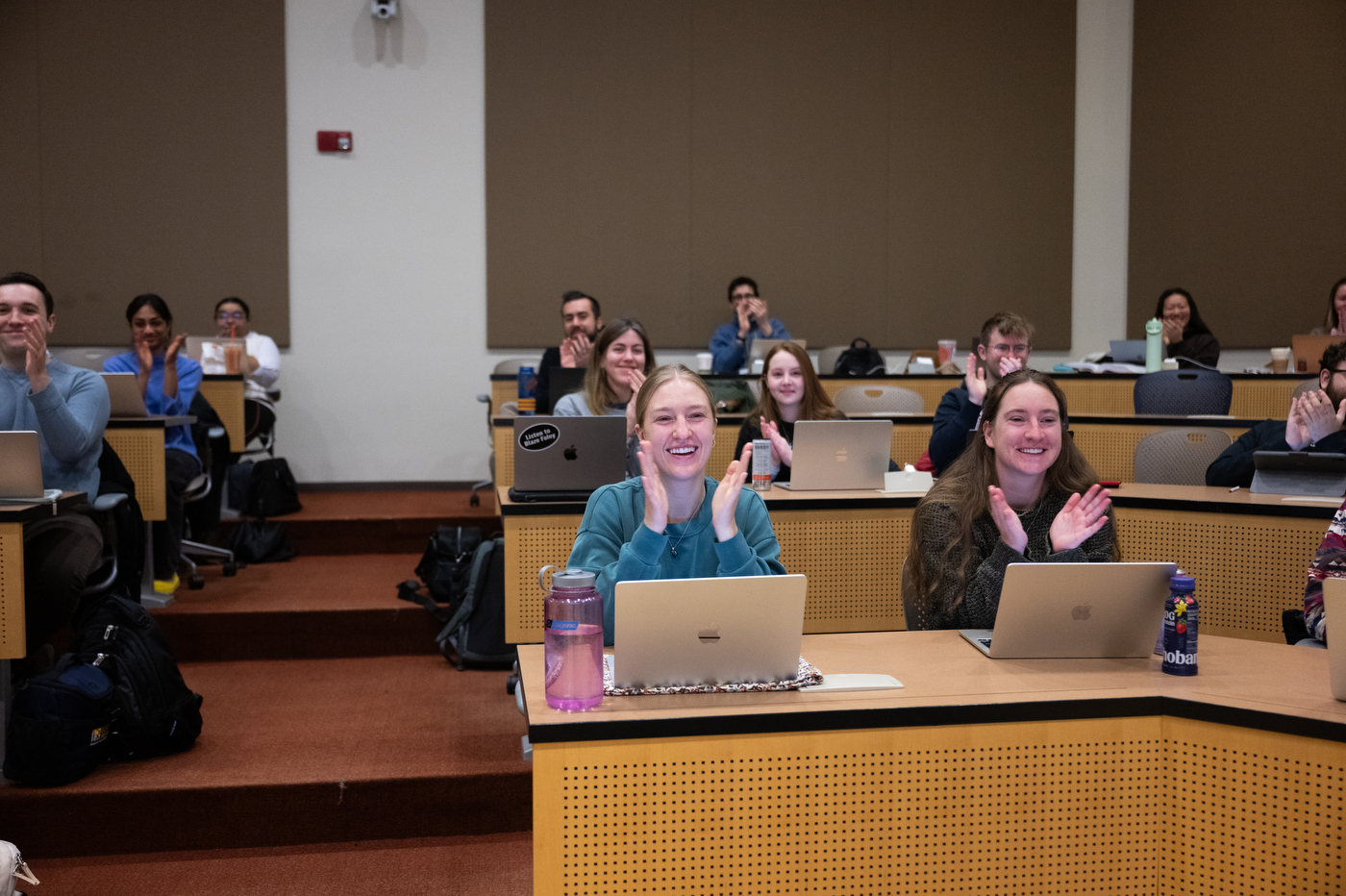
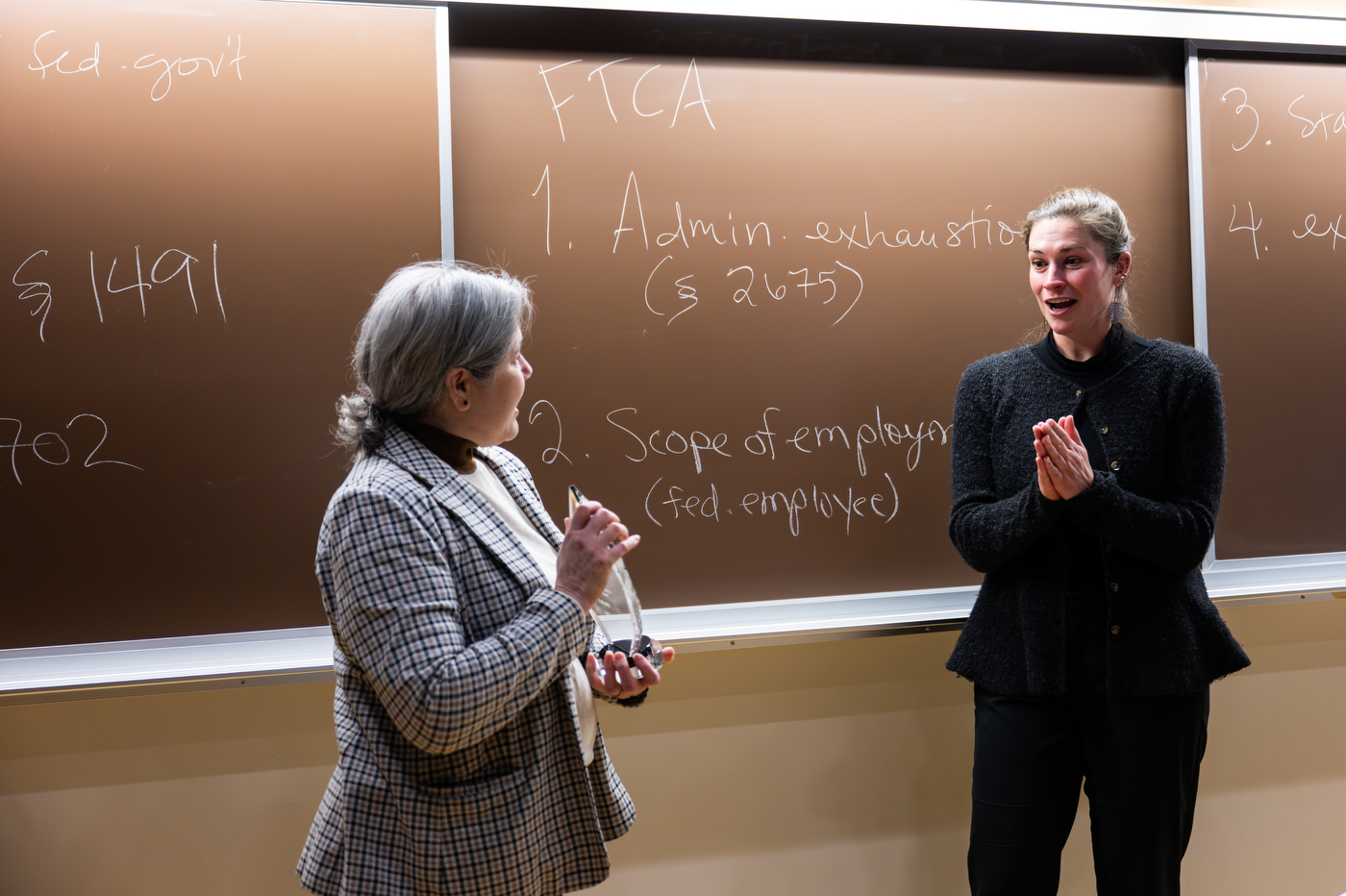
Erin Islo was in the middle of teaching her students about the Federal Tort Claims Act, a statute that allows U.S. citizens to sue the federal government, when she got an unexpected visit.
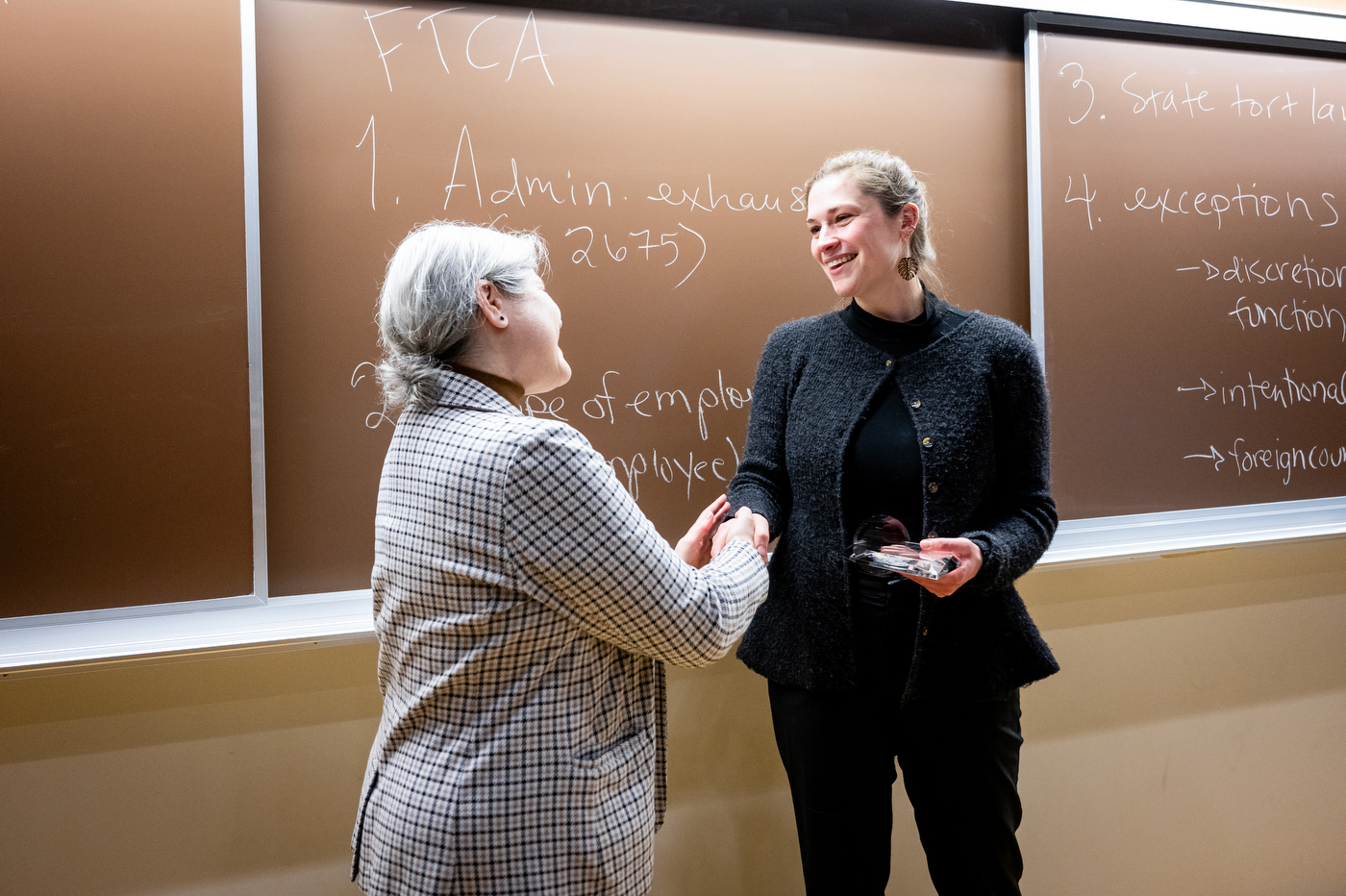
On March 23, much to Islo’s surprise, Beth Winkelstein, provost and senior vice president for academic affairs at Northeastern University, entered her classroom. Islo, having only joined Northeastern in 2023 as an assistant professor of law, had little idea what was happening, though many of her students did.
“The first thing that I thought was that I had run over time in my classroom and that someone was coming to kick me out,” Islo said.
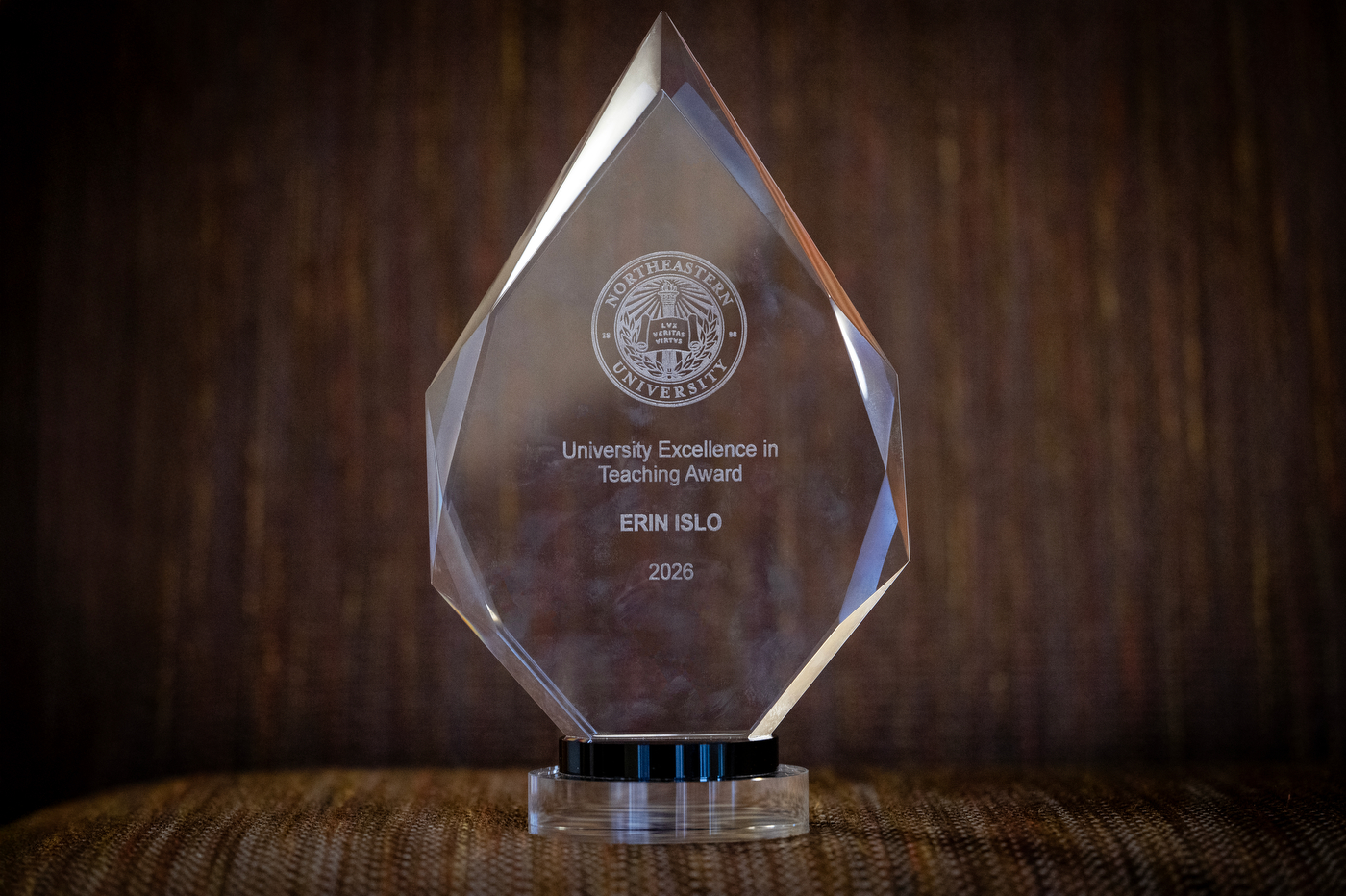
Instead, Winkelstein was there to award Islo with Northeastern’s prestigious University Excellence in Teaching Award, an annual honor presented to two professors who have been nominated by students for their outstanding work as educators. Laurent Lessard, an associate professor of mechanical and industrial engineering at Northeastern, also received the award this year.
For Islo, the award is even more meaningful given the courses she teaches.
Northeastern Global News, in your inbox.
Sign up for NGN’s daily newsletter for news, discovery and analysis from around the world.

“If you ask anyone about the main courses that I teach, civil procedure and federal courts, they have the reputation for being the most technical and some would say boring … and most difficult classes,” Islo said. “I think I’m able to teach the courses in a way that shows how important even very technical procedural issues in the law can be.”
Her students agree.
“When the semester began, I believed I would dread sitting through doctrinal classes, such as civil procedure, as I thought myself to have little interest in the content,” wrote first year doctoral student Maddy Mangano in her nomination for Islo. “Instead, I found myself looking forward to going to CivPro three times a week despite it being a late afternoon class in a dreary room with no windows.”

Through case studies and real-world examples, Islo brings the nitty gritty of the law to life. She aims to ground complex ideas in understandable truths. For example, Islo focused heavily on the history of Muslim and Arab discrimination in her coverage of the 2009 Supreme Court case Ashcroft v. Iqbal, in which Pakistani immigrant Javaid Iqbal claimed that he was arrested and profiled by law enforcement after the Sept. 11 attacks.
Editor’s Picks


“Because of Professor Islo, it was also a class on how to dynamically engage, as human beings, with a civil legal system that deeply affects individual lives in just and unjust ways every day,” wrote first year doctoral student Lauren Abrams in her nomination.
That could be through a lesson on who has personal jurisdiction over a cat, or a case study on a 2025 lawsuit against Verizon, in which the company was accused of misleading consumers and overcharging them a small amount on each extra line they added to their phone plan. The latter encapsulates the legal mechanisms that allow people to band together, file a lawsuit and “empower people to show up in court when they otherwise would not be able to,” Islo explained.
“I think it can be described in a very technical way, but what it comes down to is who gets to be in court, when and why,” Islo said.
A licensed lawyer who previously clerked for senior U.S. circuit court judge Barrington D. Parker, Islo fell in love with civil procedure during her time at Yale Law School. The personal passion she brings to her lessons is “infectious” and evokes the same energy that her favorite professors brought to the subject, she said. That energy spills over into her interactions with students outside the classroom. While many professors hold only a few open office hours per week, Islo keeps her door open every day to offer course help and even career advice.
“I want to go into civil litigation because of the way she made the material understandable,” Blair Braddock, a first year doctoral student who took Islo’s civil procedure class, wrote in her nomination.