Student engineers share with the world instructions on making this wheelchair with wood and bike parts
“Since traditional wheelchair parts can be so expensive, we are trying to make an alternative solution,” said Northeastern student Christopher Shih.
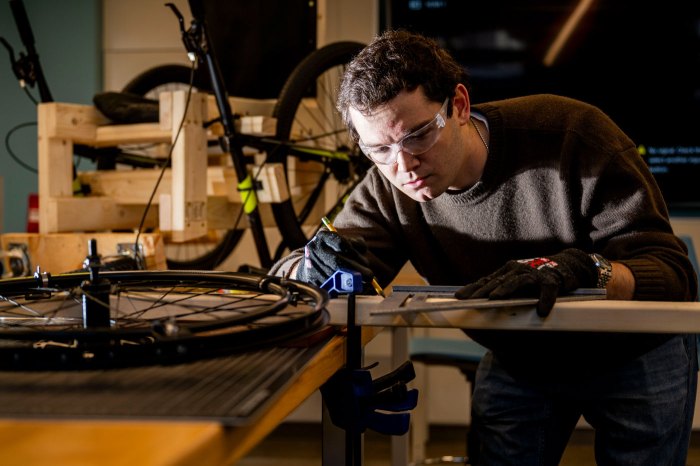

Building a functional wheelchair requires fewer materials than you might think.
Ask Northeastern fourth-year student Christopher Shih and his bioengineering capstone classmates.
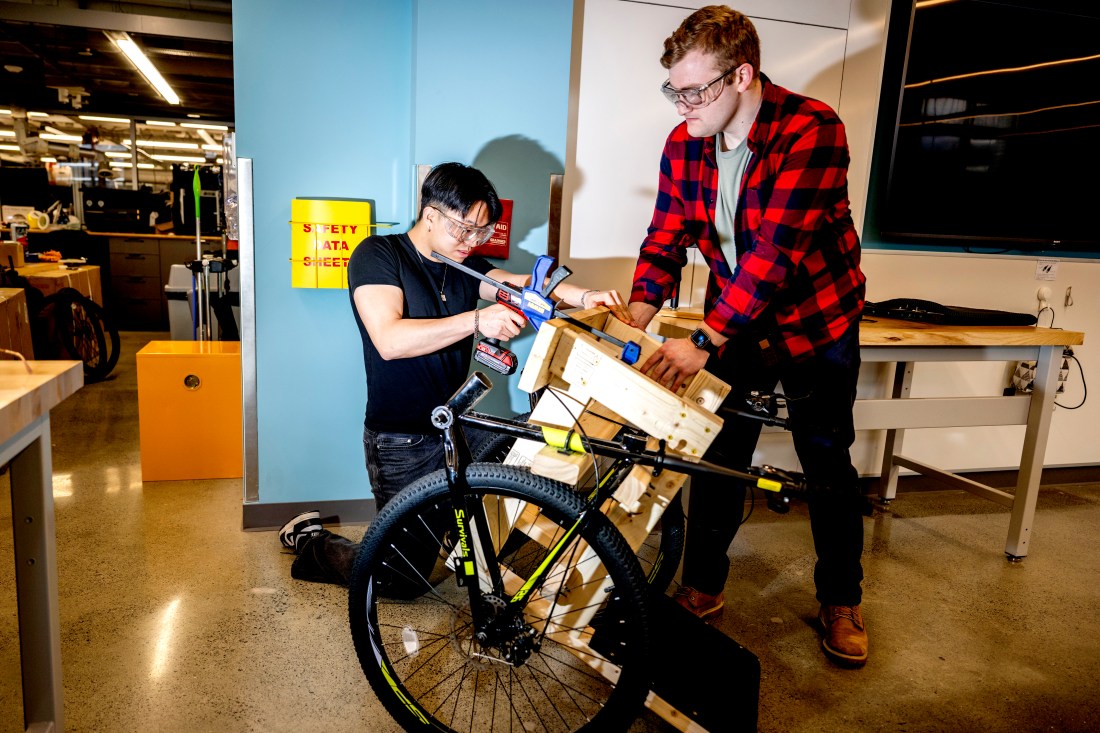
This semester, they have been hard at work in the bioengineering capstone makerspace in Richards Hall developing a wheelchair prototype constructed from 12 pieces of wood, bicycle parts and some bolts and screws.
They’ve also been meticulously documenting their work, and have created a free, do-it-yourself instruction manual – pictures and all – so that anyone can build a wheelchair.
Through this capstone project, the students said, they are hoping to make an impact in parts of the world, like rural Kenya and areas of South America, where access to commercial wheelchairs can be limited, according to Shih, one of the team leads.
“Since traditional wheelchair parts can be so expensive, we are trying to make an alternative,” he said. “We want to create a very low-cost solution that is easily modifiable and modular.”
Capstone courses are project-based classes designed to showcase students’ mastery of concepts and lessons learned while pursuing their degree. They are often taken after students have fulfilled the course requirements for a major, and can be one of the final courses they take before graduating.
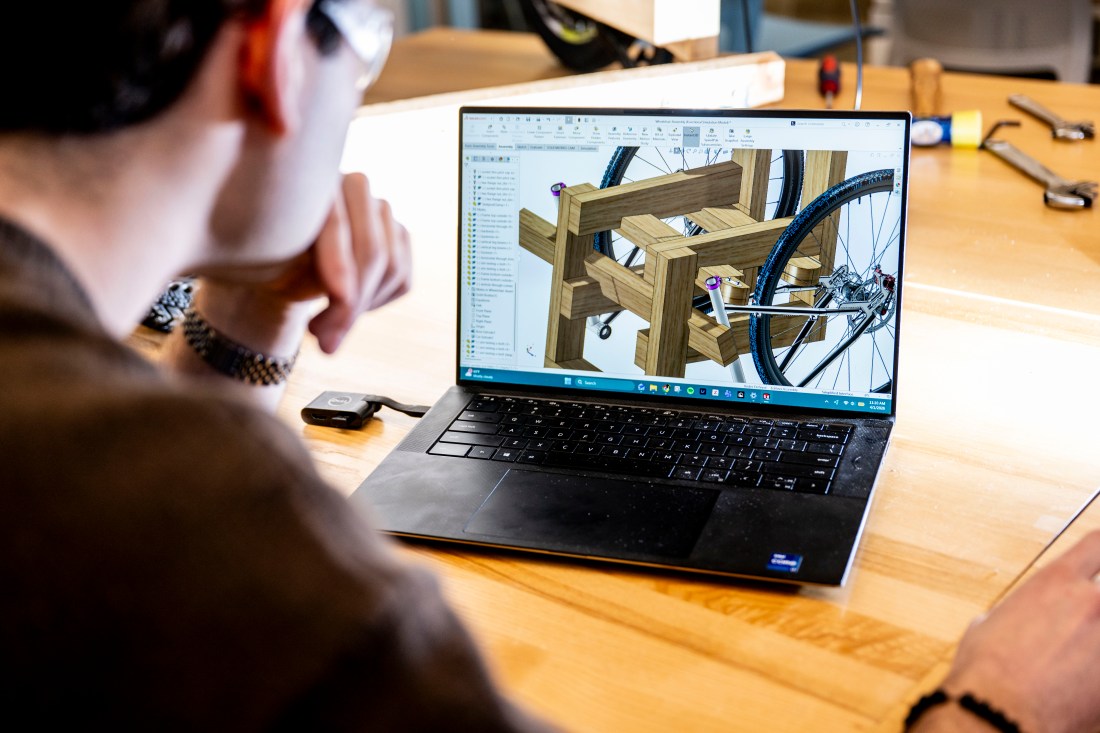
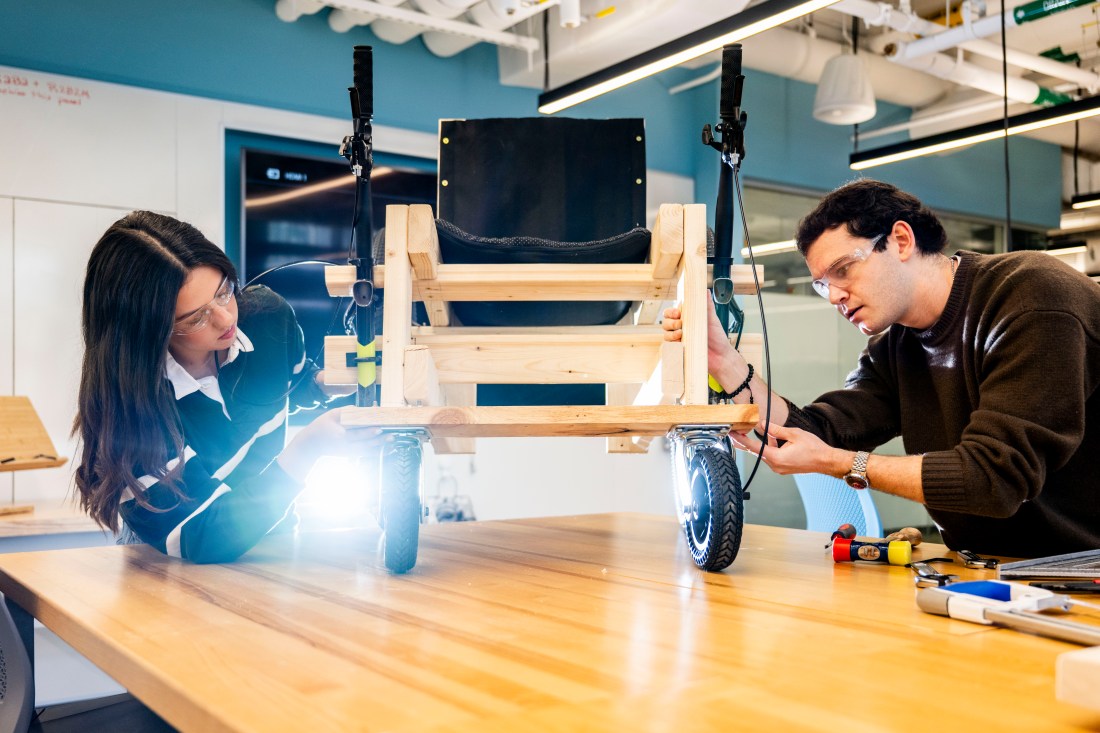
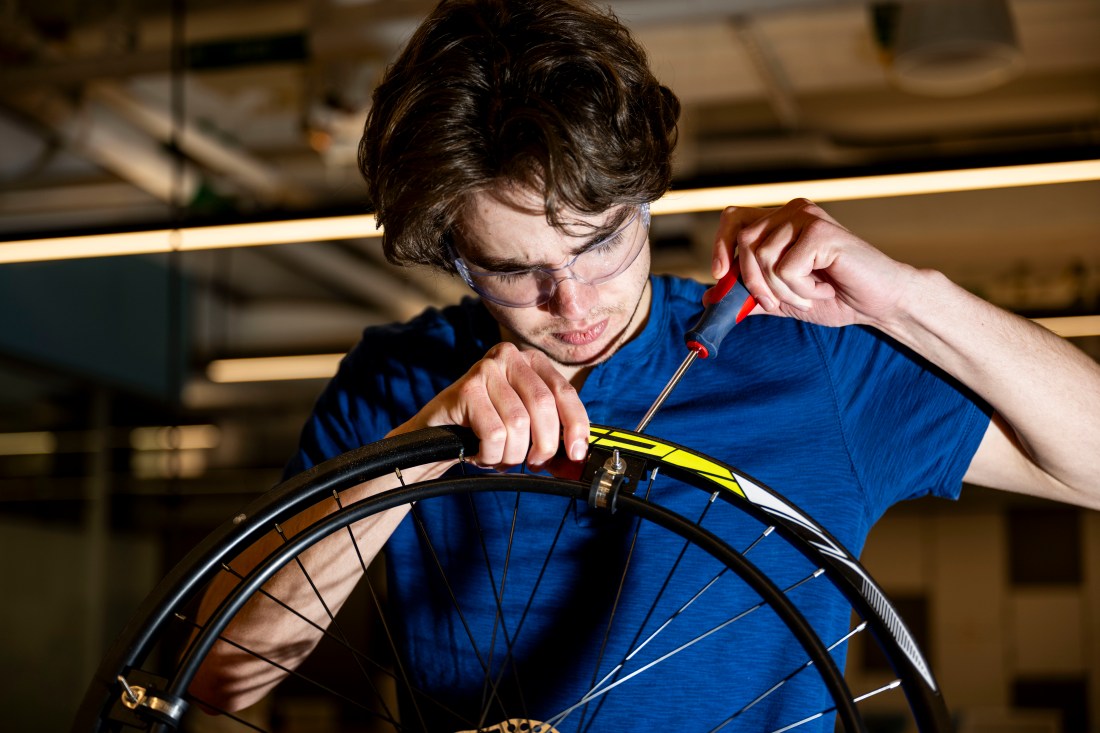
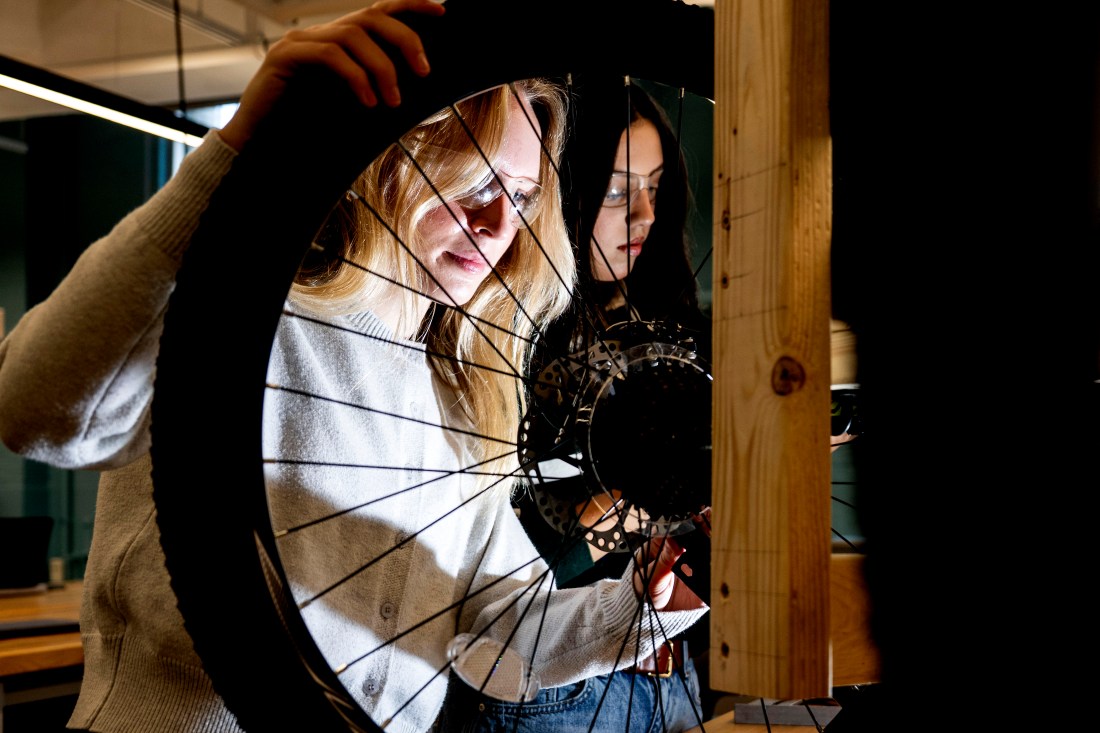
The wheelchair project group will present their final iteration of the wheelchair and manual on April 17 on Capstone Day at the Cabral Center on the Boston campus.
The group is sponsored by the Mobility Independence Foundation, a U.S.-based nonprofit that hosts open-source hardware and software designs that make it easier for people to build and access their own wheelchairs.
The organization will take the wheelchair and manual, and after some internal testing, will release the schematics and instructions on its website for the public to download, according to Thomas Quiter, the organization’s founder and president.
“These designs will be able to be made where they are and easily,” he said, noting that the organization regularly receives emails from people from around the world looking for help in obtaining more affordable wheelchairs.
An estimated 80 million people across the globe require wheelchairs, but only 5% to 35% of the world’s population have access to one, said Daniela Broad, a fourth-year student working on the project, referencing data from the World Health Organization’s 2023 wheelchair provision guidelines and a WHO-affiliated research study.
The students knew they could offer a more cost-effective and modular solution by placing a focus on the materials.
Editor’s Picks


The frame of the chair is made out of wood, a material that can easily be found in most parts of the world on the cheap, they said.
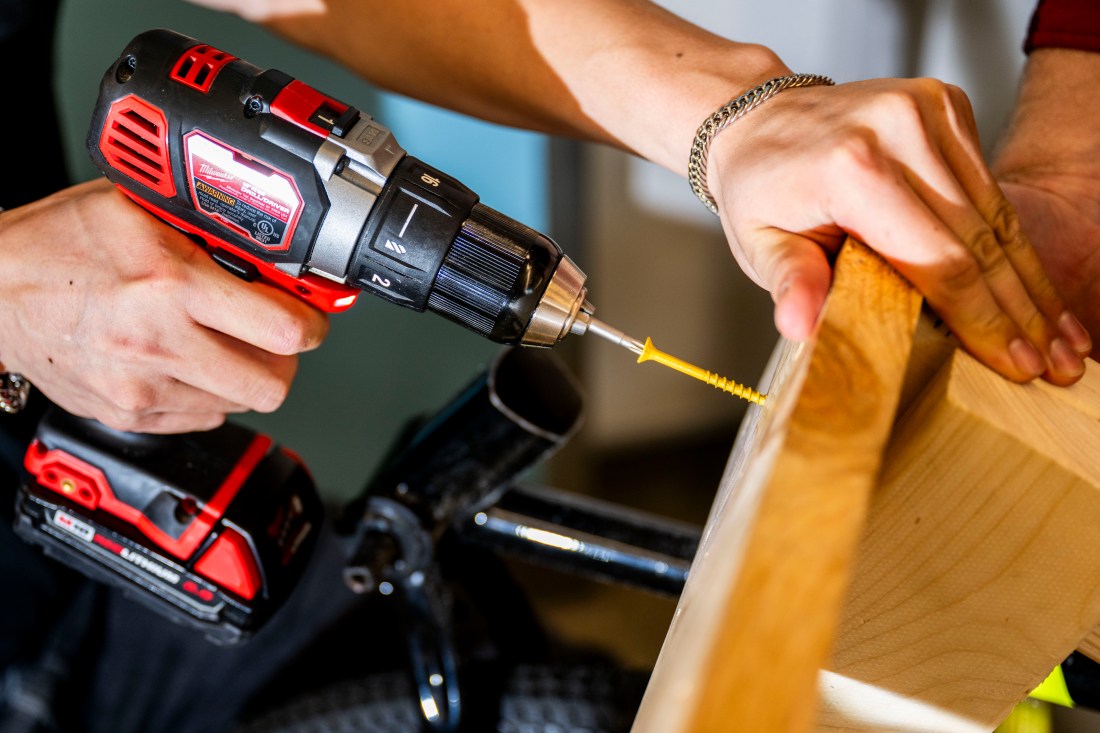
“Wood is everywhere and is easy to work with without specialized tools,” Shih added. “To put things together, you need maybe a drill and a screwdriver, which are very accessible.”
Equally as universal? Bicycles.
“They are available worldwide, use standardized parts and are easily repairable and cost-efficient,” Broad said.
Many of the wheelchair’s key features were directly taken from a pair of bicycles the students purchased for the project, including its rear driving wheels and braking system.
While the wheelchair prototype was built with new parts, the students said users could easily use old bike parts and cheaper materials that might be readily available to build their own, saving them both time and money in the long run, they said.
It’s best to understand the prototype as a proof of concept rather than a finished product and just one example of a more cost-effective wheelchair, explained Anna Morrison, a third-year bioengineering student on the project.
“The real end product here is the manual and showing you exactly how you can build your [own],” she said.