This mysterious protein punctures our cells — now researchers know how
New Northeastern University research has identified how a ubiquitous protein in our bodies regulates the flow of ions traversing cell walls.


The human body is a dynamic place. Blood pumps, spinal fluid flows, oxygen comes in and carbon dioxide goes out. Deeper still, charged molecules pass through cell walls, quietly keeping the body’s systems in balance.
New research from Northeastern University researchers now unlocks a primary mechanism in how the body maintains its electrochemical balance through chloride ions, important in our most basic cellular functions. An imbalance in the body’s electrochemistry can lead to diseases as diverse as high blood pressure or asthma.
The researchers, investigating a mysterious protein called TMEM16A, have discovered how this protein interacts with another chemical inside the cell to open small gaps in the wall, allowing chloride ions into and out of the cell.
TMEM16A is found throughout our tissues, says Leigh Plant, assistant professor of pharmaceutical sciences. TMEM16A, and other proteins similar to it, are like “molecular machines” that live in cell membranes to control the flow of ions across cell walls, he says, adding that the process generates “the bioelectrical signals that make your brain work, make your heart work, make your muscles work.”
Dysregulation of TMEM16A is associated with a range of serious diseases, Plant says. If TMEM16A in blood vessels malfunctions, that could lead to hypertension. In the lungs, it might manifest as asthma or even cystic fibrosis, he continues.
But how TMEM16A actually functions has long remained an open debate. “This protein is so fundamental to physiology that part of the challenge has been understanding how the protein itself operates, and how we can understand its function in these different tissues,” Plant says.
Editor’s Picks


Plant’s research sheds some light on that.
His group created a three-dimensional representation of the protein on the computer, to apply some of the natural forces and conditions — like temperature and pressure — that TMEM16A experiences inside the body, and then watched how the protein reacts and how it impacts the concentration of ions inside a cell. “We could actually watch, for the first time, the chloride ions moving from one side of the cell membrane to the other,” Plant says.
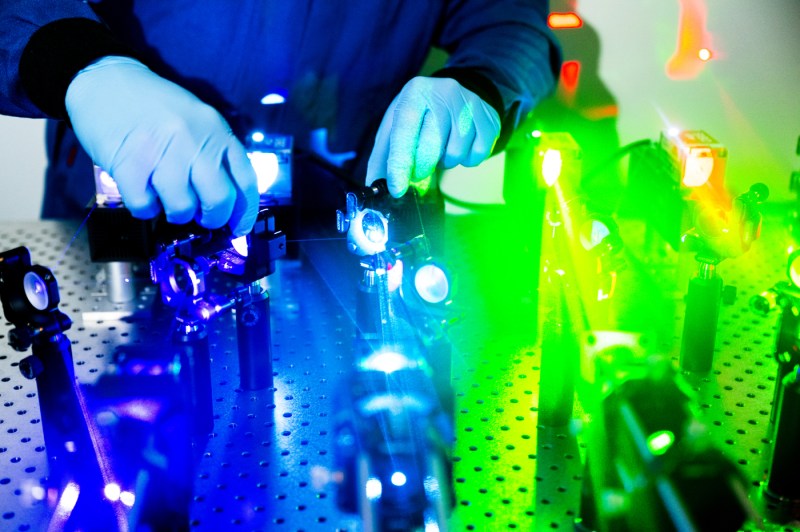
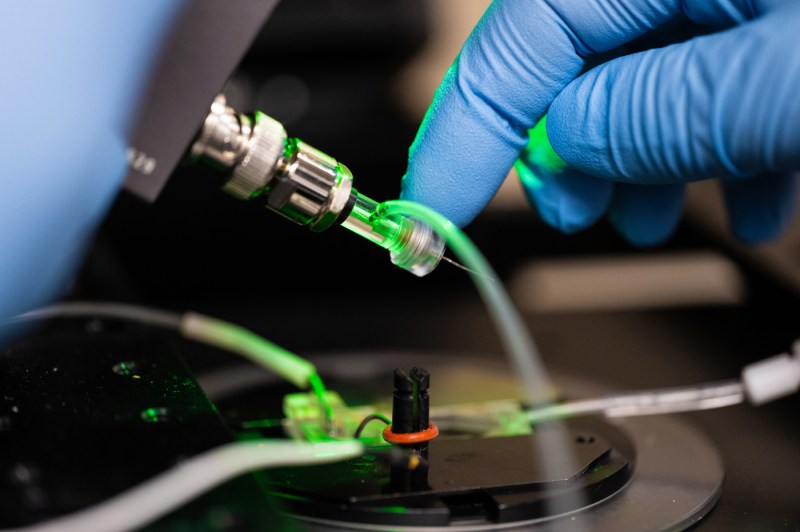
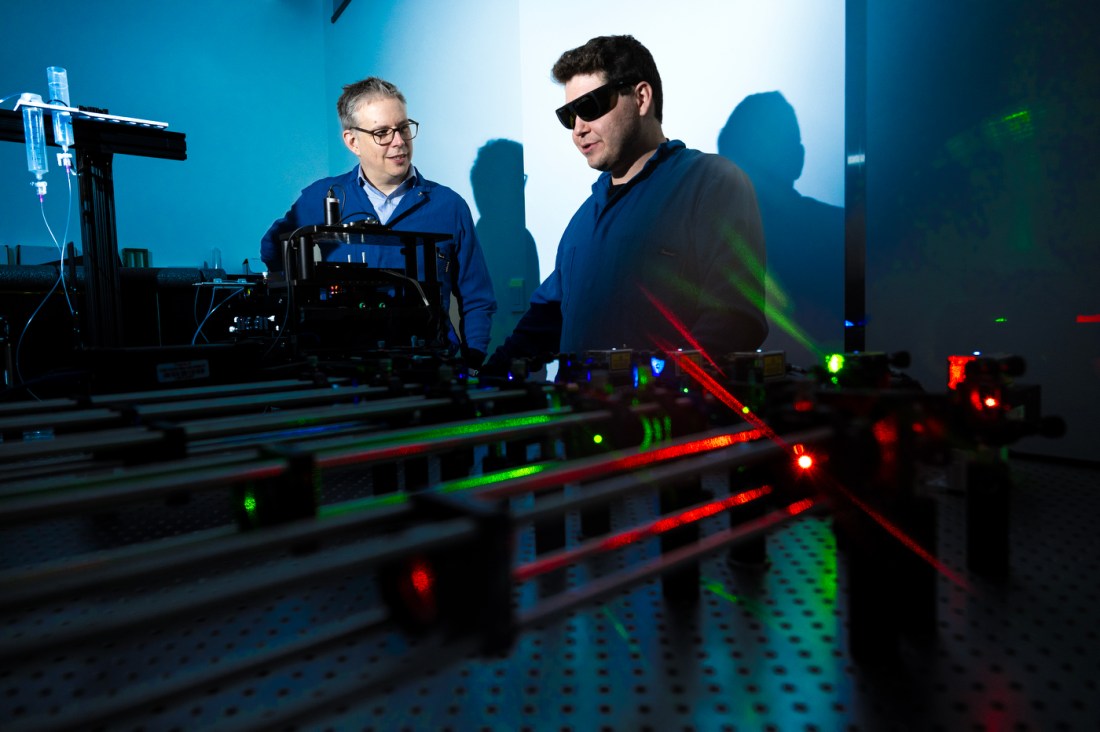
Then, Plant and his team used a custom laser microscope “to create a very thin ‘evanescent’ illumination layer right at the cell surface,” he says, which allowed them to view specific proteins in the cell membrane. They then compared the results of these experiments on live cells to those predicted by the computer model.
What the team learned is that TMEM16A acts something like a straw, engages with a chemical called phosphatidylinositol 4,5-bisphosphate — or the much less cumbersome PIP2 — inside the cell membrane to open up a small hole in the cell wall itself, opening up a channel for ions to pass through.
Charles Kissell, a graduate student researcher working with Plant, says that their discovery “closes a significant gap in the field’s understanding of how TMEM16A activation is regulated.”
By better understanding the protein’s function, researchers could develop targeted drugs for the many conditions.that result from TMEM16A malfunction. With the same approach they used to understand how the protein pries open the cell walls, Plant says that researchers will be able to model how prototype drugs interact with the protein before testing it in their wet lab for confirmation.
“That’s still fairly early,” Plant notes.