SAVE Act: Voter suppression or election integrity law?
Supporters of the controversial bill argue that it strengthens election integrity. Critics warn it could disenfranchise eligible voters who lack ready access to the required forms of documentation.

The overhaul of a major U.S. elections bill that seeks to ensure voting eligibility has divided congressional Republicans and Democrats over the fairness and viability of the proposed legislation, which would include multiple layers of verification if it becomes law.
The bill, called the Safeguard American Voter Eligibility Act, or SAVE Act, would require Americans to provide documentary proof of U.S. citizenship when registering to vote in federal elections and would mandate that states remove noncitizens from voter rolls, among other changes.
Voters additionally would need to present government-issued identification such as a REAL ID, passport, military ID, or other official photo identification when casting a ballot.
Supporters of the bill argue that it strengthens election integrity. Critics warn it could disenfranchise eligible voters who lack ready access to the required forms of documentation.
Nick Beauchamp, an associate professor of political science at Northeastern University, framed the debate as a question of “intent versus effect,” noting that even if the goal is to prevent rare cases of fraud, eligible voters may be disproportionately caught up in the law’s restrictions.
“We can fairly confidently say that, irrespective of the intent behind it, the effects will be much more on the side of deterring votes by people who have a legitimate right to vote,” Beauchamp told Northeastern Global News.

Proving citizenship with a passport could be a significant hurdle for a large swath of the American electorate. According to the U.S. Department of State, which keeps figures on the number of passports issued each fiscal year, less than half of American citizens currently hold a valid U.S. passport. Passport applications can take weeks to process and cost over $100, creating additional barriers for the average American.
Will I need a voter ID this year to vote in the midterms?
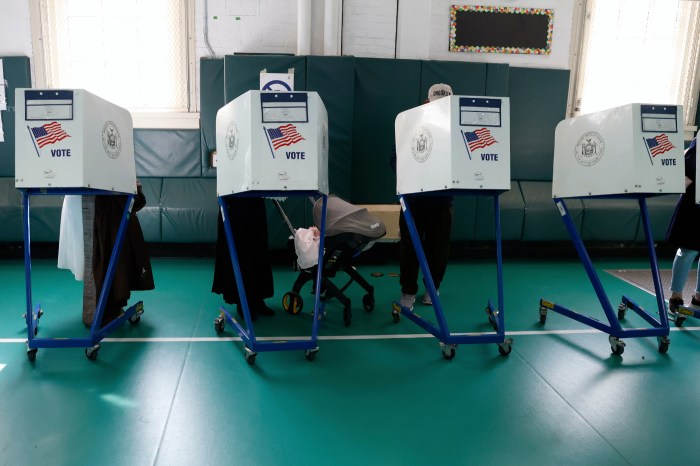
At present, there are 36 U.S. states that have laws that require voters to show some form of identification to cast a ballot in person, according to the National Conference of State Legislatures, a bipartisan organization that tracks state laws.
Several states are also considering new measures to expand or tighten voter ID requirements beyond what the SAVE Act would mandate, as part of a broader push by Republicans to bolster election security.
In Nevada and North Carolina, for example, residents will be weighing in on a ballot measure that, if passed, would enshrine the requirement in a constitutional amendment. Nevada currently doesn’t require documentation to vote, but North Carolina does.
Beauchamp noted that the federal law, which would apply the new rules to all 50 states, faces an uphill battle in the Senate. Senate Majority Leader John Thune has publicly acknowledged that the Republicans don’t have the 60 votes he needs to pass the bill in the Senate.
Still, a lot can play out between now and November, Beauchamp said.
But the U.S. administration continues to push for change. President Donald Trump said in a Feb. 13 Truth Social post that he would unilaterally force a photo ID requirement upon the electorate whether Congress approved the package or not, arguing that the Democrats “refuse to vote for Voter I.D., or Citizenship.”
Senate Minority Leader Chuck Schumer said Democrats would block the GOP’s push for voter ID “tooth and nail,” calling the proposal an “outrageous” effort that would disproportionately disenfranchise poorer Americans and people of color.
Trump has been pushing for reform to U.S. elections ever since falsely asserting that the 2020 election was “stolen,” a claim widely debunked by election officials, judges’ findings and media fact-checking. What’s more, multiple studies have found that voter fraud, which includes voter impersonation, voting by noncitizens and manipulation of ballots, in the U.S. is exceedingly rare, with documented cases representing a tiny fraction of ballots cast in recent elections.
How would the SAVE Act affect married women who have changed their surnames?
Editor’s Picks


Martha Johnson, an associate professor of political science, said the act, as it currently stands, would “without a doubt decrease the number of women able to vote in the United States,” adding that it appears that one of the goals of the legislation is to intentionally “dissuade or even prevent some married women from voting.”
According to data from Pew Research Center, a nonpartisan public opinion research organization, women are less likely than men to identify with or lean toward the Republican Party, with a majority of women aligning with or leaning Democratic.
Multiple 2024 election surveys found that that longstanding gender gap persisted: women were significantly less likely than men to vote Republican. A 2024 Edison Research national exit poll found a 10-point gap (45% of women vs. 55% of men for Trump), while AP VoteCast, a nationwide survey conducted by The Associated Press and National Opinion Research Center, or NORC, at the University of Chicago, found a nine-point gap, continuing a pattern seen in every presidential election since 1980.
“There is a persistent and growing gender gap in voting in the United States, with women – including married women — increasingly supporting Democratic candidates while men shift toward Republicans,” Johnson said. “Given this fact, reducing the number of women who vote benefits the Republican party.”
The bill also risks pushing women even further from the GOP, Johnson added. One of the longstanding challenges to democratic participation is not that there are too many people voting, but too few, she said.
What are the laws in other democracies?
Voter ID requirements vary across other similar democracies.
In the United Kingdom, for example, photo ID is required when voting in person in a wide range of elections and referendums, including U.K. parliamentary elections and by-elections; local elections in England; Police and Crime Commissioner elections in England and Wales; and certain neighborhood planning and local authority referendums in England.
Canada allows voters to show either government-issued ID with an address or a combination of ID and a supporting document. Australia does not require voter ID at all, relying instead on compulsory registration and strict roll maintenance.