Male pharmacists and female pharmacy technicians face a higher risk of suicide, study finds
Pharmacist suicide rates higher than national average


When people think of high-stress health care jobs, working as a physician or nurse typically comes to mind, according to Amanda Choflet, dean of Northeastern University’s School of Nursing.
But pharmacy workers also face stressful workplace demands, including escalating performance metrics, staffing shortages and customer dissatisfaction with high drug prices, Choflet said.
A new study that Choflet co-authored documents the increased risk of suicide among male pharmacists and female pharmacy technicians. She said it highlights the need to prioritize mental health among these frontline healthcare workers.
Published in the American Journal of Health-System Pharmacy, a peer-reviewed journal for pharmacists, the research shows that male pharmacists are 25% more likely than other men to die by suicide, while female pharmacy technicians are 22% more likely to end their lives than women in the general population.
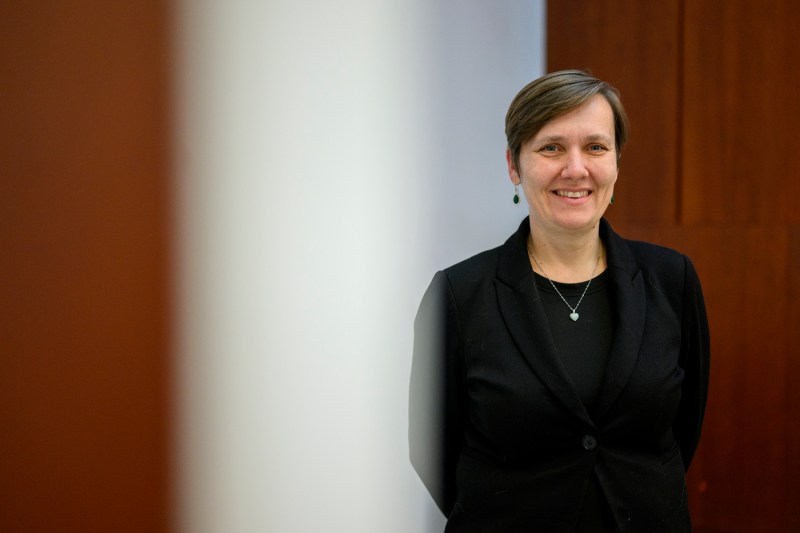
“The truth is we don’t know the ‘why,’” Choflet said. “What we need to do next is look into workplace stressors and mental health problems and create work environments where people feel safe and comfortable asking for help when they need it.”
The researchers used the National Violent Death Reporting System to look at deaths by suicide among pharmacists, pharmacy technicians and the general population from 2011 to 2022.
“When accounting for sex differences in the workforce, the increased suicide risk for all pharmacists was 21% over the 12-year study period, which is lower than the 25% figure for male pharmacists alone, as female pharmacists did not have a higher risk than females in general,” Choflet said.
In contrast, pharmacy technicians had a lower suicide risk than the general population (86% of the general population rate), but that was driven by lower rates among men; female pharmacy technicians faced a 22% higher risk than other women.
Though pharmacists and pharmacy technicians work side by side, the researchers found that death certificates, law enforcement reports and coroner reports noted different explanations for the emotional or psychological status of the two groups prior to their deaths by suicide.
“The pharmacists are more likely to report job problems, and pharmacy technicians are more likely to have reported mental health problems,” including previous suicide attempts, said Choflet, who is also a clinical professor at Northeastern.
The U.S. census reports that women dominate the pharmacy workforce, accounting for at least 60% of all pharmacists. But male pharmacists are more likely to be managers or own their own pharmacy, which may or may not account for the reports of job stress prior to death, Choflet said.
“These findings are deeply concerning but unfortunately not surprising to many in the profession,” said pharmacist Keith D. Marciniak, senior director of well-being and workforce initiatives for the American Pharmacists Association.
A higher rate of suicide among pharmacists was confirmed in a previous study in the Journal of the American Pharmacists Association in 2022. It showed suicide rates of approximately 20 per 100,000 among pharmacists, compared to 12 per 100,000 among the general population, results that contributed to the establishment of a Pharmacy Workforce Suicide Awareness Day every September.
Stress and strain build “when pharmacists feel unable to provide the level of care that they were trained to give, day after day,” due to increasing workloads, staffing shortages and pressure to meet performance metrics and patient needs, despite limited resources, Marcininiak said.
Choflet called pharmacists and pharmacy technicians “a little bit of a forgotten group” when it comes to recognizing frontline health care workers.
The reality is they deal every day with patients who are going through difficult times, either in the hospital or in the community, Choflet said. “They don’t necessarily get as much recognition for that work and for the emotional labor that they’re carrying with them.”
Editor’s Picks


Pharmacists often absorb the frustration patients feel about high drug prices, even though they have little influence over pricing decisions, Marciniak said. Tongue lashings aside, he said, “routinely watching patients struggle to afford their medications, or leave without necessary treatment, takes a real emotional and psychological toll.”
The researchers were struck by the fact that the higher suicide rates were occurring well before the COVID-19 pandemic started in 2020, Choflet said. “The financial pressures, the administrative pressures that they’re under have only gotten worse over time,” as pharmacies close and consolidate under large chains.
Pharmacists in hospital and ambulatory care clinics are also seeing stressors increase as patients increasingly require more complex care and a greater number of medications, said Kayla Waldron, director of medication-use and quality for ASHP, an organization representing pharmacists in patient settings.
“There’s not a single item that’s going to fix it all,” she said, adding that better use of technology to improve the workload and opportunities for hybrid or remote work, combined with mental health awareness, can be part of the solution.
Choflet, whose previous studies have shown that female physicians and female nurses have higher suicide rates than the general population, said harm reduction strategies include access to health insurance, protected mental health days and paid time-off schedules “that actually facilitate a positive work-life balance.”
“They should be a part of a reasonable work expectation,” she said. “The people who are powering the health care system are the most important part of the health care system.”