Who is convicted child killer Lucy Letby and why do some think she might not be guilty?
As Netflix releases its documentary, “The Investigation of Lucy Letby”, Northeastern experts examine the facts and speculation around the neonatal nurse’s case.

LONDON — The conviction of baby killer Lucy Letby shocked a nation. On the front pages of British newspapers she was called a “baby poisoner” and “evil.”
Two years later, the tone became more questioning. On Feb. 5 last year, The Daily Mirror’s lead article read: “Baby killer … or victim?”
In 2023, Letby was found guilty of killing seven babies and attempting to kill six more. A year later, a retrial also found her guilty of another attempted murder. Jurors at Manchester Crown Court were told Letby had used various methods between June 2015 and June 2016 to attack babies, including injecting them with air, poisoning them with insulin and using blunt trauma.
The result made her Britain’s most prolific child killer and her sentence of 15 whole-life terms means she is set to die in prison.
The verdict has split public opinion. It has been the subject of podcasts, investigative reporting and television shows. On Wednesday, Netflix will release its own documentary, “The Investigation of Lucy Letby,” promising unseen footage and insider accounts.
It is far from the first documentary to be focused on Letby. The BBC aired its own, “Lucy Letby: Who To Believe?” in August. And Apple TV hosted the film “Lucy Letby: Mistake Or Murder,” created by British broadcaster Channel 4. But with Netflix’s subscriber base of 325 million people, its 90-minute broadcast will bring her story — and her protestations of innocence — to an even wider audience.
Legal experts said the case illustrates the tension between public scrutiny and the formal appeals process. Daniel Medwed, university distinguished professor of law and criminal justice at Northeastern University, said it can be a “mixed bag” when it comes to public interest documentaries impacting the outcome of high-profile criminal cases.
“On the one hand, they often generate public pressure on the authorities to take a closer look,” said Medwed. “On the other, that pressure can also trigger defensive impulses that may lead decision makers to double down on the status quo.”
Letby, now 36, asked to appeal both trial convictions but was turned down. Her supporters, including a panel of 14 experts from around the globe, still believe there may have been a wrongful conviction.
Ursula Smartt, an associate professor of law and criminology at Northeastern University in London, said “some doubts have been raised” about the conviction, with high-profile politicians, journalists and some medical professionals calling into question the evidence used to convict Letby.


An article in The New Yorker magazine, initially blocked in the U.K. in case it influenced Letby’s second trial, examined other factors at play where the babies died, including staffing shortages and hygiene issues at the Countess of Chester Hospital’s neonatal unit.
Smartt said Letby’s future is now in the hands of the Criminal Cases Review Commission, the independent body that investigates potential miscarriages of justice in England, Wales and Northern Ireland. An application on Letby’s behalf was received by the commission last year.
“With two applications for leave to appeal rejected and a full public inquiry premised on her guilt almost finished, it would be reasonable to consider the matter settled,” said Smartt, a former lay magistrate. “But a panel of 14 experts have passed their findings to the Criminal Cases Review Commission, which indicated that a review would take time due to the complexity of the case.”


If the CCRC investigates, Smartt said it will determine whether there is new evidence that casts doubt on the conviction. This could include new witness statements, fresh scientific evidence or a change in the law. The CCRC can choose to refer the case back to the Court of Appeal for consideration.
Medwed, a former public defender, said the CCRC had a “reputation for being a little cautious, not being as willing to pursue viable innocence claims as some people would like.”
“The problem is, if you apply to the CCRC and they turn you down, it sends a really strong signal to the courts that you’re guilty,” said Medwed, who suggested the North Carolina Innocence Inquiry Commission was the most comparable organization in the U.S.
Smartt said the CCRC would only refer Letby’s case to appeal judges if it “finds a ‘real possibility’ of a miscarriage of justice based on new evidence.” “Two of her appeals have already been rejected,” continued Smartt. “To date, nothing has changed.”
There is also another side to the constant debate over Letby. Smartt said the parents of the babies killed and attacked “find this speculation over her guilt deeply upsetting.”
Prosecutors in her trials relied not only on medical evidence but also painted a wider contextual picture to convince the juries. They heard how stable babies would unexpectedly deteriorate on Letby’s shifts. She was found in the same room as a distressed baby that was bleeding from its mouth. Known only as Baby E, the baby died the next day.
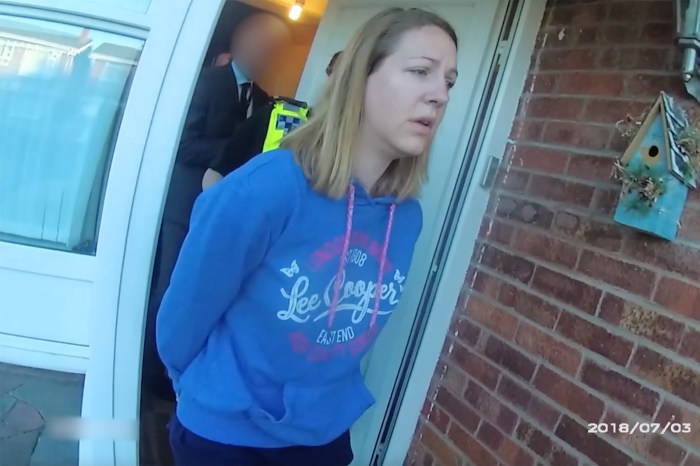
As suspicion surrounding her grew in July 2016, Letby was removed from the neonatal unit and placed on clerical duties. The unexpected collapses stopped and the mortality rate returned to normal levels. When her home was searched after her 2018 arrest, police found a handwritten note on which Letby had written: “I am evil, I did this.”
Letby’s defenders have said this was a form of journaling — the notes also included protestations of innocence. Supporters say the evidence was largely circumstantial, while experts have called into question the prosecution’s medical evidence, particularly in relation to insulin’s impact on babies.
Medwed said he did not have a view on whether Letby’s conviction was secure. But he noted that there have been previous examples when female carers have been unfairly blamed for infant deaths, including those in the U.S. who had their convictions overturned after being found guilty based on their babies exhibiting symptoms of shaken baby syndrome.
“A lot of people, principally women — moms, babysitters, elder caretakers — were convicted of killing infants in their care,” said Medwed, author of “Barred: Why the Innocent Can’t Get Out of Prison.”
But as science developed, doctors found babies could have the symptoms associated with the syndrome, such as brain swelling, for other reasons, including preexisting conditions.
There are parallels between Letby and the shaken baby syndrome cases, Medwed said, particularly in the use of circumstantial evidence.
“In these cases, no one saw her inject the babies,” Medwed continued. “When you have a circumstantial evidence case, the last known person in the presence of the victim is assumed to be the suspect. Sometimes law enforcement fills in that blank through medical and scientific evidence.”
For now, there are only two sets of opinions that matter for Letby. The first is the two juries that found her guilty. The second is the CCRC and whether it agrees that there are grounds to revisit those convictions.


