With ‘A Knight of the Seven Kingdoms’ and ‘Wonder Man,’ why are the biggest franchises going small?
With ‘A Knight of the Seven Kingdoms’ and ‘Wonder Man,’ two of the biggest franchises, ‘Game of Thrones’ and Marvel, are hedging their bets on smaller stories. Financially and creatively, it could be a winning strategy.

Simon Williams is a Marvel superhero. He’s also a working actor more likely to tank his small appearance on “American Horror Story” by pestering the director with questions than he is to book a job.
“Wonder Man,” a new television series in the Marvel Cinematic Universe, is notable because it cares more about the latter than the former. Gone are the world-ending stakes. In their place is a personal story about an actor striving for a Hollywood career while trying to get out of his own way.
“Wonder Man” is one of several recent productions, along with “Game of Thrones” spinoff “A Knight of the Seven Kingdoms” and Star Wars show “Andor,” that have seen the world’s largest franchises going small, with lower stakes, smaller budgets and fewer visual effects.
For studios, these small adventures in big franchise sandboxes could be the key to surviving a Hollywood era defined by ballooning budgets and a constant demand for content. But for creators and fans, smaller stakes can actually bring greater rewards, said Steve Granelli, a teaching professor of communication studies at Northeastern University.
“What we have seen is a consistent expanding of these universes, and the expansion of that universe then increases the stakes of each subsequent story that’s being told,” Granelli said. “It’s almost like our mental map for those high-stakes things is so well-worn that the smaller-stakes stuff, especially in those worlds, we don’t know what that looks like.”
For fans who have grown weary of the escalating, world-ending, life-and-death stakes of their favorite franchises, a show like “A Knight of the Seven Kingdoms” can be a balm.
“I love that the stakes are so personal,” “Game of Thrones” fan Alicia White said. “This isn’t the ‘Game of Thrones,’ it’s a penniless hedge knight trying to get one big win at a tourney so he doesn’t have to resort to either beggary or robbery to survive.”
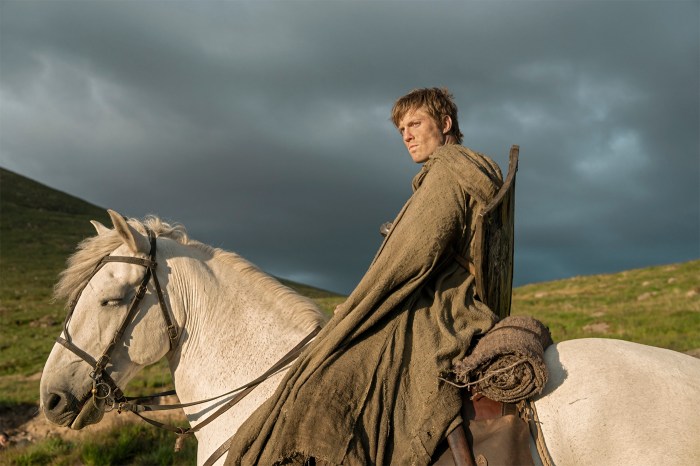
The political powerplays and fire-breathing dragons are gone. Instead, “A Knight of the Seven Kingdoms” follows the adventures of Ser Duncan the Tall and his squire, Egg. It sounds simple because it is.
“We’re not rooting for life or death,” Granelli said. “We’re just rooting for them to be OK.”
Jonathan Thomas is one of several self-proclaimed “Game of Thrones” super fans who called the show a “breath of fresh air” for setting aside the dour tone of the original show in favor of something lighter and more comedic.
For studios like Warner Bros. and Disney, small-scale excursions along the edges of established franchises offer a cost-effective way to do what Granelli called “franchise maintenance.” These productions give fans more content while potentially bringing in new viewers a decade or more into a franchise’s life cycle.
Editor’s Picks


“You’re going to port over some of the audience or a lot of the audience of people who are like, ‘Give me more Marvel’ or ‘Give me more ‘Game of Thrones,’” Granelli said. “And then you have a chance of pulling in casuals who didn’t have a point of entry.”
Small stakes stories like “A Knight of Seven Kingdoms” and “Wonder Man” come with smaller real-world stakes for the studios funding them. Both of these shows have shorter seasons and shorter episode lengths, sitting closer to 30 minutes than the hour-plus of most big-budget shows. With a focus on character over spectacle, it also means fewer visual effects.
Since the budgets for these productions are relatively smaller –– “A Knight of the Seven Kingdoms” still costs less than $10 million per episode, which is modest compared to “Game of Thrones” –– they come with less risk for studios.
As a result, the creators feel empowered to take more risks, Granelli said. A show like “Wonder Man” can look and feel different or even more experimental, at least for the Marvel Cinematic Universe and its machine-like house-style of filmmaking. The creators can take stylistic moves from 1970s Hollywood and dedicate a whole episode to a black-and-white flashback largely unrelated to the main characters.
This kind of franchise diversity is an increasingly necessary step as properties like “Game of Thrones” and Marvel push well beyond a decade, Granelli said. They are far from irrelevant and still draw audiences, but in terms of cultural relevancy and viewership, both franchises have hit a ceiling and need to bring in more fans beyond the diehards, Granelli said.
“At this point, all the levels of difference that you can apply to decrease that barrier to entry and increase the amount of people who are going to be taking this in as their first ‘Game of Thrones’ property, flip all the switches,” Granelli said. “Make it shorter. Make it smaller. Make it more funny. Take away the amount of deaths. Play with it. You can do that when you have a dedicated audience already and you have a world that has worked.”