Ted Landsmark: Portrait of a leader
Landsmark directs the Kitty and Michael Dukakis Center for Urban and Regional Policy. He is also a consummate Renaissance man.


Walk through the first floor of the Americas wing in the Museum of Fine Arts, Boston, and you will be greeted by some of America’s first leaders.
Paul Revere is inspecting a teapot. John Hancock poses with a quill pen in hand. George Washington stands before his horse at Dorchester Heights.
But for Northeastern University professor Ted Landsmark, another face beckons: the face of an African American man directing a crew of white sailors as they rescue a comrade from a shark attack.
“He’s the person in charge,” Landsmark said, looking at John Singleton Copley’s 1778 painting “Watson and the Shark” during a recent visit to the museum.
Landsmark explained that there are few early images of African Americans and people of color in heroic, rather than subservient, positions. And although the title character, “Watson,” is the victim in the water, it is the African American man who is at the center of the painting.
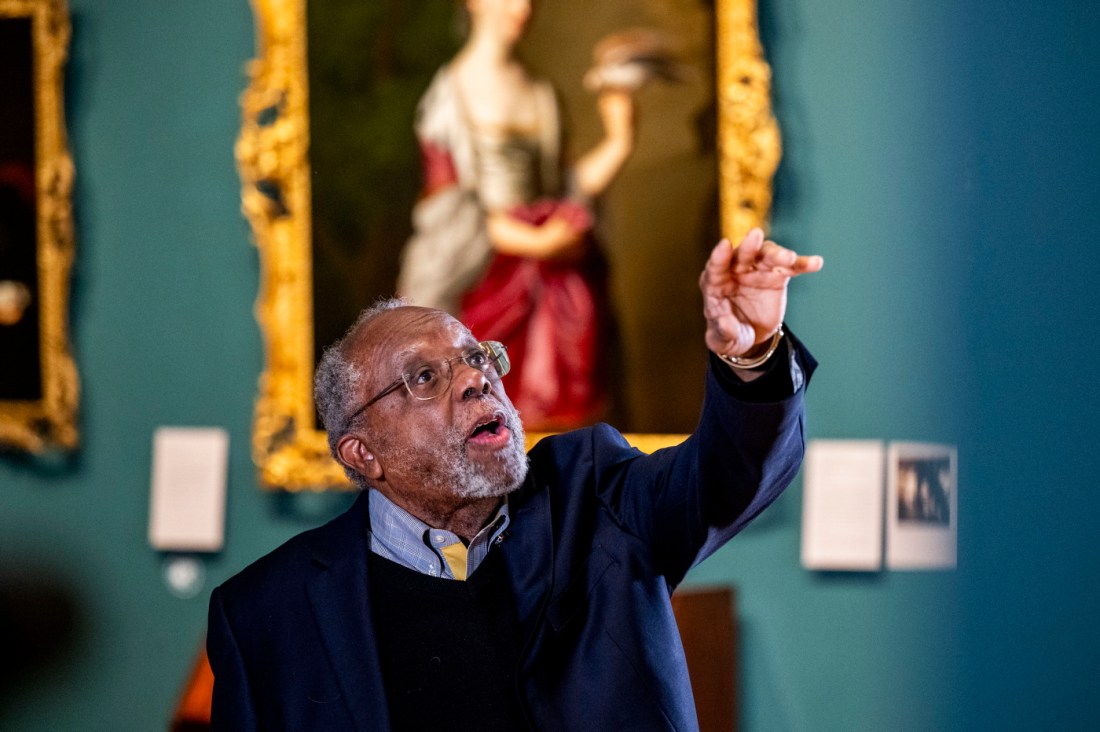
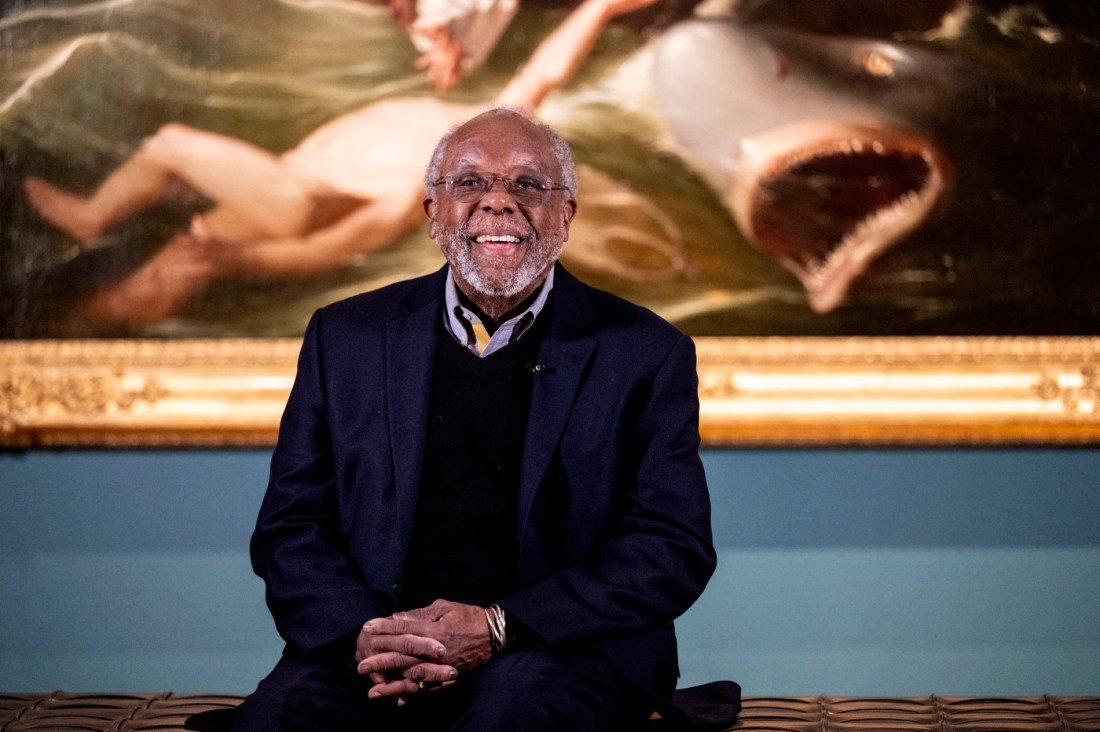
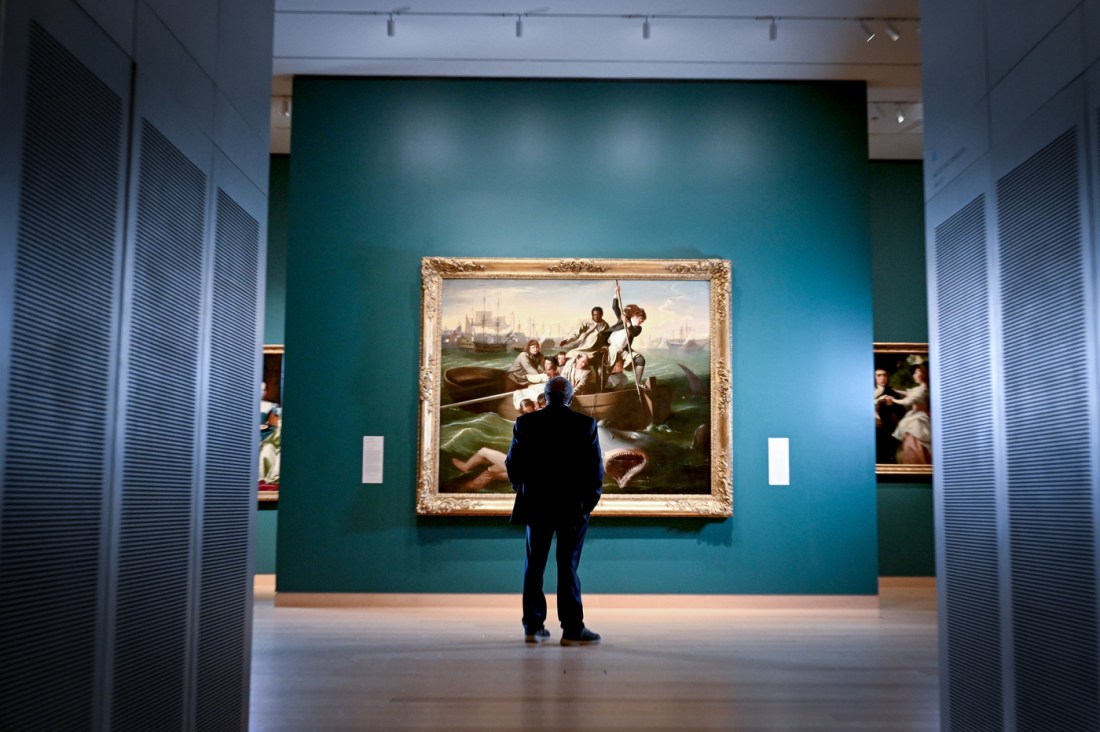
The painting, which depicts an actual event, has captivated Landsmark since he and his mother visited the museum when he was a child during trips from their home in Harlem, New York.
“This painting in particular started me thinking early on in life about the kinds of things that I might be able to accomplish as a leader and as a person who might find himself in situations where showing courage and confidence would enable other people to escape risky or perilous circumstances,” Landsmark said. “The courage that is shown by an African American in this painting is something that I felt carried forward and really inspired me to be the kind of African American young person who could do heroic things,” he added.
Landsmark has certainly taken the inspiration to heart, emerging as a leader on several fronts.
He is a beloved educator at Northeastern, where he is a distinguished professor of public policy and urban affairs and directs the Kitty and Michael Dukakis Center for Urban and Regional Policy. He is an honorary trustee at the Museum of Fine Arts and a board member of the Boston Planning and Development Agency. He has served as a trustee or board member for several organizations, including the American Architectural Foundation, Historic New England and Historic Boston.
Landsmark has also been at the forefront of several institutions, notably serving for 17 years as president and CEO of the Boston Architectural College, where he remains president emeritus.
“I look at Ted as a multifaceted, almost multimodal thinker,” said Jonathan Garland, president and founder of JGE Architecture and Design and JGE Development, who graduated from Boston Architectural College during Landsmark’s tenure as president. “I would call him a friend, a mentor, an educator, a leader — a leader by example, not just by word.”
The quiet and unassuming professor also made his mark in Boston city government during the 1980s and 1990s, where his roles included overseeing workforce training and employment programs and creating initiatives to prevent violence and improve youth opportunities.
Editor’s Picks




“Even during difficult times, Ted was always there for the city of Boston, bringing the city together, especially on race relations,” said City Councilor Ed Flynn, who got to know Landsmark on trips to the MFA when Landsmark worked for Flynn’s father, former Boston Mayor Raymond Flynn.
For Landsmark, there is also an episode in history by which he would rather not be defined, but which epitomizes his role as a leader and teacher.
The Pulitzer Prize-winning photograph, The Soiling of Old Glory, shows Landsmark being attacked by a white teenager with an American flag during a 1976 anti-busing protest at Boston’s City Hall.
The image cemented Landsmark as an example of “the kind of African-American young person who could do heroic things,” the professor said, similar to the African-American man he admires in “Watson and the Shark.”
The photograph, a statement on the violation of civil rights, remains a “teaching tool” for the next generation of activists.
Landsmark’s embrace of the arts goes beyond just being an observer. He is an art patron and collector, well known for his collection of baskets, musical instruments, and other artifacts of African Americans from the 18th and 19th centuries.
Margaret Burnham, university distinguished professor of law and professor of Africana Studies at Northeastern, who worked with Landsmark at the National Center of African American Artists, described Landsmark as the consummate Renaissance man.
“There really is no area of improving urban life in the city of Boston that Ted Landsmark’s fingerprints have not been on,” Burnham said.
Landsmark was humbled.
“I think everyone who’s curious has the opportunity to find themselves in a position where they might be considered renaissance people,” he said.
For all his achievements, there is one ambition that Landsmark, a graduate of Yale Law School, said he hadn’t fulfilled. He once dreamed of being a mayor. Though that title wasn’t to be, his impact has been felt in so many other ways, his colleagues and acquaintances said.
“His involvement as an attorney and as a civic leader and his involvement with the arts are all really about community and advancing the ways that communities can thrive within Boston,” said Peggy Fogelman, the Norma Jean Calderwood director of the Isabella Stewart Gardner Museum.
Flynn, the councilman, said Landsmark taught him that community leadership and community building go beyond “glamorous buildings.”
As for Landsmark, he had a simple explanation for his impact.
“Life is short,” he said. “And you want to get as much into it as you possibly can.”