Who wins in player-team disputes? Experts unpack the feud between Mohamed Salah and Liverpool FC
Northeastern researchers in international business and communications assess how the crisis between the international star and the Premier League club might unfold.


LONDON — The rabble of journalists loitering in the mix zone near the Elland Road dressing rooms knew something was afoot when they saw Egyptian footballer Mohamed Salah walking toward them.
In almost nine years as Liverpool FC’s talismanic forward, Salah has approached the reporters’ mix zone no more than four times. On Saturday, after spending a third game in a row sitting on the substitute’s bench, he had something to get off his chest.
In a spectacular outburst, he accused the club of attempting to blame him for the reigning Premier League champions’ poor performances this season. He said Liverpool had “thrown me under the bus” and also revealed his relationship with manager Arne Slot had completely broken down.
“I think it is very clear that someone wanted me to get all of the blame,” Salah told reporters after Liverpool succumbed to a last-minute 3-3 draw away to Leeds United, the latest off-color result in a stuttering season.
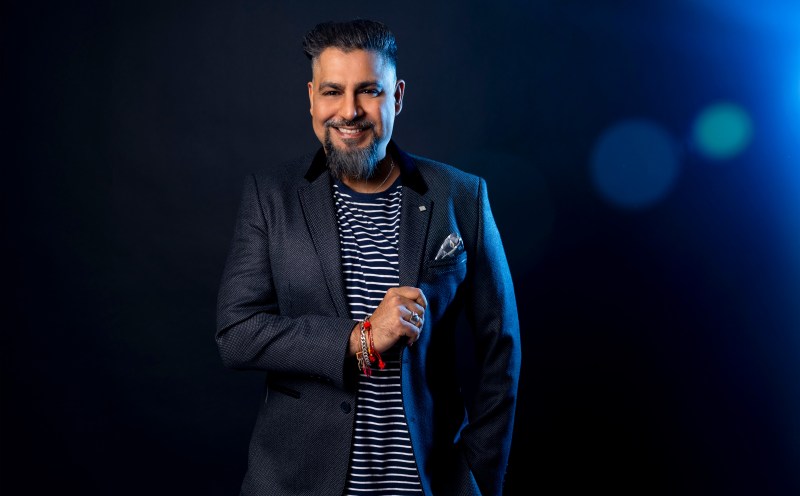
Priyan Khakhar, assistant professor of international business at Northeastern University in London, said Liverpool is facing the “irreplaceable” employee dilemma.
“When your highest performer publicly challenges the leadership, it creates immediate ripple effects across three levels in organizational behavior — team dynamics, stakeholder confidence and precedent-setting,” said Khakhar.
The researcher said public pronouncements of discontent can cause a team to lose motivation and call into question a manager’s authority.
There is little question that Salah was the stand-out performer for Liverpool in the 2024/25 season. Slot’s team stormed to the Premier League title, winning by a 10-point margin. A revitalized Salah finished as the season’s top scorer, netting 29 times.
The form earned him a new two-year contract with the club and he was named player of the season by both his fellow league players and British football correspondents. Before Salah signed his contract extension, there were reports that clubs in Saudi Arabia were willing to part with £150 million, or $200 million, to sign the superstar.
But the team and Salah’s form have dipped in the current 2025/26 season. Liverpool are 10th in the table and are 10 points off the leaders. Salah has scored just five times in 19 appearances across all competitions. Liverpool players have also been dealing with the devastation of losing a teammate, after striker Diogo Jota died in a car crash during the off-season.
Salah’s recent stats and Liverpool’s shaky performances led to him being benched, with his non-involvement in the Leeds match acting as the final straw.
Big blow-outs between players and managers are nothing new, including in sports in the United States. In the NFL, former New York Jets quarterback Aaron Rodgers last year denied that he had any part in influencing the decision by owner Woody Johnson to sack head coach Robert Saleh. The coach had fined Rodgers four months beforehand for taking a vacation rather than joining a training camp.
Global corporations, Khakhar said, often have “specific strategies for managing rain-makers who believe they’re bigger than the institution” by crafting an “invisible way out behind the scenes”.
In one of the most-watched sports in the world, it would be close to impossible for Liverpool’s owners, Fenway Sports Group — a global sports company headed by principal owner John W. Henry and which also owns the Boston Red Sox — to offer Salah a quiet exit. But his rehabilitation looks equally difficult, with coach Slot saying he was “surprised” by Salah’s remarks, opting to leave him out of the travelling squad for Liverpool’s European fixture against Inter Milan on Tuesday.
Editor’s Picks



Khakhar said the odds of Salah, 33, staying at the club are not in his favor when you look at analysis from the world of business. “Corporate history suggests a 70/30 rule,” Khakhar continued. “In 70% of public leadership conflicts, someone exits within 18 months.”
A calculation a company will make before choosing to let a big asset move on is whether they can find a suitable replacement, Khakhar said. The question for Liverpool is can the team find “another Salah” if he is sold.
Liverpool is not short on players looking to fill Salah’s boots, having spent $600 million on new outfielders during the summer transfer window — the most ever spent by a Premier League club in a single window.
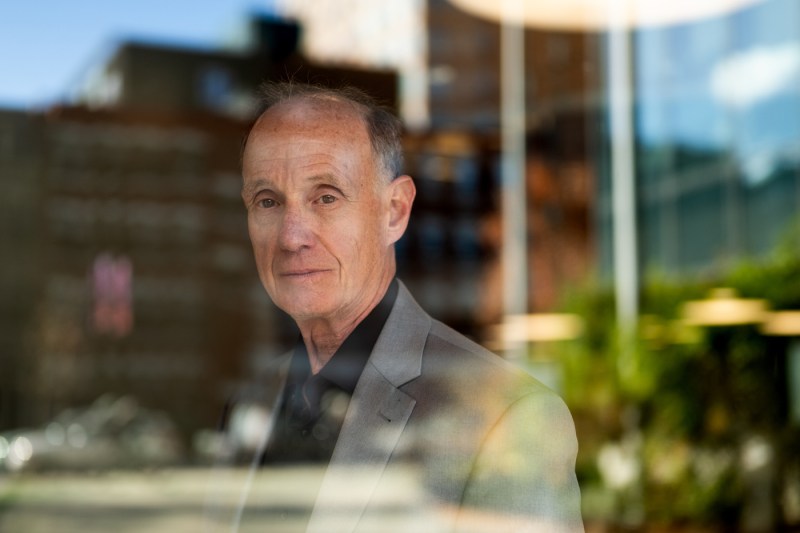
Alan Zaremba, a Northeastern associate professor in communication studies, said bringing in so many big-name additions can be a challenge.
He recalled how the NBA’s Brooklyn Nets had on their roster three of the best basketball players in the sport — Kevin Durant, Kyrie Irving and James Harden — during the 2021-22 season. But the trio could not gel.
“They couldn’t work harmoniously,” Zaremba said. “So Liverpool going out and spending all of this dough does not guarantee success. It depends upon the character of the people involved.”
Analyzing Salah’s remarks to the press, Zaremba, who recently published the book “Sports Ethics: Challenges for Athletes and Management,” said he was surprised by the tone of some of the comments.
Salah had said he didn’t have to fight every day for his position on the team because he had already “earned it.” But Zaremba said: “Anybody who follows sport knows that you’re auditioning for your job every day. To say that ‘I had a high scoring percentage in one year and now I should play because of that,’ it makes you sound like a baby — you’re squawking.”
Zaremba explained that it is frowned upon to air a club’s dirty laundry in public as it fails to show respect for the internal workings of a team and can be seen as a “selfish” act.
That is exactly how Chris Sutton, a former Premier League winner and England international, described Salah’s behavior. The player-turned-pundit told the BBC that Salah had “made it all about him.”
Actions like Salah’s almost always work out negatively for the team, Zaremba added, and can lead to a player being outcast as a “pariah.”
“Certainly someone who is an outstanding talent, people will often look past their abrasiveness, because they consider this person an asset,” continued Zaremba. “But in any team sport, if it becomes all about you then, eventually, no matter how good you are, it’s going to take away from the possibility of your team excelling.”


