Para-athlete regains balance and power with custom prosthesis

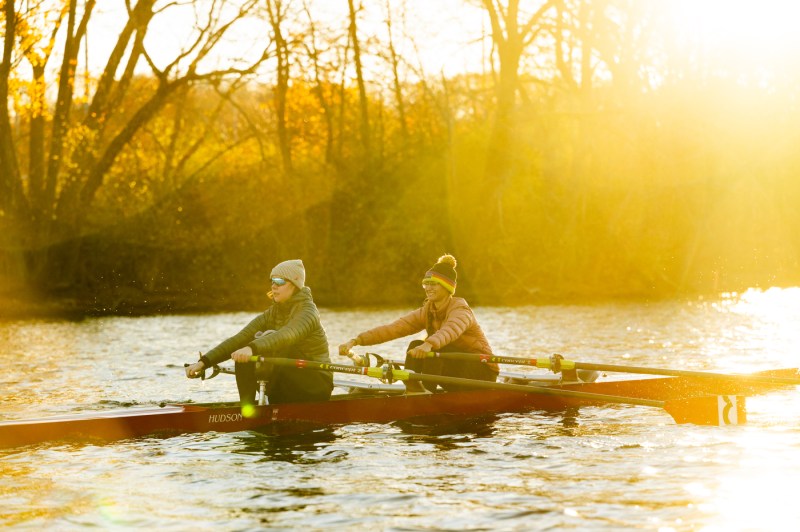
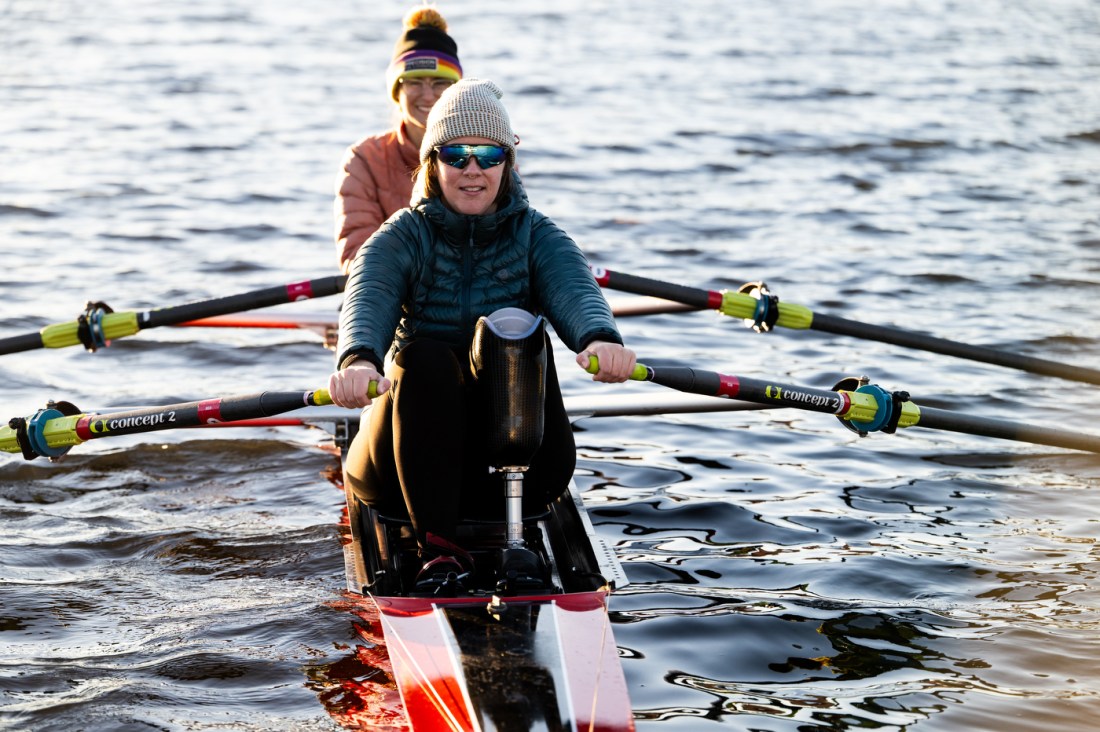
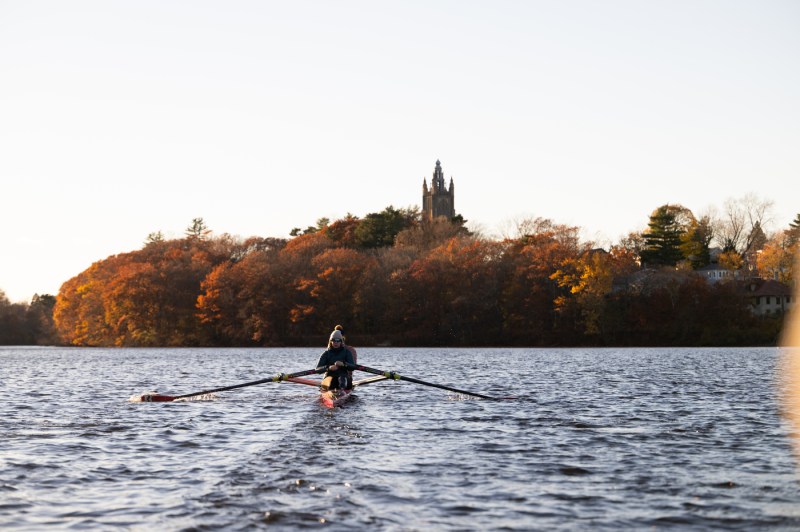
Megan Hopkins was gliding on the Charles River, her oars slicing the water as she executed each stroke.
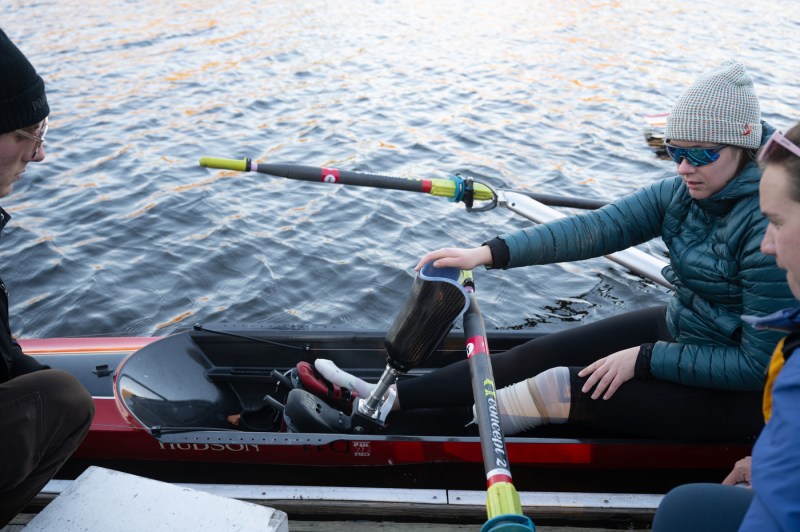
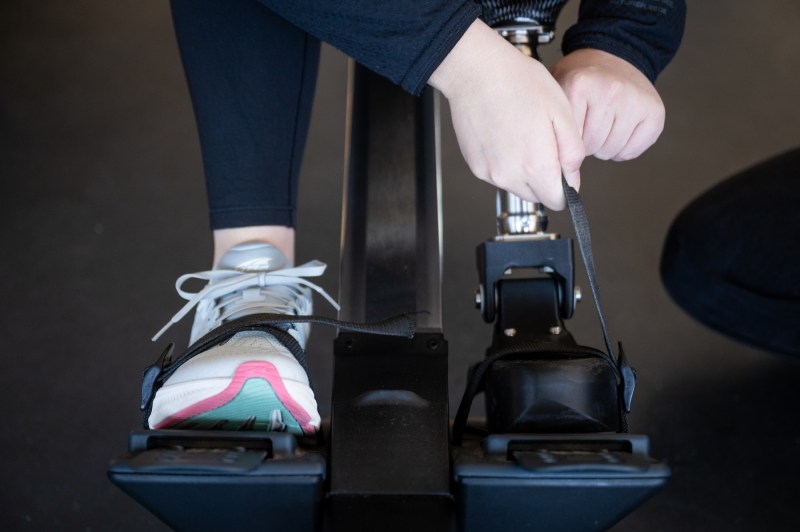
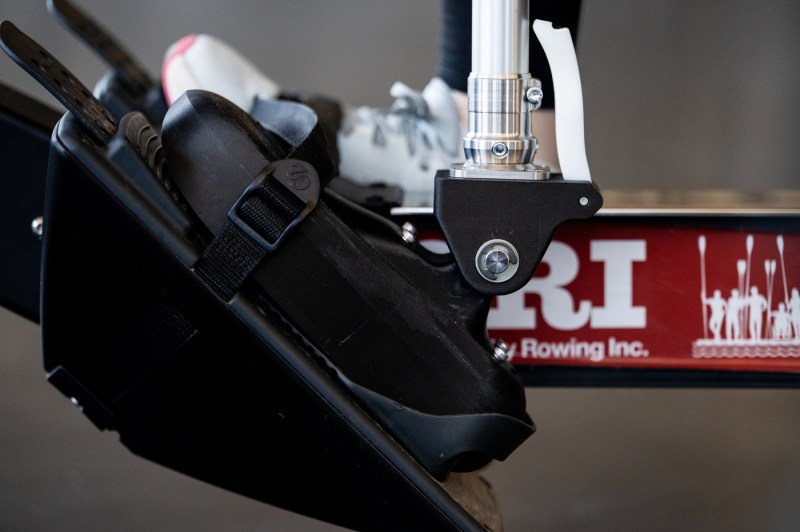
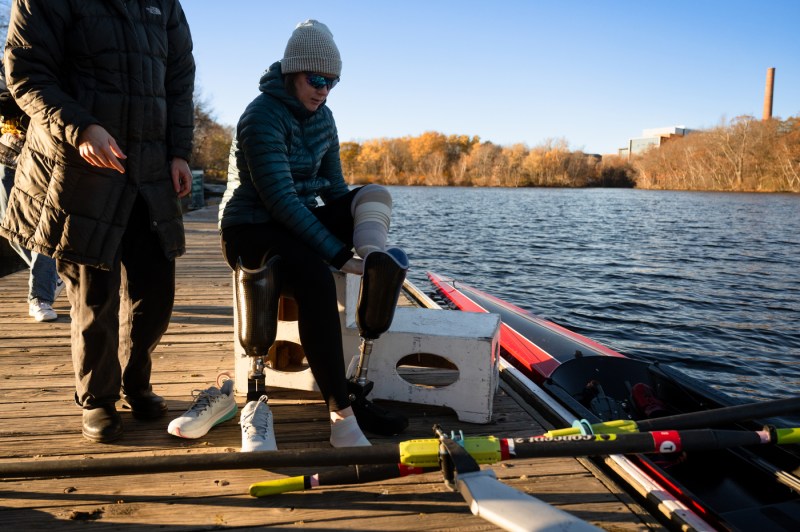
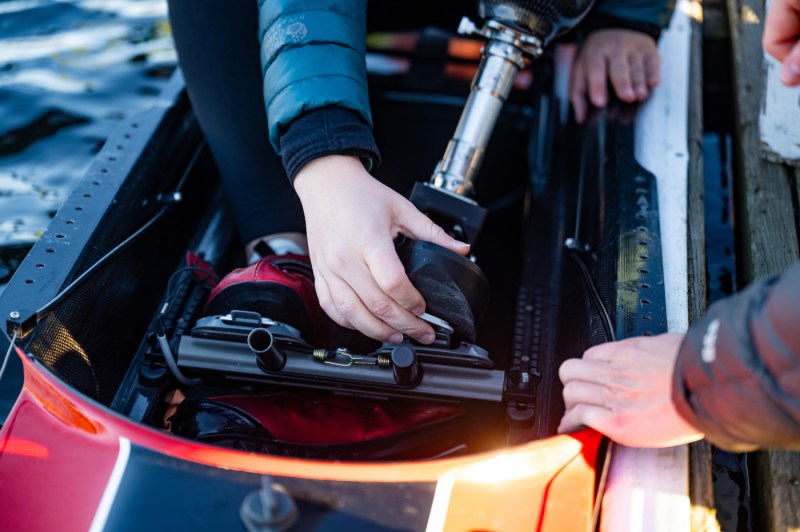
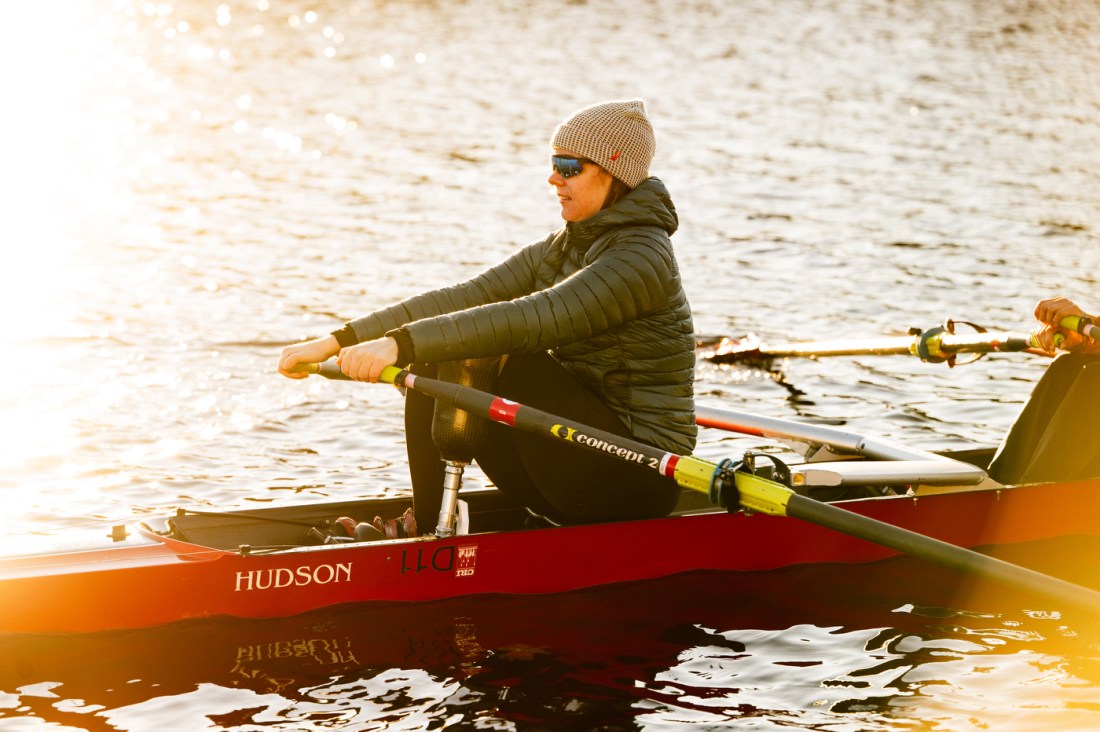
It was some of the best rowing of her career, a testament to the ingenuity of a group of Northeastern University bioengineering students who had developed a prosthetic foot and ankle for the local para-athlete.
“It’s so good,” Hopkins hollered to the group of students trailing on a launch boat as she tested the device.
Where her previous prosthesis made it challenging for her to distribute pressure evenly between her legs and caused some discomfort, this new one was a dream, providing a long range of motion and allowing her to perform powerful strokes with little trouble.
It was a moment of celebration for both Hopkins and the students, who had spent the past few months developing the prosthesis.
“I have the sense that engineering is in my blood,” said Max Sproull, one of six Northeastern undergraduates who designed and manufactured the prosthesis for their bioengineering capstone class.
“I’ve done projects before, but this is a first for me seeing an actual bioengineering project through to completion that’s actually going to be used by a real person,” he added. “It’s really satisfying. We started from nothing.”
That’s the exact feeling the course is designed to invoke, explained Daniel Grindle, a Northeastern University professor of bioengineering and the group’s adviser.
“All throughout their undergraduate degree, we are giving students almost like boutique pieces of important engineering information,” he said. “I teach them mechanics. Someone else teaches them fluids. Someone else teaches cell assays, all this type of stuff. Capstone is one of the few places where we say, ‘You’ve learned all of the pieces of it, you’re going to have to throw it all together because we have a real problem for you to figure out.”
For Hopkins, the students’ help came at the perfect moment.
In 2022, a portion of one of her legs was removed after complications from a climbing accident she had in 2016.
That surgery allowed her to get back into the activities she loved — hiking, skiing, swimming and surfing.
One new activity she picked up in the past decade was rowing, and she started participating in pararowing classes a few years ago. However, the prostheses she used posed challenges causing painful issues that prevented her from being able to perform full strokes.
One day she was brainstorming with her prosthetist — a health care professional who designs and fits prostheses — about designing her own prosthesis.
From there, her prosthetist connected her with Brittany Moores, a fellow prosthetist and doctoral student at Northeastern, who then connected Hopkins to the capstone group, composed of Sproull, Anais Rey, Paige Harrington, Joshua Murdock, Marlena Eichelroth and Ella Hughes, all senior Northeastern bioengineering undergraduates.
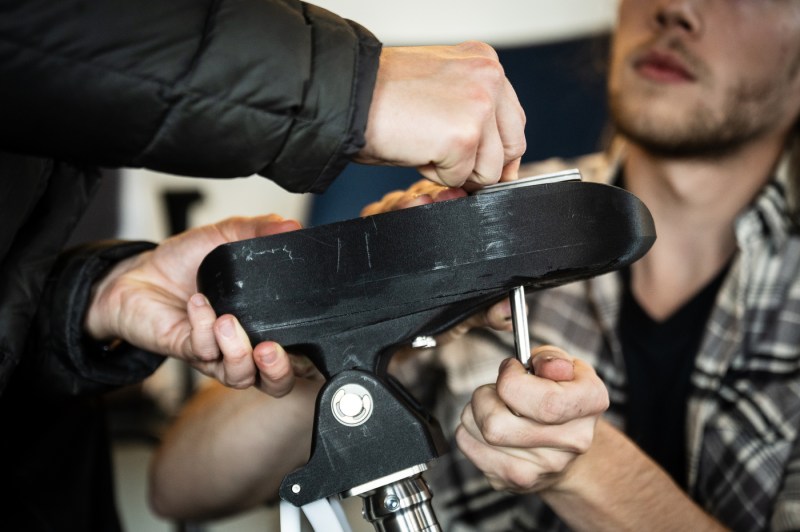
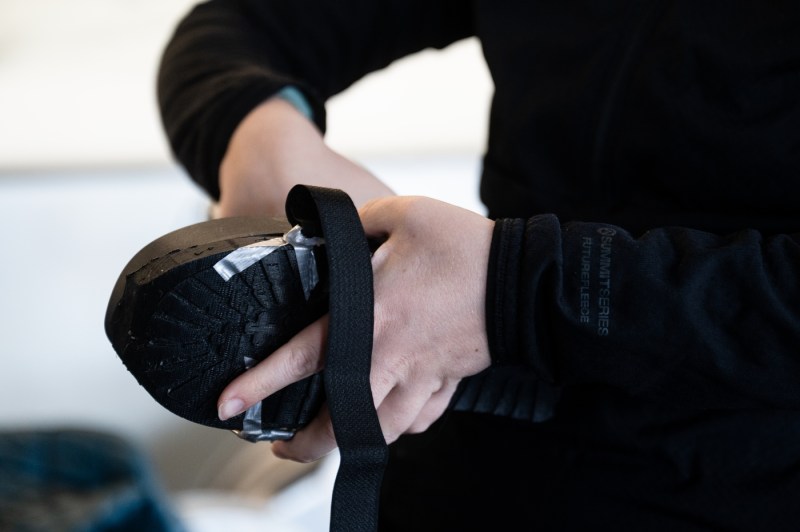
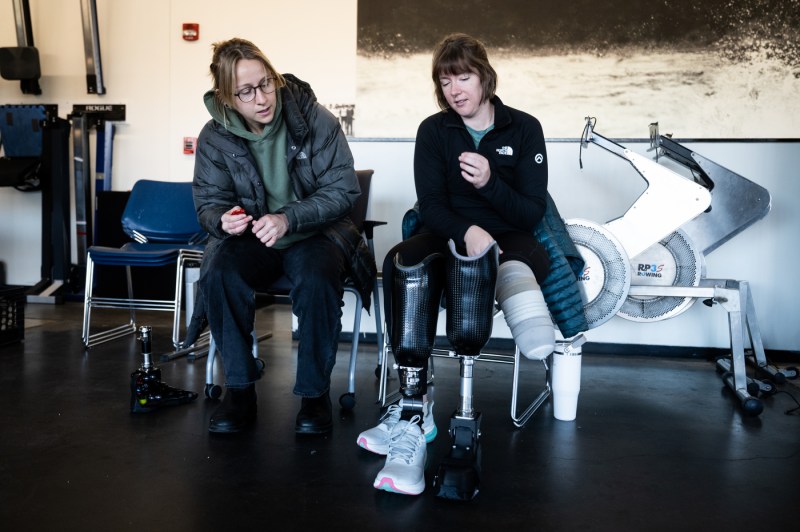
This project builds on Sproull’s original capstone idea, which was to develop a surfing prosthesis and ankle attachment.
But rowing and surfing are different animals.
For one, rowing requires a large range of motion through the ankles, and ideally any prosthesis the students created needed to allow for as much plantar and dorsiflexion as possible to mimic the ability of a foot bending up and down, Hopkins explained.
Additionally, the prosthesis needed to align with her knees on her right leg to preserve her joints and for her to perform strokes properly.
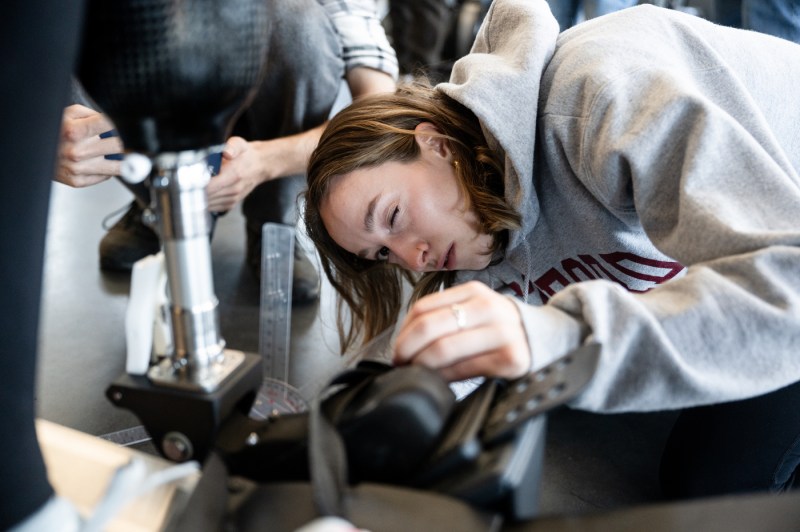
It was an involved process that first required the students to research the sport of rowing and the physiological mechanisms that go into performing a stroke. They also had to do a deep dive into prostheses, uncovering where the shortfalls existed to understand how they could build a device that met Hopkins’ specific needs.
“Since there is no standard rowing prosthesis on the market, this is something that could fill that gap,” said Hughes, who spent a lot of time learning about the sport and understanding the components that would work best for Hopkins’ prosthesis.
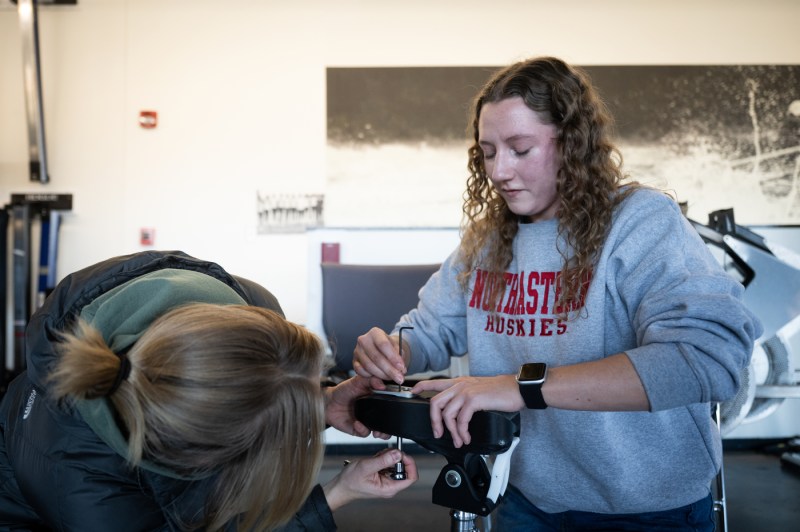
Actually designing and manufacturing the prosthesis has been an iterative process, and the group was broken down into several subgroups charged with each specific part of the prosthesis.
From design ideation and computer-aided design, or CAD, modeling to material selection and printing and assembly, it’s been quite the journey, explained Josh Murdock, who spent much of the project refining the prosthesis’ design.
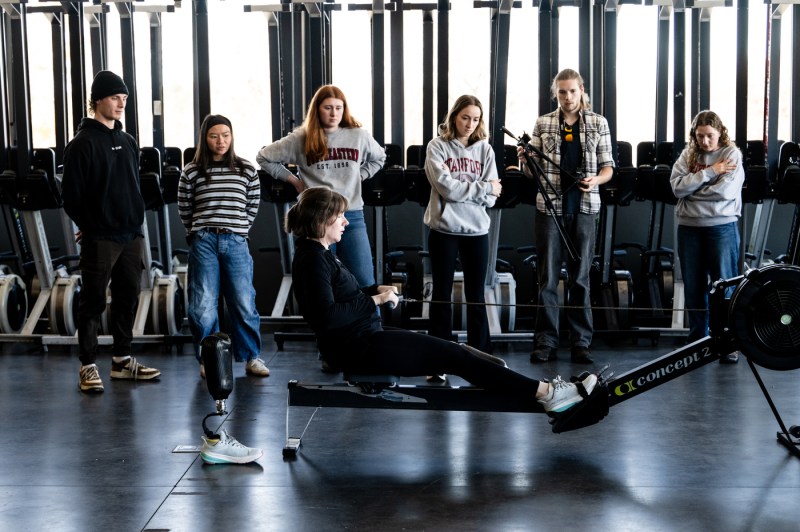
Last month, Hopkins tested the second version of the prosthesis at Community Rowing Inc. in Brighton, one of the largest public access rowing centers in the country.
Editor’s Picks



It weighs about 3.2 pounds and is composed of 3D-printed polyethylene tetraphthalate, 17% carbon fiber, stainless steel, spring steel, fiberglass and polytetrafluoroethylene, titanium, aluminum, and other trace metals and coatings, according to Sproull.
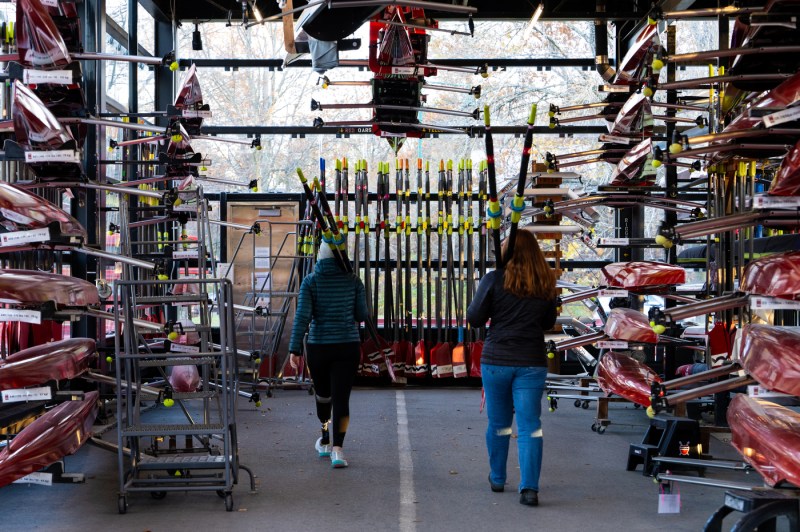
But before Hopkins could hit the water, she first needed to test the device using one of Community Rowing’s Inc indoor rowing machines.
Testing went well. The students had taken in Hopkins’ feedback after she tested their first version of the prosthesis earlier in the semester, and this upgraded version worked swimmingly for performing strokes.
It wasn’t perfect, though.
The clip allowing her to use the prosthesis to walk broke off while she was putting it on, an issue the students will have to fix by the time they present an updated version of the device during their capstone presentation on Dec. 3.
But the main objective — giving Hopkins the ability to perform powerful strokes on the water — was a success, explained Eichelroth, who was one of several capstone students observing Hopkins from the launch boat.
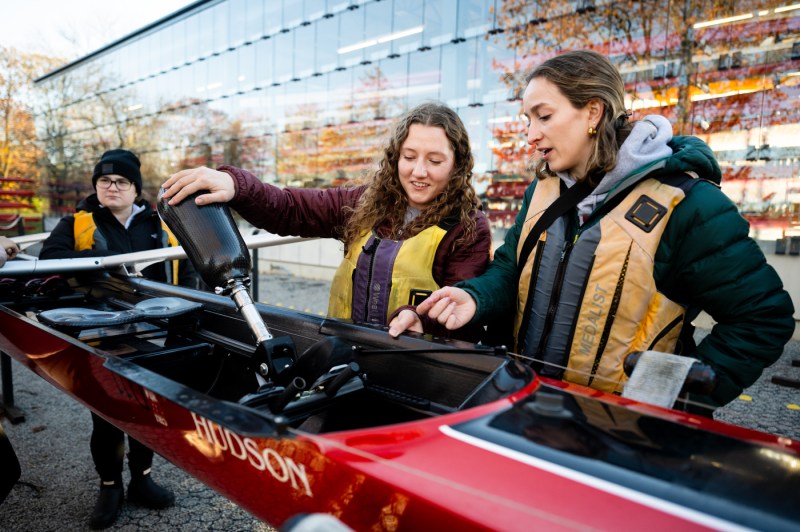

“It was so surreal because we already know she loves rowing, and so our end goal was to have her use it on the water, and we just saw that demonstrated,” she said, nearly choking up. “It was amazing to put it bluntly.”
For Hopkins, the prosthesis was exactly what she had in mind when she first met with the students — the difference in the water was immediate, and she’s particularly excited to achieve new goals next season.
“I definitely felt a lot of power out there,” Hopkins said shortly after the test run.
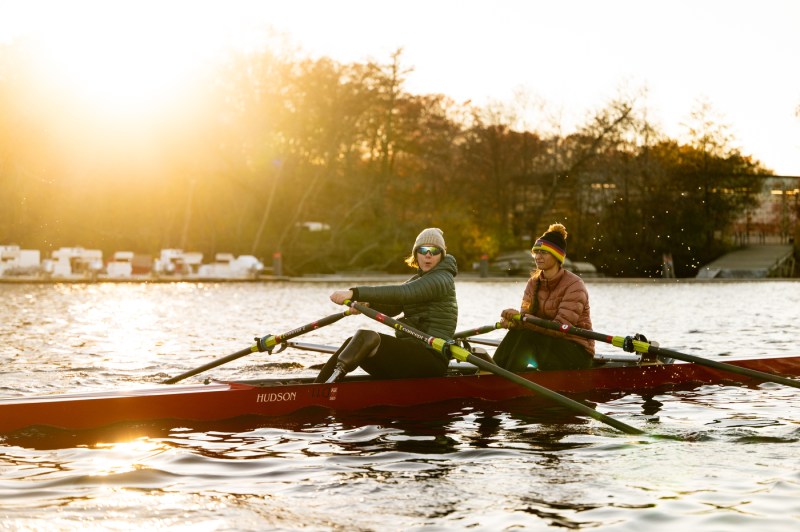
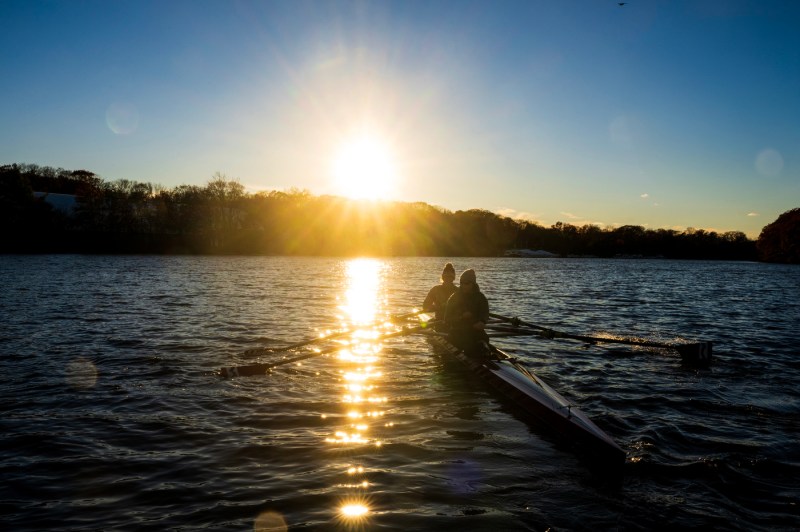
Her coach, Serena Blacklow, who was rowing with her on the boat, concurred.
“I could feel that she was pushing evenly through both feet, which she didn’t have before,” said Blacklow, who works at Community Rowing Inc. “I could feel the power from the backseat.”
While the capstone project may be wrapping up in the next few weeks, the team plans to iterate on the device with Hopkins in the months to come, Sproull said.
In fact, that’s one of the things he’s most looking forward to after the semester closes out.
“I’m really excited to see her use it in a real competition. I’m also really excited to continue working on it with her after Capstone is over,” he said. “We won’t have the same time crunch, deadlines and deliverables, and we’ll really be able to dial it in on a better schedule and give her a really nice finished product.”