Have far-right views been ‘normalized’ at the Dutch elections?
Northeastern’s Marianna Griffini looks at attempts to rein in the far-right while Frank Hartmann analyses whether the Netherlands’ coalition-style of government is holding it back.


LONDON — The Netherlands will act as a litmus test on the popularity of the far-right in Europe for the second time in as many years when voters go to the polls this week.
Geert Wilders’ anti-immigration Freedom party (PVV) produced a shocking victory two years ago and it is expected to triumph again in Wednesday’s election. But with rival parties gaining renewed support in opinion polls and political attitudes changing toward the far-right, PVV’s success may not automatically lead to the same result.
Marianna Griffini, an assistant professor in international relations and anthropology at Northeastern University in London, produced a paper looking at the lessons that could be learned from the 2023 contest.
In her co-authored paper, “Snap out of it? Governmental instability and far-right mainstreaming in the Dutch and French elections of 2023/2024,” Griffini argues that one of the core reasons far-right parties have become a dominant force in countries like the Netherlands is due to the normalization of “the far-right by mainstream politician actors.”
The Netherlands, with its multi-party system, has been ruled by coalition governments for the past century. Wilders, an outspoken firebrand politician who is known for his controversial anti-Islam views, was part of the previous four-party coalition that lasted only 11 months. He pulled the plug on the PVV’s cooperation when his partners refused to accept his immigration demands, including rejecting all asylum requests and sending home all Syrian refugees, forcing a second election in 23 months.
In a move designed to discredit Wilders, the mainstream parties, including the center-right outfit People’s Party for Freedom and Democracy, which held the premiership between 2010 and 2023 and was in coalition with Wilders until the summer, have said they will refuse to work with the PVV.
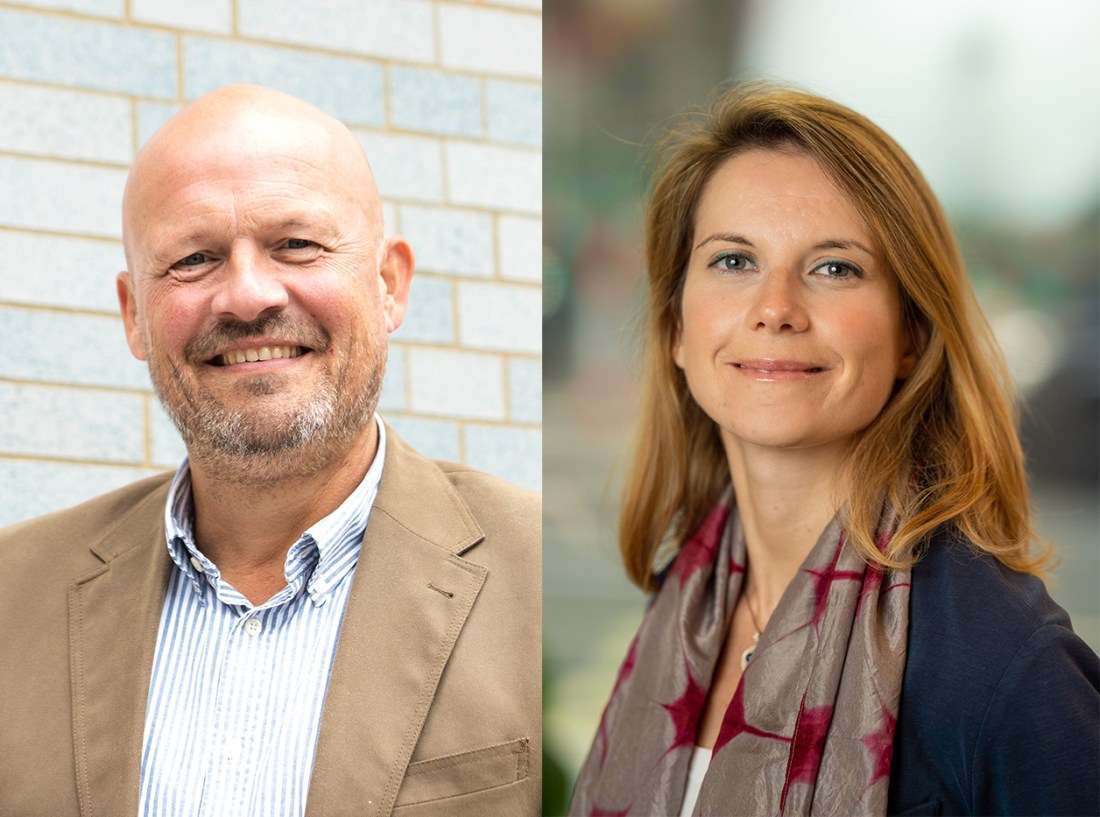
Griffini says the cordon sanitaire — a French saying used in politics when parties rule out working with others they deem to be extremist — has been under serious strain across Europe and is only “minimally holding” in the Netherlands. The last coalition government marked the first time PVV had been included in a ruling alliance.
“Unless the PVV’s leading position in the polls reflects into a neat victory and the formation of a majority government,” says Griffini, “mainstream parties will need to come together to form a majority and maintain a very hard posture and not go back to seek the PVV’s support.”
Editor’s Picks


In their paper, published in the Journal of Common Market Studies, Griffini and her colleagues — Marta Lorimer from Cardiff University in Wales and Leionie de Jonge from the University of Tübingen in Germany — say that focus on immigration and security has played into the far-right’s hands. To reverse this trend, they say mainstream parties need to “refocus on other pressing concerns — including economic inequality, climate change, the cost of living and infrastructure.”
The two parties currently battling for second place in the Netherlands include a renewed Christian Democrats and the GreenLeft/Labour alliance. Both have put housing needs at the forefront of their campaigns and Christian Democrats leader Henri Bontenbal has promised to return to “normal, civilized politics.”
But even the issue of housing has been grasped by the PVV, Griffini now points out, with its politicians blaming migrants for the country’s long-standing housing shortage. “This may be an electoral battleground, with the PVV and mainstream parties vying for ownership on the issue,” the populism expert suggests.
Frank Hartmann, a professor of accounting at Northeastern, says the growth of far-right populism in his homeland appears to stem from a sense of “frustration” in some quarters of Dutch society.
“I think a lot of people are truly afraid and they are truly frustrated — and that’s also, I think, a Western phenomenon,” says Hartmann. “The Dutch, believe it or not, I believe are not so liberal and tolerant as sometimes depicted abroad.”
What is almost guaranteed after this week’s election is a lengthy process of negotiations to finalize a government. The parties traditionally have had to work together to put forward a ruling coalition that can wield a majority in the country’s 150-seat parliament.
Wrangling after the 2023 election, when deciding on what Griffini’s paper labels “the most right-leaning government in the post-war history of the Netherlands,” took eight months to agree upon a prime minister.
These considered deliberations were often seen as a strength of the Dutch system, says Hartmann. “I think you could for a long time have argued that this compromising and debating had a positive effect on business,” he says, “because everybody understood that nothing would change, and that would be for the better because the Netherlands traditionally had a very open economy.”
But with the Dutch economy needing an urgent redress, given the growth in the technology and artificial intelligence sectors, he argues that the “advantage is slowly disappearing.”
“We need to change the economy and the structure of the economy,” says Hartmann.
The Boston-based academic points at the U.S., where President Donald Trump — another example of a populist politician who has captured the public imagination — has directly intervened in a bid to drive the economy. It is the polar opposite of the slower process of finding consensus in a coalition government system.
“If you look at the infrastructure now, and the amount of long-term investment needed to update that, I believe we’ve now lost 10 to 20 years on really making big steps,” Hartmann says about the Netherland’s economic position. “We’re losing ourselves in all kinds of side issues which take away a lot of the political energy.”


