Sociology, meet ecology: How the variability of coffee harvests can teach us about sustainable farming
New research looks at farmers’ responses to variable crop yields to make better recommendations for resilient practices.


The rootstock of a coffee plant can live for 20 to 30 years. In that time, a generation, it will have good years and bad years, years where it bears large quantities of fruit and years where it fails to produce as expected.
This cycle, called “alternate bearing,” has troubled farmers for millennia. Gabriela Garcia and Laura Kuhl, two Northeastern University researchers, wanted to know how farmers’ management strategies dealt with the issue of alternate bearing, especially on small, single-family farms, called smallholdings.
There are “basically no studies that have looked at the social dimensions of alternate bearing, how farmers conceptualize it and its underlying drivers,” says Garcia, an assistant professor of marine and environmental sciences with a co-appointment in the school of public policy and urban affairs. Garcia and Kuhl’s recent research is changing that.

When a plant just won’t fruit
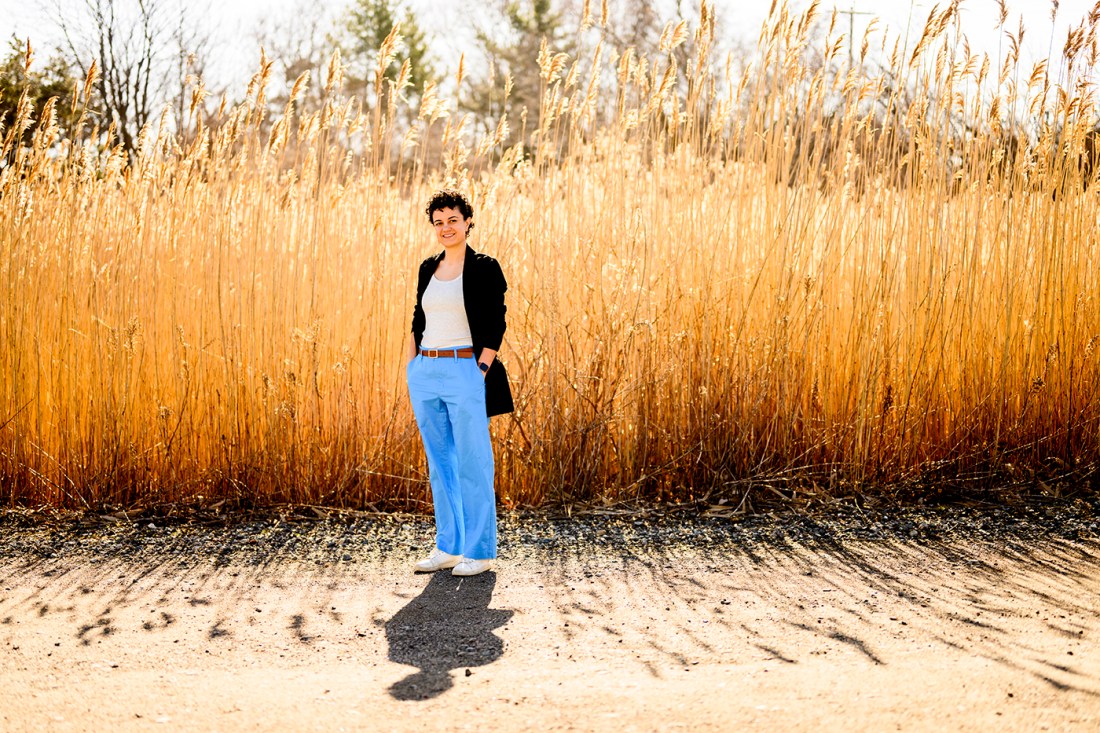
Garcia studies human and plant interactions, socioecology, from smallholder farms to national patterns and trends.
“I think it’s pretty well-known that farmers face various types of variability,” Garcia says, which can cause challenges for farmers, especially small, single-family operations.
“But what comes to mind probably first are external, extrinsic sources of variability, like in rainfall or pest pressure, or even within the economic sector,” she says, but some amount of crop yield variability is inherent to the plant.
This intrinsic variability in the plant’s yield is the alternate bearing cycle.
The problem is that this cycle is poorly understood.
When they began their research, they weren’t even sure that alternate bearing had any effect on farmer decision-making.
Managing high highs and low lows
In previous research, Garcia discovered that plants “overinvest resources during these high fruiting years. They deplete their nitrogen stores, and it takes them a year to recover those before they can reproduce again.”
Fertilizer, she continues, is mostly nitrogen, so just adding more fertilizer seems like the simplest solution. “But really, that ecological theory posits that adding more resources would actually just lead to higher highs, but not necessarily alleviate the lows.”
Kuhl, an associate professor of public policy and urban affairs and international affairs, says that it wasn’t clear how well this cycle really could be managed. “There was a real question as to whether this was something that farmers could control,” she says.
“One of the reasons that we’re looking at coffee here is because many smallholder farmers’ livelihoods are highly dependent on coffee,” Kuhl continues.
Because farmers have learned how to manage so many kinds of extrinsic sources of variability — irrigate in the case of too little rain, employ various kinds of pest control — it’s often assumed that low-yielding years, which result due to alternate bearing, is “a failure of management, and particularly when it synchronizes,” Garcia says.
Farmers will try to account for alternate bearing cycles by having fields of plants at different times in their bearing cycles, to average out the fruit load, Garcia says.
This will mean fewer extreme highs across the farm, but overall, more predictable growing seasons.
Sometimes plants will sync up in their bearing cycles, which can mean trouble for farming livelihoods, when they’re suddenly producing much less than the year before, and, to compound things, it also increases their vulnerability to those extrinsic factors, Garcia notes.
How farmers approach the problem
Understanding farmer management strategies “has really important implications for our broader understanding of farmer decision-making in socioecological systems,” Kuhl says. “How do we connect the ways that farmers understand the system to the ways they’re making decisions, and what’s within their control versus outside of their control?”
What they found was that farmers linked their management strategies to their presumptions about what caused the yield’s variability. Farmers who focused on irrigation and pest control presumed that low yields came from extrinsic factors, while those who presumed the yield was attributable to inherent plant properties focused on managing plant resources, like adding fertilizer.
Editor’s Picks


This led Kuhl and Garcia to propose a new, “integrated” approach to intrinsic yield variability, one that keeps stock of “the underlying kind of mechanisms at a plant level. How can farmers manage it, if at all? And then what are the actual opportunities and barriers for them?” Garcia asks.
This is where public policy comes into play, ensuring that there are institutional and social supports in place to support farmers when their crops all produce low yields, and in unison, she continues.
Farmer feedback (loops)
“This is an actual ecological question that has not been resolved,” Kuhl says. But interdisciplinary research like this allows researchers to approach the problem not just ecologically, but by “putting the farmer perceptions and their own experiences at the center of the study.”
Alternate bearing interacts “in complex ways with some of these external sources of variability,” Kuhl notes. “These types of dynamics display really different patterns, and therefore different types of decisions need to be made about how to manage this type of variability, these types of challenges for the farming system.”
The ecological questions and the social questions “interface really in interesting ways,” Garcia explains. “What it allows us to do is understand these feedbacks. So how did the ecological dynamics influence what kind of management practices,” or policies at other scales, are employed? And how do those policies feed back to “influence the ecological dynamics?”
Considering “those dynamics as two different types of variability, it really enhances our ability to think in a much more nuanced way about what resilience is and how to manage it,” Kuhl says.